 Divisi
Little leaf
· Bacterial
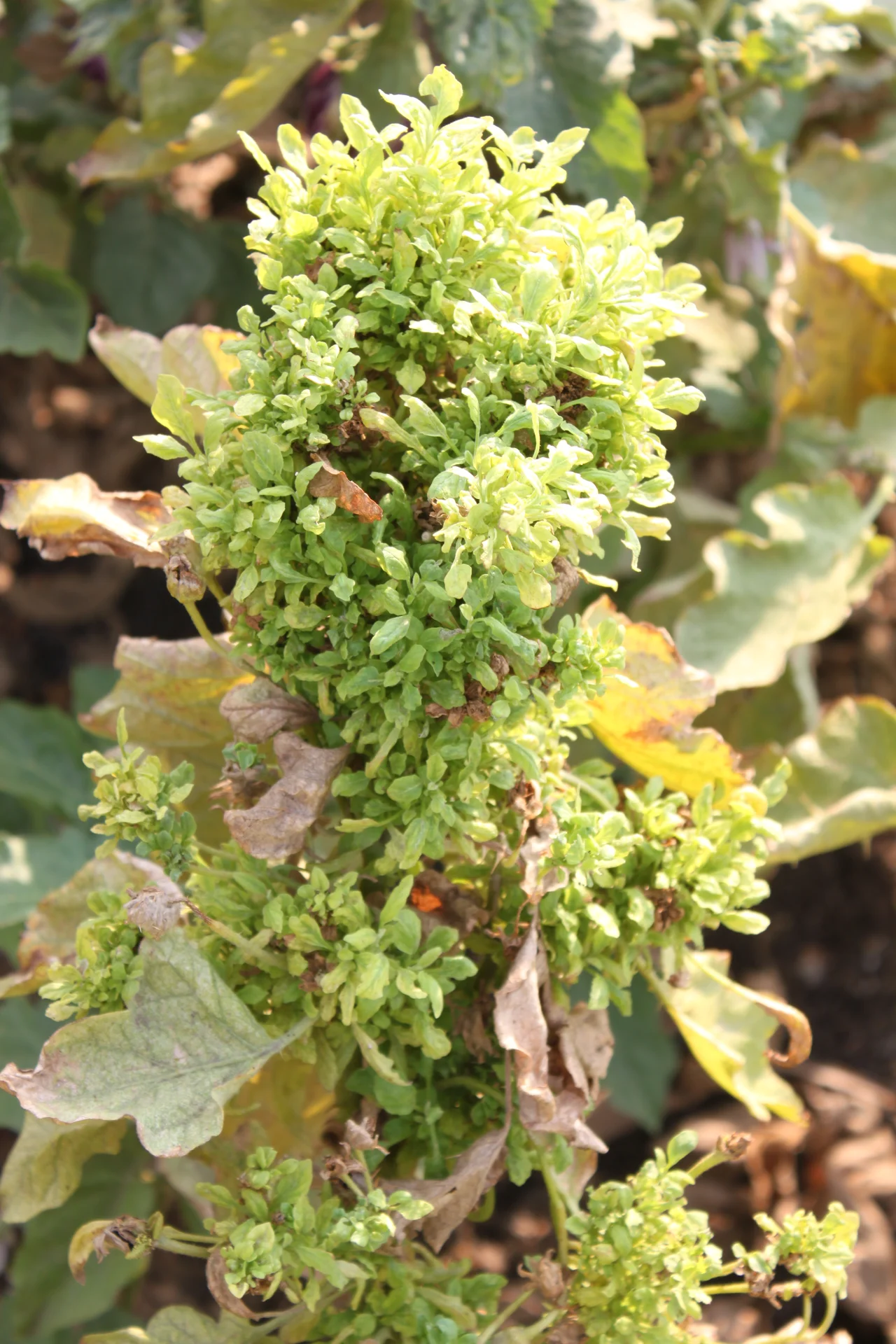
Photo: Amityadav8 · CC BY-SA 4.0
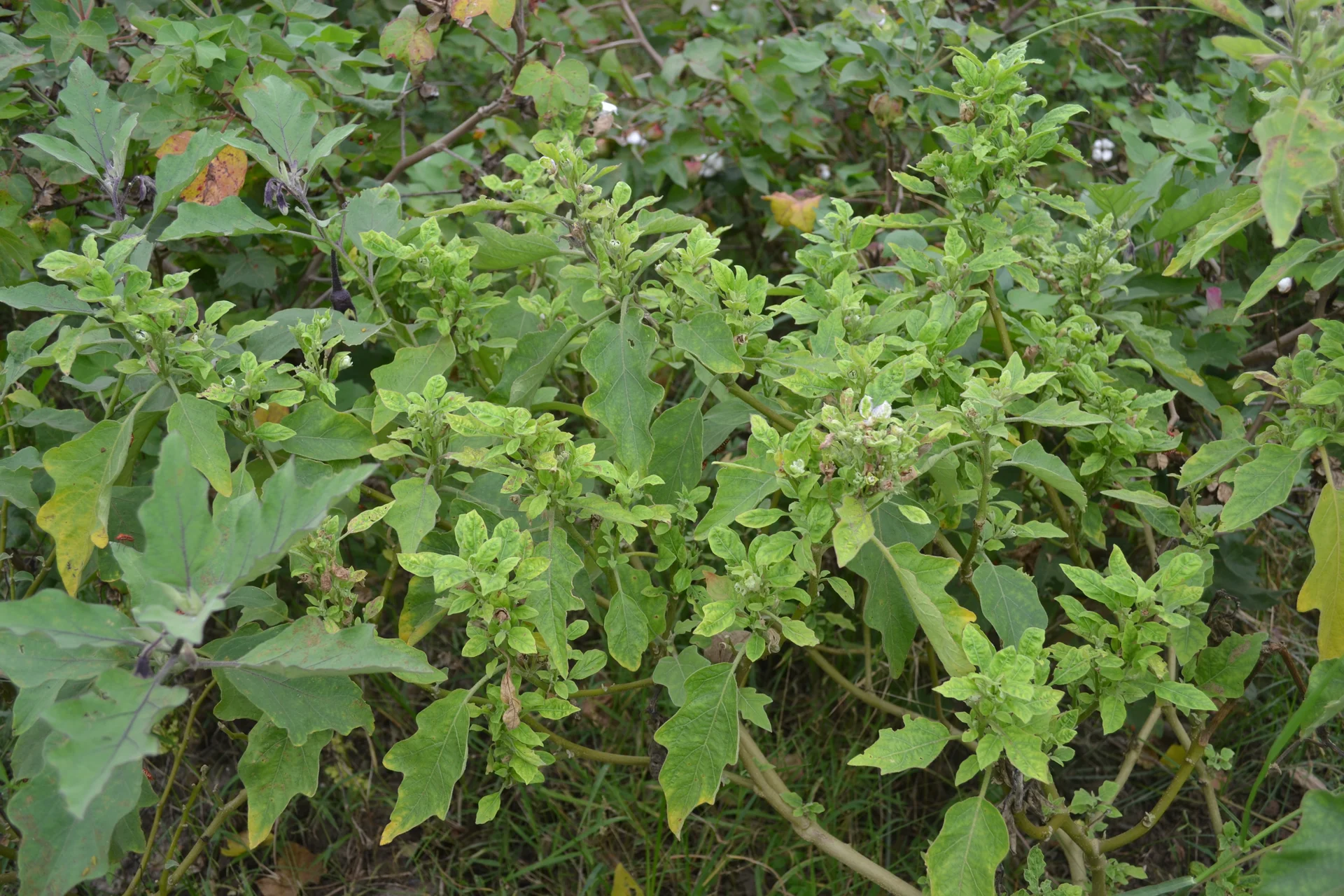
Little leaf is a phytoplasma disease — caused by a wall-less bacterium that lives inside the plant's sap tubes (the phloem, the pipes that carry food) — and is carried plant-to-plant by leafhoppers, small jumping insects. It attacks brinjal (eggplant) and potato. It jams the plant's growth signals so instead of normal leaves the plant throws out crowds of tiny pale leaves and a mass of thin shoots, turning bushy, stunted and barren. There is no cure once a plant is infected.
J RAJA PLANT PATHOLOGIST · CC BY-SA 4.0 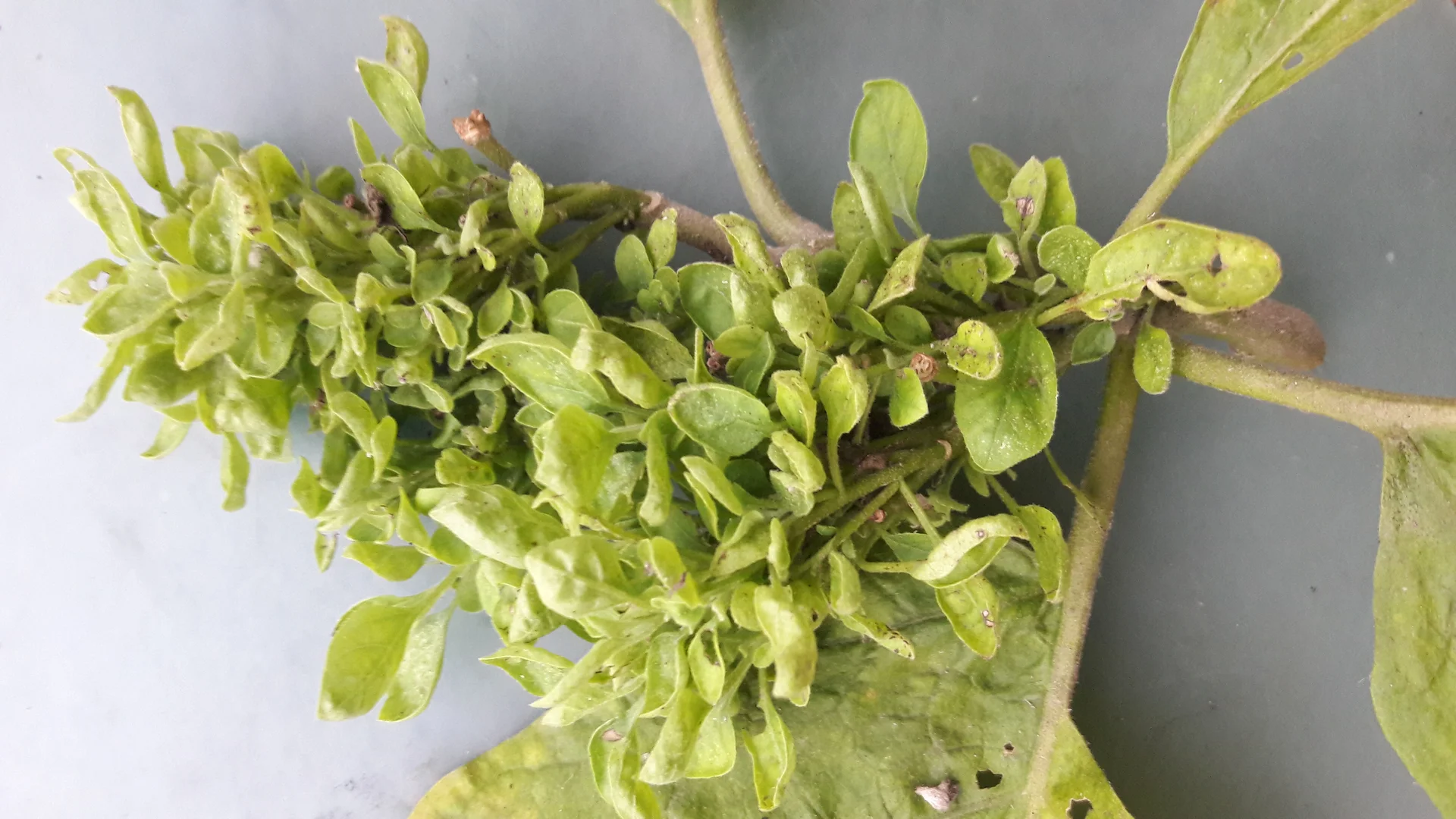
SaimonPankaj · CC BY-SA 4.0
Why it matters
Little leaf can wipe out up to 70% of your crop — the sick plants turn into useless bushes of tiny leaves that set little or no fruit, so a badly hit field earns almost nothing. The hardest part is that once a plant catches it, there is no medicine that can cure it — no spray, no fertiliser will bring it back. Every day an infected plant stands in the field, leafhoppers feed on it and carry the disease to healthy plants next to it. So the whole fight is about keeping it out and pulling out sick plants fast — not treating them.
When to act
plants showing clusters of small leaves or excessive shoots, or leafhoppers active; rogue affected plants promptly
This guidance is general, compiled from published agronomic references including FAO and CABI. Thresholds and timing shift with your crop, your variety and the season.
In much of the region a spray is simply called mushonga — medicine. But a chemical group you cannot name is one you cannot rotate, and a product you did not write down has no pre-harvest interval you can observe. Mushonga, and other farming words →
The full Little leaf field guide
Identify it
The first thing you notice
is a plant that looks wrong-sized: instead of normal broad leaves it grows crowds of tiny, narrow, pale leaves — often smaller than your thumbnail — packed close together.
The bushy broom look
the plant shoots out far too many thin branches from one spot, so it becomes a dense, bushy tangle (people call this a "witches'-broom"). The whole plant stays short and stunted next to its healthy neighbours.
No fruit
the flowers go green and leafy instead of opening properly, and the plant sets few or no fruit — the ones it does set are small and worthless.
Look for the messenger
turn a few leaves over and watch for leafhoppers — small (a few millimetres, smaller than a grain of rice), green or brown wedge-shaped insects that jump or run sideways and fly off when disturbed. They spread the disease as they feed.
Don't confuse it
with a plant that is simply hungry or drought-stressed (those go evenly pale and thin all over, but keep normal-shaped leaves and don't turn into a bushy broom). Herbicide drift can also crinkle leaves — but that hits many plants in a line downwind at once, while little leaf shows up as odd single bushy plants scattered through the field.
Scout for it
When to look hardest
from the time plants are actively growing and putting on new branches through the middle of the season (the development and mid-season stages) — this is when the plant is most at risk and when leafhoppers are busy in warm weather.
How to walk
cross the field in a big "W" shape so you cover all four corners and the middle, not just the row by the path where you always look.
How many to check
make about 10 stops along the W. At each stop look closely at a few plants for tiny crowded leaves, extra bushy shoots, and stunting, and turn some leaves over to check for leafhoppers.
The number that means act now
even 1 plant in 10 showing the small-leaf bushy signs → act immediately — pull it out that same day. Little leaf spreads plant to plant, so there is no "safe" number to leave standing.
Also act on the messenger
if you find leafhoppers active on the crop even before you see sick plants, treat that as a warning to step up scouting and get ready to control them (see below) — they are the ones carrying the disease in.
Control it
Prevent first
-
start clean (cultural):
plant only healthy planting material from a trusted source, and never re-grow (ratoon) or take cuttings/seed potatoes from an infected crop — you would just carry the disease into the new field.
-
grow a tough variety (resistant variety):
where a tolerant or resistant brinjal or potato variety is available locally, grow it. It is one of your strongest tools because it costs nothing extra once planted and there is no cure to fall back on.
-
clear the hiding places (cultural):
keep the field and its edges weeded. Weeds shelter the leafhoppers and can harbour the disease between crops. Don't plant brinjal or potato in the same ground season after season — rotate to a non-solanaceous crop to break the cycle.
Act early
-
rogue and destroy:
the moment a plant shows the tiny-leaf bushy signs, pull it out whole (roots and all) and burn or bury it well away from the field, that same day. This is the single most important action — a sick plant left standing is a factory feeding the disease to the rest.
-
knock down the vector:
because the disease itself cannot be cured, the only thing a spray can do is kill the leafhoppers that carry it. If leafhoppers are active and plants are being infected, use a recommended insecticide for leafhopper control to bring their numbers down and slow the spread. Understand its limit: it protects healthy plants by cutting the messengers — it does NOT heal a plant already infected.
Chemical — last resort, use it safely:
before you spray, cover your skin, eyes, nose and mouth, spray in the cool of the morning or evening with the wind at your back so it blows away from you, and keep the spray off food, off drinking water, and away from children and bees. Respect the pre-harvest interval (the number of days the label says you must wait between the last spray and picking fruit) so no poison ends up on what you eat or sell. Wash yourself and your clothes afterwards. To stop the leafhoppers becoming immune, rotate to a different chemical group each time rather than using the same product over and over (this is how you avoid resistance).
If it keeps spreading
if new bushy plants keep appearing despite roguing, be ruthless — remove every symptomatic plant on sight and keep the leafhoppers knocked down so healthy plants stay protected. When a plant is already sick there is nothing to save on it — don't waste inputs trying to nurse it; your effort and money are best spent protecting the plants that are still healthy and planning a clean, resistant, rotated crop next season.
Catch Little leaf before it costs you the harvest
This guide is the general answer. Divisi works out yours — the week to scout your own field for Little leaf, and what to do the day you find it.


Crops it affects
Plan the crops it attacks

All planting calendars, country by country
Get Insights by email
A short digest of new Divisi articles. No email on quiet weeks.
Frequently asked questions
How do I identify Little leaf?
The first thing you notice. is a plant that looks wrong-sized: instead of normal broad leaves it grows crowds of tiny, narrow, pale leaves — often smaller than your thumbnail — packed close together.
When should I take action against Little leaf?
plants showing clusters of small leaves or excessive shoots, or leafhoppers active; rogue affected plants promptly
How do I control Little leaf?
Prevent first — start clean (cultural):. plant only healthy planting material from a trusted source, and never re-grow (ratoon) or take cuttings/seed potatoes from an infected crop — you would just carry the disease into the new field.
Which crops are attacked by Little leaf?
Among the crops covered here: Eggplant.