 Divisi
Sclerotinia head rot
Sclerotinia sclerotiorum · Fungal
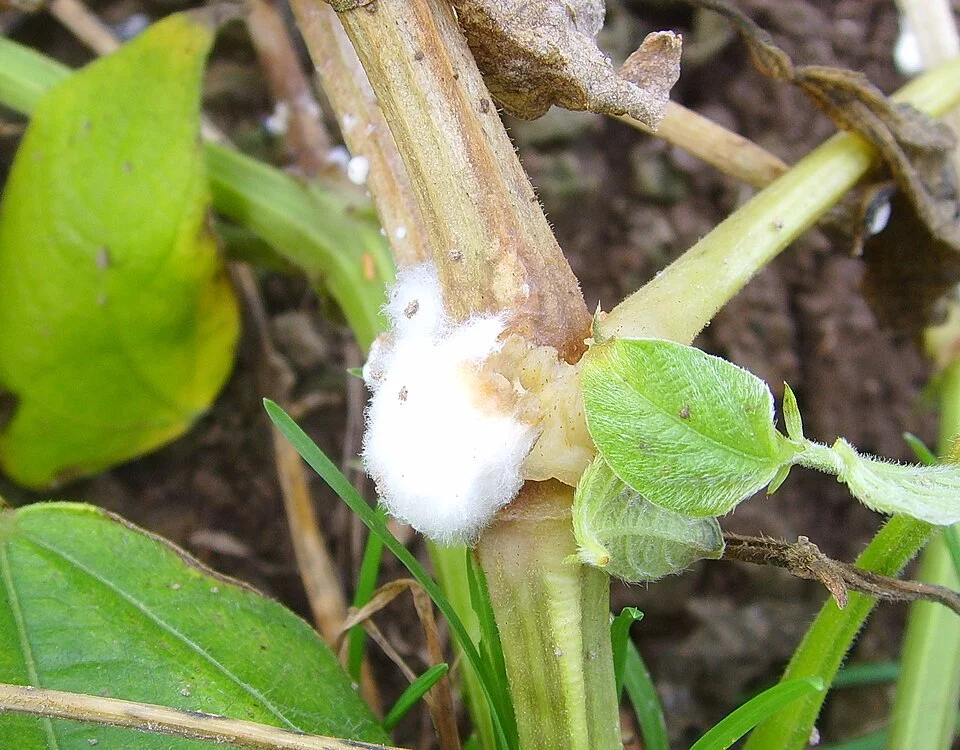
Photo: Jymm · Public domain
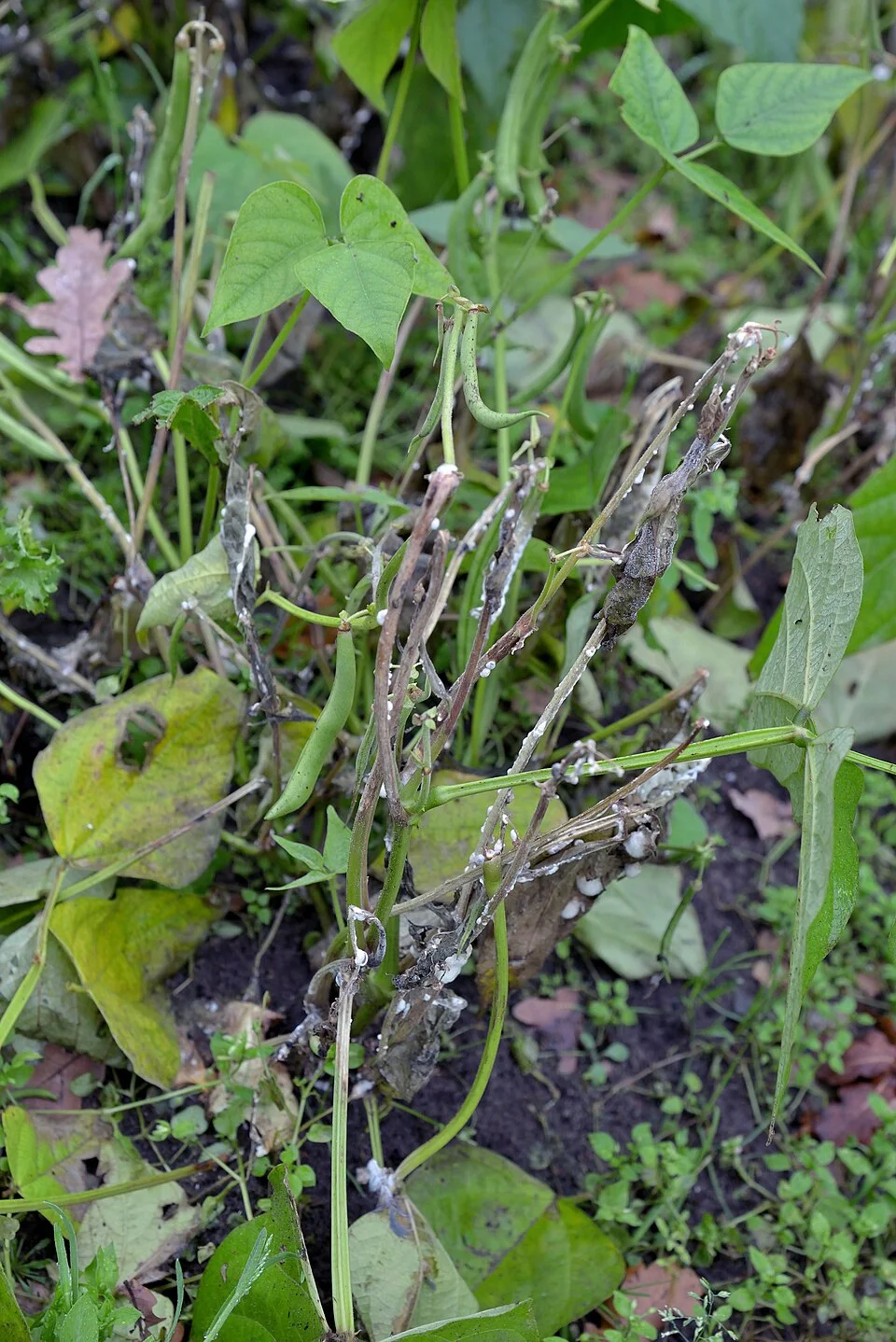
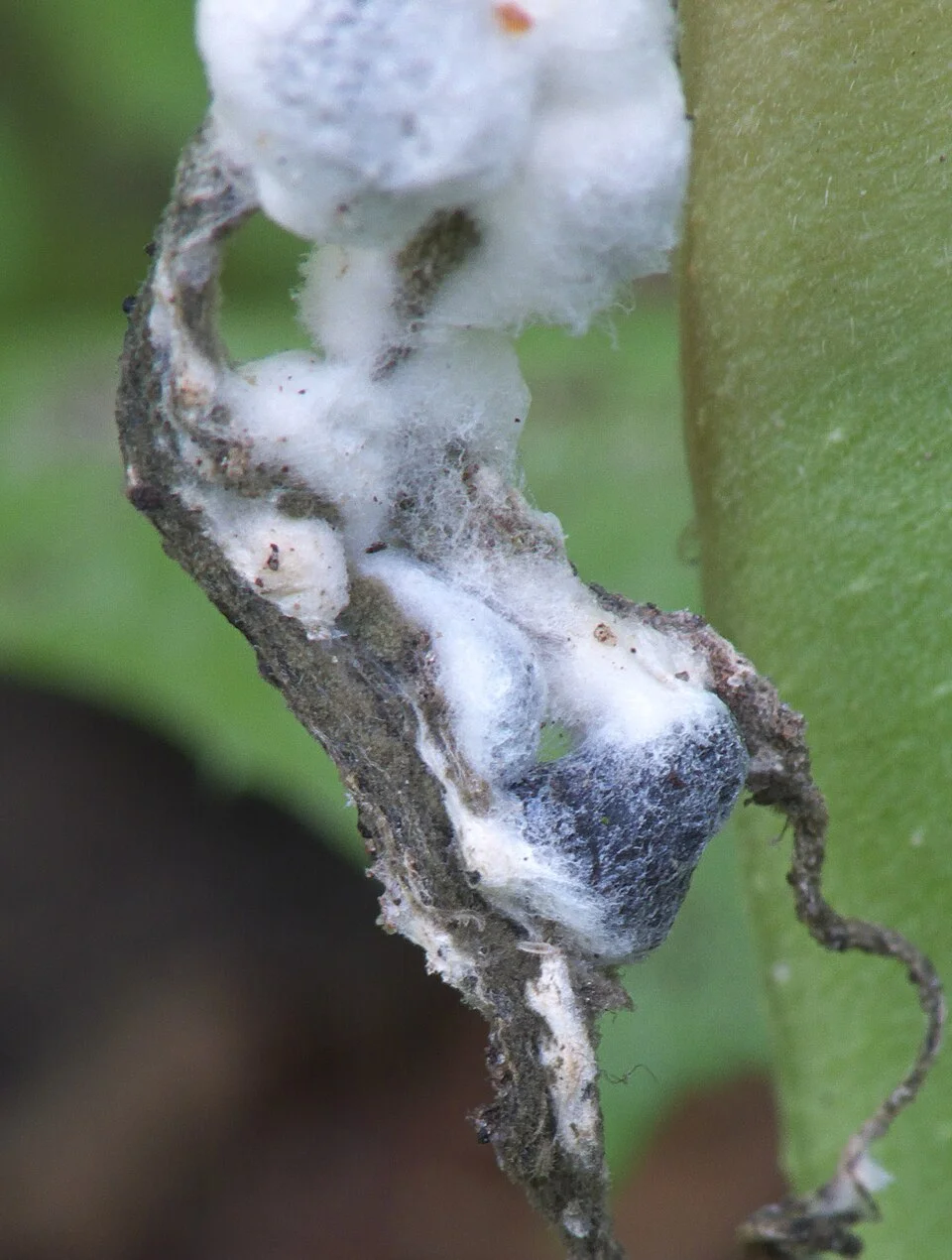
Sclerotinia head rot is a fungal rot of the sunflower head caused by Sclerotinia sclerotiorum. Tiny airborne spores land on the ageing flowers at the front of the head and grow back through it. The fungus softens and bleaches the head, packs it with white cottony mould, and leaves behind hard black lumps (called sclerotia) that drop into the soil and wait there for years. It thrives in cool, wet, humid weather during and after flowering.
Why it matters
This is the most damaging rot of sunflower once it takes hold. In a cool, wet season it can rot so many heads that you lose up to 70% of your crop — the head simply falls apart and the seed spills or goes mouldy before you can harvest. It is hard to beat because by the time you see it the fungus is already deep inside the head, there is no reliable spray to cure it, and every rotten head drops hard black lumps into your soil that can start the disease again years later.
When to act
first bleached, soft lesions on the back of heads during flowering to grain fill under wet weather
This guidance is general, compiled from published agronomic references including FAO and CABI. Thresholds and timing shift with your crop, your variety and the season.
In much of the region a spray is simply called mushonga — medicine. But a chemical group you cannot name is one you cannot rotate, and a product you did not write down has no pre-harvest interval you can observe. Mushonga, and other farming words →
The full Sclerotinia head rot field guide
Identify it
The first sign
is a soft, pale, water-soaked patch on the BACK of the head (the side facing the ground), usually appearing after flowering. It looks bleached, like a wet bruise, and spreads outward day by day until much of the head goes a light straw or bone colour.
As it spreads
, break open a suspect head and you'll see white, cottony, cotton-wool-like mould growing between the seeds. The head goes soft and rotten, then dries out and shreds like wet straw, leaving the stringy fibres of the head hanging and the seeds loose or empty.
The give-away sign
inside and among the seeds you'll find hard black lumps the size of a seed or a bean — these are the fungus's resting bodies (sclerotia). They are black outside, white or pink inside when cut. Nothing else in a sunflower head leaves hard black lumps like these.
Don't confuse it
with birds or drought. Bird damage leaves the head firm with seeds pecked out and no mould; drought leaves a firm, brown, dried head with empty seeds but no soft wet rot, no white mould and no black lumps. Rhizopus and other head rots turn the head dark and slimy but do not leave the hard black sclerotia — those are the mark of Sclerotinia.
_Favoured by:_
cool, wet, humid weather (about 15–25°C) during and after flowering, thick crowded stands where the leaves stay damp, and fields that grew sunflower or other broadleaf crops (like beans, soya or cabbage) recently.
Scout for it
When to look
start walking your field the moment the heads start flowering (mid-season) and keep going right through to grain fill (late season) — this is the only window the fungus can get in. Look hardest after every spell of cool, wet, cloudy or humid weather, because that is when it strikes.
How to walk
step through the field in a large "W" shape so you cover all four corners and the middle, not just the edge by the path. Make about 10 stops along the W.
What to check
at each stop, tip up 5–10 heads and look at the BACK of each one for soft, pale, water-soaked bleaching. Where you see a suspect patch, break the head open and check for white cottony mould and hard black lumps among the seeds.
When to act — lead with the count:
the threshold is very low. As soon as you find even ONE head with a soft, bleached, water-soaked patch on the back during flowering-to-grain-fill in wet weather, treat it as the start of an outbreak and act now — do not wait for it to spread. A cure is impossible, so early action is really about protecting next season and salvaging what you can.
Control it
Prevent first
-
rotate (your strongest tool):
the black lumps live in the soil for years, so rotate with cereals (maize, sorghum, millet, wheat) for several years before returning sunflower to a field. Do not follow sunflower with other broadleaf hosts such as beans, soya, groundnut or cabbage, which feed the same fungus.
-
open up the canopy and go easy on nitrogen:
the fungus needs damp, still, crowded conditions. Space your rows and plants wider so air moves through and heads dry quickly after rain, and avoid over-feeding nitrogen, which makes a thick leafy canopy that stays wet. Where you can, avoid low, wet fields with a history of this disease.
-
grow a tolerant variety and clean up:
where you can get them, plant head-rot-tolerant sunflower hybrids. After harvest, remove or deep-bury infected heads and residue so the black lumps are not left lying on the surface to infect the next crop — never leave rotten heads in the field or throw them on the compost.
Act early — starve the soil of the fungus (biological):
apply the biological control Coniothyrium minitans (a helpful fungus, product class coniothyrium) to the soil. It is not a spray that cures a sick head — it slowly eats the black resting lumps in the soil, lowering how much fungus is there to start next season's attack. Apply it well before or after the crop as directed, and keep it cool and out of direct sun until you use it.
A note on sprays and safety
there is no reliable chemical spray that cures Sclerotinia head rot once it is inside the head — do not waste money spraying rotten heads. If you ever handle any biological product or input, still protect yourself: cover your skin, eyes and nose, keep it away from food, water, children and bees, work in the cool with the wind at your back, and wash well afterwards.
If it keeps spreading → cut your losses
if wet weather continues and more heads rot, there is nothing you can spray to stop it. Harvest the healthy heads early, before they too soften and shed seed, and dry them well. Cut out and carry away the rotten heads so their black lumps do not fall into your soil. Then plan a long cereal rotation and a tolerant variety before you grow sunflower in that field again.
Catch Sclerotinia head rot before it costs you the harvest
This guide is the general answer. Divisi works out yours — the week to scout your own field for Sclerotinia head rot, and what to do the day you find it.


Crops it affects
Plan the crops it attacks

All planting calendars, country by country
Get Insights by email
A short digest of new Divisi articles. No email on quiet weeks.
Frequently asked questions
How do I identify Sclerotinia head rot?
The first sign. is a soft, pale, water-soaked patch on the BACK of the head (the side facing the ground), usually appearing after flowering. It looks bleached, like a wet bruise, and spreads outward day by day until much of the head goes a light straw or bone colour.
When should I take action against Sclerotinia head rot?
first bleached, soft lesions on the back of heads during flowering to grain fill under wet weather
How do I control Sclerotinia head rot?
Prevent first — rotate (your strongest tool):. the black lumps live in the soil for years, so rotate with cereals (maize, sorghum, millet, wheat) for several years before returning sunflower to a field. Do not follow sunflower with other broadleaf hosts such as beans, soya, groundnut or cabbage, which feed the same fungus.
Which crops are attacked by Sclerotinia head rot?
Among the crops covered here: Sunflower.