 Divisi
Sunflower rust
Puccinia helianthi · Fungal
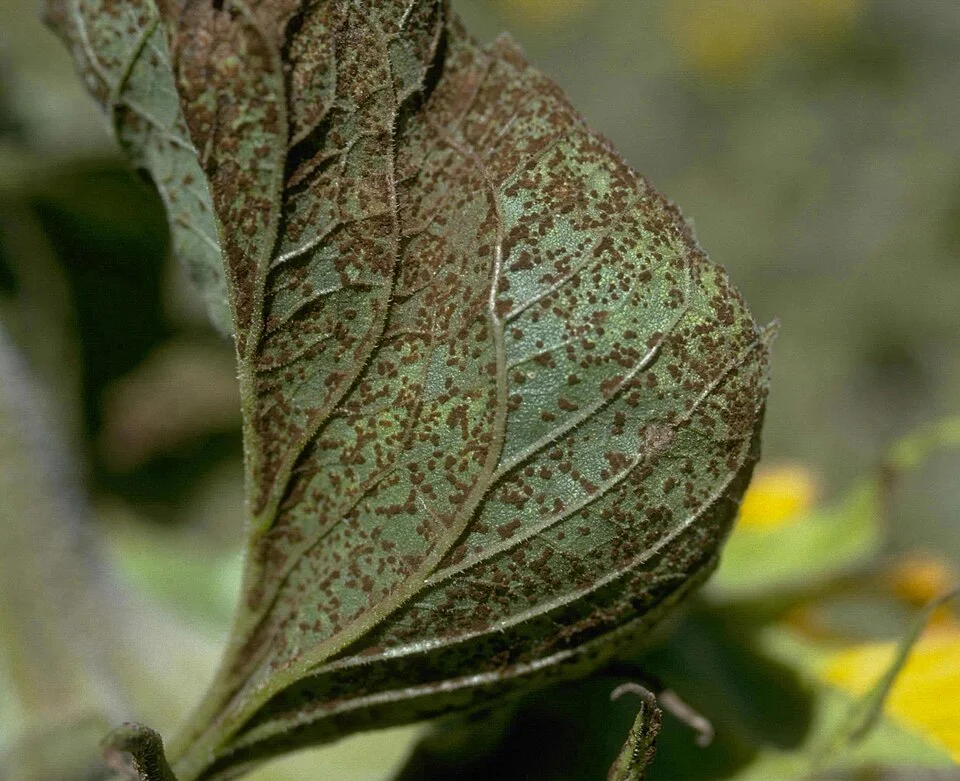
Photo: Howard F. Schwartz, Colorado State University · CC BY 3.0 us
Sunflower rust is a fungal disease (Puccinia helianthi) that lives its whole life on the sunflower plant. It shows as cinnamon-brown, powdery bumps (pustules) that burst through the leaf. Each pustule puffs out thousands of rust-coloured spores that the wind carries to fresh leaves, and wherever a film of dew or rain sits on the leaf for a few hours those spores sprout and start a new spot. So the disease doubles and doubles through a warm, humid season, and dark spores left on old stalks and stubble carry it over to next year's crop.
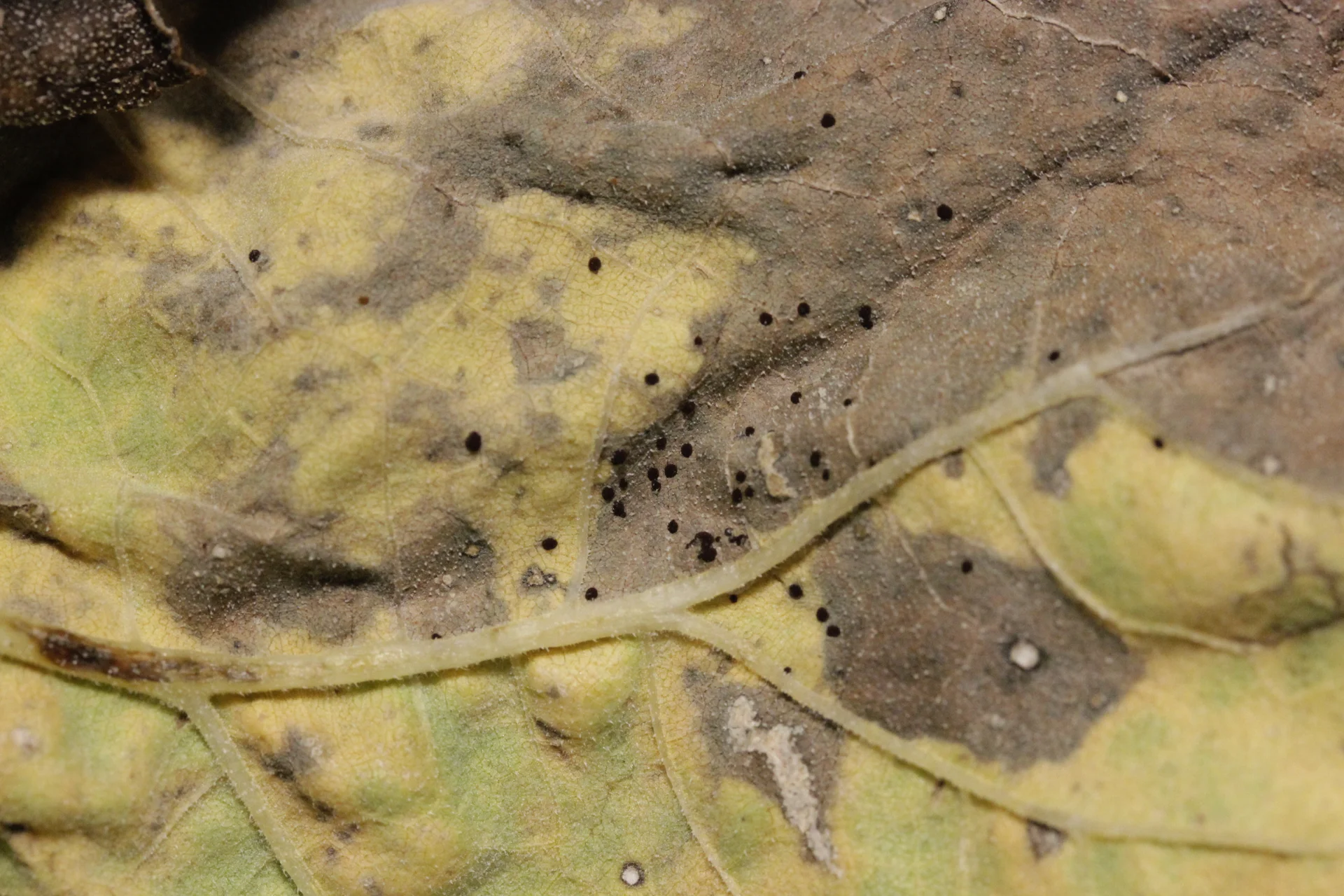
Björn Sothmann · CC BY-SA 4.0 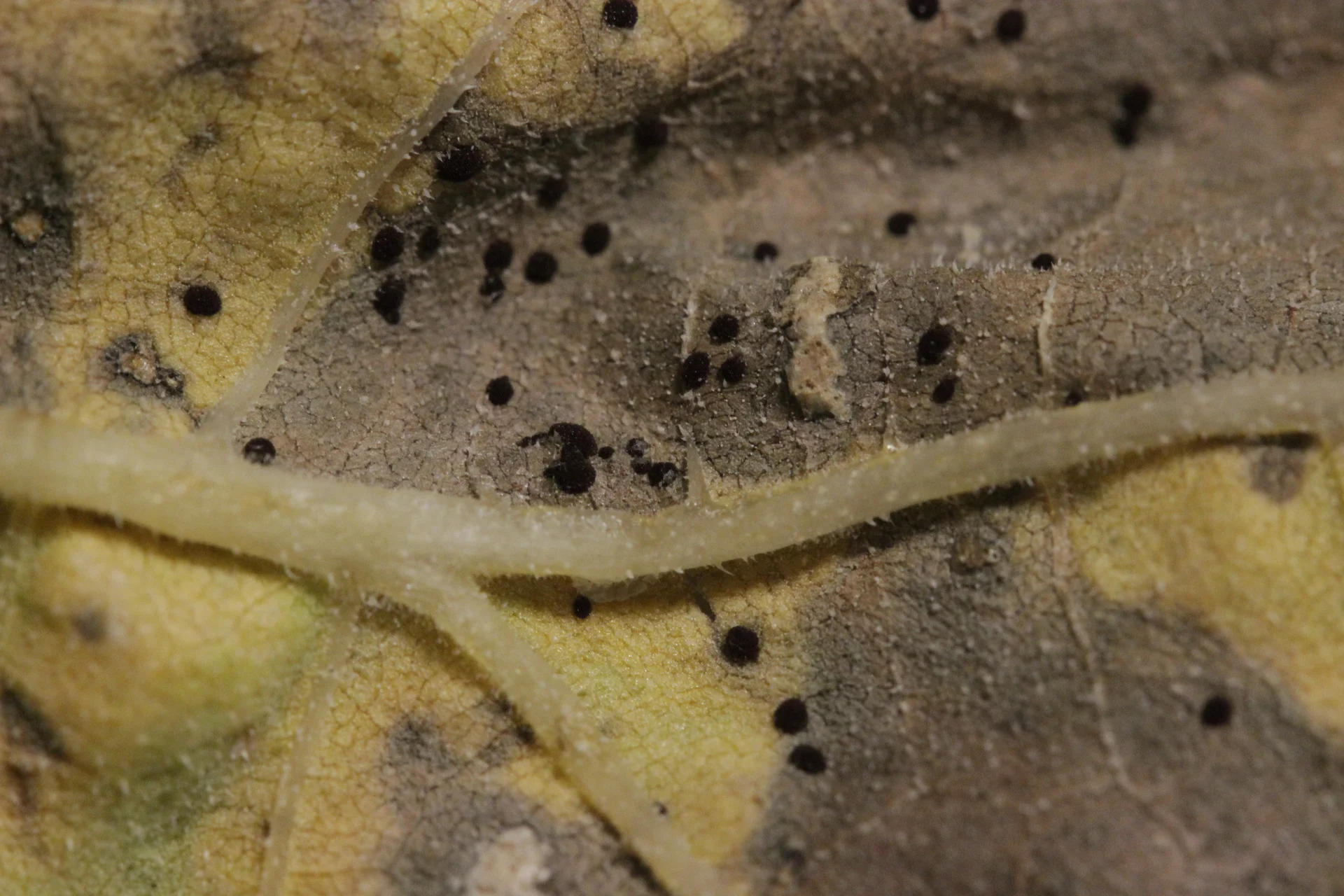
Björn Sothmann · CC BY-SA 4.0
Why it matters
Sunflower rust eats away the green, food-making part of the leaf. In a bad, humid year on a susceptible variety it can take up to half your crop (about 50%) — the leaves brown off and die early, so the heads fill with light, half-empty seeds low in oil. It is hard to beat once it takes hold because every pustule breeds thousands of new spores that keep re-infecting the plant with each dew, and there is no cure for a leaf already killed — you can only protect the leaves that are still green. That is why stopping it early, before it climbs into the top leaves that feed the head, matters far more than fighting it late.
When to act
Consider fungicide when rust pustules reach about 3 percent leaf area coverage on the upper leaves before or at early flowering, especially in a susceptible variety under humid weather.
This guidance is general, compiled from published agronomic references including FAO and CABI. Thresholds and timing shift with your crop, your variety and the season.
In much of the region a spray is simply called mushonga — medicine. But a chemical group you cannot name is one you cannot rotate, and a product you did not write down has no pre-harvest interval you can observe. Mushonga, and other farming words →
The full Sunflower rust field guide
Identify it
The damage you notice first
patches of leaf that yellow, then brown and dry out and die early — starting on the lower, older leaves and creeping upward. A badly hit plant looks scorched from the bottom up while the head is still filling.
The disease sign up close
turn a leaf over and rub it. You'll find cinnamon to rust-brown powdery bumps (pustules), about the size of a pinhead, that smudge orange-brown on your finger like brick dust. They sit mostly on the underside of the leaf, often ringed by a pale yellow halo, and later spread up onto the stem, the green bracts and the back of the flower head.
As it ages
late in the season the same spots turn dark brown to almost black and no longer rub off — these are the tough winter spores that survive on the stubble.
Don't confuse it
with harmless orange pollen dusting the leaves at flowering (pollen wipes clean and leaves no raised bump), with downy mildew (pale, powdery-white or greyish growth on the under side with yellow blotches on top, no rusty brown), or with plain nutrient yellowing (even paling with no powder and nothing that rubs off). Rust is the only one that leaves a raised, rusty, brick-dust smudge.
Scout for it
When to start
begin checking from the development stage (knee-high, actively growing) right through flowering and into grain-fill — these are the vulnerable stages, and the danger is highest in warm, damp weather (around 18–30°C) after nights of heavy dew, mist or rain that leave the leaves wet for hours.
How to walk it
once a week, walk a large "W" across the field so you cover all four corners and the middle, not just the edge by the path. Make about 10 stops along the way.
What to check at each stop
pick a plant and look at the underside of the lower and middle leaves first (rust starts low), then check the newer leaves higher up. Rub any brown spots — real rust smudges rust-brown on your finger.
Track the climb
the key danger sign is rust moving up the plant toward the top leaves and the head. Note how high the pustules have reached each week; fast upward spread in humid weather means act now.
The threshold to act
the trigger is about 3% of the leaf covered in pustules on the upper leaves at or just before early flowering — in plain terms, when the top leaves of most plants (say 4 or more in every 10 you check) are clearly carrying scattered pustules and the weather stays warm and wet, it is time to act, especially on a susceptible variety. A few old pustules stuck low on dying bottom leaves is not a reason to spray.
Control it
Prevent it first
-
grow a resistant variety (your strongest tool):
plant a rust-resistant hybrid matched to the rust races common in your area. This is the single most effective step — a resistant variety carries far less rust for far less cost than any spray.
-
break the disease cycle (cultural):
rotate at least two years away from sunflower so last year's spores die out before you plant again; plough under, burn or remove old sunflower stalks and stubble and pull out any volunteer sunflowers, since the fungus overwinters on them. Avoid over-thick stands and late planting, which trap moisture in the canopy, and don't overdo nitrogen fertiliser, which grows soft, rust-prone leaves.
Act early
rust spreads fastest once it reaches the upper leaves, so combine the steps above and keep scouting — the earlier you catch the upward climb, the fewer green leaves you lose. There is no leaf to save once it has browned off.
Chemical — last resort (a triazole fungicide):
if a susceptible crop hits the threshold at or before early flowering under warm, wet weather, spray a triazole fungicide. A triazole is systemic — it moves inside the leaf and protects a little into the future, unlike a contact spray that only coats the surface. Cover the leaves well, follow the label rate, and repeat only if pressure stays high.
Spray safely
cover your skin, eyes, nose and mouth; spray in the cool of morning or evening with the wind behind you so the mist blows away from your face; keep the spray off food, drinking water, children and grazing animals, and away from flowering weeds where bees are working. Respect the pre-harvest interval — the number of days the label says you must wait between spraying and harvest — and wash yourself and your clothes afterwards.
Guard against resistance
if you must spray more than once, rotate to a fungicide from a different chemical group each time (for example alternate the triazole with a different mode of action) so the fungus does not learn to survive one product.
If it keeps spreading
a resistant variety plus clean rotation should hold rust to a dull roar. If, despite spraying, rust still races up into the top leaves and the head early in grain-fill, one more well-timed triazole spray on a different group is your last useful move. If the crop is already near maturity and the top leaves are browning off, stop spending on sprays — you cannot revive dead leaves; harvest on time to save what seed has filled, then clear and destroy the stubble and switch to a resistant variety and a longer rotation next season.
Catch Sunflower rust before it costs you the harvest
This guide is the general answer. Divisi works out yours — the week to scout your own field for Sunflower rust, and what to do the day you find it.


Crops it affects
Plan the crops it attacks

All planting calendars, country by country
Get Insights by email
A short digest of new Divisi articles. No email on quiet weeks.
Frequently asked questions
How do I identify Sunflower rust?
The damage you notice first. patches of leaf that yellow, then brown and dry out and die early — starting on the lower, older leaves and creeping upward. A badly hit plant looks scorched from the bottom up while the head is still filling.
When should I take action against Sunflower rust?
Consider fungicide when rust pustules reach about 3 percent leaf area coverage on the upper leaves before or at early flowering, especially in a susceptible variety under humid weather.
How do I control Sunflower rust?
Prevent it first — grow a resistant variety (your strongest tool):. plant a rust-resistant hybrid matched to the rust races common in your area. This is the single most effective step — a resistant variety carries far less rust for far less cost than any spray.
Which crops are attacked by Sunflower rust?
Among the crops covered here: Sunflower.