 Divisi
Sorghum midge
Stenodiplosis sorghicola · Insect
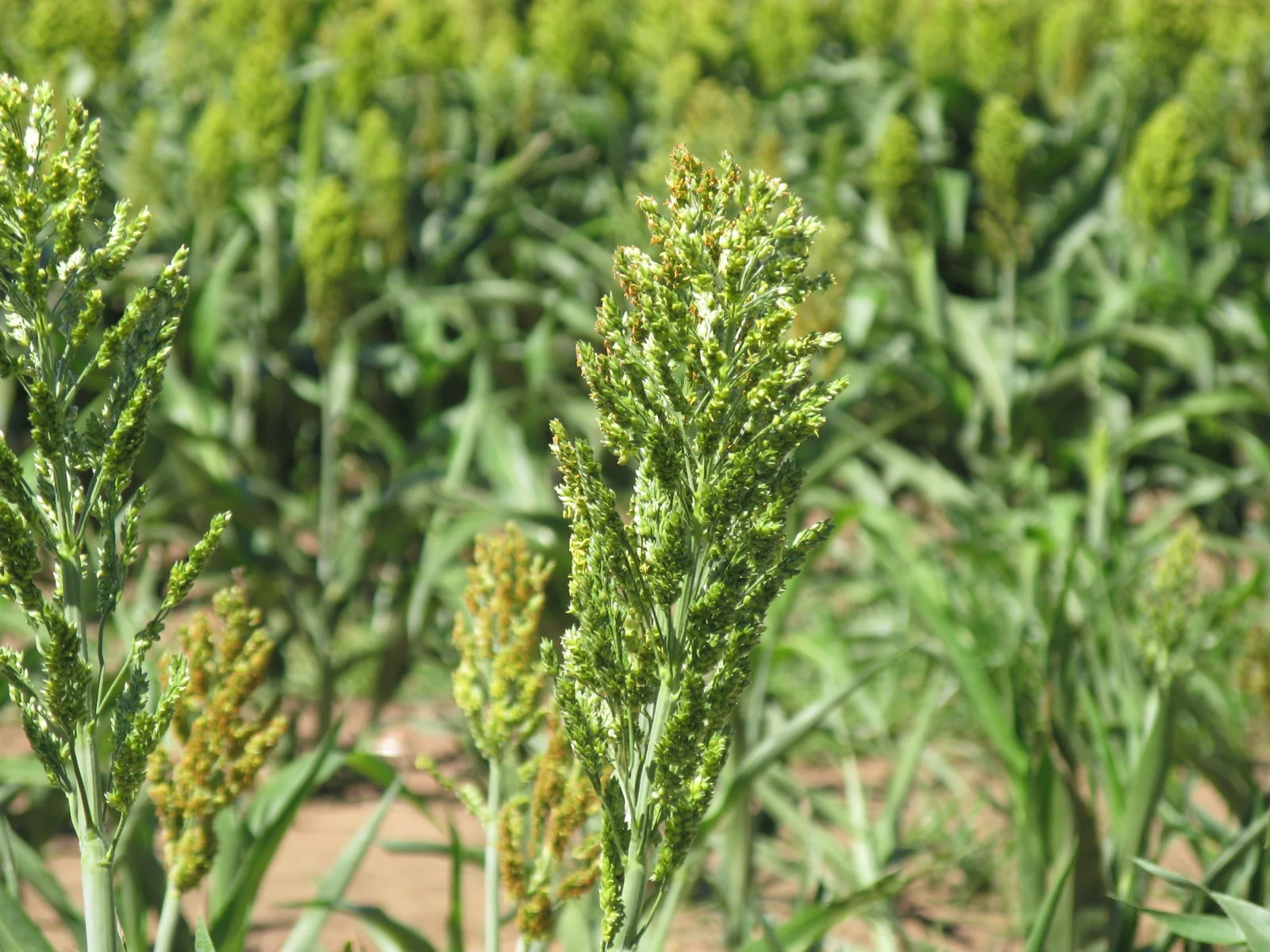
Photo: Harry Rose, Dungog, Australia · CC BY 2.0
Sorghum midge is a tiny orange fly — barely the size of a grain of rice — that attacks sorghum only while the head is flowering. The female slips her eggs into the open flower, and the small orange maggot that hatches eats the developing grain from the inside, so the spikelet (the little flower that should become one grain) stays empty and 'blind'. Because it strikes only at flowering, its damage is tied tightly to that short window and is worst when a field flowers unevenly or late.

Obatom19 (Wikimedia Commons) · CC BY 4.0
Why it matters
Sorghum midge can quietly take more than half your grain — up to 60% — yet you often don't notice until the harvest is already gone. The fly strikes only while the head is flowering, and its maggot eats each grain from the inside before it can even form, leaving a thin, half-empty head of blasted (empty) spikelets. Once the maggot is sealed inside the flower there is nothing you can spray to save that grain — and if plants in your area flower at different times, the fly keeps breeding from one late head to the next, so its numbers build fast. Your only real defence is a resistant variety and getting the whole crop to flower together, quickly.
When to act
About one adult midge per panicle at flowering, or where staggered flowering exposes panicles over a long period.
This guidance is general, compiled from published agronomic references including FAO and CABI. Thresholds and timing shift with your crop, your variety and the season.
In much of the region a spray is simply called mushonga — medicine. But a chemical group you cannot name is one you cannot rotate, and a product you did not write down has no pre-harvest interval you can observe. Mushonga, and other farming words →
The full Sorghum midge field guide
Identify it
The damage (look here first)
at grain-fill you expect a full, heavy head. Instead the head looks thin and sparse — many spikelets (the little flowers that each should carry one grain) are flat, empty and 'blind', set no grain, while only a few here and there fill. Pinch an empty floret: there is nothing inside, or a tiny orange maggot. The surest sign it was midge: hold the head to the light and you'll see clear, whitish empty pupal cases (the little cases the young fly leaves behind) poking out of the spikelet tips like fine threads.
The pest itself
the adult is a tiny bright-orange fly, only about 1.5 mm long — smaller than a grain of rice and much smaller than a mosquito — with a delicate orange-red body, clear wings and reddish eyes. You find them resting and flitting on the flowering heads in the mid-morning sun, never on the leaves. Tear open a spikelet and you may find the small orange maggot or a clear pupa.
Tell it apart from look-alikes
a head left empty by drought or poor pollination is evenly thin all over, with no pupal cases poking out and no orange maggot inside. Birds rip out whole patches and leave torn, broken spikelets — midge leaves each spikelet whole but hollow. And unlike a caterpillar, the midge never touches the leaves — all its damage is in the flower.
Scout for it
When
-
start the very day the first heads begin to flower — you'll see the yellow anthers (the little pollen parts) dangling from the head — and check every morning right through the flowering window. This flowering stage is the only time the midge can strike, so a check three days late is a check too late.
-
scout in the mid-morning, about 9–11 am, when it's warm and still — that's when the tiny orange flies come out and rest on the flowering heads. In the cool of early morning or a windy afternoon you won't spot them even if they are there.
How to walk it
walk a big "W" across the field so you cover all four corners and the middle. Stop at about 10 spots, and at each look closely at the flowering heads (the ones showing yellow anthers) — ignore the leaves and stems, because this pest is only ever on the flower.
The number that means act — lead with this:
the threshold is about one midge per flowering head. So if you find roughly 1 or more orange midge on nearly every flowering head you check → spray that same morning. Don't wait for a bigger count; waiting wastes the short flowering window you are trying to protect.
Red flag — uneven flowering:
if your field is flowering unevenly (some heads now, others a week later), treat it as high risk and scout every single morning. The midge simply moves to whichever head has just opened and breeds up over the long, drawn-out window.
Control it
Prevent
-
grow a resistant variety (your strongest tool):
plant a midge-resistant sorghum variety if you can get one — this is the single most effective step. Resistant heads flower quickly and tightly and are far less suitable for the fly to breed in. Ask your extension officer or seed dealer which resistant varieties are sold near you.
-
flower early and all together:
plant early and at the same time as your neighbours so the whole area's sorghum flowers over one short window, before midge numbers build up in the season. A short, shared flowering window gives the fly little time and few open heads to lay in; late or staggered planting does the opposite and lets the midge breed from one late head to the next.
-
clear the carry-over hosts (sanitation):
slash and destroy volunteer sorghum (self-sown plants that came up on their own from last season's dropped seed), wild sorghum and Johnson grass in and around your field. These grasses flower off-season and shelter the midge between crops — removing them cuts the fly's breeding ground and lowers next season's attack.
Act at flowering — protect the flower, because you can't reach the maggot:
once a maggot is sealed inside a spikelet, nothing will save that grain, so there is no handpicking or picking off this pest. Your one action window is during flowering itself — scout every morning (above) and be ready to act the moment you hit the threshold, while the adult flies are still out laying.
Chemical
-
last resort, on the flowering heads only:
only if you reach about one midge per flowering head, spray a registered insecticide (a shop-bought insecticide approved for use on sorghum) onto the panicles (grain heads) in the mid-morning, when the adult flies are active and before they finish laying. Because heads flower over several days, you may need to repeat as new heads open. Spraying a head that has already finished flowering wastes money — the spray only guards heads still in bloom.
-
safety and resistance (do not skip):
cover your skin, eyes, nose and mouth; spray in the cool, calm part of the day with the wind at your back so the spray blows away from you; keep it off food, drinking water, children, animals and bees (bees visit flowers, so spray when they are least active); wait the full pre-harvest interval — the number of days the label tells you to leave between spraying and cutting the grain, so no poison is left on the food — before harvesting; and wash yourself and your clothes afterwards. Each time you must spray, rotate to a different chemical group so the midge doesn't build resistance (stop being killed by that chemical).
If it keeps spreading — or it's too late:
if midge stays above threshold no matter how you spray, understand that one farm alone can't win when the whole area flowers over many weeks — the lasting fix is next season: everyone plants early, together, and on resistant seed. A head already showing empty, blasted spikelets with pupal cases has lost that grain — don't spend more spray on it. If most of the crop is hit late and badly, cut your losses: harvest whatever filled and use the poor, empty heads as animal fodder instead of spending more on chemicals.
Catch Sorghum midge before it costs you the harvest
This guide is the general answer. Divisi works out yours — the week to scout your own field for Sorghum midge, and what to do the day you find it.


Crops it affects
Plan the crops it attacks

All planting calendars, country by country
Get Insights by email
A short digest of new Divisi articles. No email on quiet weeks.
Frequently asked questions
How do I identify Sorghum midge?
The damage (look here first). at grain-fill you expect a full, heavy head. Instead the head looks thin and sparse — many spikelets (the little flowers that each should carry one grain) are flat, empty and 'blind', set no grain, while only a few here and there fill. Pinch an empty floret: there is nothing inside, or a tiny orange maggot. The surest sign it was midge: hold the head to the light and you'll see clear, whitish empty pupal cases (the little cases the young fly leaves behind) poking out of the spikelet tips like fine threads.
When should I take action against Sorghum midge?
About one adult midge per panicle at flowering, or where staggered flowering exposes panicles over a long period.
How do I control Sorghum midge?
Prevent — grow a resistant variety (your strongest tool):. plant a midge-resistant sorghum variety if you can get one — this is the single most effective step. Resistant heads flower quickly and tightly and are far less suitable for the fly to breed in. Ask your extension officer or seed dealer which resistant varieties are sold near you.
Which crops are attacked by Sorghum midge?
Among the crops covered here: Sorghum.