 Divisi
Sunflower head moth
Homoeosoma nebulella · Insect
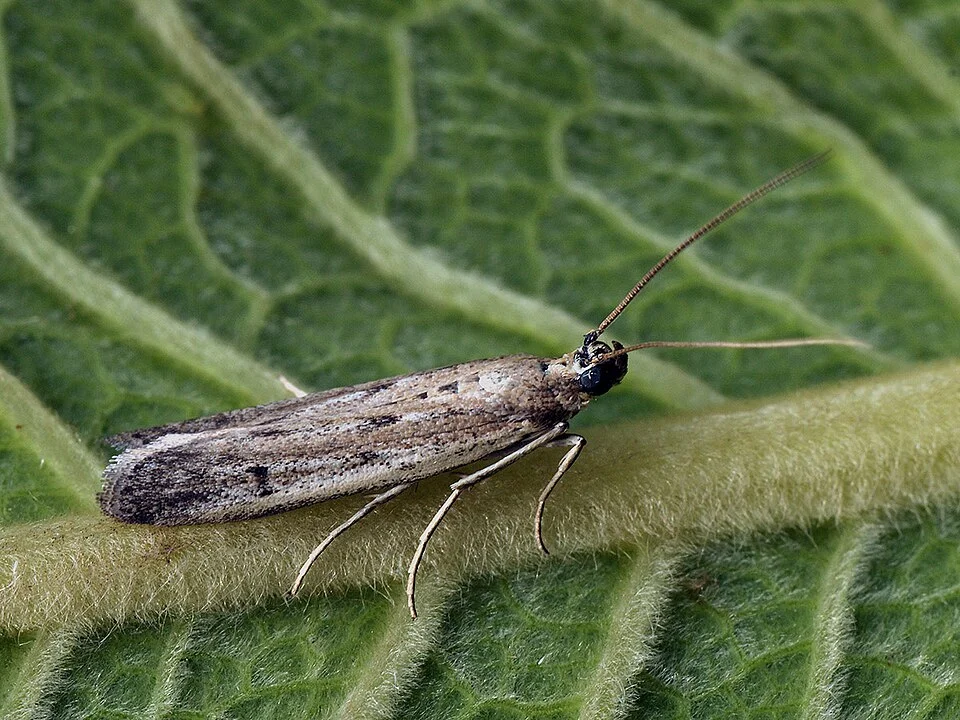
Photo: Ilia Ustyantsev from Russia · CC BY-SA 2.0
The sunflower head moth (Homoeosoma nebulella) is a small grey moth whose caterpillars — not the moth itself — do the harm. The moths settle on sunflower heads as the petals open and tuck their eggs among the tiny disc flowers; the caterpillars that hatch first graze on pollen and florets, then bore into the soft, filling seeds and spin a dirty mat of silk webbing and droppings across the face of the head. Hollowed seeds plus a damp, webbed head also open the door to head rot. Sunflower is its only crop host.
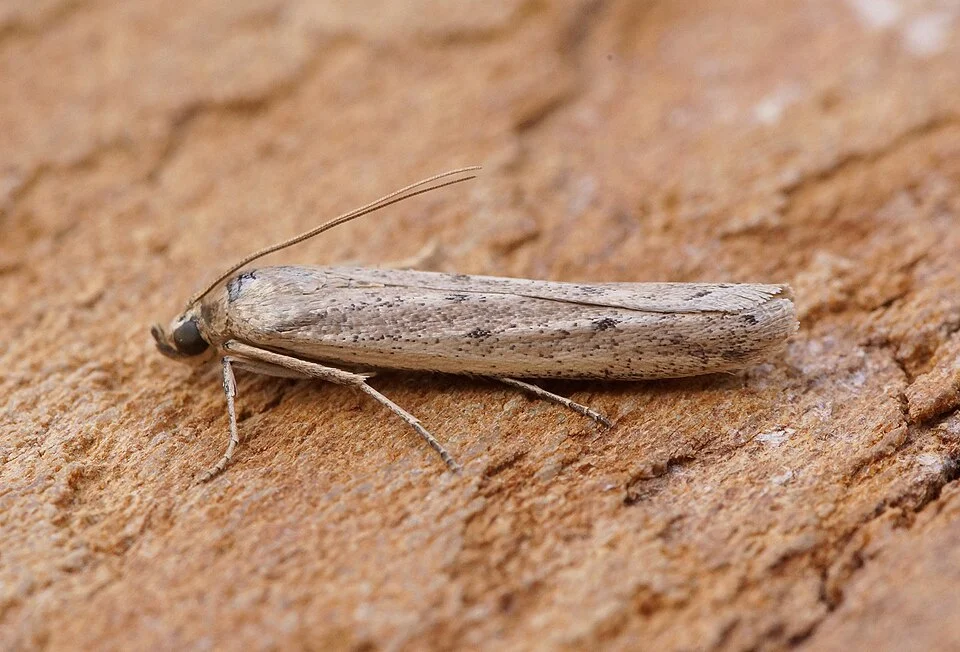
Ben Sale from Stevenage, UK · CC BY 2.0 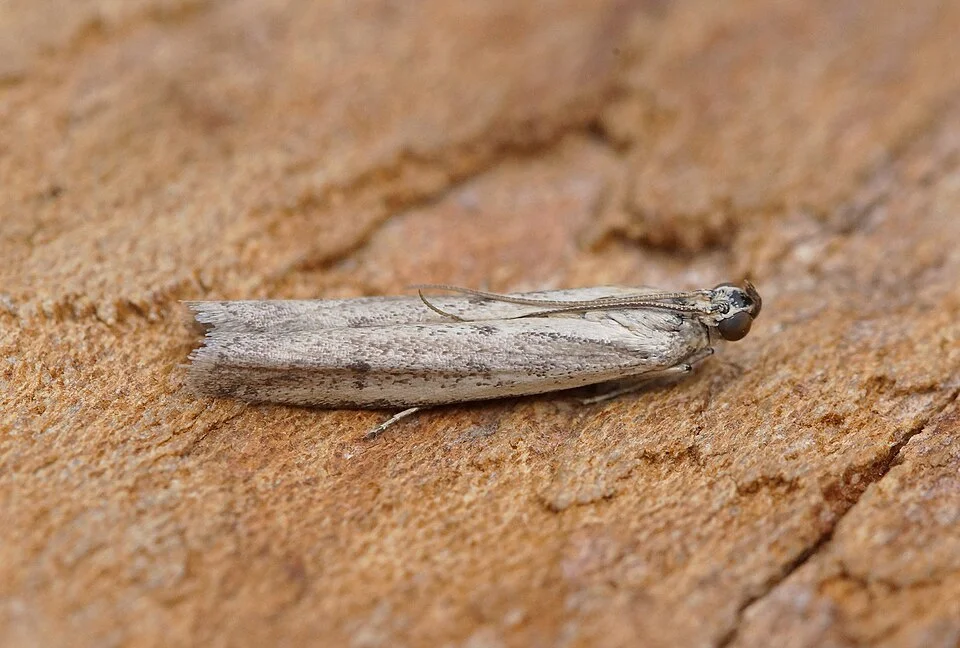
Ben Sale from Stevenage, UK · CC BY 2.0
Why it matters
The caterpillars eat your seeds from the inside, and a bad attack can wipe out up to 40% of your harvest — almost half the crop you were counting on. Worse, the silk they weave across the head traps moisture and invites head-rot fungus, so a webbed head can rot as well as empty out. And once the caterpillars have tunnelled down into the seeds, no spray can reach them — so the whole fight is won or lost in the few days the flowers stand open, when you must strike at the moths and eggs before they get inside.
When to act
Treat at early flowering when 1-2 moths per plant are seen at dusk or the first eggs and young larvae appear on the face of opening heads.
This guidance is general, compiled from published agronomic references including FAO and CABI. Thresholds and timing shift with your crop, your variety and the season.
In much of the region a spray is simply called mushonga — medicine. But a chemical group you cannot name is one you cannot rotate, and a product you did not write down has no pre-harvest interval you can observe. Mushonga, and other farming words →
The full sunflower head moth field guide
Identify it
The damage shows first — look for webbing
The clearest sign is a dirty mat of silk webbing spun across the open face of the flower head, tangled with sticky brown droppings called frass — as if a spider had fouled the flower. Peel the webbing back and the seeds beneath are hollow, chewed and tunnelled; a badly webbed head often turns dark and starts to rot.
The caterpillar hides in the silk
Part the webbing and florets and you'll find small caterpillars up to about 1.5 cm long — the length of your little fingernail — greyish-green with darker stripes running down the body and a dark head. They stay tucked among the flowers and never crawl out in the open.
The moth flies at dusk
It is a small, plain grey moth, narrow and dart-shaped with its wings folded, about as long as a single sunflower seed. You'll spot them resting on or fluttering over the open heads in the evening — almost never in the heat of the day.
Don't mix it up with the African bollworm
— a bigger, fatter caterpillar (up to 4 cm), coloured green, brown or pink with pale side-stripes, that chews large open holes in the head but spins no silk mat. The rule is simple: if the head is webbed together with fine silk and frass, it's the head moth; big holes and no webbing means the bollworm.
_Favoured by:_
warm, dry weather during flowering (around 20–32°C), and late or staggered planting that keeps fresh heads opening while the moths are still on the wing.
Scout for it
Start the day the buds crack open
The danger runs right through flowering and into early seed-fill — the whole time the heads stand open and the disc flowers show. Walk the field every 2–3 days through this window, and be extra watchful in warm, dry weather, which is exactly when the moths swarm.
Scout at dusk, when the moths come out
They rest and lay their eggs on the heads in the evening, so a midday walk will miss them. Cross the field in a big "W" shape so you cover all four corners and the middle — not just the row nearest the path.
Stop at about 10 plants
spread along your "W". At each one, look on and around the open face of the head for small grey moths, then gently part the florets and check for tiny eggs, fresh silk, and young caterpillars among the flowers.
Act the moment you find 1–2 moths on a plant at dusk, or the first eggs or tiny caterpillars on an opening head
Do not wait for webbing and rot to build up — by then the caterpillars are already deep inside the seeds, where no spray can reach them. At flowering, the moths and eggs are your signal to act, not the damage.
Control it
Prevent it
-
plant an armoured variety
Your single strongest defence is a modern hull-armoured sunflower: its seed hulls carry a hard black armour layer (called phytomelanin, a kind of natural bullet-proof coat) that stops the young caterpillars boring in. Ask your seed dealer or extension officer for an oil or confectionery variety bred to resist the head moth.
-
plant early, together, and clean up after
Sow early and in step with your neighbours so your heads flower and finish before moth numbers peak; avoid late or staggered planting that keeps fresh heads opening while the moths fly. After harvest, plough in the old heads, stalks and volunteer plants (stray sunflowers that spring up on their own from dropped seed) and rotate to a non-sunflower crop next season to break the moth's cycle.
Act early — spray Bt at egg-hatch
The moment you reach the scouting threshold, spray Bt (Bacillus thuringiensis, a natural caterpillar-killing bacteria that is harmless to people and bees) over the opening heads to kill the young caterpillars while they still feed on the surface, before they tunnel into the seeds. Bt only works on small caterpillars, so timing it to first egg-hatch is everything — and spraying in the cool of the evening spares the bees working the flowers.
Last resort — a pyrethroid spray
If moths and eggs are heavy and Bt is not holding them, use an approved pyrethroid. It is a contact insecticide — meaning it only kills the eggs and caterpillars it physically lands on and cannot touch any already tunnelled inside the seeds — so it too must go on at first egg-hatch. Before you spray, cover your skin, eyes, nose and mouth; spray in the cool of the evening with the wind at your back; and keep the chemical well clear of food, drinking water, children, animals and bees. Sunflowers are alive with bees at flowering, so spraying only at dusk — after the bees have gone home — protects them. Respect the pre-harvest interval (the least number of days the label says you must wait between the last spray and harvest, so no poison stays on the seed), and wash yourself and your clothes well afterwards.
Don't let the moth get used to the poison
If you have to spray more than once, switch to a different chemical group each time (ask for a product with a different active ingredient) so the head moth cannot build up resistance — where the few survivors breed and the spray slowly stops working. Never spray the same product again and again, and never mix a dose stronger than the label allows.
If it keeps spreading — or it's already too late
When webbing and rot are spreading across many heads despite your sprays, the caterpillars are already inside the seeds and no spray will save those heads. Cut your losses: harvest the least-damaged heads a little early and dry them hard and fast before mould takes hold, cut and burn or bury the badly webbed, rotten heads so the caterpillars cannot finish feeding and drop into the soil to breed, and set up to win next season with an armoured variety, earlier planting, and rotation.
Catch sunflower head moth before it costs you the harvest
This guide is the general answer. Divisi works out yours — the week to scout your own field for sunflower head moth, and what to do the day you find it.


Crops it affects
Plan the crops it attacks

All planting calendars, country by country
Get Insights by email
A short digest of new Divisi articles. No email on quiet weeks.
Frequently asked questions
How do I identify sunflower head moth?
The damage shows first — look for webbing. The clearest sign is a dirty mat of silk webbing spun across the open face of the flower head, tangled with sticky brown droppings called frass — as if a spider had fouled the flower. Peel the webbing back and the seeds beneath are hollow, chewed and tunnelled; a badly webbed head often turns dark and starts to rot.
When should I take action against sunflower head moth?
Treat at early flowering when 1-2 moths per plant are seen at dusk or the first eggs and young larvae appear on the face of opening heads.
How do I control sunflower head moth?
Prevent it — plant an armoured variety. Your single strongest defence is a modern hull-armoured sunflower: its seed hulls carry a hard black armour layer (called phytomelanin, a kind of natural bullet-proof coat) that stops the young caterpillars boring in. Ask your seed dealer or extension officer for an oil or confectionery variety bred to resist the head moth.
Which crops are attacked by sunflower head moth?
Among the crops covered here: Sunflower.