 Divisi
Angular leaf spot
Pseudocercospora griseola · Fungal
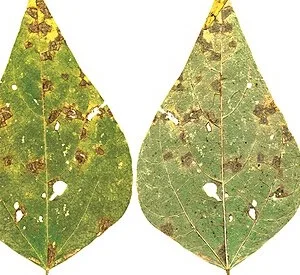
Angular leaf spot is a fungal disease of common beans (caused by Pseudocercospora griseola). It is named for the angular, block-shaped spots it makes on the leaves: the fungus gets trapped between the tiny leaf veins, so each spot has straight sides instead of being round. It spreads by wind and by rain splashing spores up from the soil and lower leaves, and it thrives in cool-to-warm, very humid weather — roughly 16–28°C with damp, still air in a crowded bean canopy.
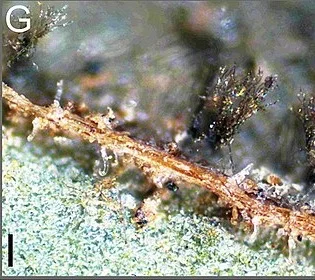
Meswaet Y, Mangelsdorff R, Yorou NS, Piepenbring M (2021) Unravelling unexplored diversity of cercosporoid fungi (Mycosphaerellaceae, Mycosphaerellales, Ascomycota) in tropical Africa. MycoKeys 81: 69-138. https://doi.org/10.3897/mycokeys.81.67850 · CC BY 4.0 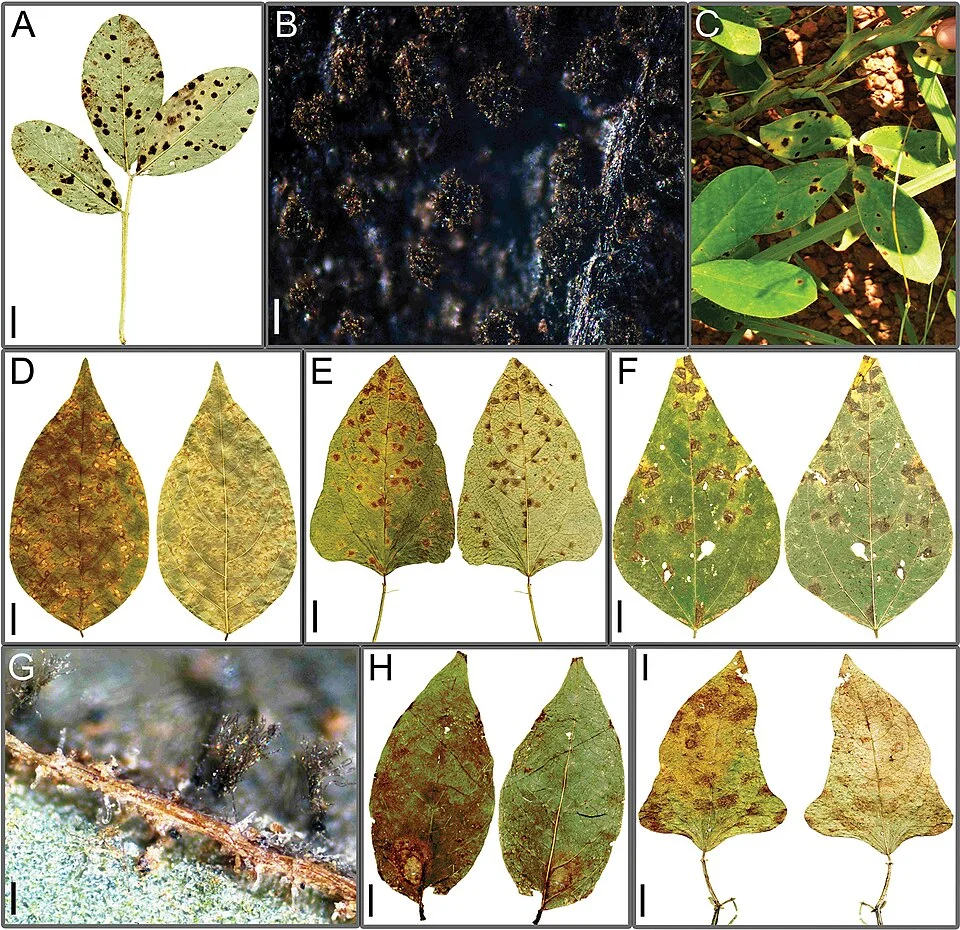
Rasbak · CC BY-SA 3.0
Why it matters
In a wet season angular leaf spot can cost you up to 70% of your bean harvest. The spots kill the leaves, and without healthy leaves the plant cannot fill its pods, so you are left with few, small, poorly-filled beans. It is hard to beat once it takes hold, because the fungus rides in on the seed and survives on old bean trash in the soil, so it comes back season after season on the same land. And a spray can only protect healthy leaves — it cannot heal a spot that has already formed — so the whole game is catching it early and staying ahead of it.
When to act
Protect the crop when the first angular grey-brown spots appear on lower leaves, especially from flowering onward in humid weather.
This guidance is general, compiled from published agronomic references including FAO and CABI. Thresholds and timing shift with your crop, your variety and the season.
In much of the region a spray is simply called mushonga — medicine. But a chemical group you cannot name is one you cannot rotate, and a product you did not write down has no pre-harvest interval you can observe. Mushonga, and other farming words →
The full Angular leaf spot field guide
Identify it
The first thing you see
small angular, block-shaped spots on the lower, older leaves. They have straight sides — like little tiles, or a cracked-mud pattern — because each spot is boxed in by the tiny leaf veins. That straight-sided, angular shape is the giveaway: most other bean leaf diseases make round spots.
The colour and feel
the spots start grey-green, then dry to grey-brown or rust-brown, often with a paler centre. They stay dry and papery — not slimy or water-soaked. As more appear they join up, the whole leaf yellows and drops early, starting at the bottom of the plant and climbing upward.
Turn a spotted leaf over
on the underside of each spot you will see a fine, dusty grey growth — the fungus making its spores — like a faint smear of ash. It shows clearest in the early morning or in damp weather. This grey fuzz underneath is the surest sign it is angular leaf spot and not something else.
On the pods
look for round-to-oval reddish-brown spots, sometimes slightly sunken. Pod spots mean the disease is well established — and that the seed you might save for next season is already being infected.
Tell it apart from look-alikes
bean rust makes raised rusty bumps that dust your finger orange when you rub them (this disease is flat, with grey — not orange — growth). Common bacterial blight makes water-soaked, greasy patches with a yellow halo and ragged edges (this disease is dry, straight-sided and boxed in by veins). Anthracnose makes dark, sunken sores along the veins and stems, often with a pinkish ooze.
Scout for it
When to look
start once the plants are in active leafy growth, then step it up hard from first flowering right through pod-fill — that is the disease's favourite window. Look every week, and check again within a day or two of every rain or heavy dew, because warm, wet, humid spells are when it explodes.
How to walk it
cross the field in a big "W" so you cover all four corners and the middle, not just the row beside the path. Make about 10 stops, and give extra attention to the densest, shadiest, wettest patches — that is always where it starts.
What to check at each stop
look at the lower, older leaves first (the ones nearest the ground) and turn them over to hunt for the angular spots and the dusty grey growth underneath. From podding onward, also check a few pods for round reddish spots.
Your trigger is basically zero-tolerance — even 1 or 2 plants is enough
The very first angular grey-brown spots on the lower leaves — showing on just 1 or 2 plants in your whole walk, once flowering has begun in warm, wet weather — are your signal to act now. Do not wait for many plants to spot up: the spray only guards healthy leaves, so the first spot is already late enough to move.
Control it
Prevent it — start with the variety
Plant a tolerant or resistant bean variety suited to your area (ask your extension officer or agro-dealer which local varieties hold up to angular leaf spot). This is your strongest defence that does not need a spray, and it costs you nothing extra at planting.
Break the seed-and-trash cycle
The fungus arrives on the seed and survives on old bean debris, so: (1) plant certified or known-clean seed — never grey, shrivelled or spotted saved seed; (2) after harvest, gather and bury or burn all bean trash; and (3) rotate away from beans for at least two seasons — grow maize, a cereal or another non-legume on that land so the leftover fungus starves out.
Keep the canopy dry, and don't carry the disease around
Space and weed the crop so air moves through and the leaves dry quickly after rain. And never walk through, weed or pick the beans while the leaves are wet — the sticky spores ride from plant to plant on your hands, clothes and tools. Do that work only once the dew has dried.
Act the moment you see it
Pick off and bury or burn the first few spotted lower leaves to slow the spread, and tighten your scouting to twice a week. On a resistant variety in a dry spell, clean sanitation and good airflow may be all you need — no spray at all.
Last resort — a protectant spray of mancozeb
If it is a wet season, the variety is susceptible, and spots are appearing from flowering on, spray mancozeb. It is a protectant (contact) fungicide — it coats the leaf surface and stops new spores from taking hold, but it cannot cure spots already there — so start early and re-cover the new growth as the plant grows. Safety: cover your skin, eyes, nose and mouth, spray in the cool of the day with the wind at your back, keep it well away from food, drinking water, children, animals and bees, wash yourself and your clothes afterwards, and respect the pre-harvest interval — the number of days you must wait between the last spray and picking the beans, printed on the label. Mancozeb attacks the fungus in many places at once, so it is slow to build resistance — but a spray is still your last line, not your first: keep leaning on clean seed, rotation and a resistant variety, and if you ever add a different single-target fungicide, alternate chemical groups so the fungus can't get used to one poison.
If it keeps climbing the plant despite all this
stop pouring money into spray on a crop that is already heavily spotted — a protectant cannot undo the damage that is done. Instead, harvest the healthy pods early, before the falling leaves ruin pod-fill; keep only your cleanest, spot-free pods for seed (or better, buy fresh clean seed next time); and after harvest clear and bury every bean plant and keep that land out of beans for two or more seasons. Breaking the seed-and-trash cycle is what finally beats it — so next season can start clean.
Catch Angular leaf spot before it costs you the harvest
This guide is the general answer. Divisi works out yours — the week to scout your own field for Angular leaf spot, and what to do the day you find it.


Crops it affects
Plan the crops it attacks

All planting calendars, country by country
Get Insights by email
A short digest of new Divisi articles. No email on quiet weeks.
Frequently asked questions
How do I identify Angular leaf spot?
The first thing you see. small angular, block-shaped spots on the lower, older leaves. They have straight sides — like little tiles, or a cracked-mud pattern — because each spot is boxed in by the tiny leaf veins. That straight-sided, angular shape is the giveaway: most other bean leaf diseases make round spots.
When should I take action against Angular leaf spot?
Protect the crop when the first angular grey-brown spots appear on lower leaves, especially from flowering onward in humid weather.
How do I control Angular leaf spot?
Prevent it — start with the variety. Plant a tolerant or resistant bean variety suited to your area (ask your extension officer or agro-dealer which local varieties hold up to angular leaf spot). This is your strongest defence that does not need a spray, and it costs you nothing extra at planting.
Which crops are attacked by Angular leaf spot?
Among the crops covered here: Common bean.