 Divisi
Bacterial black spot
Xanthomonas citri pv. mangiferaeindicae · Bacterial
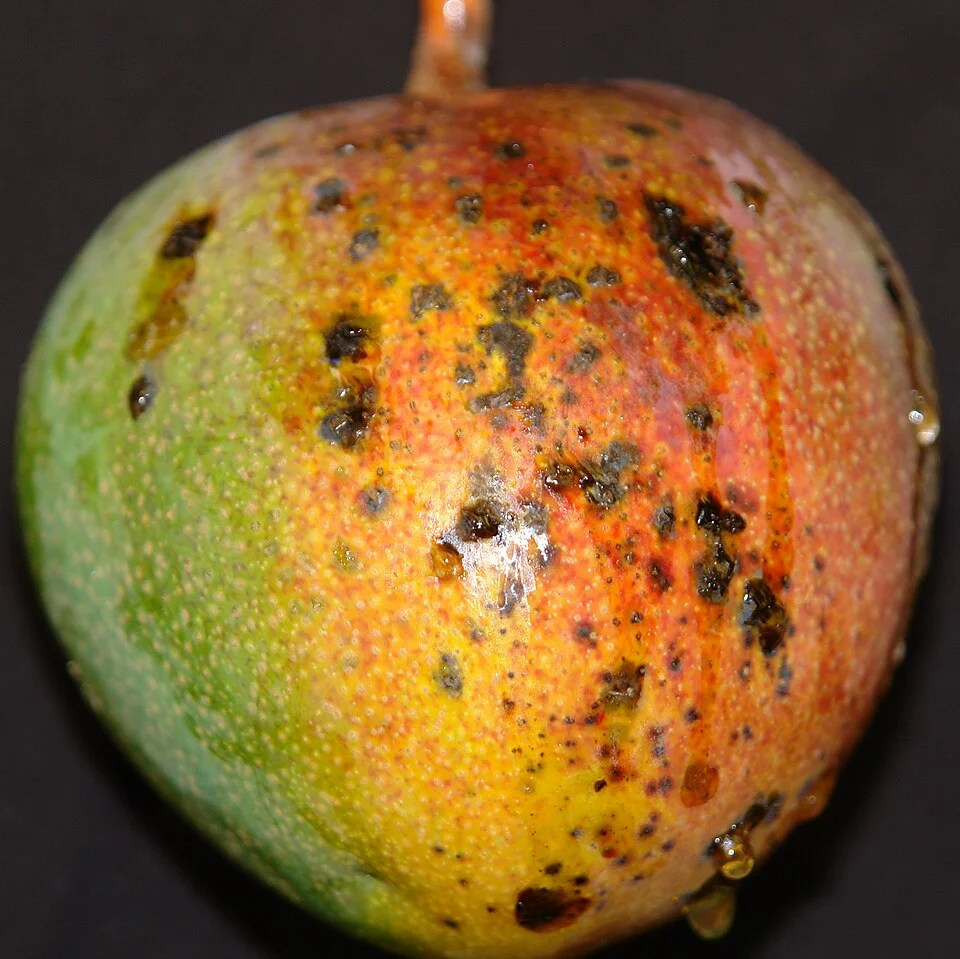
Photo: Plant pests and diseases · CC0
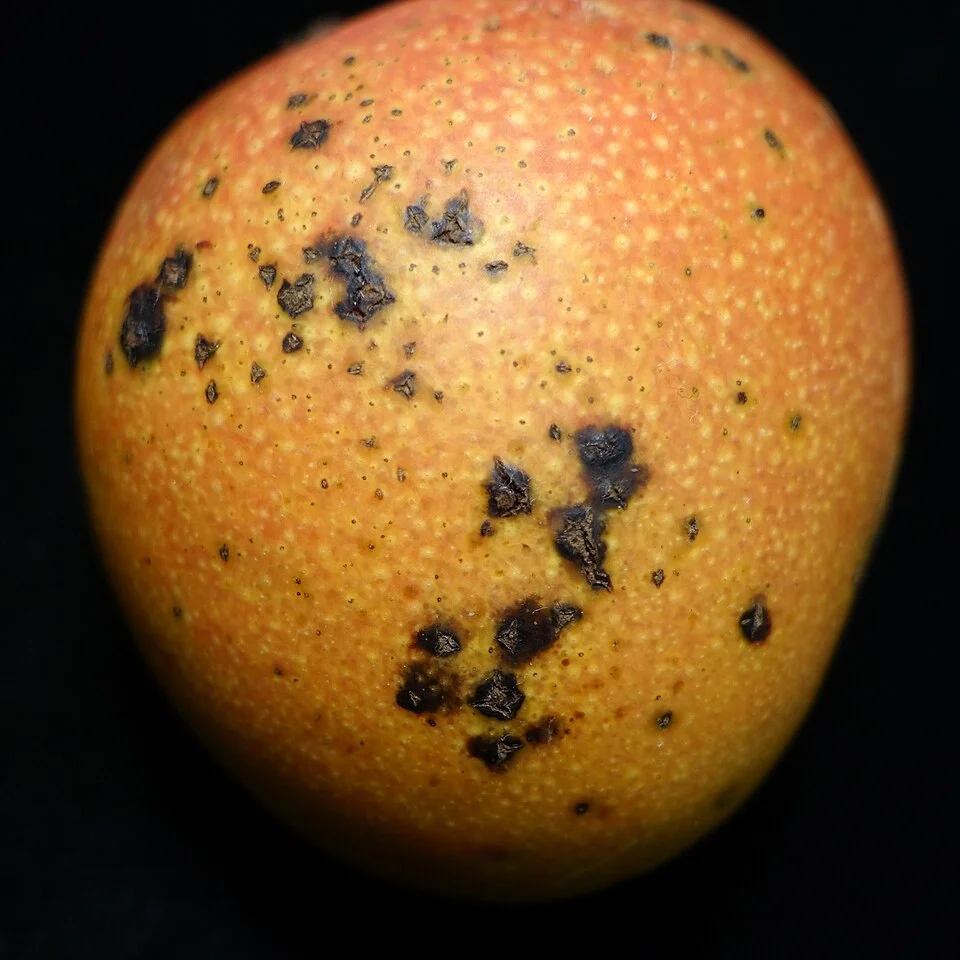
Bacterial black spot (also called bacterial canker of mango) is a disease of mango caused by a bacterium that survives the dry season inside cracked cankers on the twigs and is splashed onto new leaves, shoots and fruit by wind-driven rain. It slips in through the leaf's natural pores and through tiny wounds made by blowing sand, wind and hail, then shows as angular black spots on the leaves and raised, star-shaped, gum-oozing cracks on the fruit. It thrives in warm (20-30 degrees C), very humid, windy orchards and is worst where blowing sand scratches the leaves and fruit.
Scot Nelson · CC0 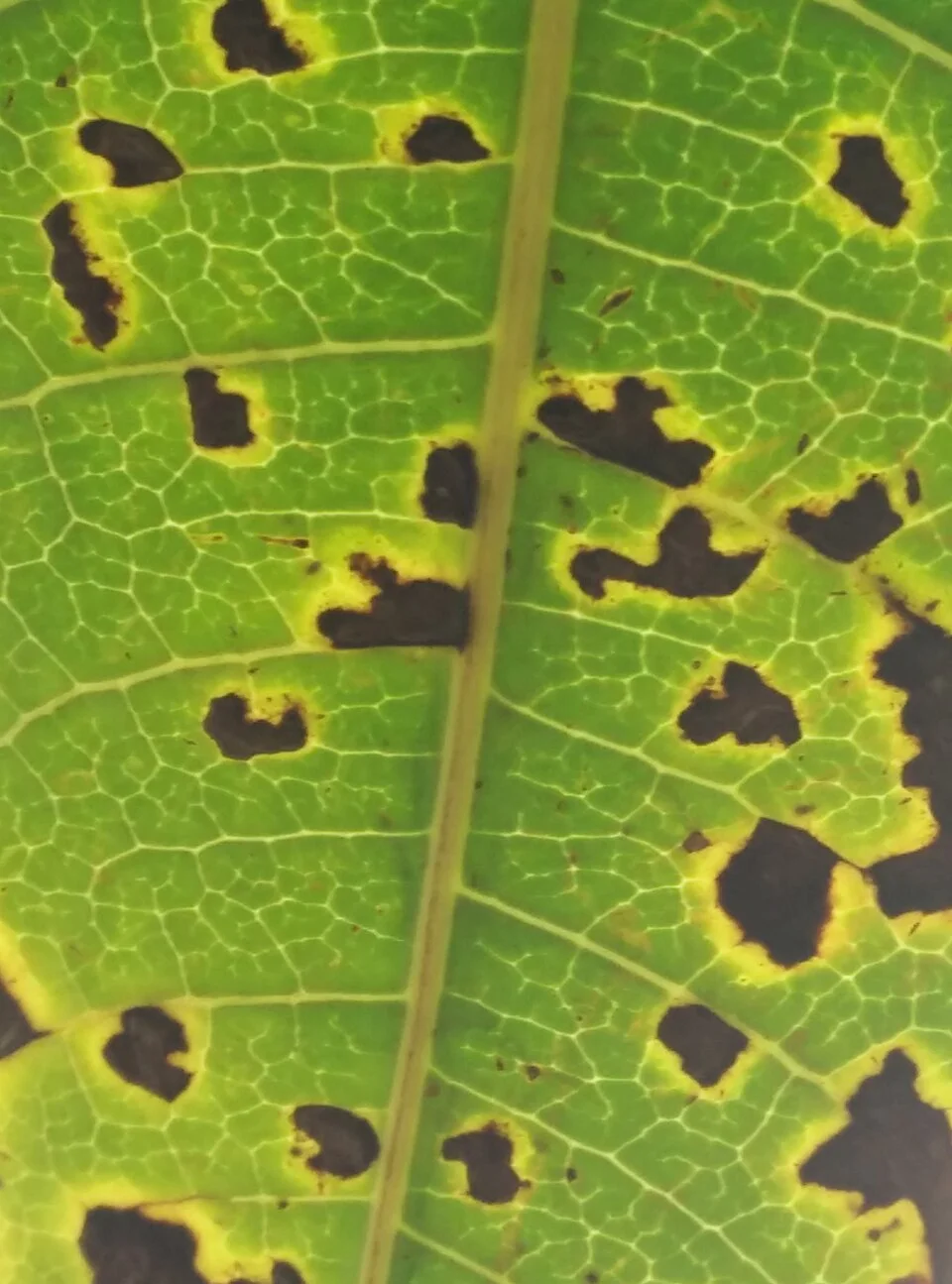
Scot Nelson · CC0
Why it matters
Bacterial black spot attacks the part you actually sell - the fruit. In a warm, wet, windy orchard it can scar, crack and rot up to 6 in every 10 mangoes (60%), turning fruit you would sell at market into fruit no buyer will touch, while its leaf and twig damage slowly weakens the whole tree. It is hard to beat once it takes hold, because the bacteria hide and survive the dry season inside cracks in the twigs, ready to be splashed onto fresh growth by the next windy rain - and copper spray can only protect healthy tissue, it cannot cure a spot that has already formed. That is why beating it is about prevention, cutting out the source, and timing - there is no spray that heals it.
When to act
Begin copper protection at the start of the rains and at flowering and fruit set when black angular spots appear on leaves or young fruit.
This guidance is general, compiled from published agronomic references including FAO and CABI. Thresholds and timing shift with your crop, your variety and the season.
In much of the region a spray is simply called mushonga — medicine. But a chemical group you cannot name is one you cannot rotate, and a product you did not write down has no pre-harvest interval you can observe. Mushonga, and other farming words →
The full Bacterial black spot field guide
Identify it
On the leaves (the first sign)
small dark, water-soaked, greasy-looking spots on the young leaves that harden into raised BLACK spots with straight sides - angular, like little tiles - because the veins box them in. Each spot is often ringed by a yellow halo, and you may see black streaks running along the midrib.
On the fruit (the costly sign)
raised black, star-shaped cracks that split the skin and weep a sticky gum. The skin around each crack goes dark and rough. These cracks let rot and fruit flies in, so the fruit can no longer be sold - this is the unmistakable, market-ruining sign.
On the twigs (the hidden source)
black, sunken cracked cankers and dieback (dead tips) on the young twigs and branches. This wood is where the bacteria survive the dry season and re-start the attack each year, so it matters even though it is easy to miss.
Don't confuse it with anthracnose
(the commonest mix-up): anthracnose spots are round and sunken, NOT angular, they run down the fruit in dark tear-stain streaks, and they never ooze gum or form raised star cracks. Black spot is angular, raised, boxed in by the veins, and gummy on fruit. Sooty mould is different again - it wipes off with your finger, while black spot is embedded and won't rub away.
Scout for it
When to look
the danger window runs right through the wet season - from the new-leaf flush and flowering, through fruit set, to the maturing fruit before harvest. Check within 2-3 days after every windy rain, because that is exactly when the bacteria are splashed onto fresh, tender growth.
How and how many
walk a big "W" through the orchard so you cover all four sides and the middle, not just the trees by the path. Stop at about 10 trees; at each one look at the new leaves, the flowers and young fruit, and the lower twigs - and check the shaded inside branches too, not only the sunny outside.
What you are checking for
fresh angular black spots with a greasy edge or yellow halo on the new leaves, and any star-shaped cracks or beads of gum on the young fruit. Also find the old twig cankers and mark those trees so you can prune them in the dry season.
The trigger — act early:
because copper can only protect healthy tissue and cannot cure a spot once it has formed, don't wait for a big count. The moment you find angular black spots on even 1 in 10 leaves, or a single spot on any young fruit, act. Better still, get protection on ahead of the rains and again at flowering and fruit set - before any spots appear at all.
Control it
Prevent
-
plant it out of trouble:
in windy, wet areas choose less-susceptible mango varieties (ask your nursery or extension officer which local varieties are least affected), and start only with clean, spot-free nursery seedlings. Never carry the disease into a healthy orchard on new planting material.
-
cut out the source and block the wind:
in the dry season, before the rains, prune out and BURN every cankered, dead or dying twig - this removes the bacteria's hiding place so it cannot re-start next year. Keep or plant a windbreak (a row of taller trees or a hedge) around the orchard to slow the wind-driven rain and stop blowing sand from scratching wounds into the leaves and fruit. Rake up and remove fallen infected leaves and fruit from under the tree.
Act early — keep the tree dry and unwounded:
avoid overhead or sprinkler watering (water sitting on the leaves spreads the bacteria), and never prune or handle the trees while they are wet - a fresh wet cut is an open door the bacteria walk straight through.
Chemical — copper, as protection not cure (last resort):
copper spray is a contact protectant - it coats the surface and stops NEW infections, but it cannot cure spots that are already there and it does not travel inside the plant (it is not systemic). Get the timing right: spray copper at the start of the rains, again at flowering and fruit set, and on through fruit development - always BEFORE wet, windy weather, so healthy tissue is already covered when the bacteria arrive. SAFETY: copper is poisonous - cover your skin, eyes, nose and mouth, spray in the cool, calm part of the day with the wind at your back, keep it off food, drinking water, children and bees, respect the pre-harvest interval (the least number of days the label tells you to wait between spraying and picking the fruit), and wash yourself and your clothes afterwards. RESISTANCE: do not lean on copper alone - over-using it breeds copper-tolerant bacteria (and over-spraying can mark or roughen the fruit skin), so always pair copper with the pruning, sanitation and windbreaks above.
If it keeps spreading — or when it is too late:
if spots keep appearing despite protection, tighten the sanitation - in the next dry season prune out and burn more of the cankered wood and widen your windbreak, because the source is always in the twigs. On badly cracked, oozing fruit there is no cure: pick and remove them so rot and fruit flies do not spread, and count that fruit as lost. For a tree that is heavily cankered and dying back year after year, cut your losses - remove and burn it, and replant a less-susceptible variety on that spot.
Catch Bacterial black spot before it costs you the harvest
This guide is the general answer. Divisi works out yours — the week to scout your own field for Bacterial black spot, and what to do the day you find it.


Crops it affects
Plan the crops it attacks

All planting calendars, country by country
Get Insights by email
A short digest of new Divisi articles. No email on quiet weeks.
Frequently asked questions
How do I identify Bacterial black spot?
On the leaves (the first sign). small dark, water-soaked, greasy-looking spots on the young leaves that harden into raised BLACK spots with straight sides - angular, like little tiles - because the veins box them in. Each spot is often ringed by a yellow halo, and you may see black streaks running along the midrib.
When should I take action against Bacterial black spot?
Begin copper protection at the start of the rains and at flowering and fruit set when black angular spots appear on leaves or young fruit.
How do I control Bacterial black spot?
Prevent — plant it out of trouble:. in windy, wet areas choose less-susceptible mango varieties (ask your nursery or extension officer which local varieties are least affected), and start only with clean, spot-free nursery seedlings. Never carry the disease into a healthy orchard on new planting material.
Which crops are attacked by Bacterial black spot?
Among the crops covered here: Mango.