 Divisi
Bean common mosaic virus
Bean common mosaic virus · Viral
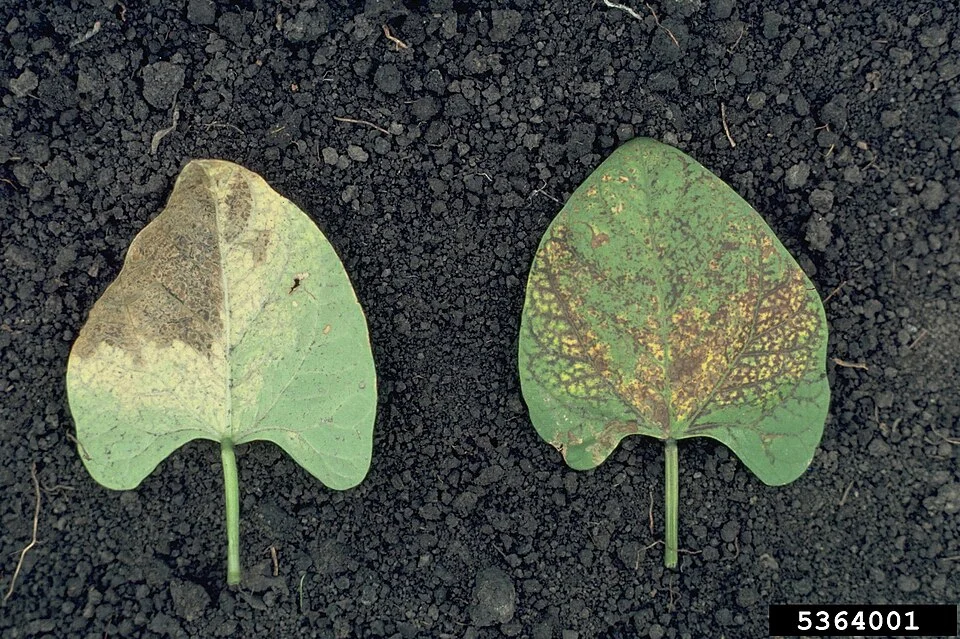
Photo: Howard F. Schwartz, Colorado State University, Bugwood.org · CC BY 3.0
Bean common mosaic virus (BCMV) is a seed-borne potyvirus of common bean. It enters a field hidden inside infected seed — so some seedlings emerge already sick — and is then carried plant-to-plant by aphids in a fast, 'non-persistent' way (an aphid infects a new plant within seconds of probing, which is why sprays cannot stop it). Infected young plants show a light-and-dark green leaf mosaic, down-curled and puckered leaves, and stunting; in susceptible varieties it turns into a lethal black-root necrosis. Early infection can cost most of the crop.
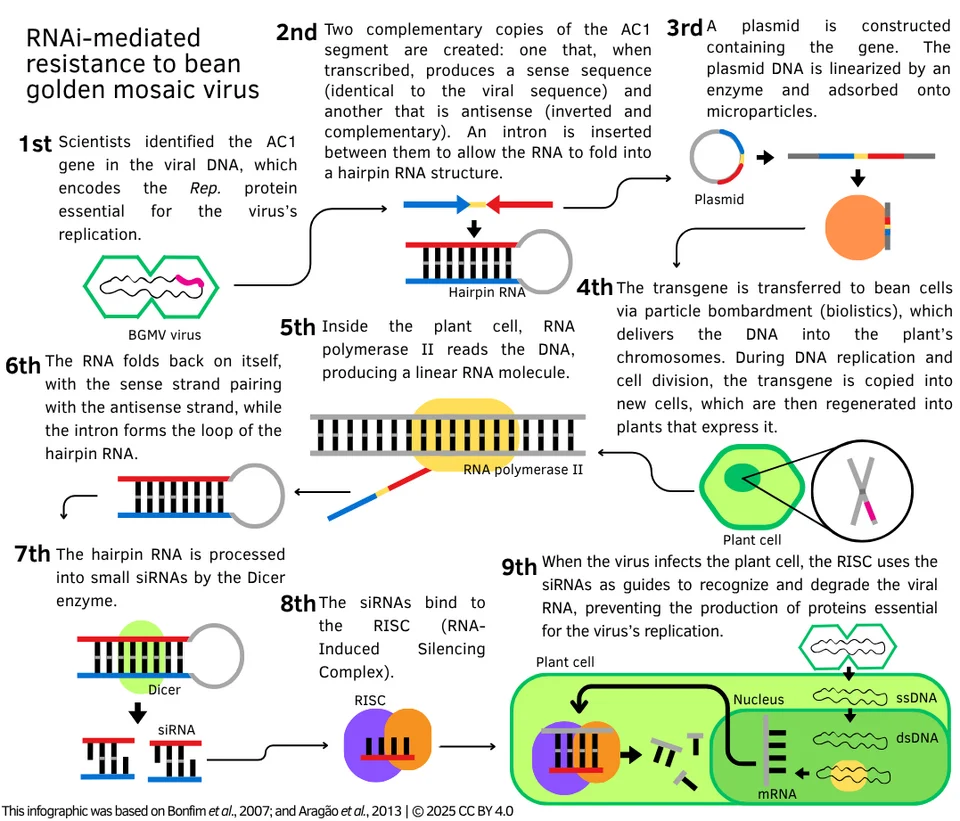
Lololo321 at Portuguese Wikipedia · CC BY 4.0 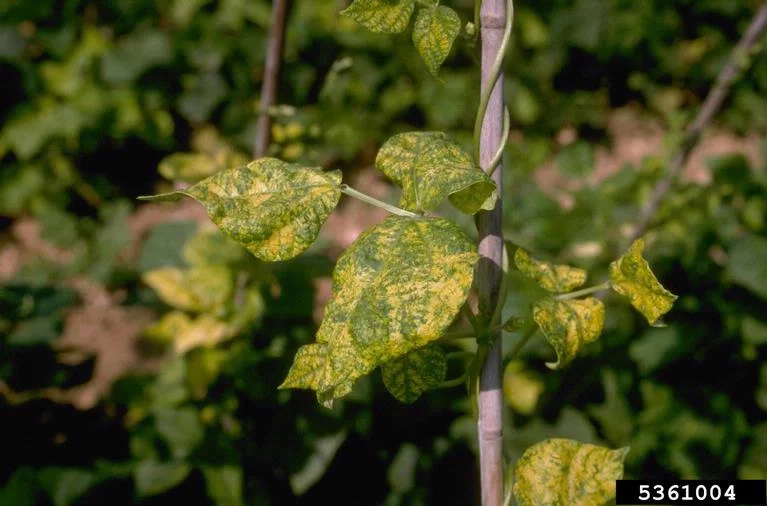
Howard F. Schwartz, Colorado State University, Bugwood.org · CC BY 3.0
Why it matters
Bean common mosaic is a virus — a sickness inside the plant's sap, not a bug you can pick off or a spray you can buy — and there is no cure once a plant catches it. Caught while the beans are young, it can cost you up to 80% (four-fifths) of your harvest: the plants stay stunted and give few pods or none. It sneaks in hidden inside infected seed, then aphids carry it from plant to plant in seconds, so you cannot spray it away once it is in the field. That is why clean seed, a resistant variety, and pulling out sick plants early matter more than anything you can do later.
When to act
Rogue mosaic seedlings on sight; manage aphid vectors when colonies build early in the crop.
This guidance is general, compiled from published agronomic references including FAO and CABI. Thresholds and timing shift with your crop, your variety and the season.
In much of the region a spray is simply called mushonga — medicine. But a chemical group you cannot name is one you cannot rotate, and a product you did not write down has no pre-harvest interval you can observe. Mushonga, and other farming words →
The full Bean common mosaic virus field guide
Identify it
The first and clearest sign — the mosaic:
the youngest leaves at the growing tip come up in a patchy mix of light yellow-green and dark green, like camouflage or a mottled shadow, instead of one even green. Healthy new leaves are a smooth, uniform green; sick ones look blotchy. ('Mosaic' just means this light-and-dark patchwork.)
Leaf shape goes wrong
the mottled leaves curl and cup downward, the surface puckers and blisters (dark-green raised bumps between the veins), and the leaves look narrow, crinkled and crumpled instead of flat and open.
The whole plant is stunted
an infected plant is shorter and bushier than its healthy neighbours, with crowded, shortened gaps between the leaves. Its pods are few, short, and sometimes lumpy or mottled — this is where your lost harvest shows.
The deadly form in some varieties — 'black root':
dark brown-to-black streaks run up the stem and down into the roots, and the plant suddenly wilts, blackens and dies. This killing form shows up most in warm weather (around 20–30°C).
It is a virus, not an insect or hunger
there are no chewed holes — the leaf is whole but discoloured and mis-shapen. It usually starts on scattered single plants (grown from bad seed), then spreads outward to their neighbours as aphids carry it.
Don't confuse it
with plain nitrogen hunger (an even pale-yellow over whole, older leaves, uniform across the field — no light-dark patchwork and no puckering), with weed-killer drift (cupped, twisted leaves in a strip where spray blew across, but no green mosaic), or with mite or thrips damage (fine pale dots and speckles, and you can find the tiny pests — not broad green patches).
Scout for it
When to look
start the moment seedlings emerge and keep checking through the young, growing plants right up to flowering — the seedling and vegetative stages are when beans are most vulnerable. Seed-carried plants show up first at emergence, so do not wait.
How often
walk the field twice a week, and more often in warm weather (20–30°C), when aphids breed fastest and move the virus quickest.
Walk pattern
cross the field in a big "W" so you cover all four corners and the middle — about 10 stops, roughly 10 plants at each stop — not just the row beside the path.
What to check
look at the newest leaves at the growing tip for the light-dark mosaic, down-curling and puckering. Then turn leaves over and check the undersides and shoot tips for aphids — small (pin-head, about 2–3 mm), soft, pear-shaped green or black insects clustered together, often with a sticky shine (honeydew) and ants tending them. Aphids are the vector, the carrier that moves the virus from a sick plant to a healthy one.
Your action numbers — lead with the count:
the moment you find even 1 mosaic plant, that is your trigger to pull it out today (see control). Separately, when aphid colonies are building on more than about 1 in 5 young plants (20%) early in the crop, step up your roguing and put out reflective mulch or a barrier crop before they can spread the virus.
Read the pattern
scattered single sick plants point to infected seed; a spreading patch, or a line moving in from an older bean field, means aphids are carrying it — trace it back and rogue hard along that front.
Control it
Prevent
-
grow a resistant variety (your single best defence):
ask your seed seller for a bean bred to resist bean common mosaic. These carry built-in resistance (breeders call it the I gene or bc genes — you do not need the names, just ask for a resistant or tolerant variety). It is the cheapest and most reliable protection you have.
-
plant certified clean seed:
use certified virus-free seed (seed tested and guaranteed free of the virus) from a trusted source. Never save and replant seed from a field that had mosaic — the virus hides inside the seed and comes straight up in next year's seedlings.
-
deny it a home:
do not plant new beans right next to, or downwind of, an older bean field (it is a virus store the aphids fly from); clear volunteer beans and weeds that harbour the virus; and plant early so your beans pass the tender young stage before aphid numbers peak in the warm season.
Act early
-
rogue on sight (every scouting round):
the moment you see even one mosaic seedling — 1 plant is enough — pull it out and destroy it that same day (this is called roguing) before aphids carry the virus to its neighbours. Bag, bury or burn it; do not drop it in the field, and wash your hands and tools afterward, because the sap itself can spread the virus.
-
slow the aphids down:
since aphids move the virus, make your field hard for them to land on — lay silvery reflective mulch between the rows, or ring the crop with a tall barrier/border crop to intercept flying aphids. Protect the natural aphid-eaters (ladybirds, lacewings, hoverflies and tiny wasps) by avoiding broad poisons that kill them too.
Last resort — know that spraying does NOT cure this:
insecticide will not stop the virus. Aphids pass it in seconds as they probe a leaf — long before any spray can kill them (this fast hand-off is called non-persistent spread) — so do not waste money spraying to stop mosaic. If aphid colonies are heavy enough to stunt plants directly and you choose to spot-treat them, spray safely: cover your skin, eyes, nose and mouth; spray in the cool of the day with the wind behind you; keep it off food, water, children and bees; rotate to a different chemical group each time so aphids do not build resistance; respect the pre-harvest interval (the wait on the label between spraying and safe harvest); and wash well afterward. Understand it only reduces aphid feeding — it cannot save an already-infected plant.
If it keeps spreading / when it is too late
once mosaic is in more than about 1 in 5 plants (20%) while they are still young, roguing can no longer save this crop — those stunted plants will yield little. Cut your losses: keep the healthy plants weeded and watered to harvest what you can, and save seed ONLY from strong, completely symptom-free plants (better still, buy fresh certified seed). Next season, rotate the land to a non-bean crop and replant clean seed of a resistant variety, well away from the old field — that stops you carrying the virus into next year.
Catch Bean common mosaic virus before it costs you the harvest
This guide is the general answer. Divisi works out yours — the week to scout your own field for Bean common mosaic virus, and what to do the day you find it.


Crops it affects
Plan the crops it attacks

All planting calendars, country by country
Get Insights by email
A short digest of new Divisi articles. No email on quiet weeks.
Frequently asked questions
How do I identify Bean common mosaic virus?
The first and clearest sign — the mosaic:. the youngest leaves at the growing tip come up in a patchy mix of light yellow-green and dark green, like camouflage or a mottled shadow, instead of one even green. Healthy new leaves are a smooth, uniform green; sick ones look blotchy. ('Mosaic' just means this light-and-dark patchwork.)
When should I take action against Bean common mosaic virus?
Rogue mosaic seedlings on sight; manage aphid vectors when colonies build early in the crop.
How do I control Bean common mosaic virus?
Prevent — grow a resistant variety (your single best defence):. ask your seed seller for a bean bred to resist bean common mosaic. These carry built-in resistance (breeders call it the I gene or bc genes — you do not need the names, just ask for a resistant or tolerant variety). It is the cheapest and most reliable protection you have.
Which crops are attacked by Bean common mosaic virus?
Among the crops covered here: Common bean.