 Divisi
Bean rust
Uromyces appendiculatus · Fungal
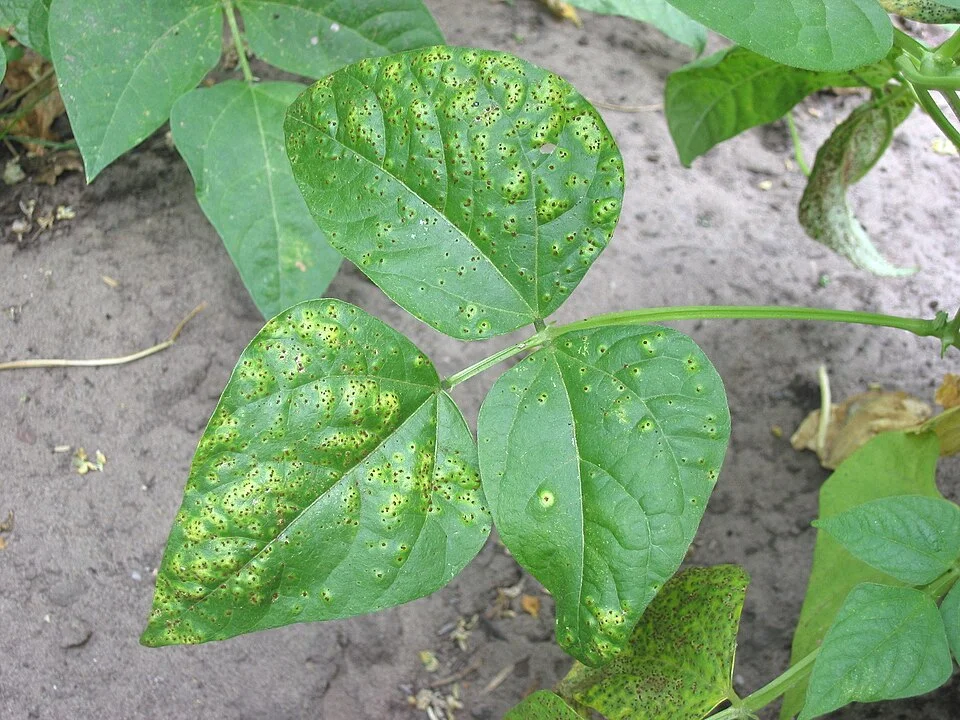
Photo: Rasbak · CC BY-SA 3.0
Bean rust is a fungal disease of common beans (Uromyces appendiculatus). It blows in on the wind and survives between crops on old bean debris, then re-infects the leaves whenever they stay wet for hours in warm, humid weather — flaring into repeated cycles of rusty, powdery spores that can strip a crop of its leaves before the pods have filled.
Jerzy Opioła · CC BY-SA 4.0 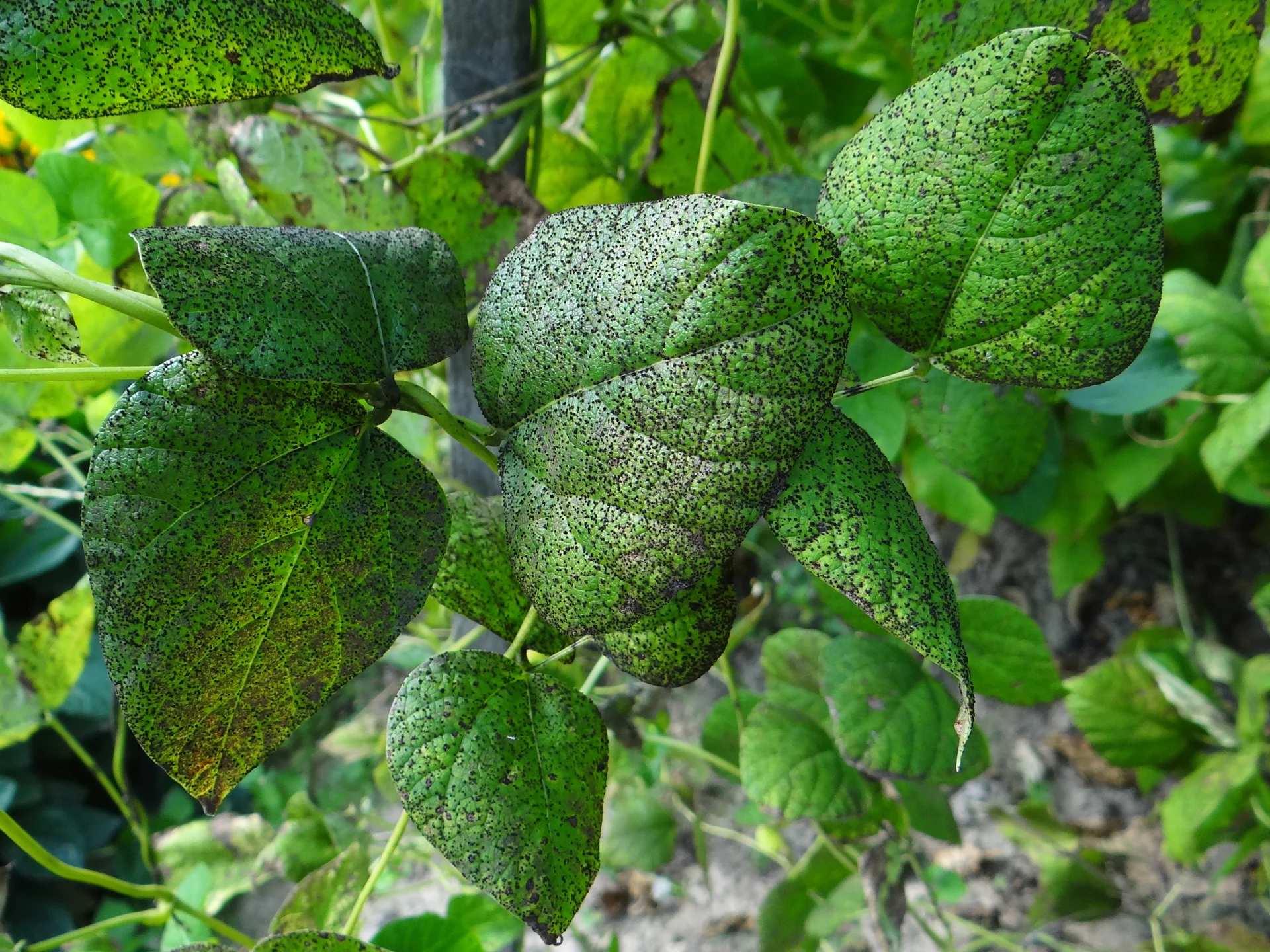
Jerzy Opioła · CC BY-SA 4.0
Why it matters
Bean rust attacks the leaves your plants need to fill their pods, and a bad outbreak can cost you up to 60% of your bean harvest. Badly rusted leaves turn yellow, dry up and drop early, so the pods left behind stay small and half-empty. Once it takes hold in warm, humid, dewy weather it throws out wave after wave of wind-blown spores — every little pustule dusts the whole field — so it spreads fast and is very hard to stop once it is established. That is why catching the very first pustules early, and better still preventing it with a resistant variety, matters so much.
When to act
Spray at first appearance of rust pustules on lower leaves, especially from flowering onward under humid conditions.
This guidance is general, compiled from published agronomic references including FAO and CABI. Thresholds and timing shift with your crop, your variety and the season.
In much of the region a spray is simply called mushonga — medicine. But a chemical group you cannot name is one you cannot rotate, and a product you did not write down has no pre-harvest interval you can observe. Mushonga, and other farming words →
The full Bean rust field guide
Identify it
The first, surest sign
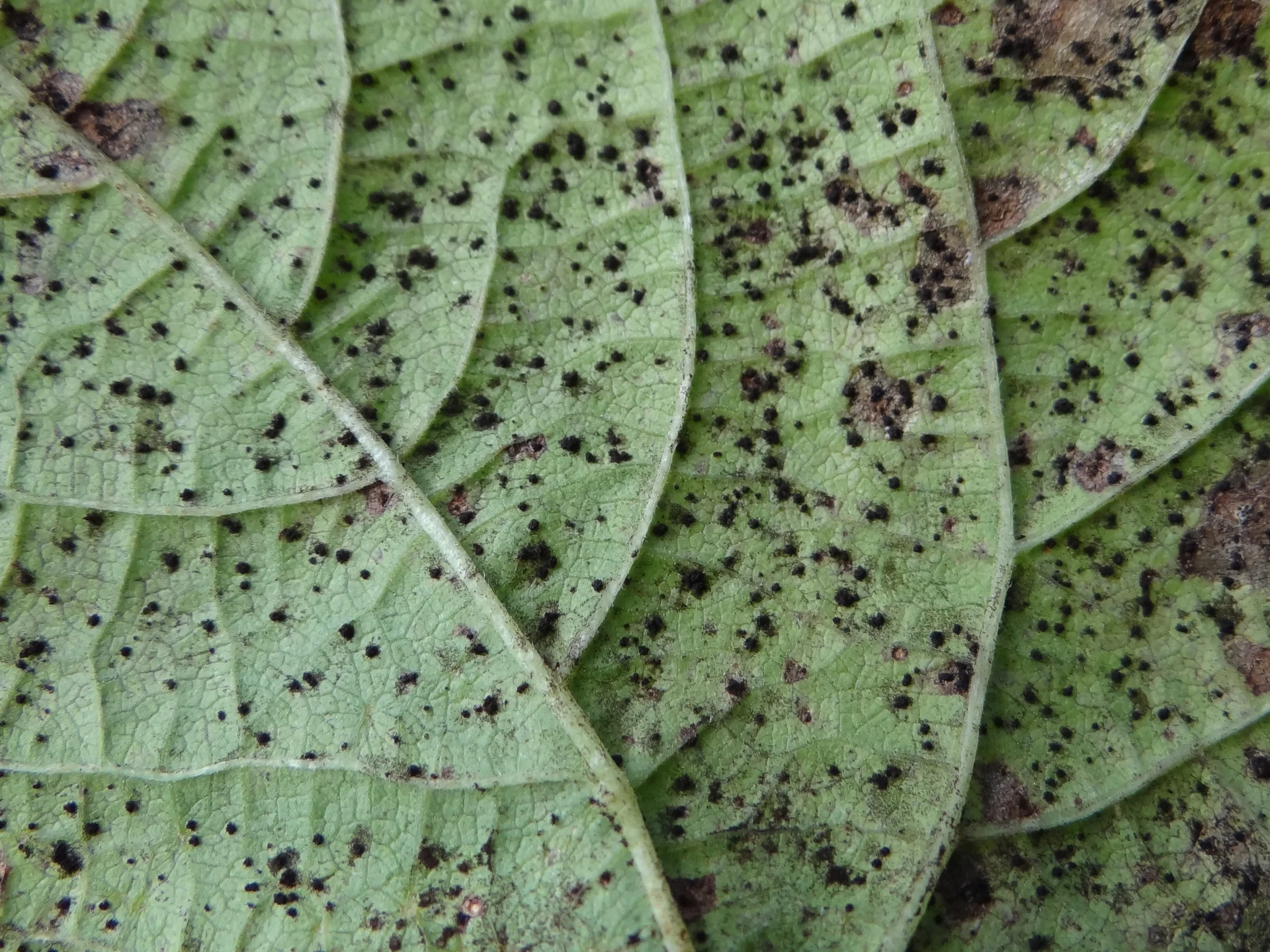
tiny pale yellow-white flecks appear on the lower, older leaves, then quickly swell into small raised rusty-brown pustules (bumps) — mostly on the underside of the leaf. Rub one with your thumb and a rusty-orange powder (the spores) dusts your finger — that powder-on-the-thumb test is the sure way to know it is rust and not something else.
As it spreads
each pustule is often ringed by a yellow halo, and the rust climbs from the lower leaves up the plant and onto the pods and stems; late in the season the pustules darken to blackish-brown. A heavy attack turns the leaves yellow and dry and drops them early — the plant looks scorched and the pods stay small.
Don't confuse it
flat, dry, dead patches that do not dust your finger orange are a different problem. Angular leaf spot makes brown patches boxed in straight by the leaf veins; common bacterial blight makes big brown blotches with yellow edges. Bean rust is raised and powdery; those look-alikes are flat and dead.
Scout for it
When to look
start once the plants bush out and the leaves close over the rows, and check hardest from flowering through pod-fill — that is when rust does the most damage. Step up your checks after spells of warm, wet, humid or heavy-dew weather (rust thrives at about 17–27°C with the leaves staying wet for hours).
How to walk it
cross the field in a big "W" so you cover all four corners and the middle — not just the row nearest the path, where you happen to pass every day.
What to check
at about 10 stops, turn the lower, older leaves over on a couple of plants — the pustules hide on the underside — and rub any suspect spot to see if rusty-orange powder comes off on your thumb.
When to act
the moment you find the first rusty pustules on the lower leaves — even on just 1 plant — from flowering onward in humid weather, act now. Rust throws out wave after wave of spores and doubles fast, so first-sighting is action time; don't wait for it to reach many plants the way you would for an insect pest.
Control it
Prevent it best
-
resistant variety:
grow a rust-resistant bean variety. It is the strongest and cheapest protection because it needs no spraying at all. Rust comes in many local races, so ask your extension officer or agro-dealer which variety beats the rust in your area — one that resists elsewhere may not resist here.
-
rotate and clean up:
don't plant beans after beans on the same land. Rotate to a non-bean crop for a season or two, and clear, bury or burn last season's bean debris before you plant — the fungus survives the dry months on old bean residue, and that leftover debris is what starts the next outbreak.
-
keep the leaves dry:
space the plants wider so air moves through the rows and the leaves dry quickly, and water at the base early in the day, never overhead late in the evening. Rust can only get in while the leaves stay wet for hours, so leaves that dry fast stop it starting.
Act early — strip the first spots:
at the very first pustules, pick off and destroy — bury deep or burn — the few spotted lower leaves before they shower the field with spores, and open up the crowded canopy for airflow. Never brush through the plants or pick beans while they are wet, or you will carry spores from plant to plant on your hands and clothes.
Last resort — a protectant fungicide (mancozeb):
if you had no resistant variety and rust is appearing under humid pressure, spray mancozeb. It is a protectant (contact) fungicide — it coats the leaf and blocks new spores from getting in, but it cannot cure spots already there — so start at the first pustules, cover both sides of the leaves (especially the undersides), and repeat every 10–14 days while the weather stays warm and wet. Safety: cover your skin, eyes, nose and mouth; spray in the cool of the day with the wind behind you; keep children, animals, bees, food and water well away; respect the pre-harvest interval (the number of days you must wait after the last spray before you pick or eat the beans — it is printed on the label); and wash yourself and your clothes afterwards. Resistance (the fungus getting used to one chemical until it stops working): if you must spray again and again, alternate with a fungicide from a different group between sprays so the rust cannot get used to it.
If it keeps spreading → and when it's too late
keep the protectant schedule tight and ahead of the wet weather, and make sure you switch to a locally-resistant variety next season. But if it is late in the season and most leaves are already rusty, yellow and dropping, a protectant cannot bring dead leaves back — stop wasting money on sprays, harvest whatever pods have filled, then cut and burn all the bean debris so the spores don't carry over. Start next season clean: a resistant variety, rotated land, and wider spacing.
Catch Bean rust before it costs you the harvest
This guide is the general answer. Divisi works out yours — the week to scout your own field for Bean rust, and what to do the day you find it.


Crops it affects
Plan the crops it attacks

All planting calendars, country by country
Get Insights by email
A short digest of new Divisi articles. No email on quiet weeks.
Frequently asked questions
How do I identify Bean rust?
The first, surest sign. tiny pale yellow-white flecks appear on the lower, older leaves, then quickly swell into small raised rusty-brown pustules (bumps) — mostly on the underside of the leaf. Rub one with your thumb and a rusty-orange powder (the spores) dusts your finger — that powder-on-the-thumb test is the sure way to know it is rust and not something else.
When should I take action against Bean rust?
Spray at first appearance of rust pustules on lower leaves, especially from flowering onward under humid conditions.
How do I control Bean rust?
Prevent it best — resistant variety:. grow a rust-resistant bean variety. It is the strongest and cheapest protection because it needs no spraying at all. Rust comes in many local races, so ask your extension officer or agro-dealer which variety beats the rust in your area — one that resists elsewhere may not resist here.
Which crops are attacked by Bean rust?
Among the crops covered here: Common bean.