 Divisi
Boll rot
Diplodia gossypina · Fungal
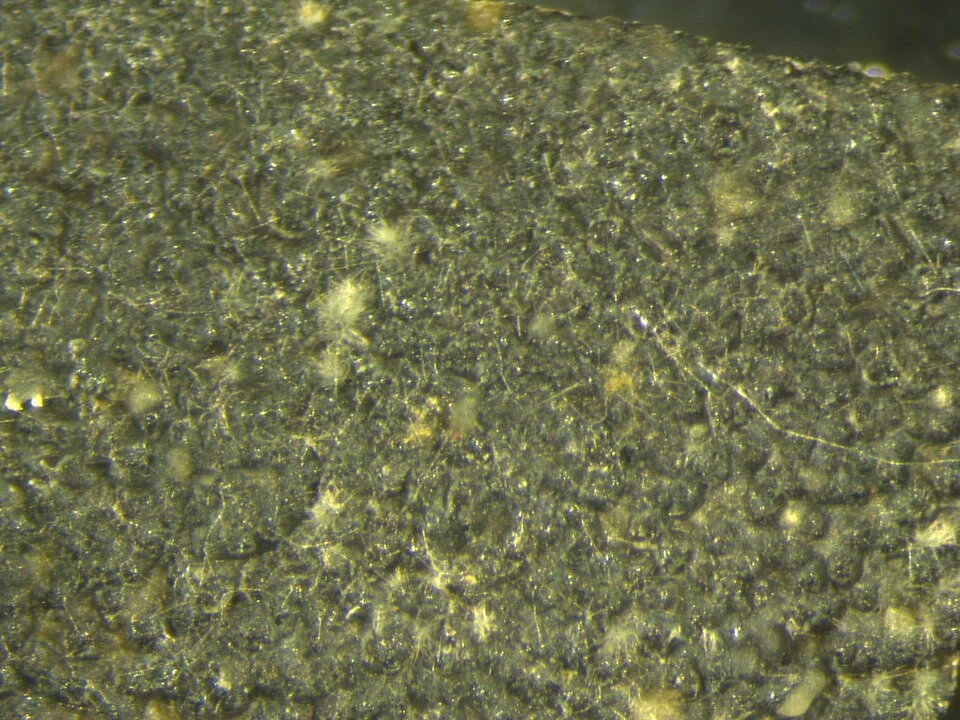
Photo: Scot Nelson · CC0
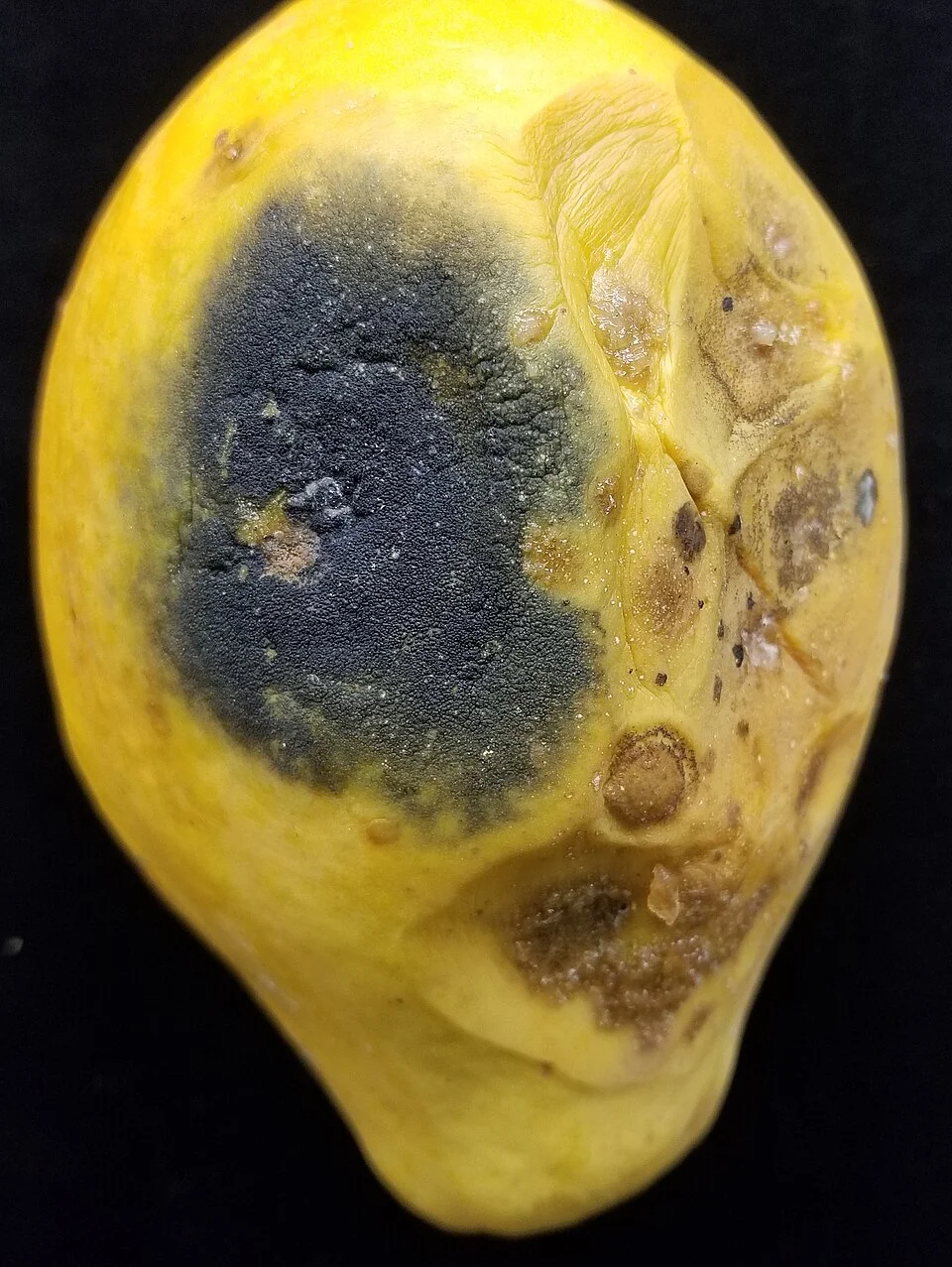
Boll rot is not one germ but a team of opportunist fungi and bacteria (led by Diplodia gossypina) that invade the cotton boll through insect wounds, growth cracks and natural openings. It needs the boll to stay wet: warm, humid, rainy weather and a dense, poorly-aired canopy keep bolls damp long enough for the rots to take hold and spoil the fibre inside.
Scot Nelson · CC0 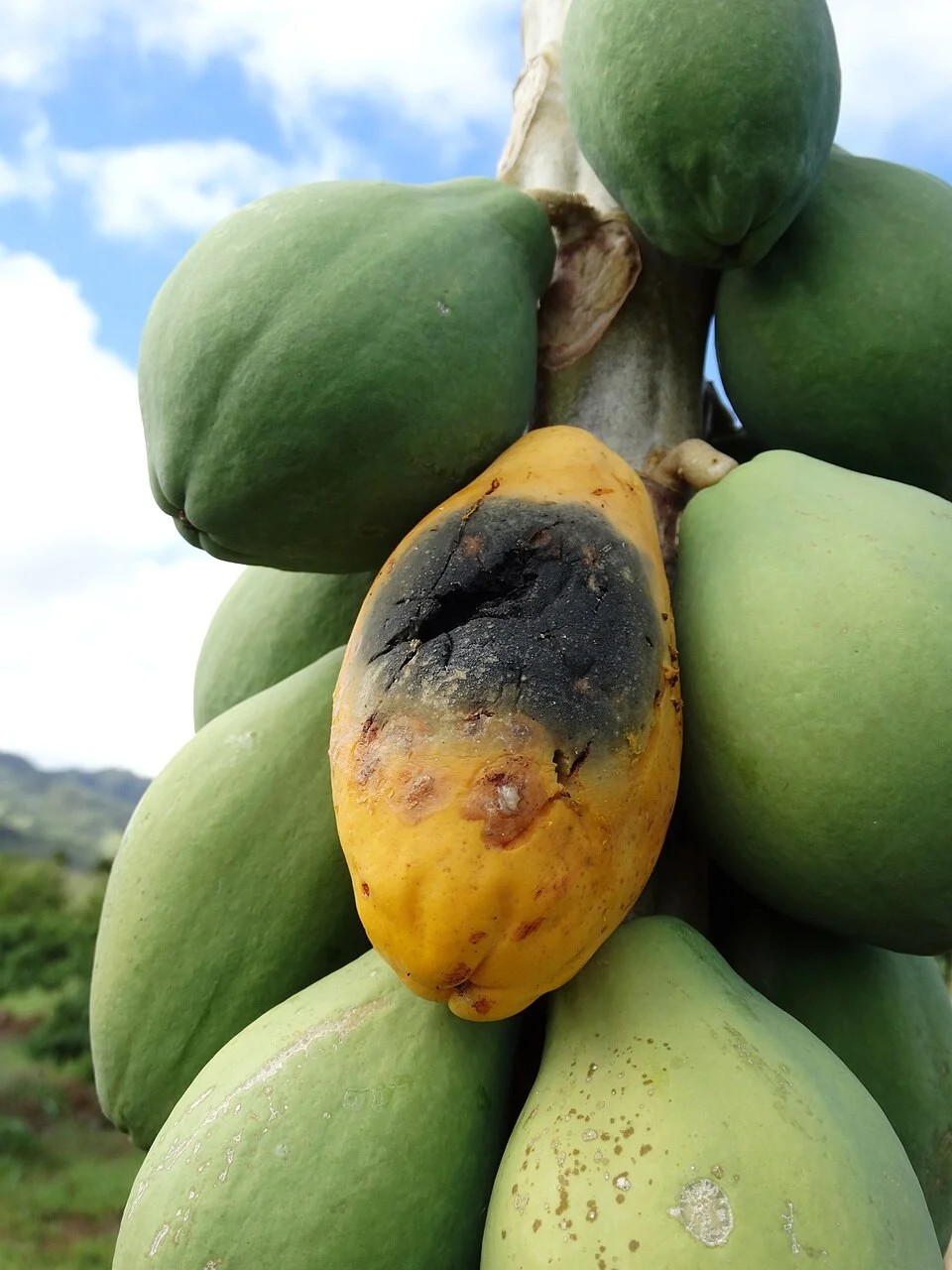
Scot Nelson from USA · CC0
Why it matters
Boll rot spoils the cotton fibre inside the boll (the pod you actually pick and sell) — so you lose the finished product, not just some leaves. In a warm, wet season it can rot up to half your crop (50%), and it strikes late, after you've already spent months and money growing those bolls. Once the fungus is inside a boll, that boll is finished — no spray brings it back, and in a dense, damp canopy it jumps from boll to boll fast. Because a direct fungicide rarely pays on cotton, beating boll rot is about prevention — keeping bolls dry and free of insect wounds — not rescue.
When to act
Act when developing bolls in the lower, dense canopy start to rot during wet weather, especially where bollworm or sucking-bug damage has opened wounds.
This guidance is general, compiled from published agronomic references including FAO and CABI. Thresholds and timing shift with your crop, your variety and the season.
In much of the region a spray is simply called mushonga — medicine. But a chemical group you cannot name is one you cannot rotate, and a product you did not write down has no pre-harvest interval you can observe. Mushonga, and other farming words →
The full Boll rot field guide
Identify it
The first sign
on a green, developing boll you'll see a small water-soaked spot — a dark, wet, greasy-looking patch that feels soft, not firm like healthy boll wall. It often sits right beside an insect sting or hole, or low down where a shaded boll stays damp after rain.
As it spreads
the spot turns brown, then black, and grows a fuzzy surface mould — this can be pink, black, grey or sooty depending on which fungus took hold. Whole bolls can go black, hard and shrivelled ('mummified') and just hang on the plant instead of opening.
The give-away
a rotted boll won't open and fluff. The segments (called locks) stay hard and stuck shut — farmers call this 'hardlock'. Prise or cut one open and the cotton inside is stained yellow-brown-black, matted and rotten, not clean white fluff. That stained lint is worthless.
Where to expect it
it starts on the lower, inner bolls in the thick, shaded part of the plant that stays wet the longest, and mostly on developing (green) and maturing bolls during warm, humid, rainy spells.
Don't confuse it with
(1) a healthy boll opening — that one dries pale tan and splits cleanly to white fluff; (2) plain bollworm damage — a neat round hole with a caterpillar or dry droppings inside but no mould and no wet rot (though that hole is often the very doorway the rot uses next); (3) weather-greyed lint on bolls that already opened normally — dull and discoloured but dry, not slimy or mouldy.
Scout for it
When to scout
start once bolls begin to form and set, and keep going through boll development and boll-fill (the mid-season and late season) right up to harvest. Step up your checks after every rain and during warm, muggy, humid weather (around 24-32°C) — that wet, close air is exactly when the rot takes off.
How to walk it
cross the field in a big 'W' so you cover all four corners and the middle, not just the outer rows by the path. Make about 5 stops along the W.
Look LOW and INSIDE
The rot hides on the lower, inner bolls deep in the canopy, so bend down and part the plants with your hands — don't just glance at the top, outer bolls. At each stop check about 10 plants.
At each plant look for
water-soaked spots, surface mould, and bolls that stay hard and won't open. Check every boll that has an insect hole, and cut open two or three suspect bolls to see if the lint inside is stained and rotten.
Act as soon as you find the first rot
even 1-2 spoiled or mouldy bolls in every 10 plants low in the canopy during wet weather is your signal to act now — especially if those bolls also carry insect holes. Don't wait for it to climb up and out through the crop; in a dense, wet canopy a small start becomes a big loss fast.
Control it
Prevent it — open up the canopy so bolls dry fast (your strongest tool)
Give plants correct, not-too-tight spacing, and go easy on nitrogen fertiliser: too much makes soft, leafy 'rank' growth (thick, lush growth) that traps damp, still air around the bolls. Sun and moving air dry bolls quickly and starve the rot of the wetness it needs.
Keep insects off the bolls
Bollworms and sucking bugs punch the wounds the rot creeps in through, so controlling those insects is really controlling boll rot. Scout for these pests and their entry holes alongside your rot checks.
Pick promptly and clear the rot
Harvest open, sound bolls as soon as they're ready — don't leave good lint hanging in wet weather to spoil and stain. Where you can safely reach them, pick off and carry away the badly rotted, mouldy bolls so they stop shedding spores onto the healthy ones.
Last resort — an insecticide, NOT a fungicide
Spraying a fungicide straight onto bolls rarely pays on cotton. What can help is a pyrethroid insecticide (a common contact insect spray — 'contact' means it kills the insects it lands on but does not travel inside the plant) used against the bollworms and sucking bugs, to stop the wounds before they start. Only spray when those insects are actually present in numbers — never on a fixed calendar.
Spray safely
Cover your skin, eyes, nose and mouth; spray in the cool of the morning or evening with the wind at your back; keep it well off food, drinking water, children, animals and bees; and wash yourself and your clothes afterwards. Respect the pre-harvest interval (the set number of days you must wait between the last spray and picking, printed on the label). And to stop the pests building resistance (surviving the spray until it stops working), rotate to a different chemical group each time rather than using pyrethroids over and over.
If it keeps spreading — or it's too late:
in a long wet spell, open the canopy harder (thin or defoliate for airflow) and pick early and often to rescue every sound boll before it spoils. Bolls that are already black, hard and mouldy are lost — cut your losses: leave them, save the clean bolls, and set up next season to win — wider spacing, less nitrogen, and tighter insect control right from the start.
Catch Boll rot before it costs you the harvest
This guide is the general answer. Divisi works out yours — the week to scout your own field for Boll rot, and what to do the day you find it.


Crops it affects
Plan the crops it attacks

All planting calendars, country by country
Get Insights by email
A short digest of new Divisi articles. No email on quiet weeks.
Frequently asked questions
How do I identify Boll rot?
The first sign. on a green, developing boll you'll see a small water-soaked spot — a dark, wet, greasy-looking patch that feels soft, not firm like healthy boll wall. It often sits right beside an insect sting or hole, or low down where a shaded boll stays damp after rain.
When should I take action against Boll rot?
Act when developing bolls in the lower, dense canopy start to rot during wet weather, especially where bollworm or sucking-bug damage has opened wounds.
How do I control Boll rot?
Prevent it — open up the canopy so bolls dry fast (your strongest tool). Give plants correct, not-too-tight spacing, and go easy on nitrogen fertiliser: too much makes soft, leafy 'rank' growth (thick, lush growth) that traps damp, still air around the bolls. Sun and moving air dry bolls quickly and starve the rot of the wetness it needs.
Which crops are attacked by Boll rot?
Among the crops covered here: Cotton.