 Divisi
Brown eye spot
Cercospora coffeicola · Fungal
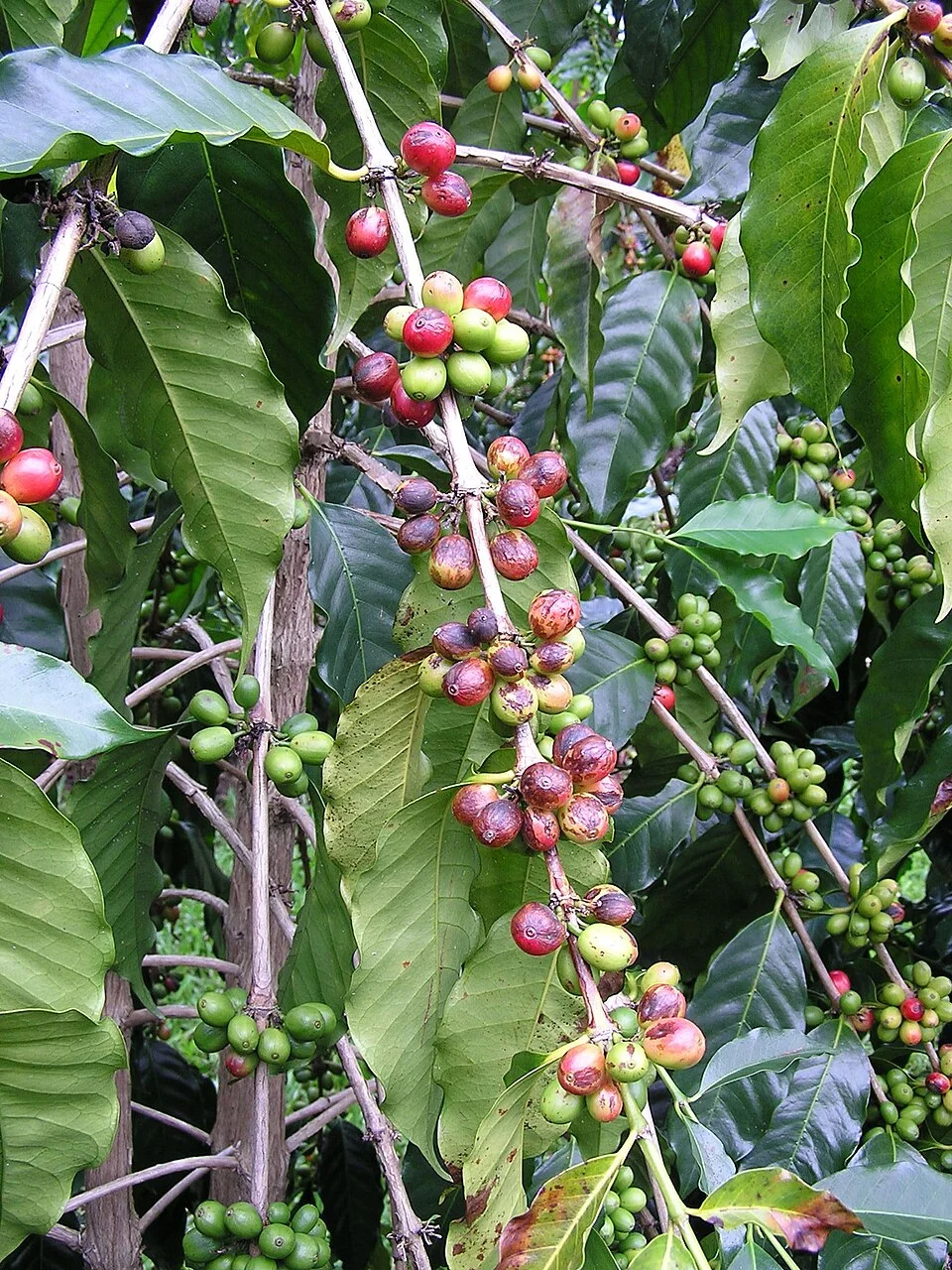
Photo: Scot Nelson · CC0
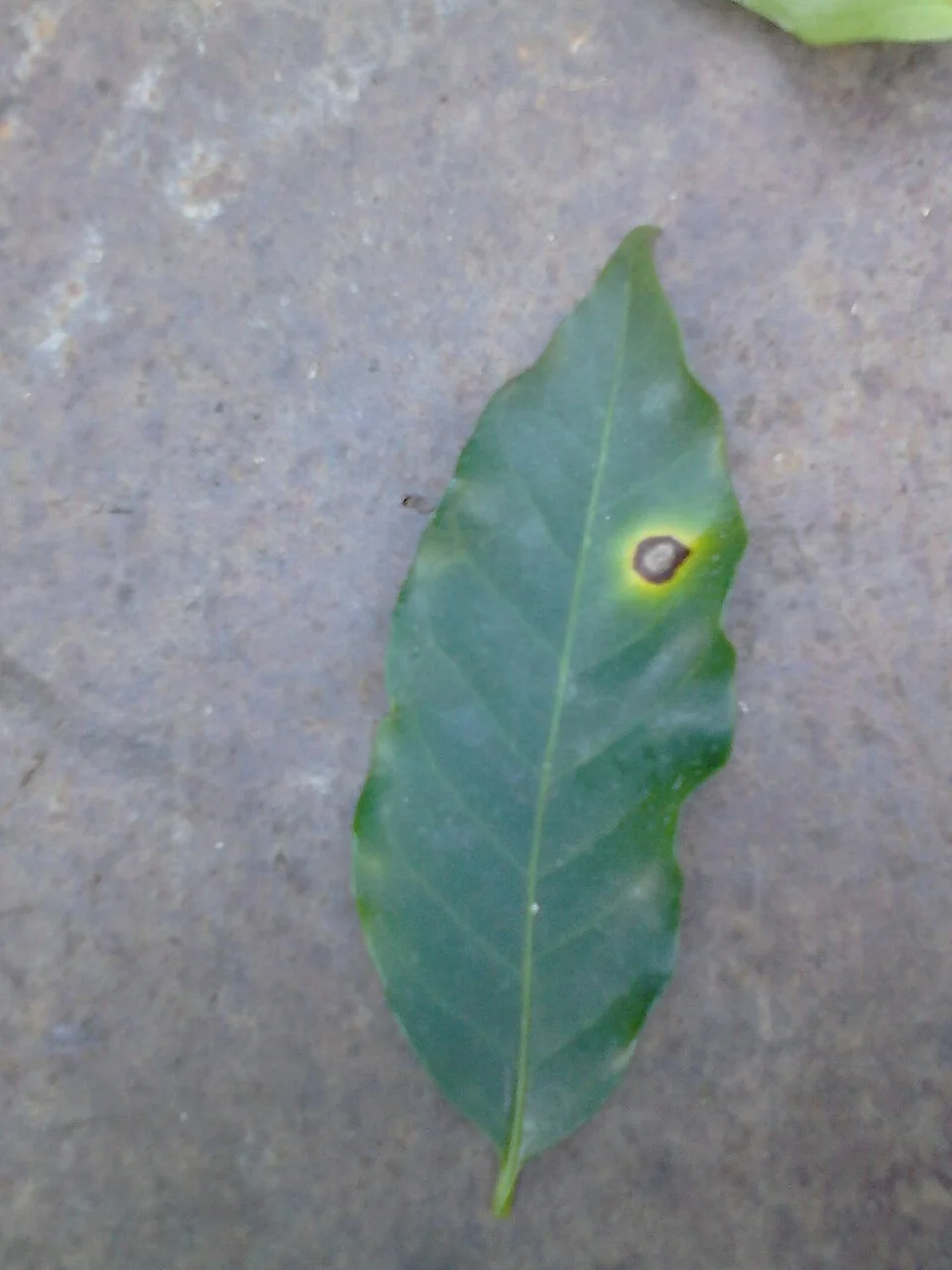
Brown eye spot (Cercospora coffeicola) is the most common fungal disease of coffee, attacking both the leaves and the berries. Its dust-like spores spread by rain-splash and wind, and infection takes hold when leaves stay wet for a long time and the plant is stressed by poor feeding, drought or too much direct sun. On leaves it forms round, yellow-ringed 'eye' spots that make the leaves drop; on berries it leaves sunken brown blotches that ripen unevenly and downgrade the cherry. Because it is driven by plant stress, it is beaten by keeping the bush well-fed, shaded and watered far more than by spraying alone.
Ernani Zimmermann · CC BY-SA 4.0 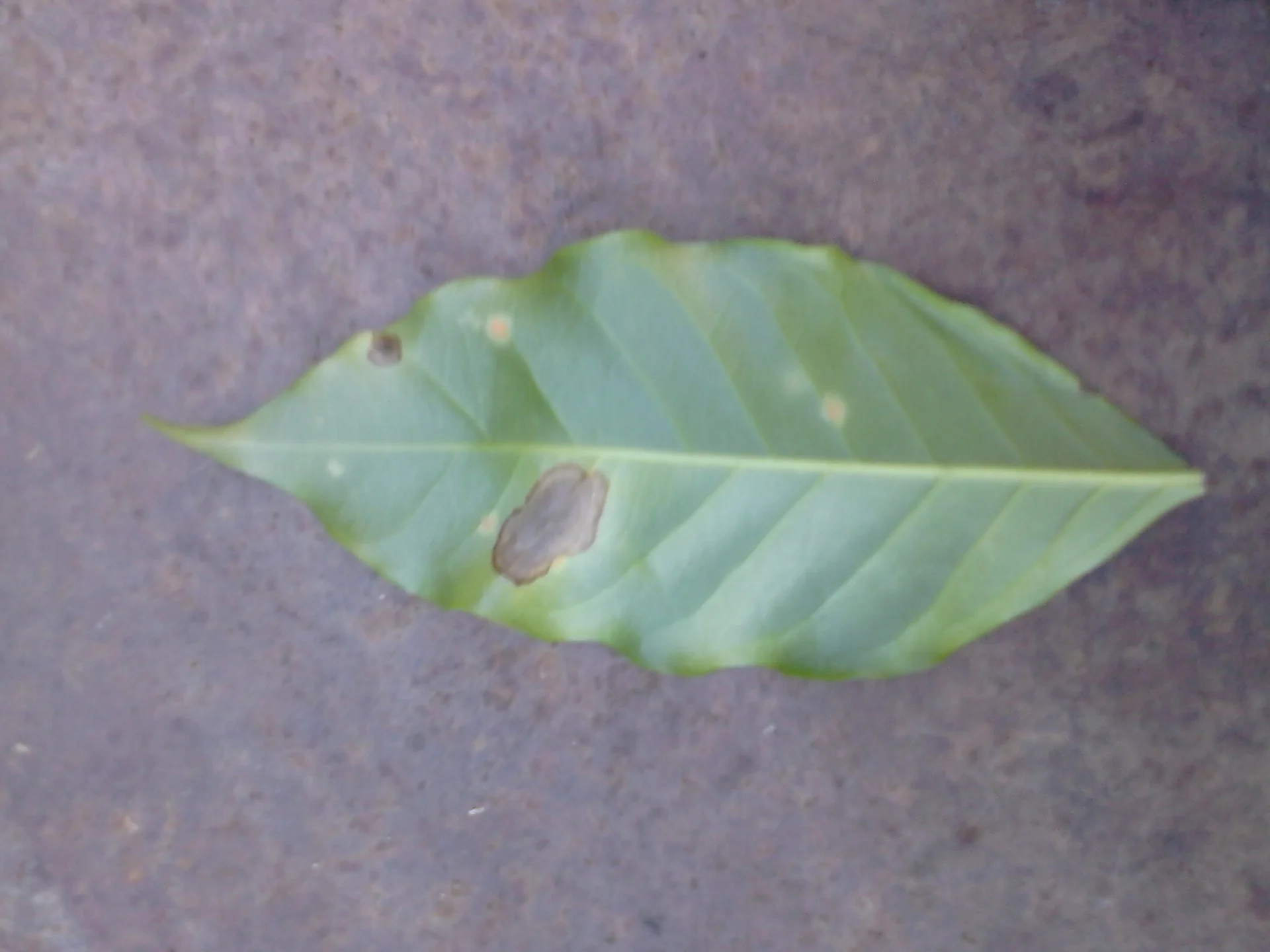
Ernani Zimmermann · CC BY-SA 4.0
Why it matters
Brown eye spot is the most common disease of coffee, and it hurts you twice: on the leaves it makes them yellow and drop, weakening the bush so it carries fewer, smaller cherries, and on the berries it leaves sunken brown blotches that ripen early, fall before harvest, and fetch a lower price. Together that can cost you up to a third (30%) of your crop. The hard part is that the disease is really a sign your plants are stressed — hungry, sun-baked or thirsty — so you cannot simply spray it away: copper only coats the leaf to stop new spots, and can never cure a spot or bring back a leaf that has already dropped. Unless you fix the underlying stress, it comes back every wet season.
When to act
first eye-spots on leaves of nursery seedlings or on developing berries
This guidance is general, compiled from published agronomic references including FAO and CABI. Thresholds and timing shift with your crop, your variety and the season.
In much of the region a spray is simply called mushonga — medicine. But a chemical group you cannot name is one you cannot rotate, and a product you did not write down has no pre-harvest interval you can observe. Mushonga, and other farming words →
The full Brown eye spot field guide
Identify it
The eye-spots (the giveaway)
round brown spots on the leaves, each with a pale grey, tan or almost-white centre ringed by a bright yellow halo — like a small eye or a bird's eye staring back at you. They begin as tiny brown pinpricks and grow to the size of a pea or a small fingernail (up to about 1 cm across), and the dry centre may crack or fall out, leaving a little hole.
Where to find it
the older, lower and most sun-exposed leaves are hit first, then it climbs the bush; badly hit leaves yellow and drop. On the berries (cherries), look for sunken dark-brown blotches on the sun-facing side — that side reddens and ripens early while the rest is still green, and blotched cherries drop before you can pick them. Nursery seedlings are hit hardest of all.
Don't confuse it with coffee leaf rust
turn the leaf over. Rust shows bright orange, powdery dust on the underside that rubs off on your finger; brown eye spot has no powder — it is a dry, firm spot with a grey centre and a yellow ring that looks the same from both sides of the leaf. Sun-scorch and fertiliser-burn make large brown patches at the leaf tips and edges, but never a neat round eye with a yellow halo.
Scout for it
When to look
walk your coffee at least once a week through the leaf-growing (development) and berry-filling (mid-season) months, and check nursery seedlings even more often — they are the most vulnerable. Look hardest after a wet spell or a run of heavy dew in warm weather (about 18-28 °C), and on any plant that looks hungry, pale-yellow, thirsty or fully sun-exposed — stress is what invites the disease.
How to walk
go in a big "W" across the block so you cover all four corners and the middle, not just the row nearest the path. Make about 10 stops, and check a few plants at each stop.
What to check at each stop
look first at the older, lower and sun-side leaves (that is where it starts), and turn the leaves over so you don't mistake orange rust powder for an eye-spot. On bearing trees, inspect the berries on the sunny side for the sunken brown blotches. In the nursery, check the seedlings leaf by leaf.
When to act — lead with the first spot, not a count:
with this disease you act at the very first eye-spots; do not wait for damage to build up. The moment you find eye-spots on even one nursery seedling, or the first brown blotches on the developing berries, treat that as your signal to act now — from a few spots it spreads fast by rain-splash in wet weather.
Control it
Prevent it — feed and shade the plant (your strongest tool):
brown eye spot is a stress disease, so a well-fed, well-shaded bush largely shrugs it off. Give balanced feeding with enough nitrogen (manure, compost or a nitrogen fertiliser) so the leaves stay green and strong; provide shade over exposed plants and nurseries; and avoid water stress in dry spells. Start with clean, disease-free nursery stock so you are not planting the problem.
Open up and clean up
prune and space your bushes so air moves through and wet leaves dry quickly — the fungus needs long leaf-wetness to infect. Pick off and destroy (burn or bury) the worst-spotted leaves and any blotched berries, especially in the nursery, to cut down the spores (the fungus's dust-like seeds) that splash onto healthy leaves. Never leave infected leaf-litter lying under the bush.
Copper spray — a last resort, only if it keeps coming despite the above:
a copper spray is a protectant — it coats the leaf to stop new spots forming, but it cannot cure a spot already there, so it only helps if you begin at the first symptoms and repeat through wet periods, mainly on nursery and young field plants. Safety: cover your skin, eyes, nose and mouth, spray in the cool of the day with the wind at your back, and keep it off food, drinking water, children and bees. Wash yourself and your tools afterwards, and respect the pre-harvest interval — the least number of days the product label says you must wait between your last spray and picking cherry — so no residue reaches your beans. Copper is a mineral, multi-site protectant, so the fungus does not easily build resistance to it, but it is not a cure: never let it replace fixing nutrition and shade.
If it keeps spreading → fix the stress, then cut your losses
more copper will not rescue a badly stressed bush — the driver is the stress. Strip and destroy the worst-hit leaves, get feeding, shade and watering right so the next flush of leaves comes back clean, and where berries are already blotched, harvest early and selectively to salvage what quality you can before they drop. Treat a badly defoliated (leaf-stripped) flush as lost, and put your effort into a strong, well-fed recovery rather than spraying a crop that is already gone.
Catch Brown eye spot before it costs you the harvest
This guide is the general answer. Divisi works out yours — the week to scout your own field for Brown eye spot, and what to do the day you find it.


Crops it affects
Plan the crops it attacks

All planting calendars, country by country
Get Insights by email
A short digest of new Divisi articles. No email on quiet weeks.
Frequently asked questions
How do I identify Brown eye spot?
The eye-spots (the giveaway). round brown spots on the leaves, each with a pale grey, tan or almost-white centre ringed by a bright yellow halo — like a small eye or a bird's eye staring back at you. They begin as tiny brown pinpricks and grow to the size of a pea or a small fingernail (up to about 1 cm across), and the dry centre may crack or fall out, leaving a little hole.
When should I take action against Brown eye spot?
first eye-spots on leaves of nursery seedlings or on developing berries
How do I control Brown eye spot?
Prevent it — feed and shade the plant (your strongest tool):. brown eye spot is a stress disease, so a well-fed, well-shaded bush largely shrugs it off. Give balanced feeding with enough nitrogen (manure, compost or a nitrogen fertiliser) so the leaves stay green and strong; provide shade over exposed plants and nurseries; and avoid water stress in dry spells. Start with clean, disease-free nursery stock so you are not planting the problem.
Which crops are attacked by Brown eye spot?
Among the crops covered here: Robusta coffee.