 Divisi
Brown spot
Cochliobolus miyabeanus · Fungal
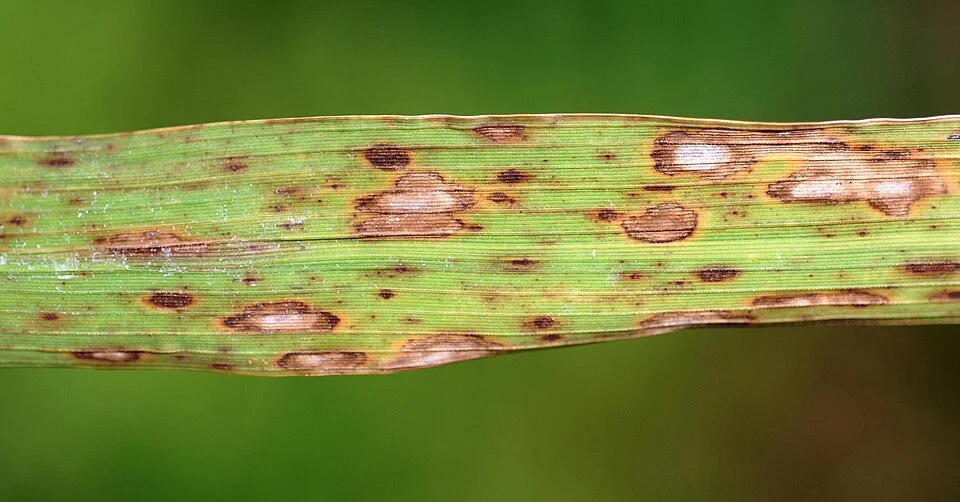
Photo: Donald Groth, Louisiana State University AgCenter · CC BY 3.0 us
Brown spot (Cochliobolus miyabeanus) is a seed- and soil-borne fungal disease of rice that thrives on starved, drought-stressed soil. It scatters small, sesame-seed-shaped brown spots across the leaves, blights seedlings in the nursery, and spots the grain at harvest. Because it rides on infected seed, survives in old rice straw, and blows about on wind-carried spores (the fungus's tiny dust-like seeds), it comes back season after season on hungry soil (low nitrogen, potassium and silicon) until the fertility is corrected.
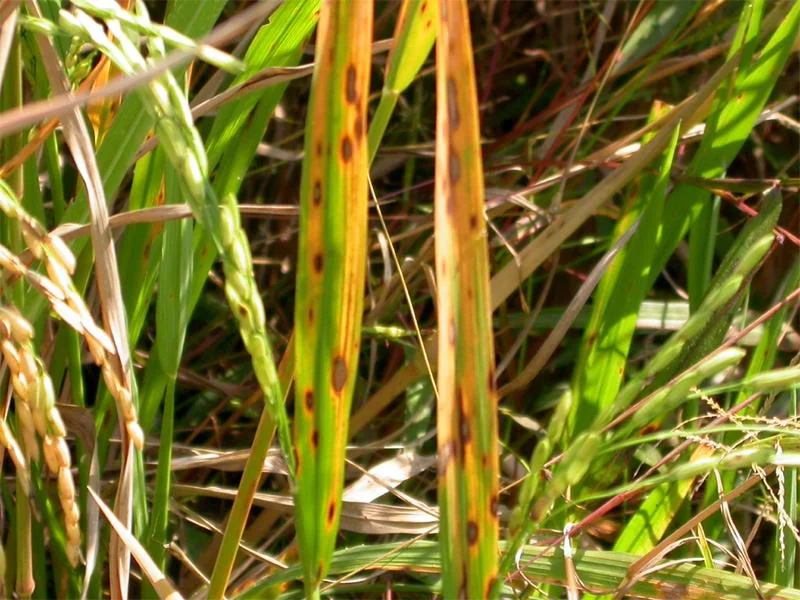
GarryMann · Public domain 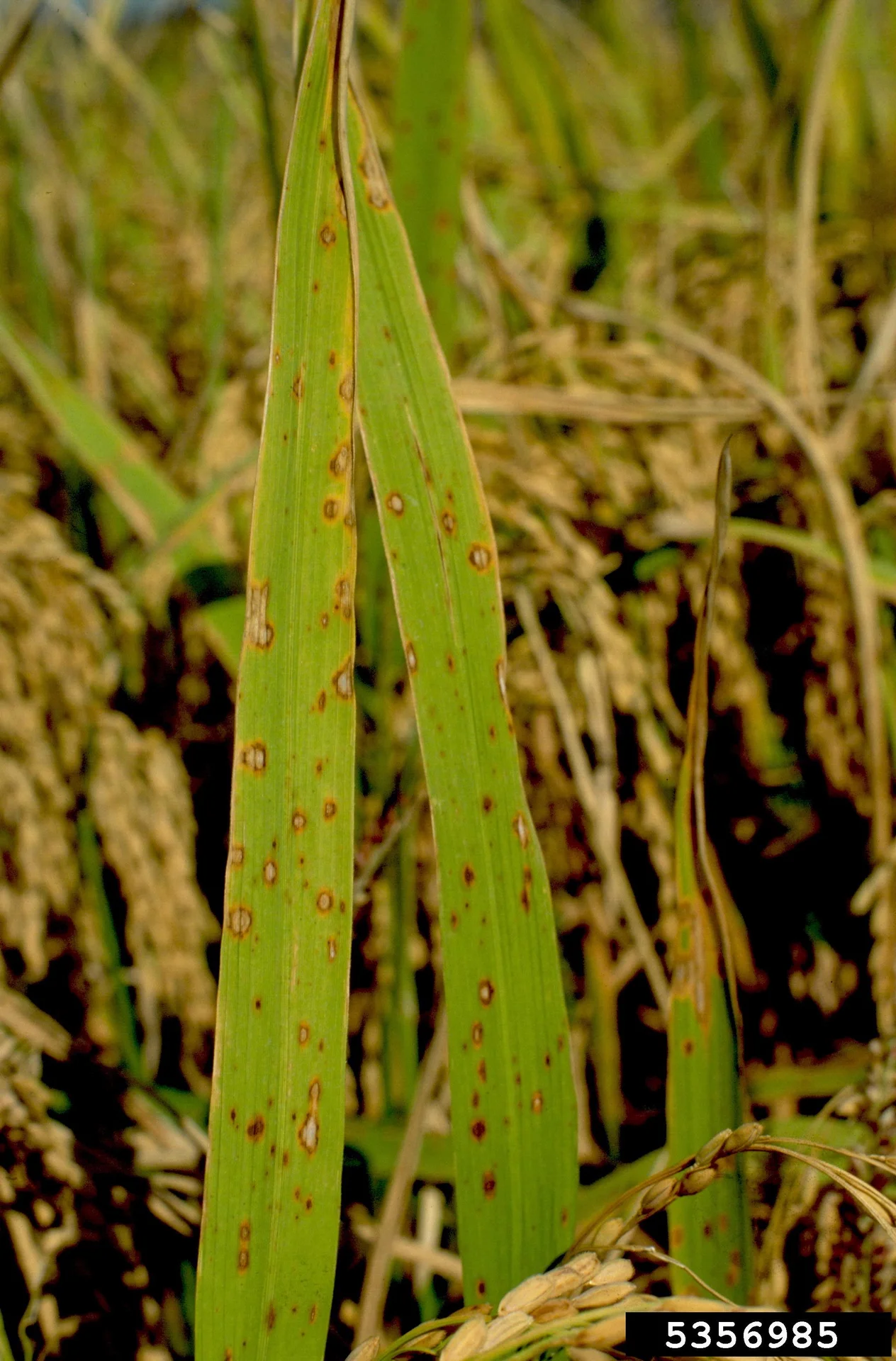
William M. Brown Jr., Bugwood.org · CC BY 3.0 us
Why it matters
Brown spot is a disease of hungry, thirsty soil, and on starved land it can be brutal: in a bad year it can take nearly half your rice crop (up to 45%), killing seedlings in the nursery and spotting the grain so it won't sell or store. It is hard to beat once it takes hold, because the fungus lives on inside your seed and in old rice straw and blows in on the wind, coming back every single season. No spray truly cures it, either: the real fix is feeding and watering the soil properly, so a farmer who only sprays keeps losing. This is the disease behind the great Bengal famine, so on poor land it is worth taking seriously.
When to act
spots on seedlings or spreading lesions on leaves in nutrient-poor patches
This guidance is general, compiled from published agronomic references including FAO and CABI. Thresholds and timing shift with your crop, your variety and the season.
In much of the region a spray is simply called mushonga — medicine. But a chemical group you cannot name is one you cannot rotate, and a product you did not write down has no pre-harvest interval you can observe. Mushonga, and other farming words →
The full Brown spot field guide
Identify it
The spots (easiest to recognise)
many small, brown, oval spots scattered evenly all over the leaf, each about the size and shape of a sesame seed. Young spots are tiny, round and dark reddish-brown; older ones grow into ovals with a grey or straw-coloured centre and a brown edge, sometimes ringed by a faint yellow halo. On a badly hit leaf, dozens of these even-sized spots pepper the whole blade.
In the nursery (often the first and worst warning)
brown flecks appear on the tiny seedlings, which then brown off, wilt and die in patches, leaving a thin, gappy stand. This seedling blight is what makes the disease so damaging early on.
On the grain (later, at heading)
dark-brown to black spots and blotches on the husks around the grain; the grain underneath is discoloured, shrivelled and light. This 'spotted' grain sells poorly, stores badly, and must never be kept for seed.
Where it hits
worst on the older, lower leaves first, and worst in the pale, hungry, stunted or drought-dry patches of the field, the spots cluster wherever the soil is starved.
Don't confuse it with rice blast
blast makes bigger, pointed, eye- or diamond-shaped lesions with grey centres, and can rot the neck just below the head; blast also loves RICH soil. Brown spot's marks stay small, round and even, and love POOR, hungry soil. And narrow brown leaf spot makes short, thin brown streaks running along the veins (lines, not round dots).
Scout for it
Start in the nursery
the moment seedlings are up, because this is when seedling blight strikes and does the most damage. Even a few spotted or browning seedlings is your signal to act, feed the seedbed and treat if you can before you transplant.
Once the crop is in the field, walk it weekly
through tillering and active growth. Walk a big "W" across the paddy so you cover the middle and all four corners, not just the bund by the path where you always look.
Make about 10 stops along the "W"
At each stop, check the older, lower leaves of about 10 plants (spots show there first) and hold a leaf up to the light so the small spots stand out.
Give the pale, yellow, stunted or dry patches extra attention
Brown spot always hits hardest where the soil is hungry or the crop is drought-stressed, so those patches spot up first and warn you first.
At heading and flowering, also check the husks around the grain
and the young grain for brown-black spotting, this tells you whether your grain quality is now at risk.
When to act
as soon as you see spots on your seedlings, OR brown spots on about 1 in 5 leaves (2 in 10) and climbing week to week, especially clustered in the poor, hungry patches. For this disease it is the presence and the rising trend on starved ground, not a big exact count, that triggers action.
Control it
Prevent it first: feed and water the soil (the single most important control)
Brown spot is really a hunger disease. Correct the soil with balanced nitrogen and potassium, and add silicon where the land is worn out; then keep the paddy evenly watered and never let it dry out and drought-stress the crop. Well-fed, well-watered rice shrugs the disease off, and no other step comes close to this one.
Plant a tolerant variety
Where you can get it, choose a moderately resistant or tolerant local variety, it carries far fewer spots than a susceptible one on the very same soil.
Start clean, and stay clean
Take seed only from healthy, spot-free plants or use certified clean seed, never save seed from a spotted crop, because the fungus rides inside the grain. Before sowing, treat the seed: a hot-water soak (about 53 to 57 degrees C for 10 to 12 minutes) or a seed-treatment fungicide kills the seed-borne fungus so seedlings start clean. After harvest, gather and burn or bury the old infected straw and stubble, the fungus survives the dry season there and blows onto next season's crop.
Act early at the first spots
Don't wait, especially on seedlings or in the hungry patches: top-dress the starved patches with nitrogen and potassium, fix the water, and keep scouting weekly. Feeding the crop the moment spots appear often stops them climbing, while the disease is still light.
Chemical as a last resort (triazole group only)
Only if it keeps spreading on a crop worth protecting, use a triazole-group foliar fungicide (a systemic type, meaning it goes inside the plant) sprayed at booting to heading to protect the grain. Safety every time: cover your skin, eyes, nose and mouth; spray in the cool of the day with the wind at your back; keep it well away from food, drinking water, fish ponds, children and bees; wash yourself and the sprayer afterwards; and respect the pre-harvest interval (the number of days the label says you must wait between your last spray and cutting the crop). On resistance: triazoles lose their power if overused (the fungus stops being killed by a chemical it meets too often), so do not spray them again and again, rotate to a different fungicide group next time, and fix the soil so you don't need to spray at all.
If it keeps spreading, or it's too late
if spots keep multiplying and merging and the grain is spotting despite feeding and watering, accept that no spray will 'cure' this season. Protect the grain with one well-timed triazole at heading if the crop is worth it, harvest on time, dry the grain well, and do NOT keep seed from a spotted crop. Then break the cycle for next season, correct the soil fertility and silicon, rotate the field to another crop, sow clean/treated seed, and burn the old straw, because on starved land this fungus returns every year until you fix what really feeds it: the soil.
Catch Brown spot before it costs you the harvest
This guide is the general answer. Divisi works out yours — the week to scout your own field for Brown spot, and what to do the day you find it.


Crops it affects
Plan the crops it attacks

All planting calendars, country by country
Get Insights by email
A short digest of new Divisi articles. No email on quiet weeks.
Frequently asked questions
How do I identify Brown spot?
The spots (easiest to recognise). many small, brown, oval spots scattered evenly all over the leaf, each about the size and shape of a sesame seed. Young spots are tiny, round and dark reddish-brown; older ones grow into ovals with a grey or straw-coloured centre and a brown edge, sometimes ringed by a faint yellow halo. On a badly hit leaf, dozens of these even-sized spots pepper the whole blade.
When should I take action against Brown spot?
spots on seedlings or spreading lesions on leaves in nutrient-poor patches
How do I control Brown spot?
Prevent it first: feed and water the soil (the single most important control). Brown spot is really a hunger disease. Correct the soil with balanced nitrogen and potassium, and add silicon where the land is worn out; then keep the paddy evenly watered and never let it dry out and drought-stress the crop. Well-fed, well-watered rice shrugs the disease off, and no other step comes close to this one.
Which crops are attacked by Brown spot?
Among the crops covered here: Rice.