 Divisi
Bunch rot (grey mould)
Botrytis cinerea · Fungal
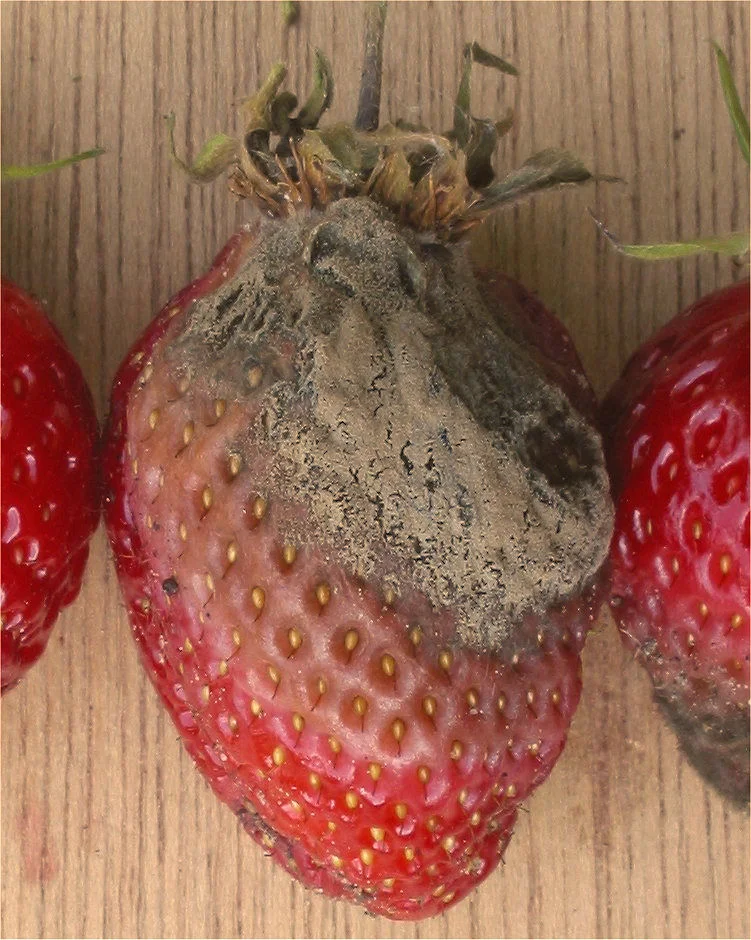
Photo: Rasbak · CC BY-SA 3.0
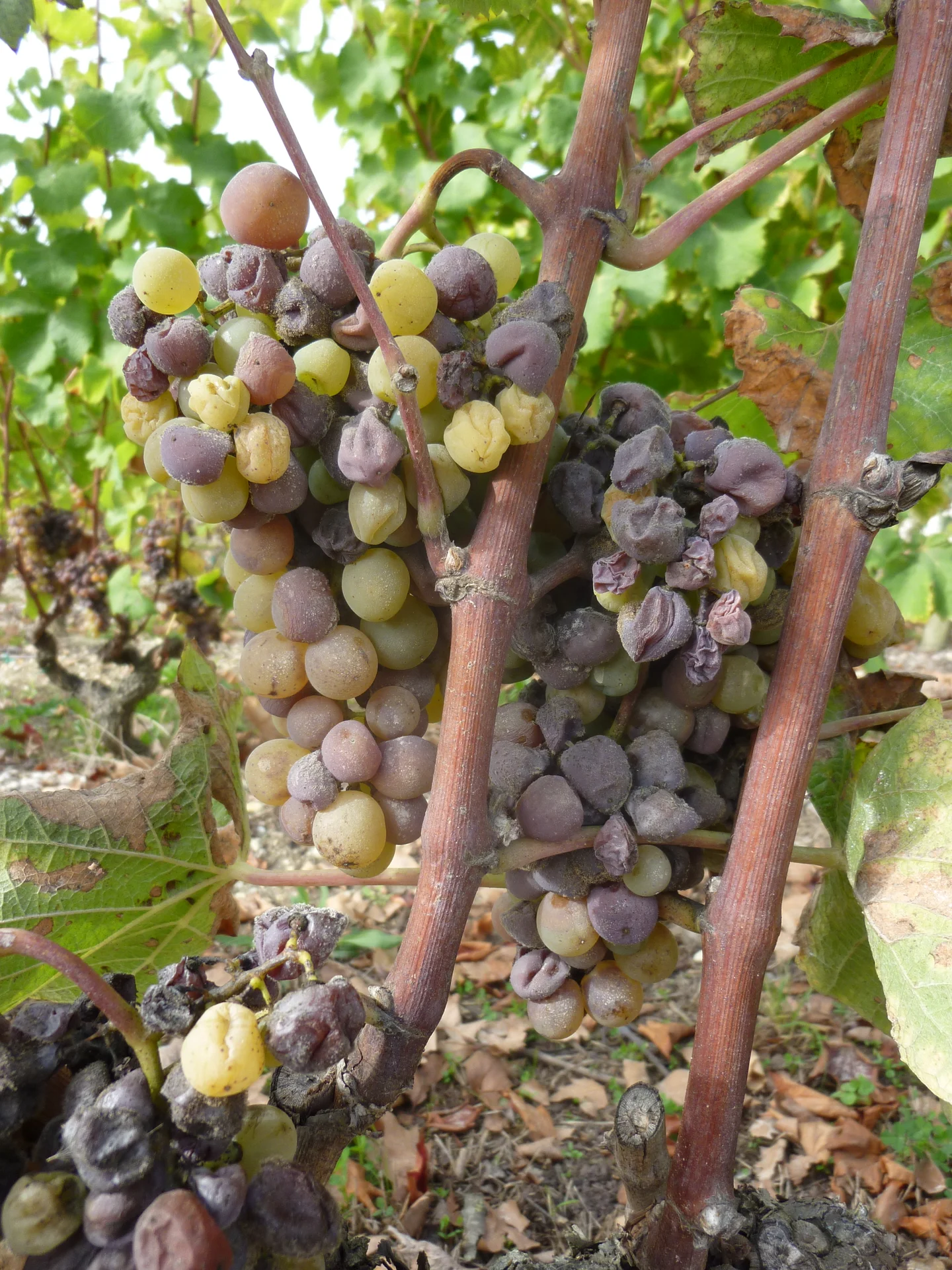
Bunch rot, also called grey mould (Botrytis cinerea), is a fungal rot of ripening fruit — grapes, tomatoes and strawberries. The fungus sneaks in early through wounds, insect holes, cracks and dying flower petals, then explodes as the fruit sweetens in cool, wet, humid weather. One infected fruit grows a fuzzy grey coat and rots its neighbours where they touch, so a tight bunch can collapse in days right at harvest.
davitydave (Flickr) · CC BY 2.0 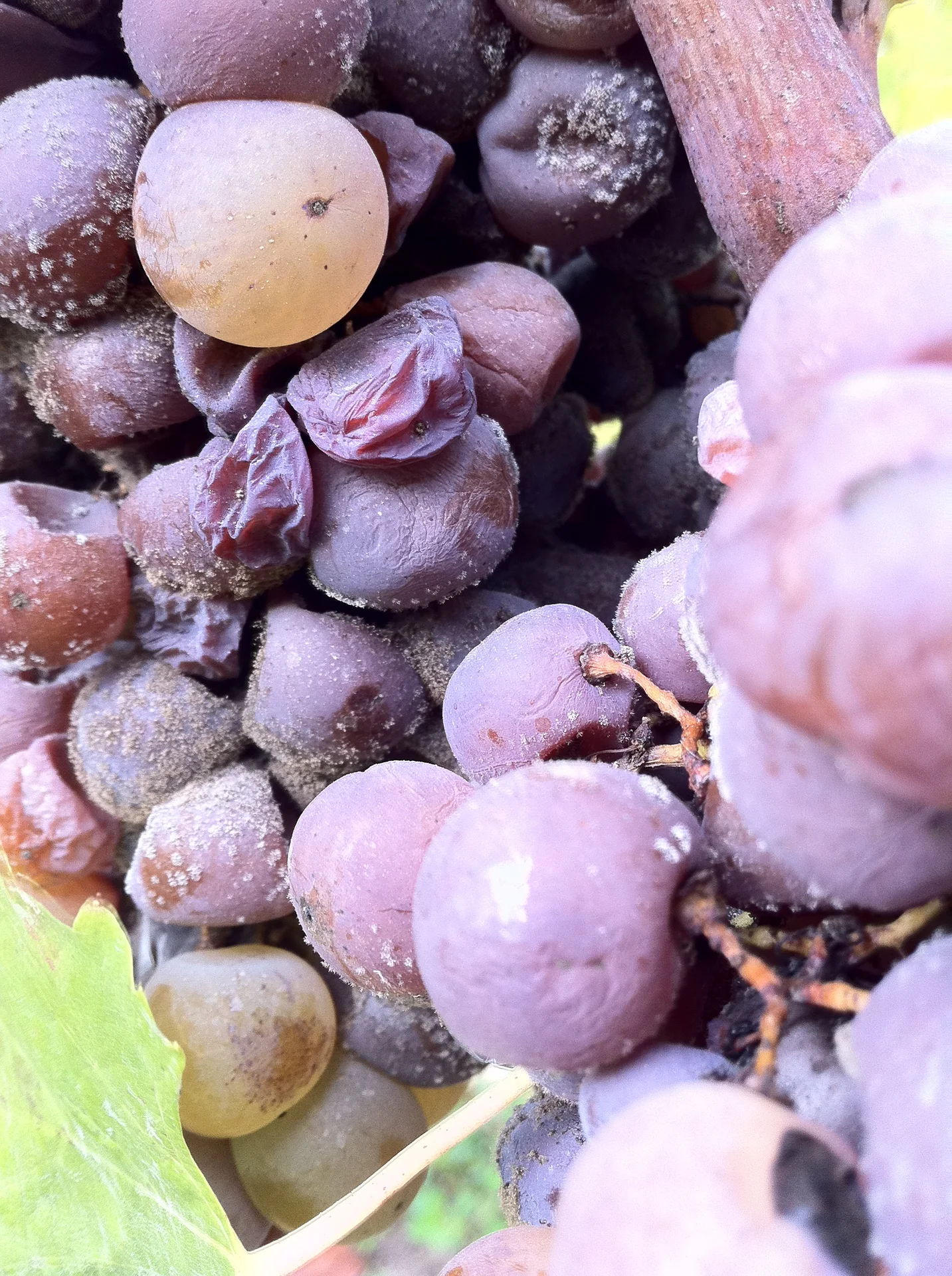
davitydave (Flickr) · CC BY 2.0
Why it matters
Grey mould strikes at the worst possible moment — on ripe fruit right before you pick, after a whole season of work. In cool, wet weather it can rot up to half your fruit (50%), and it spreads fast: one mouldy berry rots the whole bunch where the fruit touch. Worse, it often creeps in silently back at flowering and hides inside the fruit, so by the time you see the grey fuzz it is already inside and established. Once a bunch is rotting in damp weather you cannot spray it clean — you can only slow it and save what is still sound, which is why preventing it and catching the very first berry beats trying to cure it.
When to act
first rotting berries in a bunch as fruit ripens, especially after rain near harvest
This guidance is general, compiled from published agronomic references including FAO and CABI. Thresholds and timing shift with your crop, your variety and the season.
In much of the region a spray is simply called mushonga — medicine. But a chemical group you cannot name is one you cannot rotate, and a product you did not write down has no pre-harvest interval you can observe. Mushonga, and other farming words →
The full Bunch rot (grey mould) field guide
Identify it
The first sign
a single berry or fruit turns soft and brown, usually where two fruits press together, at a split or crack, or at an insect hole. Press it gently and it is watery and gives way — not firm like healthy fruit.
The give-away sign
in damp weather the rotted fruit grows a fuzzy grey-brown mould, like a coat of grey dust or felt. Knock the bunch and a cloud of fine grey dust (the spores — the fungus's seed) puffs off — that puff is how it jumps to the next fruit.
As it spreads
the rot runs from fruit to fruit through the bunch where they touch, so you find a nest of rotten fruit in the tight, crowded middle. Fruit either shrivels into hard, dried mummies or the whole bunch collapses into a soft, mouldy mess.
Where to expect it
the dense inner fruit of a tight bunch, any split or cracked fruit, insect-pecked fruit, fruit lying on wet soil, and the old brown flower petals stuck in the bunch. It loves cool, wet, humid weather and rain near harvest.
Don't confuse it
sour rot smells strongly of vinegar and draws fruit flies — a wet, leaky mess but with no grey fuzz (grey mould does not smell sour). Powdery mildew is a dry, dusty white-grey film on the skin surface that does not turn the fruit soft. Grey mould is the one with the soft collapse and the fuzzy grey coat in cool, damp weather.
Scout for it
When to look
start as the fruit fills out and begins to colour (mid-season) and keep going right through ripening to harvest (late-season) — this is exactly when grey mould strikes. Check within a day or two after every rain or humid, misty spell, and above all after rain close to harvest.
How to walk it
walk a big "W" across the field so you cover all four corners and the middle — not just the edge by the path. Make about 10 stops, and at each stop inspect a few bunches or fruit clusters.
What to check
look at the dense inner fruit of tight bunches, any split, cracked or insect-damaged fruit, fruit touching its neighbours, and fruit resting on wet soil or mulch. Gently open a few crowded bunches and look right into the middle, where it stays wet and the rot hides.
Look in the early morning
while the dew is still on the fruit — the fuzzy grey mould shows up best on damp fruit.
The trigger — act on the very first one:
you do not wait for a count. The first rotting, fuzzy berry you find in a ripening bunch means act now. One nest becomes a rotten bunch within days in wet weather, so remove it and start control the moment you see it — especially after rain near harvest.
Control it
Prevent it first — open up for air and sun (your strongest tool):
grey mould dies in sun and moving air. Remove the leaves shading the bunches so fruit dries fast after rain and dew, space and train your plants so air moves through, and avoid very dense, tight bunches. Keep fruit off wet soil with mulch or supports, and do not over-water as the fruit ripens.
Keep it clean as you go
while scouting, pick off and carry away every rotten or mouldy fruit, dead leaf and old brown flower petal — do not drop them in the row, or the grey spores spread everywhere. Bury, burn or bin them well away from the crop.
Stop the wounds it enters through
the fungus gets in through holes and cracks, so control fruit-piercing and fruit-feeding insects, and water evenly (little and regular, not a sudden flood after a dry spell) so fruit does not split. Handle fruit gently, and time your harvest to dodge wet spells — pick ripe fruit before forecast rain instead of leaving it hanging in the damp.
Act early with a friendly-microbe spray
a microbial-antagonist is a spray of helpful microbes (Bacillus- or Trichoderma-based) that settle on the fruit surface and crowd the mould out. Put it on the developing bunches from around flowering and bunch-closure as a preventer — it works before infection, is not a cure once fruit is rotting, and is safe for you, your family and bees.
Chemical — only as a last resort — botryticide:
a botryticide is a fungicide made specially to kill grey mould. Apply it at the key windows the fungus enters — from flowering / bunch-closure through veraison (veraison = when berries soften and start to change colour, the start of ripening). Safety: cover your skin, eyes, nose and mouth; spray in the cool of the day with the wind behind you; keep it off food, water, children and bees; and respect the pre-harvest interval — the set number of days you must wait between spraying and picking so the fruit is safe to eat (this matters a lot, because grey mould hits near harvest when you are tempted to spray late). Resistance: grey mould stops responding to a chemical used too often, so rotate to a different chemical group each time (resistance = the fungus survives a spray that used to kill it).
If it keeps spreading → salvage, don't chase it
pick and remove all the sound fruit at once — harvesting a little early beats losing it — and cut out and carry away every rotten bunch to stop the spore cloud. When a bunch is already a fuzzy grey mess it is lost: cut your losses and remove it so it does not infect the healthy fruit beside it. After harvest, strip and destroy every shrivelled mummy, pruning and bit of crop trash, because the fungus survives on them and comes straight back next season.
Catch Bunch rot (grey mould) before it costs you the harvest
This guide is the general answer. Divisi works out yours — the week to scout your own field for Bunch rot (grey mould), and what to do the day you find it.


Crops it affects
Plan the crops it attacks

All planting calendars, country by country
Get Insights by email
A short digest of new Divisi articles. No email on quiet weeks.
Frequently asked questions
How do I identify Bunch rot (grey mould)?
The first sign. a single berry or fruit turns soft and brown, usually where two fruits press together, at a split or crack, or at an insect hole. Press it gently and it is watery and gives way — not firm like healthy fruit.
When should I take action against Bunch rot (grey mould)?
first rotting berries in a bunch as fruit ripens, especially after rain near harvest
How do I control Bunch rot (grey mould)?
Prevent it first — open up for air and sun (your strongest tool):. grey mould dies in sun and moving air. Remove the leaves shading the bunches so fruit dries fast after rain and dew, space and train your plants so air moves through, and avoid very dense, tight bunches. Keep fruit off wet soil with mulch or supports, and do not over-water as the fruit ripens.
Which crops are attacked by Bunch rot (grey mould)?
Among the crops covered here: Tomato.