 Divisi
Cassava brown streak disease
Cassava brown streak virus · Viral
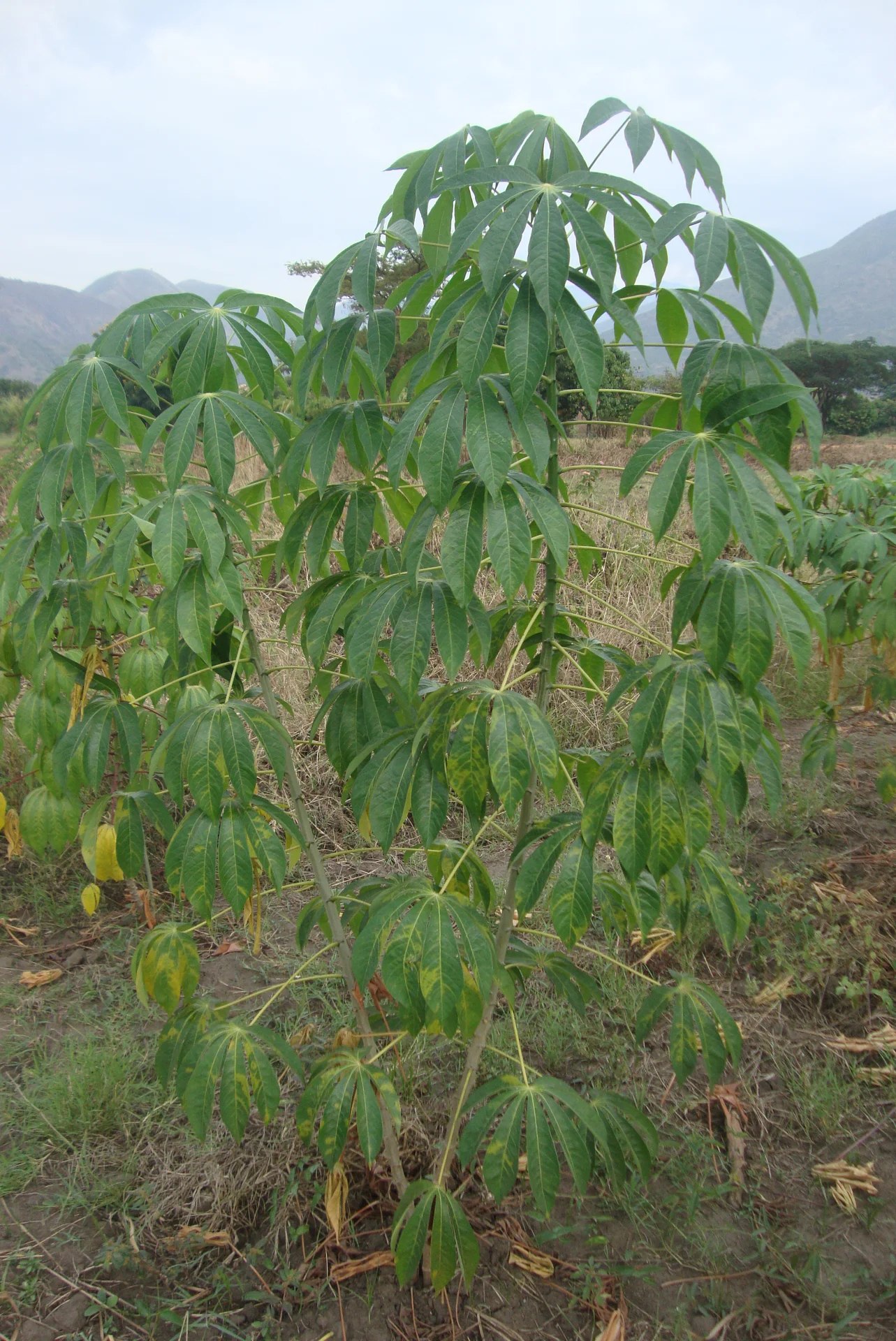
Photo: Phillip Abidrabo · CC BY-SA 3.0
Cassava brown streak disease is a viral disease of cassava carried plant-to-plant by tiny whiteflies and spread over long distances inside infected stem cuttings. Its worst damage is hidden — a dry, brown, corky rot inside the storage roots that makes them unfit to eat or sell, often while the plant still looks almost healthy on top. It is one of the most serious threats to cassava in eastern and southern Africa, and because it is a virus there is no spray that can cure it.
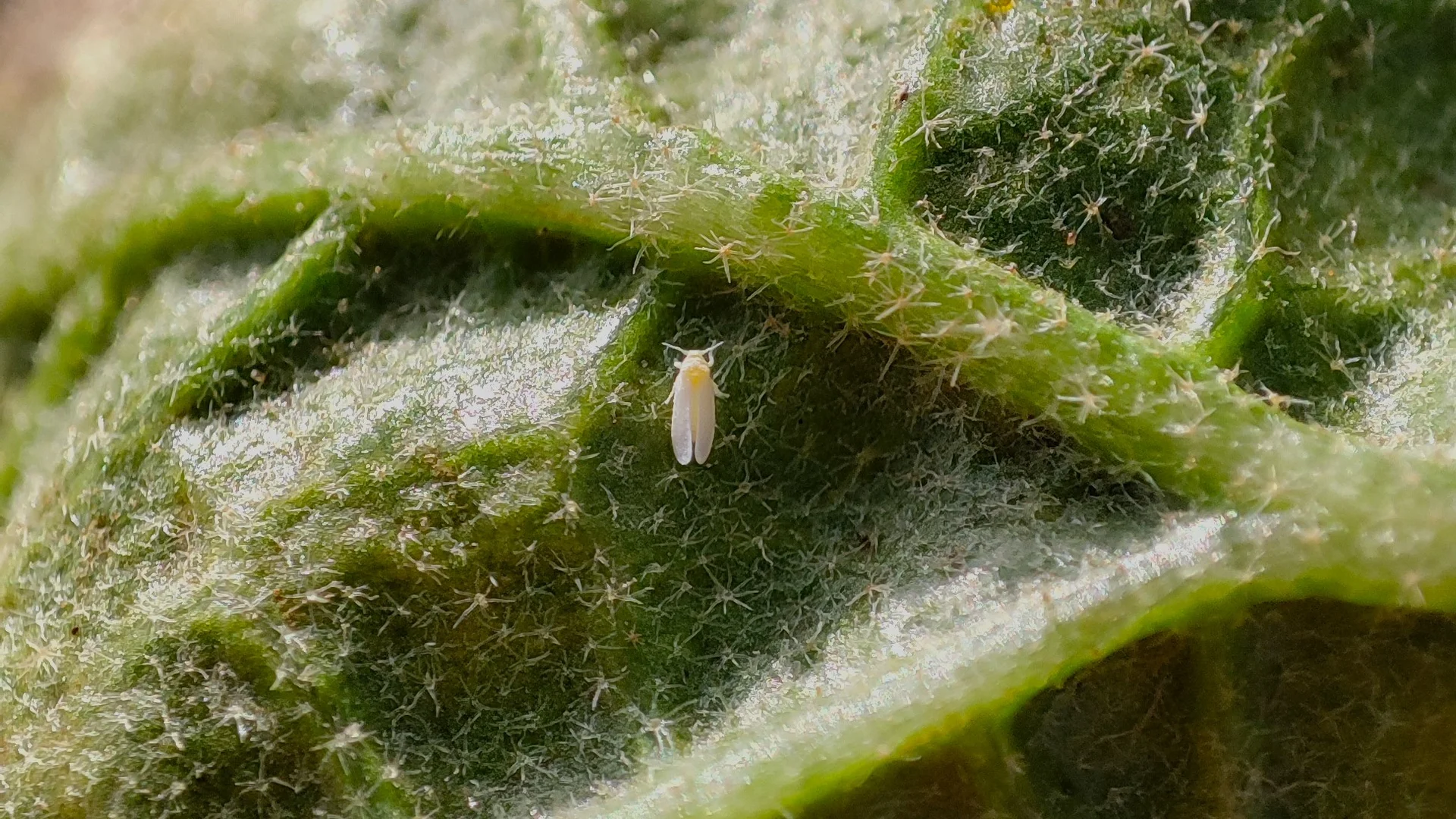
Wee Hong · CC BY-SA 4.0
Why it matters
Cassava is often the crop you fall back on when everything else fails — but this disease can rot the roots from the inside and cost you your whole harvest (up to 100%), sometimes while the leaves still look almost healthy. It is a virus, so no medicine or spray can cure a plant once it is infected: a sick plant stays sick and passes the disease to its neighbours through whiteflies and through any cuttings you take from it. Worst of all, the damage hides inside the roots, so you often don't know how bad it is until you dig — and by then it is too late to save that crop. That is why everything depends on starting clean and pulling out sick plants early.
When to act
leaf chlorosis, stem streaks or whitefly build-up; confirm by cutting a few roots to check for necrosis before harvest
This guidance is general, compiled from published agronomic references including FAO and CABI. Thresholds and timing shift with your crop, your variety and the season.
In much of the region a spray is simply called mushonga — medicine. But a chemical group you cannot name is one you cannot rotate, and a product you did not write down has no pre-harvest interval you can observe. Mushonga, and other farming words →
The full Cassava brown streak disease field guide
Identify it
The first thing you see (leaves)
on the middle-aged leaves, a feathery yellow pattern that follows the small side-veins — as if someone painted yellow feathers or blotches along the fine veins while the rest of the leaf stays green. The leaf keeps its normal shape (it is not twisted or crinkled), and it often shows on some leaves or branches and not others.
As it spreads (stems)
look for dark brown, dead streaks and dashes on the green bark of the stems and along the leaf stalks — like thin scratches of dried blood on the smooth green skin. These brown streaks are a strong sign it is brown streak and not something else.
The damage that costs you (roots)
cut a storage root in two. A sick root has dry, brown, corky rot in patches or rings running through the normally white flesh, and the skin outside may show pinched-in waists or dark pits. Remember — the roots can be badly rotten even when the plant looks almost healthy on top, so never judge by the leaves alone; always cut open a few roots.
The carrier (whitefly)
turn over the soft young leaves at the shoot tips and look for tiny white flies smaller than a grain of rice sitting underneath; tap the tip and a small white cloud rises up. Whiteflies are how the disease moves from one plant to the next.
Do not confuse it with cassava mosaic disease
, the other big cassava virus: mosaic makes a patchy green-and-yellow mottle with twisted, crinkled, misshapen leaves and stunts the whole plant, while brown streak keeps the leaf shape normal, puts the yellow along the veins, and does its real harm inside the roots. Plain hunger from poor soil yellows the whole leaf or its edges evenly, not in a feathery vein pattern.
Scout for it
When to look
start once the crop is growing strongly (the development stage) and keep checking through mid- and late season, right up to harvest. Look more often in warm weather and in low-to-mid-altitude fields, where whiteflies breed fastest and the virus spreads quickest — and remember the root rot only worsens the longer a sick plant stands.
How to walk it
walk a large W across the field so you pass through all four corners and the middle, not just the row beside the path. Stop at about 10 spots along the W.
What to check at each stop
on a few plants look for the feathery yellow along the veins on the middle leaves, brown streaks on the green stems and leaf stalks, and — by turning over the top leaves — any build-up of whiteflies.
Your trigger to act
because a virus has no cure, act on the very first sign — even 1 sick plant in 20 showing vein-yellowing or brown stem streaks means pull that plant out now. A whitefly build-up (a white cloud rising off many shoot tips) is your signal to tighten sanitation and clear old stands.
Cut roots before you harvest
dig and slice open a few roots on about 1 plant in 10, because the roots can be rotten with almost no sign on the leaves. If you find the brown corky rot starting, harvest that field promptly — every extra week in the ground lets the rot spread deeper into the roots.
Control it
Prevent
-
plant a resistant variety (your strongest tool):
where one is available for your area, plant a cassava variety bred to resist or tolerate brown streak. Tolerant means it can carry the virus with far less root rot. This single choice protects you more than anything else you can do in the field.
-
start with clean cuttings:
cassava is grown from stem cuttings, and an infected cutting carries the virus straight into your new field. Plant only clean, certified or known virus-free cuttings, and if you save your own, take them only from plants that stayed free of yellowing and streaks all season. Certified means a programme or officer has checked the mother plants are clean.
Act early — pull out sick plants (roguing):
the moment you spot an infected plant, uproot it and destroy it (burn or bury it) — do not leave it standing and never take cuttings from it. Roguing early, while only a few plants are sick, stops the whiteflies from carrying the virus to the rest of the field.
Cut off the sources around you
whiteflies bring the virus in from nearby old, infected cassava, so clear away old sick stands, do not plant new cassava right beside an old field, and avoid overlapping plantings that keep a green bridge for the flies. Harvest on time — leaving the crop standing extra-long only lets the root rot get worse.
About spraying — the honest truth:
there is no spray that cures this virus, and spraying insecticide to kill the whiteflies rarely stops the disease and is usually not worth the money or the risk for a smallholder. Put your effort and money where it works — resistant varieties, clean cuttings, and pulling out sick plants.
If it keeps spreading — cut your losses cleanly:
when many plants are sick and the roots are already rotting, harvest whatever is still usable now before the rot spreads deeper, and do not save a single cutting from this field. Next season start fresh — a resistant variety from clean cuttings, planted in a different plot away from the old stand, with the old infected plants cleared out so they can no longer feed the whiteflies and the virus.
Catch Cassava brown streak disease before it costs you the harvest
This guide is the general answer. Divisi works out yours — the week to scout your own field for Cassava brown streak disease, and what to do the day you find it.


Crops it affects
Plan the crops it attacks

All planting calendars, country by country
Get Insights by email
A short digest of new Divisi articles. No email on quiet weeks.
Frequently asked questions
How do I identify Cassava brown streak disease?
The first thing you see (leaves). on the middle-aged leaves, a feathery yellow pattern that follows the small side-veins — as if someone painted yellow feathers or blotches along the fine veins while the rest of the leaf stays green. The leaf keeps its normal shape (it is not twisted or crinkled), and it often shows on some leaves or branches and not others.
When should I take action against Cassava brown streak disease?
leaf chlorosis, stem streaks or whitefly build-up; confirm by cutting a few roots to check for necrosis before harvest
How do I control Cassava brown streak disease?
Prevent — plant a resistant variety (your strongest tool):. where one is available for your area, plant a cassava variety bred to resist or tolerate brown streak. Tolerant means it can carry the virus with far less root rot. This single choice protects you more than anything else you can do in the field.
Which crops are attacked by Cassava brown streak disease?
Among the crops covered here: Cassava.