 Divisi
Cercospora leaf blight
Cercospora kikuchii · Fungal
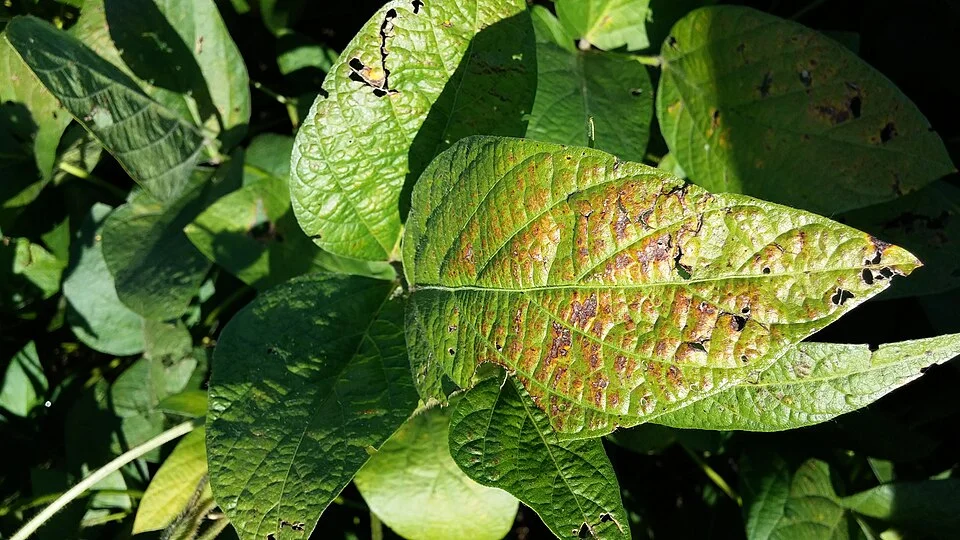
Photo: Francisco Sautua · CC BY-SA 4.0
Cercospora leaf blight is a fungal disease of soybean caused by Cercospora kikuchii. The fungus survives on infected seed and on old crop residue, then infects during warm, humid weather (about 25–32°C) with wet leaves, attacking mainly the upper, sun-exposed leaves and the seed. It shows up late in the season as a bronze-purple blight of the top canopy and as 'purple seed stain' on the beans — cutting seed quality and, through early loss of the top leaves, yield.
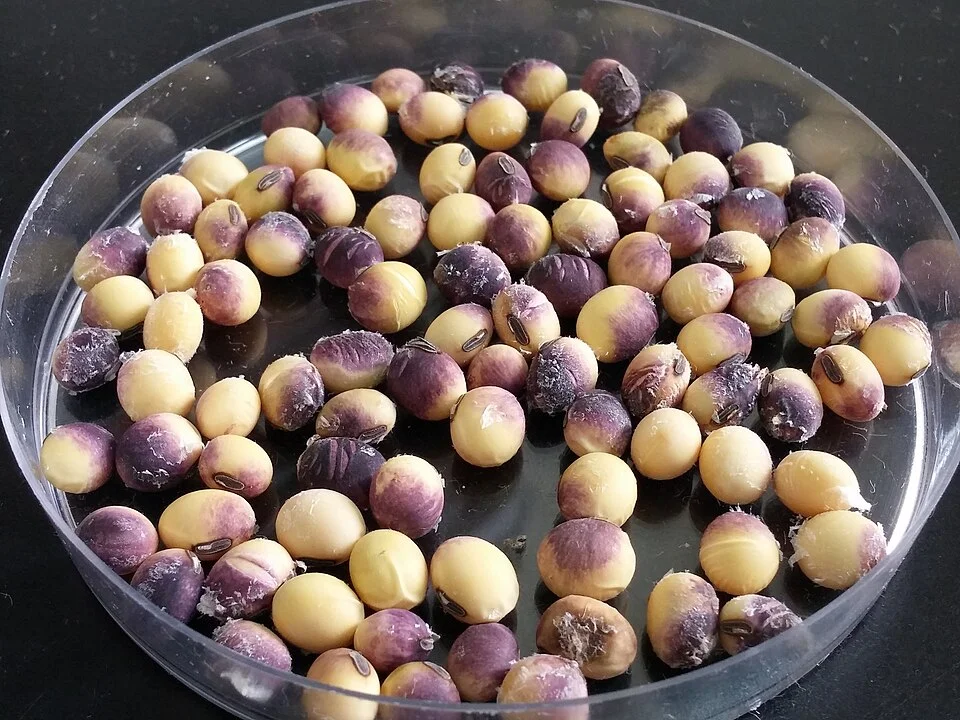
Francisco Sautua · CC BY-SA 4.0 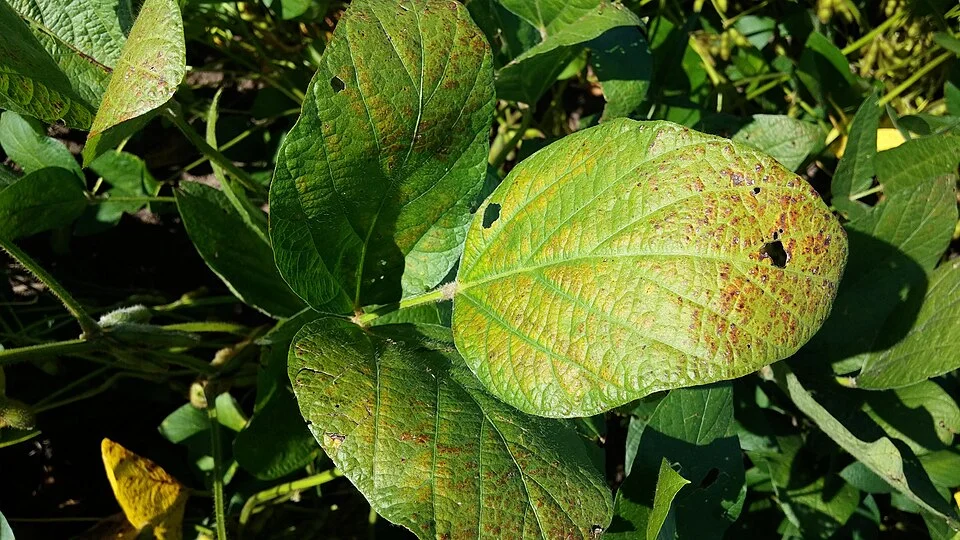
Francisco Sautua · CC BY-SA 4.0
Why it matters
Cercospora leaf blight hits your soybean from two sides. In the field it browns and drops the top leaves during pod-fill — the very leaves that should be filling your pods — and a bad attack can cost you up to about a third (30%) of your yield. On the beans themselves it leaves ugly pink-to-purple stains that buyers reject and that make saved seed rot in the ground and carry the disease into next year. It is hard to beat because the fungus hides on your seed and last year's stubble, and once the blight is spreading in warm, wet weather a spray only slows it — it cannot bring back a leaf that has already browned and fallen.
When to act
Scout from pod-fill onward; consider a fungicide when purple-bronze upper-canopy blighting begins during warm, humid weather in a crop with yield potential.
This guidance is general, compiled from published agronomic references including FAO and CABI. Thresholds and timing shift with your crop, your variety and the season.
In much of the region a spray is simply called mushonga — medicine. But a chemical group you cannot name is one you cannot rotate, and a product you did not write down has no pre-harvest interval you can observe. Mushonga, and other farming words →
The full Cercospora leaf blight field guide
Identify it
The first thing you see
the leaves at the very top of the plant — the ones in full sun — lose their fresh green and take on a dull reddish-purple to bronze cast, as if lightly scorched. This colour comes on late, during pod-fill, and shows up in patches across the field, not evenly everywhere.
As it spreads
those top leaves turn leathery and bronze, the leaf stalks (petioles) and the pods go purple, and the blighted top leaves drop early — often leaving the bare purple stalks still standing while the plant is still green lower down.
The give-away on the seed
when you shell the pods, look for pink to dark-purple blotches and cracks on the seed coat — this is 'purple seed stain'. Nothing else marks soybean seed quite like this, so a stained sample confirms it is cercospora.
Don't confuse it
natural ripening turns the whole plant yellow evenly once the pods are mature — cercospora bronzes only the top while the crop is still filling. Diseases like brown spot and sudden-death start in the lower leaves and yellow between the veins; cercospora starts at the top and looks bronze-purple. And frogeye spot makes small round 'eyes' with grey centres, not this smudgy, all-over bronzing.
Scout for it
When to look
start at flowering and keep going right through pod-fill (the mid-to-late season) — this fungus loves warm, humid weather with wet leaves, so step up your checks after every muggy, rainy or heavy-dew spell around 25–32°C.
How to walk it
once a week, walk a big 'W' across the field so you cover all four corners and the middle — not just the edge nearest the path. Make about 10 stops along the way.
What to check
at each stop, look at the top, sun-facing leaves of a few plants — this disease attacks the top of the canopy first, not the bottom. You are hunting for the very first dull bronze-purple tint on those upper leaves.
When to act
as soon as the top leaves start turning bronze-purple on even 1 plant in 10 during a warm, wet stretch while the pods are still filling, treat now — for this disease the trigger is the first onset, not waiting until half the field is bronzed. If the weather turns dry and cool, the fungus stalls on its own and you can hold off.
At harvest, check the seed
shell a handful of pods from several plants and count the purple-stained beans. Even when it is too late to spray this crop, a stained sample is your signal not to save that seed and to lead with prevention next season.
Control it
Prevent it — start with clean seed:
the fungus rides into your field on the seed and on last year's soybean stubble. Plant clean, treated, disease-free seed, never seed from a purple-stained lot, and rotate — give the land a season or two in maize or another non-soybean crop and bury or clear the old soybean trash so the fungus has nothing left to survive on.
Keep the canopy dry and tough
the disease explodes when leaves stay wet, so don't plant too thick — a more open stand lets air through and dries the leaves faster after rain and dew. Where you can get them, grow more tolerant soybean varieties; they don't stop the disease, but they slow it and buy you time.
If it reaches the trigger — foliar fungicide, used with care:
the recommended spray is a foliar fungicide of the strobilurin or triazole type. These are mostly protectant sprays — they shield the healthy leaves that are left and slow the fungus, but they cannot cure a leaf that has already browned — so spray at early pod-fill the moment bronzing begins in warm, wet weather, and coat the upper canopy where the disease starts. Safety: cover your skin, eyes, nose and mouth, spray in the cool of morning or evening with the wind at your back, keep it well off food, drinking water, children and bees, and wash yourself and your clothes afterwards. Do not harvest until the pre-harvest interval (the waiting time between the last spray and picking, printed on the label) has passed. Resistance: the strobilurin group loses its power fast if overused — never spray the same group twice in a row; rotate to the other group each time so the fungus cannot get used to it.
If it keeps spreading — or it's too late:
if the weather stays warm and wet and the top canopy browns and drops anyway, a second spray rarely pays once those leaves are gone — accept the loss on this crop and harvest on time to save what seed quality you can. Keep any stained seed for grain or sale, never for replanting, and clear the residue. Then next season lead with your strongest defences — clean seed, a tolerant variety, crop rotation, and a thinner stand — so the fungus never gets a foothold again.
Catch Cercospora leaf blight before it costs you the harvest
This guide is the general answer. Divisi works out yours — the week to scout your own field for Cercospora leaf blight, and what to do the day you find it.


Crops it affects
Plan the crops it attacks

All planting calendars, country by country
Get Insights by email
A short digest of new Divisi articles. No email on quiet weeks.
Frequently asked questions
How do I identify Cercospora leaf blight?
The first thing you see. the leaves at the very top of the plant — the ones in full sun — lose their fresh green and take on a dull reddish-purple to bronze cast, as if lightly scorched. This colour comes on late, during pod-fill, and shows up in patches across the field, not evenly everywhere.
When should I take action against Cercospora leaf blight?
Scout from pod-fill onward; consider a fungicide when purple-bronze upper-canopy blighting begins during warm, humid weather in a crop with yield potential.
How do I control Cercospora leaf blight?
Prevent it — start with clean seed:. the fungus rides into your field on the seed and on last year's soybean stubble. Plant clean, treated, disease-free seed, never seed from a purple-stained lot, and rotate — give the land a season or two in maize or another non-soybean crop and bury or clear the old soybean trash so the fungus has nothing left to survive on.
Which crops are attacked by Cercospora leaf blight?
Among the crops covered here: Soybean.