 Divisi
Coffee berry disease
Colletotrichum kahawae · Fungal
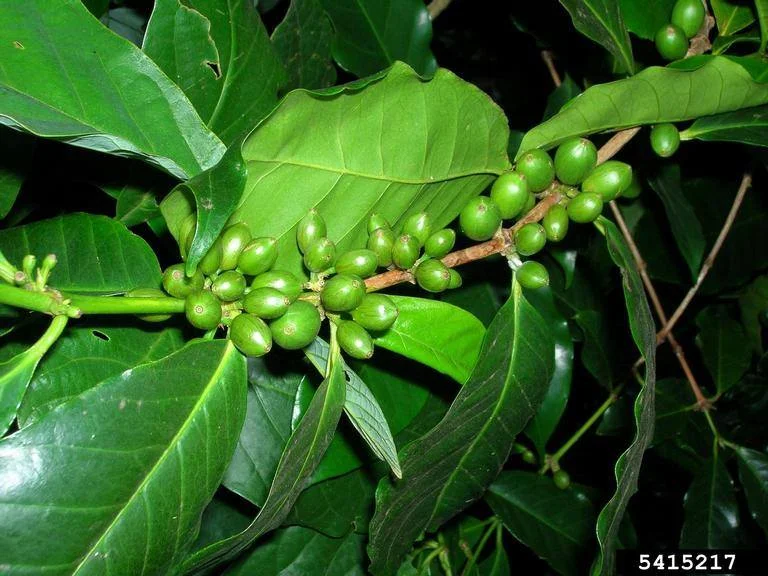
Photo: Forest and Kim Starr, Starr Environmental, Bugwood.org · CC BY 3.0
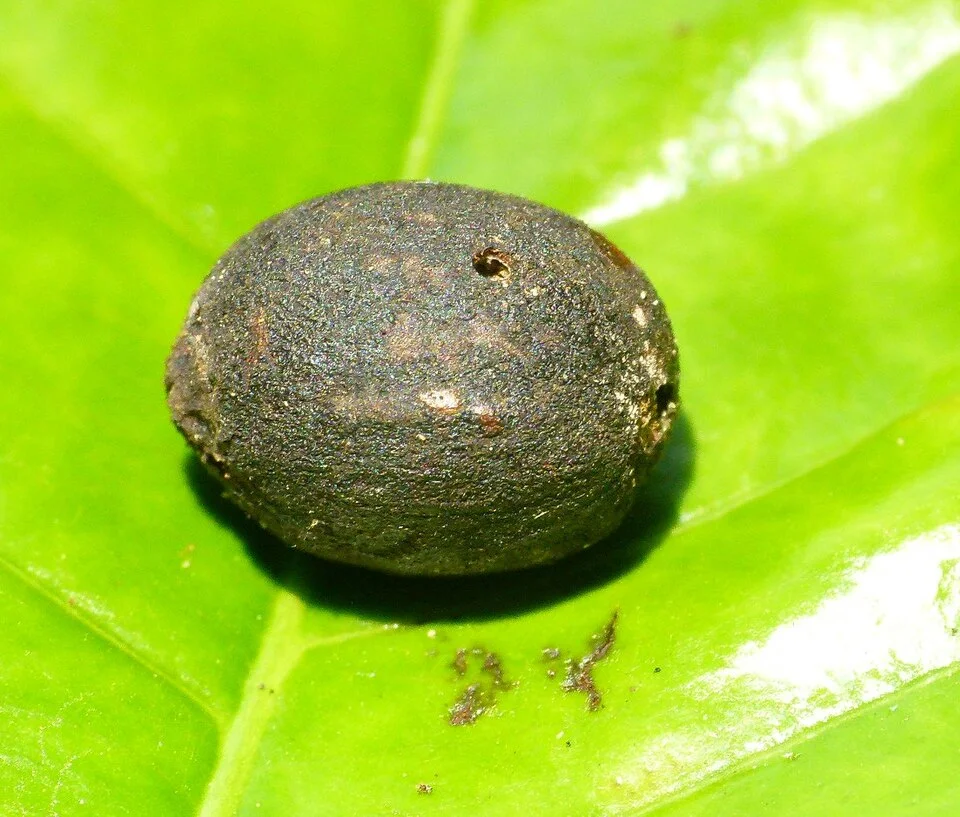
Coffee berry disease (CBD) is an aggressive anthracnose fungus (Colletotrichum kahawae — a fungus that makes dark, sunken, rotting spots) that attacks Arabica coffee in Africa's cool, wet highlands. It rots the green, growing berries — and the flowers before them — turning them into hard black "mummies" that cling to the branch. Every rain splashes fresh spores from those spots onto healthy berries, so one wet, unprotected season on a variety that is not resistant can strip most of the crop.
L. Shyamal · CC BY-SA 3.0 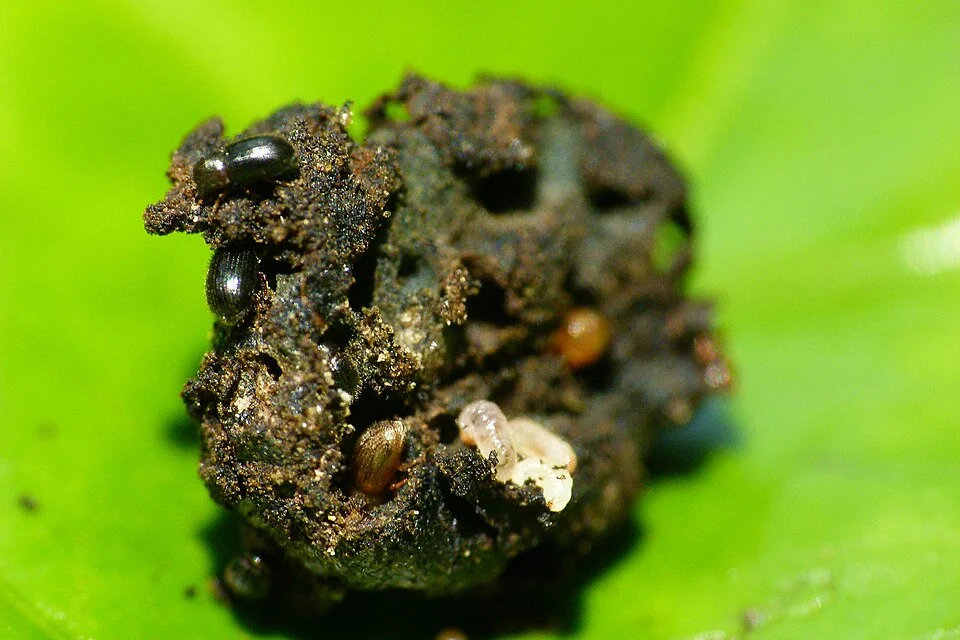
L. Shyamal · CC BY-SA 3.0
Why it matters
Coffee berry disease attacks the green berries you are counting on to ripen and sell. In a cool, wet year on a variety that is not resistant, it can rot up to 80% of your crop — four berries in every five — before they ever ripen. It is hard to stop once it starts, because every shower splashes its spores from the spotted berries onto clean ones, and the fungus hides through the dry season on old black "mummy" berries, bark and young wood, ready to strike again the moment the rains return. That is why protecting the berries early — before and during the wet berry-growing months — matters far more than reacting once the branches are already covered in spots.
When to act
First dark sunken lesions appearing on green (expanding) berries during wet weather at high altitude.
This guidance is general, compiled from published agronomic references including FAO and CABI. Thresholds and timing shift with your crop, your variety and the season.
In much of the region a spray is simply called mushonga — medicine. But a chemical group you cannot name is one you cannot rotate, and a product you did not write down has no pre-harvest interval you can observe. Mushonga, and other farming words →
The full Coffee berry disease field guide
Identify it
The first thing you see
small dark brown to black spots on the GREEN berries — not on the ripe red ones. Each spot is sunken, as if pressed in with a thumbnail, and it grows until the whole berry rots, blackens and dries hard.
In wet, humid weather
the sunken spots grow pink or salmon-coloured smears in their centres. That pink bloom is the fungus making its spores — the "seeds" that the very next rain will splash onto healthy berries nearby.
Dead berries become "mummies"
hard, black, shrivelled berries that stay stuck to the branch instead of falling. If the fungus struck at flowering, the blossoms turn brown and die (this is blossom blight) and those flowers set no berries at all.
Tell it apart from look-alikes
CBD makes a sunken, rotting patch on the berry's skin, with no hole. The coffee berry borer (a tiny beetle) instead drills a small round hole, usually at the berry's tip — a clean hole, not a sunken rot. Coffee leaf rust is different again: orange powder on the underside of the leaves, never on the berries. And a normal over-ripe cherry dries dark too, but it goes red-ripe first and shrivels evenly — CBD kills berries while they are still green.
Scout for it
When to look
from flowering right through the green, expanding-berry months (while the berries are filling out) — this is the stage when berries are most easily infected. Look hardest just after rain, and most of all on cool, wet, high blocks above 1500 m and on varieties known to catch the disease.
How to walk
cross the block in a big "W" so you cover all four corners and the middle, not just the row nearest the path. Make about 10 stops along the way.
What to check at each stop
look at green berries on 2–3 branches at different heights, and pay special attention to the inner, shaded parts of the bush where the leaves stay wet longest — that is where the fungus takes hold first. Turn the berry clusters over and hunt for the sunken dark spots.
Also note any old black mummy berries still hanging from last season and any browned, dead blossoms — these are the fungus's hiding places and your earliest warning that spores are present.
One spotted berry is your trigger — you do NOT wait for a count
Because this disease can take most of the crop, the rule is: the very first green berry with a dark, sunken lesion during a wet spell at high altitude means start protecting the block now. By the time many berries are spotted, the spores are already splashing everywhere and you are behind.
Control it
Prevent it
-
plant a resistant variety (your strongest tool by far):
on wet, high-altitude land, grow a resistant Arabica variety such as Ruiru 11 or Batian wherever you can get the seedlings. A resistant variety shrugs off most of the disease on its own — far more reliably than any spray — and it is the one change that pays off every single wet year.
-
open up and clean up:
prune the bushes to open the canopy so air moves through and wet berries dry faster (the fungus needs long, unbroken wetness to infect). Strip off and burn or bury every black mummy berry from the branches and the ground, and cut back heavy shade in high-rainfall areas. Do this in the dry season before the rains — it removes the spores that would otherwise start the next outbreak.
Act early — pick out the first infected berries:
the moment you find sunken-spot berries, pick them off by hand and destroy them (burn or bury), so they cannot shower spores over the rest of the tree. Keep the canopy open and drying. Stopping it at the first few berries is far easier than fighting a whole spotted block.
If it keeps coming — protect with copper (a last resort, used sparingly):
on susceptible varieties in a wet year, spray a copper fungicide. Copper is a protectant (also called a contact spray) — it coats the berry surface and blocks new spores from getting in, but it does NOT cure a berry that is already infected. So it only works if you put it on early — before and right through the wet flowering and green-berry period — and repeat it, especially after heavy rain washes it off and as new berries grow and need covering.
Spray safely, every time
cover your skin, eyes, nose and mouth and wear long sleeves; spray in the cool of the morning or evening with the wind at your back; keep the spray off food, drinking water, children and bees; and respect the pre-harvest interval — the number of days the product label says to wait between your last spray and picking — so no chemical ends up on the cherries you sell or drink. Wash yourself and your clothes afterwards. Never lean on spraying alone: pair copper with a resistant variety and with clean-up, and if you ever add a different, systemic fungicide (one that soaks into the plant), rotate to another chemical group each season so the fungus never gets used to one.
If it still spreads / when it is too late
if berries keep mummifying despite copper, accept this season's loss but cut off the next one — at season's end strip every mummy off the trees and the ground and burn them, prune hard to open the canopy, and then replace or graft over your susceptible bushes to a resistant variety (Ruiru 11 or Batian). On wet, high land a susceptible variety will be hit again and again — the resistant variety is the only lasting fix, and copper alone will never carry the block through a bad year.
Catch Coffee berry disease before it costs you the harvest
This guide is the general answer. Divisi works out yours — the week to scout your own field for Coffee berry disease, and what to do the day you find it.


Crops it affects
Plan the crops it attacks

All planting calendars, country by country
Get Insights by email
A short digest of new Divisi articles. No email on quiet weeks.
Frequently asked questions
How do I identify Coffee berry disease?
The first thing you see. small dark brown to black spots on the GREEN berries — not on the ripe red ones. Each spot is sunken, as if pressed in with a thumbnail, and it grows until the whole berry rots, blackens and dries hard.
When should I take action against Coffee berry disease?
First dark sunken lesions appearing on green (expanding) berries during wet weather at high altitude.
How do I control Coffee berry disease?
Prevent it — plant a resistant variety (your strongest tool by far):. on wet, high-altitude land, grow a resistant Arabica variety such as Ruiru 11 or Batian wherever you can get the seedlings. A resistant variety shrugs off most of the disease on its own — far more reliably than any spray — and it is the one change that pays off every single wet year.
Which crops are attacked by Coffee berry disease?
Among the crops covered here: Arabica coffee.