 Divisi
Dasheen mosaic virus
Dasheen mosaic virus · Viral
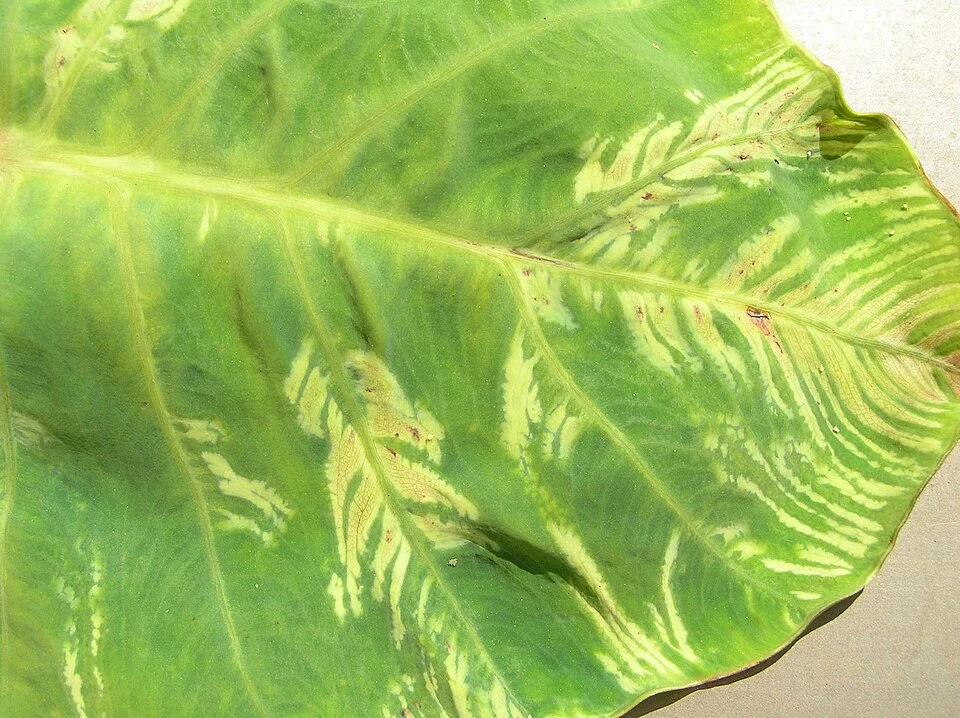
Photo: Plant pests and diseases · CC0
Dasheen mosaic virus is a virus of taro and cocoyam (dasheen). It spreads two ways: aphids carry it on their mouthparts from plant to plant in a quick, brush-past way, and — most of all — it rides inside the suckers and cormlets farmers save and replant. Because you plant your own material year after year, the virus quietly builds up and stays in your local variety from one season to the next.
Plant pests and diseases · CC0 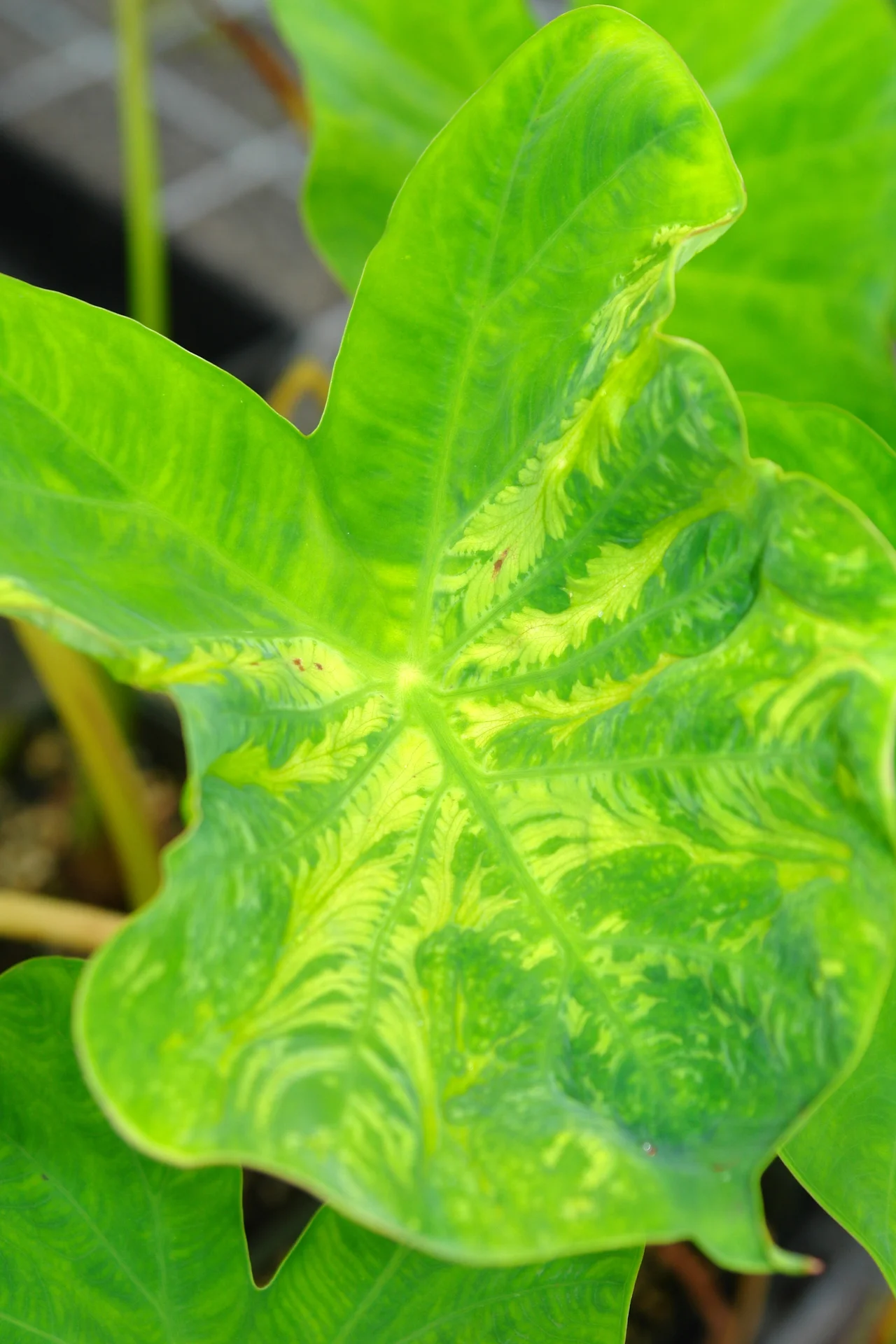
Plant pests and diseases · CC0
Why it matters
Dasheen mosaic virus does not kill the plant outright, but it saps its strength: leaves get patterned and twisted, growth slows, and the corm you dig up is small — a heavy attack can cost you as much as 60% of your harvest. The hard part is that there is no spray that cures a virus. Once a plant has it, it has it for life, and every sucker you take from that plant carries the virus into next season. That is why fixing this is about the planting material you choose, not medicine you apply.
When to act
Select and plant only symptom-free suckers; rogue visibly infected plants as they appear.
This guidance is general, compiled from published agronomic references including FAO and CABI. Thresholds and timing shift with your crop, your variety and the season.
In much of the region a spray is simply called mushonga — medicine. But a chemical group you cannot name is one you cannot rotate, and a product you did not write down has no pre-harvest interval you can observe. Mushonga, and other farming words →
The full Dasheen mosaic virus field guide
Identify it
The first thing you see
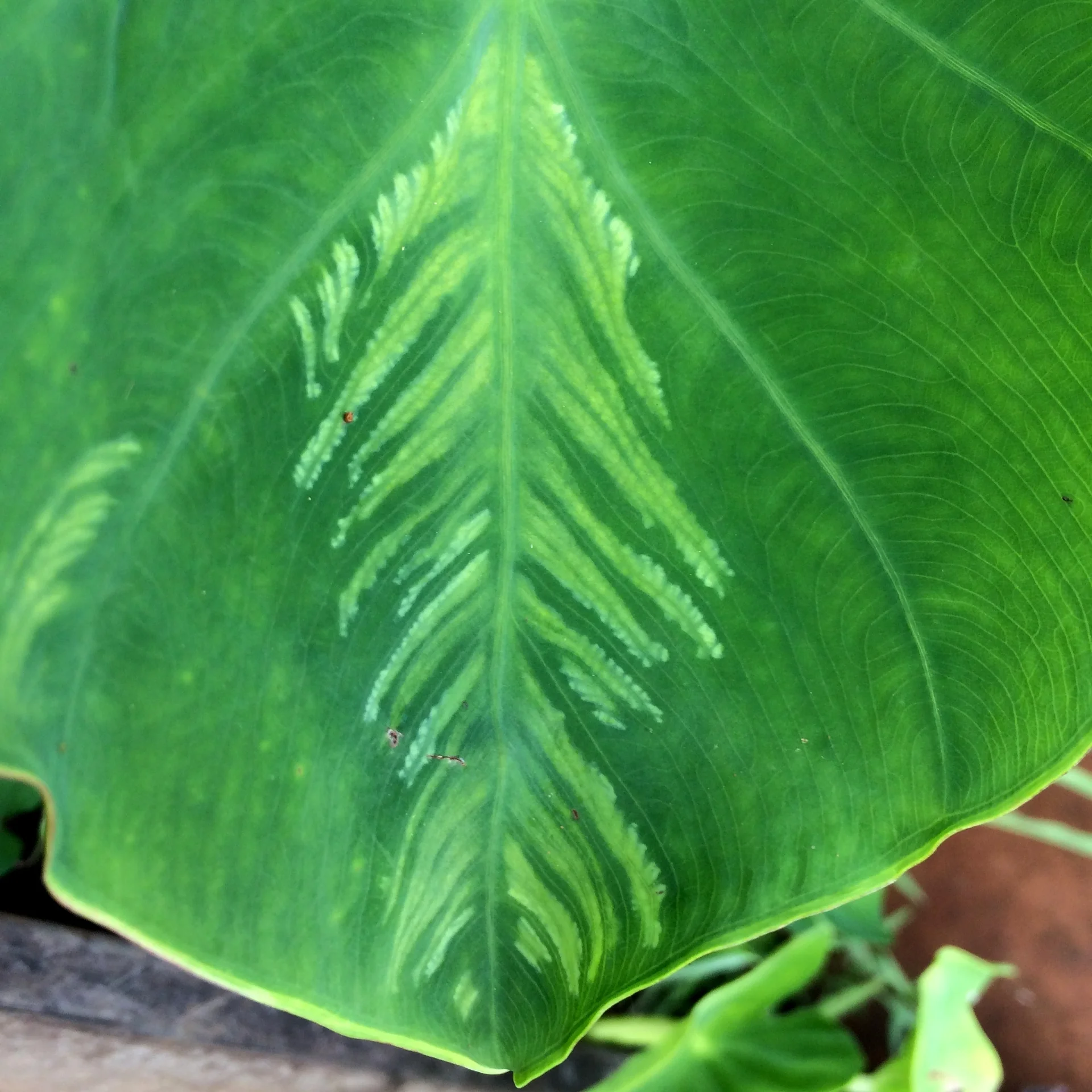
is the pattern on the young leaves: a feathery, fern-like mosaic of pale green and dark green, with the pale colour following the veins so they look banded or outlined. Hold a leaf up to the light and the veins stand out like a leaf-skeleton drawing.
As it spreads
the leaves get distorted and puckered — crinkled, uneven edges, narrower or twisted blades instead of the big smooth heart-shape a healthy taro leaf should have. You may also see short chlorotic (yellow) flecks and streaks scattered on the blade.
Over the whole plant
the signs are quiet but costly: the plant is stunted, stands shorter than its healthy neighbours, and when you lift it the corm is small — the real loss is underground.
Don't confuse it
with plain hunger or drought. A nutrient-short plant is evenly pale all over and a dry plant wilts — both look uniform. Dasheen mosaic is a two-tone pattern that follows the veins and stays even when the plant is well-watered and fed. Sun-scorch makes dry brown patches, not a green-on-green feathery mosaic.
Scout for it
When to look
the virus shows clearest on the flush of new leaves once the plant is actively growing — through the development and mid-season stages, when leaves are expanding fast. This is also when warm, humid weather brings out the aphids that spread it, so it is the window that matters most.
How to walk it
walk a large "W" across the plot so you cover all four corners and the middle, not just the row by the path. Make about 10 stops along the W.
What to check
at each stop look closely at the newest, youngest leaves of a few plants — tilt them to the light to catch the feathery vein-banding — and note any plant that is stunted or twisted. Turn a leaf or two over and look for aphids (tiny soft green or black insects clustered on the underside and on new shoots).
The action number
this virus has no spray threshold — even one clearly infected plant is a source that must go. So the rule is simple: the moment you spot a plant with the feathery mosaic, mark it and pull it out (rogue it) rather than waiting for a count. And before you ever take suckers, walk the mother plants the same way — if you see mosaic on them, do not take planting material from that stand.
Control it
Prevent it
-
start clean (your strongest tool):
only plant suckers and cormlets taken from healthy, symptom-free mother plants. Where you can get it, use virus-free or tissue-cultured planting material (clean plantlets multiplied in a lab), and keep this clean seed plot well away from old, infected gardens so aphids can't carry the virus across. Choosing clean material is the single biggest thing you can do.
-
rogue as you go:
through the season, pull out and destroy any plant showing the mosaic as soon as you see it (this is "roguing"). Every infected plant you remove is one less source of virus for the aphids to pick up and for you to accidentally propagate. Take suckers only from the plants that stayed clean all season.
Grow a tougher variety
where they are available, plant tolerant taro landraces — local varieties that carry the virus with less damage — and, if you can, multiply your clean stock through tissue culture so you keep rebuilding a healthy seed base each year.
Cut off the carriers
the aphids that spread it breed on volunteer taro and weedy wild aroids (cocoyam-family weeds) around your plot. Clear out these volunteers and weedy aroids and any self-sown taro from old gardens — removing their breeding ground lowers the aphid traffic moving virus into your clean crop.
There is no chemical cure — do not waste money on it
No fungicide or "medicine" spray will remove a virus from an infected plant, so spraying the crop to cure the mosaic is a false hope. If you ever spot-spray for the aphids themselves, treat it like any spray: cover your skin, eyes and nose, spray in the cool of the day with the wind at your back, keep it off food, water, children and bees, and wash well afterwards — but understand this only slows the aphids, it does not fix an already-infected plant.
If it keeps spreading → clean out and start over
when mosaic is turning up across much of the plot, the material itself is the problem. Do not save any suckers from that garden — it will only carry the virus forward. Harvest what corms you can, destroy the infected tops, rest the ground of taro and its weedy relatives for a season, and replant next season with fresh clean or tissue-cultured suckers from a healthy source. Breaking the cycle of replanting infected material is the only lasting fix.
Catch Dasheen mosaic virus before it costs you the harvest
This guide is the general answer. Divisi works out yours — the week to scout your own field for Dasheen mosaic virus, and what to do the day you find it.


Crops it affects
Plan the crops it attacks

All planting calendars, country by country
Get Insights by email
A short digest of new Divisi articles. No email on quiet weeks.
Frequently asked questions
How do I identify Dasheen mosaic virus?
The first thing you see. is the pattern on the young leaves: a feathery, fern-like mosaic of pale green and dark green, with the pale colour following the veins so they look banded or outlined. Hold a leaf up to the light and the veins stand out like a leaf-skeleton drawing.
When should I take action against Dasheen mosaic virus?
Select and plant only symptom-free suckers; rogue visibly infected plants as they appear.
How do I control Dasheen mosaic virus?
Prevent it — start clean (your strongest tool):. only plant suckers and cormlets taken from healthy, symptom-free mother plants. Where you can get it, use virus-free or tissue-cultured planting material (clean plantlets multiplied in a lab), and keep this clean seed plot well away from old, infected gardens so aphids can't carry the virus across. Choosing clean material is the single biggest thing you can do.
Which crops are attacked by Dasheen mosaic virus?
Among the crops covered here: Cocoyam / Taro.