 Divisi
Diplodia root and stalk rot
Stenocarpella maydis · Fungal
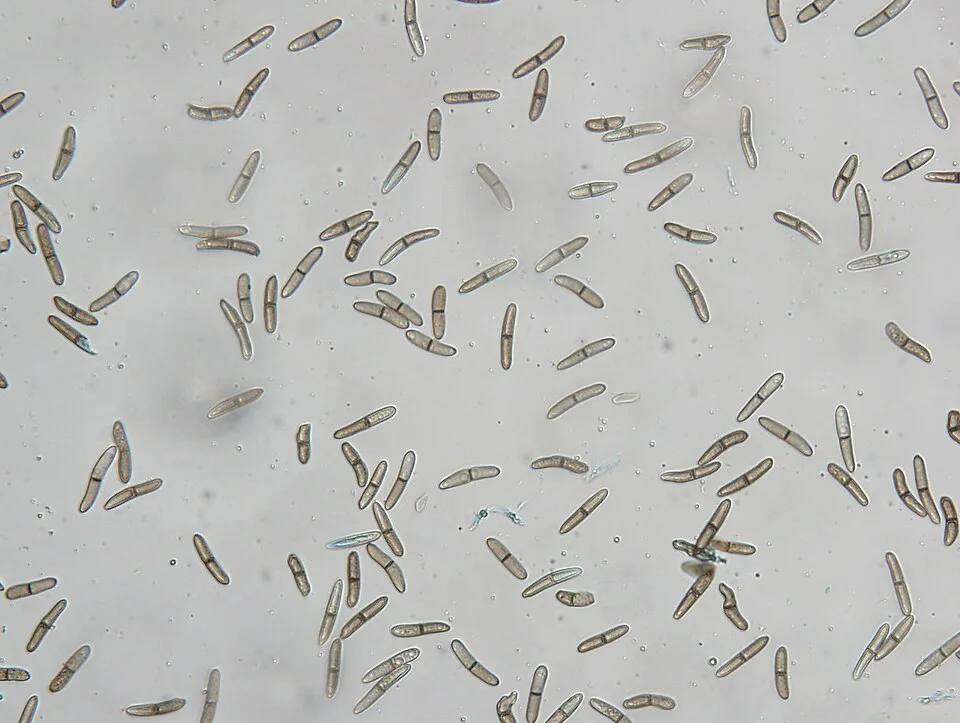
Photo: Jrodrigomendoza · CC BY-SA 4.0
Diplodia root and stalk rot is a fungus (Stenocarpella maydis, once called Diplodia) that lives on old maize stalks and cobs left on the ground and infects the roots, crown and lower stalk of the next maize crop — especially plants that were stressed after flowering. It rots the base from the inside, cutting off water and food, so plants die early, soften and fall over, and cobs fill poorly. The same fungus also causes a white, cottony cob rot.
Why it matters
Diplodia rots your maize from the roots and the base of the stalk upward, so plants die early and topple before the cobs are full — a bad attack can cost you up to 40% of your harvest, and the fallen, mouldy cobs that reach the ground rot and are lost completely. Once the fungus is inside the stalk, no spray can reach it and the plant will not recover — this is a disease you beat before planting, not one you cure in the field. Because it survives on old maize trash and attacks stressed plants, growing maize after maize on the same land, year after year, feeds it and makes each season worse.
When to act
Manage preventively through rotation and residue burial; scout from flowering for early lodging and stalk softening.
This guidance is general, compiled from published agronomic references including FAO and CABI. Thresholds and timing shift with your crop, your variety and the season.
In much of the region a spray is simply called mushonga — medicine. But a chemical group you cannot name is one you cannot rotate, and a product you did not write down has no pre-harvest interval you can observe. Mushonga, and other farming words →
The full Diplodia root and stalk rot field guide
Identify it
The first thing you see
whole plants wilt and die too early, weeks before the rest of the field is ready. The leaves fade to a dull grey-green, then to a bleached, straw colour — the plant looks 'frosted' or scorched from the ground up while nearby healthy plants are still green.
Check the base of the stalk
The lowest one or two internodes (the first 'knuckles' just above the soil) go soft, brown and spongy. Squeeze that section between your thumb and finger: a healthy stalk stays firm and round, but a rotted one crushes flat and hollow like a dry drinking straw. These plants lean over and snap at the base after wind — this falling-over is called lodging.
Split a soft stalk open lengthways
with your knife. Inside, the white pith is shredded and dry, gone tan-to-brown, and scattered over the rind and pith you'll see tiny black specks like grains of pepper or pinheads — these are pycnidia, the fungus's tiny seed-bodies (that is the sure sign it is Diplodia).
On the cobs
look for a white, cottony mould growing over the husk and creeping between the kernels. Affected cobs feel light and dry, the kernels are glued together, the husks bleach pale but stay clamped shut and upright, and tiny black specks appear on the husk. A cob may rot right through from the base.
Tell it apart from look-alikes
Charcoal rot also shreds the pith but leaves a grey-black, sooty dust inside (like charcoal), not brown rot with pepper-specks. Gibberella/Fusarium rots turn the inside pink or reddish, not brown. Ordinary drying at maturity leaves the base firm — if the base is soft enough to crush, it is rot, not ripening. Drought scorches from the tips and the base stays hard; Diplodia softens and rots the base and roots.
Scout for it
When to look
start once the crop has flowered (silking / tasseling) and keep checking right through grain fill and as the crop nears maturity — this is the mid-to-late season window when the rot shows itself. Look hardest in fields that had a dry spell around flowering followed by wet weather during grain fill, and in fields grown on maize after maize with old stalks lying on top of the soil.
How to walk the field
don't just check the edge by the path. Walk a big 'W' shape across the whole field so you touch all four corners and the middle. Make about 10 stops along the 'W', and at each stop check 10 plants (100 plants in all).
The push test — do this at every stop:
push the top of each plant about one hand's width (30 cm) to the side. A sound plant springs back; a rotting plant leans and stays leaning, or its base crumples. For any plant that fails, squeeze the lowest internode — if it crushes flat, that plant is rotting inside. Also glance at the cobs for white mould and at the stalk base for browning and black pepper-specks.
Your action number
count how many of the 100 plants fail the push test. If more than 1 in every 10 plants (about 10 in 100) crush or lean, the field is rotting from the base and will lodge — mark it to harvest that field first, before the wind flattens it (see control). Even a few soft plants early on is your warning to plan the break-the-cycle steps for next season.
Control it
Prevent
-
rotate out of maize (your strongest tool)
The fungus can only live on old maize; it starves without it. Do not plant maize after maize on the same land — grow a non-host crop such as beans, groundnut, soya or sunflower for a season so last year's fungus dies off before maize returns.
-
clear and bury the old maize trash
The fungus overwinters on stalks, roots and cobs left on the soil surface. After harvest, plough the residue down deep or gather and remove/burn it so the next crop starts on clean ground. Buried residue rots away and stops carrying the disease to the new crop.
-
keep plants un-stressed through grain fill
Diplodia hits stressed plants hardest. Don't plant too densely; feed a balanced diet with enough potassium (K) to keep stalks strong; and avoid moisture stress where you can. Strong, well-fed plants resist the rot far better than crowded, hungry ones.
-
grow a tolerant variety
Where you can, choose hybrids bred for strong stalks and stalk-rot tolerance — ask your agro-dealer or extension officer for a variety known to 'stand well'. Good standing ability keeps plants upright even if some infection creeps in.
No spray will cure it — don't waste money
Once the fungus is inside the roots and stalk, fungicides cannot reach it and there is no rescue spray for this rot. Anyone selling you a spray to 'cure' collapsing stalks is selling you nothing — put that money into rotation, clean residue and better seed instead. (This dossier lists only cultural methods and a tolerant variety — there is no chemical control for Diplodia stalk and root rot.)
When it keeps spreading / when it's too late — cut your losses and save the grain
If your push test shows many plants soft and crushing, those plants will not recover — the job now is to rescue the grain before it hits the ground. Harvest that field early, ahead of your other fields, before wind lodges the plants (cobs on wet soil rot and are lost completely). Dry the grain well and throw out any white-mouldy cobs: heavily moulded Diplodia grain can carry toxins, so keep badly mouldy cobs out of your family's food and don't feed them to animals. Then, before next season, break the cycle: rotate away from maize, bury the residue, and come back with a stronger-standing variety.
Catch Diplodia root and stalk rot before it costs you the harvest
This guide is the general answer. Divisi works out yours — the week to scout your own field for Diplodia root and stalk rot, and what to do the day you find it.


Crops it affects
Plan the crops it attacks

All planting calendars, country by country
Get Insights by email
A short digest of new Divisi articles. No email on quiet weeks.
Frequently asked questions
How do I identify Diplodia root and stalk rot?
The first thing you see. whole plants wilt and die too early, weeks before the rest of the field is ready. The leaves fade to a dull grey-green, then to a bleached, straw colour — the plant looks 'frosted' or scorched from the ground up while nearby healthy plants are still green.
When should I take action against Diplodia root and stalk rot?
Manage preventively through rotation and residue burial; scout from flowering for early lodging and stalk softening.
How do I control Diplodia root and stalk rot?
Prevent — rotate out of maize (your strongest tool). The fungus can only live on old maize; it starves without it. Do not plant maize after maize on the same land — grow a non-host crop such as beans, groundnut, soya or sunflower for a season so last year's fungus dies off before maize returns.
Which crops are attacked by Diplodia root and stalk rot?
Among the crops covered here: Maize.