 Divisi
Maize ear rot
Fusarium verticillioides · Fungal
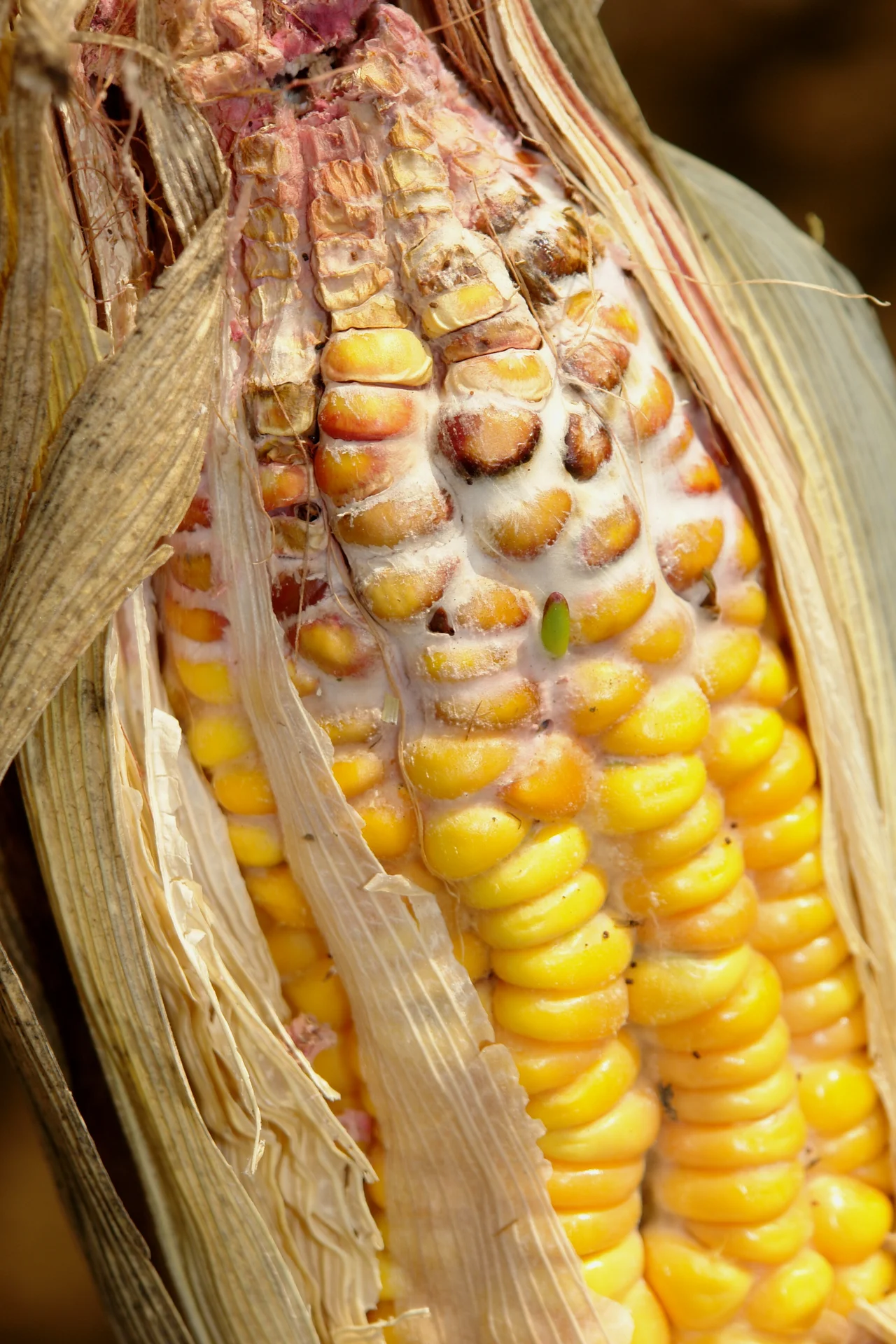
Photo: Scot Nelson, Honolulu, USA · CC0
Maize ear rot is a group of moulds (led by Fusarium, with Aspergillus, Stenocarpella and Penicillium) that rot the cob, usually creeping in through the silks or through wounds punched by stalk borers, earworms and birds. Worse than the yield it eats, several of these moulds make mycotoxins — invisible poisons (fumonisins, aflatoxins) — that make the grain dangerous for people and livestock, so keeping it out of the field and drying fast are everything.
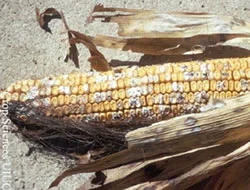
University of Illinois at Urbana-Champaign (UIUC) · CC BY-SA 3.0 nl 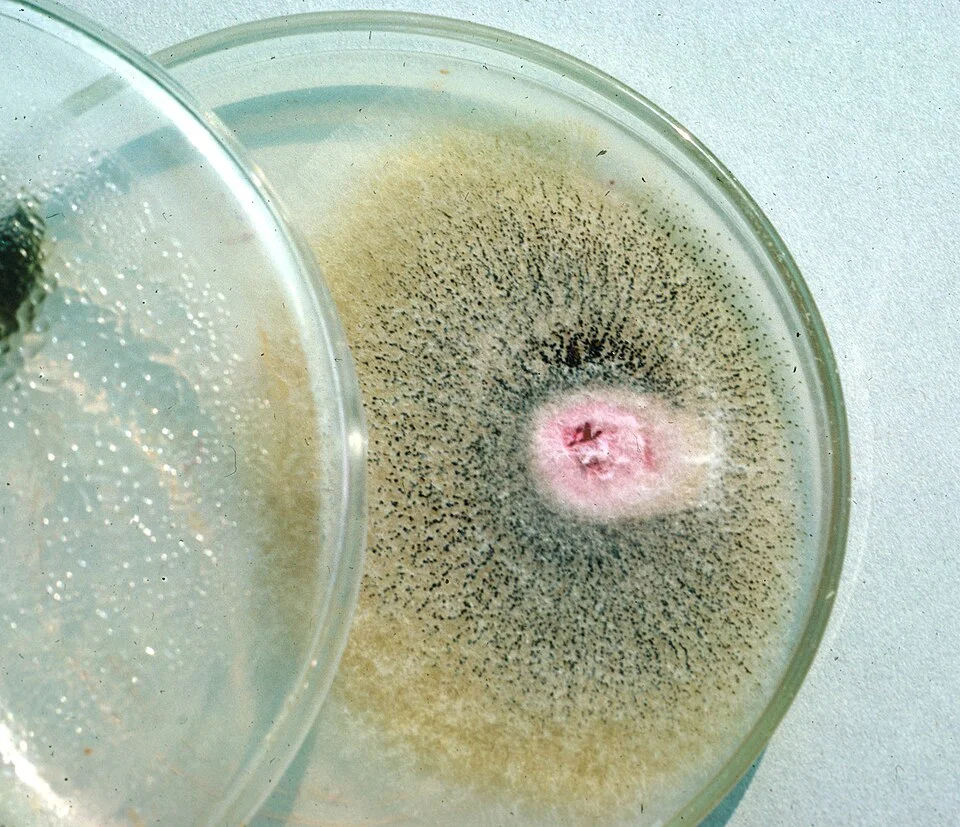
Terry Price, Georgia Forestry Commission, Bugwood.org · CC BY 3.0 us
Why it matters
Ear rot can rot away up to 40% of your maize, but the real danger is hidden: the mould makes mycotoxins — poisons you cannot see, smell or wash off — that can sicken your family and your animals and get grain rejected at the market. Once a cob is rotting there is no spray that will cure it, and the moulds keep growing in the crib if the grain goes in even slightly damp, so a small problem at harvest can spoil a whole store. That is why this pest is won or lost before it starts — with a clean, healthy, well-dried crop.
When to act
Manage preventively; inspect cobs near maturity and harvest and dry promptly once mould appears, keeping mouldy grain out of food and feed.
This guidance is general, compiled from published agronomic references including FAO and CABI. Thresholds and timing shift with your crop, your variety and the season.
In much of the region a spray is simply called mushonga — medicine. But a chemical group you cannot name is one you cannot rotate, and a product you did not write down has no pre-harvest interval you can observe. Mushonga, and other farming words →
The full Maize ear rot field guide
Identify it
The first sign
is usually at the tip of the cob or at any spot an insect or bird has bitten: peel back the husk and you see a felt-like mould growing over the kernels and in the gaps between them, and the grain underneath is dull, shrunken and light as chaff instead of hard and full.
Read the colour
to know which mould you have: soft pink-to-reddish webbing streaking up from the tip or from wounds is Fusarium; a powdery blue-green or olive dust (often near the tip, worse in dry heat) is Aspergillus — the one most linked to the worst poison, aflatoxin; a greyish-white to brown rot that starts at the base of the cob and makes the whole ear rot and stick together is Stenocarpella (Diplodia).
Feel and weight
a bad cob is light and springy, the husk may be bleached and glued to the kernels, and mould can grow right through to the shank so the ear droops or the kernels are chalky and criss-crossed with white threads.
Don't confuse it
with normal ripening. Healthy drying husks go papery-brown on the outside while the kernels stay hard, full and bright — that is fine. Ear rot is mould on the kernels themselves, soft rotten grain, and off colours (pink, blue-green, grey). A few insect-chewed kernels with no mould are just insect damage, not rot — but they are the open door the mould walks through.
Scout for it
When
start once the crop is late in the season — from silking, through the doughy grain-fill stage, and right up to harvest. This is the only window ear rot cares about: wet, humid weather over the silks plus any cob wounds is exactly what the mould waits for.
How
walk a big "W" across the field so you cross all four corners and the middle, not just the row by the path. Make about 10 stops along the way.
What to check
at each stop pick a cob and peel the husk halfway down on 1 plant — about 10 cobs in all. Look hard at the tip and at any insect or bird wounds, because that is where the mould starts. Check extra cobs on any plant a stalk borer or earworm has attacked, and on lodged (fallen) plants.
The number that triggers you to act
there is no spray, so the trigger is different — the moment you find mould on even one cob near maturity, treat the whole field as at risk and get ready to harvest and dry fast. If you peel 10 cobs and 1 or more shows mould, do not leave the crop standing to "finish" in the field — every extra wet day multiplies the mould and the poison.
Also watch the weather and the calendar
a spell of warm, wet, humid weather (roughly 18–30°C) from silking onward, or a crop you cannot harvest on time, both push the risk up sharply — scout more often when either is true.
Control it
Prevent first
-
this is your strongest tool. Grow a tolerant hybrid with tight husk cover
Choose a variety known to resist ear rot whose husks wrap the cob tip snugly and stay closed, so rain and insects cannot reach the silks and kernels. Loose, open, upright cobs collect water and invite the mould.
-
shut the insects' door
The moulds mostly enter through wounds, so control stalk borers, earworms and birds that chew the cobs. Fewer wounds means far fewer places for the fungus to get a hold — this alone cuts rot sharply.
-
grow a strong, unstressed plant
Avoid drought stress and nutrient starvation before and during grain fill; a hungry, thirsty crop is a wide-open target. Rotate maize with a non-cereal crop and plough in or clear old mouldy stalks and cobs so last season's mould does not carry over.
Act at maturity
-
harvest on time, do NOT let it stand
Once the grain is mature, bring it in promptly — a crop left drying on wet, standing plants is where most rot and poison build up. As you harvest, sort out and throw away (do not eat, do not feed to animals) any cob with visible mould, and keep it separate from the clean cobs.
-
dry hard and fast, then store dry
The mould stops growing only when the grain is properly dry, so dry it quickly to a safe, storable moisture (dry enough that a kernel is hard and cracks rather than dents when you bite it). Store the clean, dry grain in a clean, well-ventilated crib or bag off the ground, keep it dry, and check it for warmth or fresh mould through the season.
There is no chemical cure and no rescue spray for ear rot
— do not waste money on one, and never try to "clean" mouldy grain to sell or eat, because the mycotoxins (the hidden poison) stay in the grain even after the mould is brushed off. If any spraying is done, it is only the insect control above — and then follow full safety: cover your skin, eyes, nose and mouth, spray in the cool of the day with the wind at your back, keep it away from food, water, children and bees, respect the waiting period before harvest (the pre-harvest interval — the minimum days between spraying and picking), and wash yourself and your clothes afterwards.
If it keeps spreading / when it is too late
if wet weather sets in and rot is climbing through the field, harvest early rather than lose more — a slightly early, clean crop beats a fuller, mouldy one. Cut your losses on the badly rotten cobs: separate them out, keep them completely out of your family's food and your animals' feed, and use only for non-food purposes or discard them. Save and store only the clean, well-dried grain.
Catch Maize ear rot before it costs you the harvest
This guide is the general answer. Divisi works out yours — the week to scout your own field for Maize ear rot, and what to do the day you find it.


Crops it affects
Plan the crops it attacks

All planting calendars, country by country
Get Insights by email
A short digest of new Divisi articles. No email on quiet weeks.
Frequently asked questions
How do I identify Maize ear rot?
The first sign. is usually at the tip of the cob or at any spot an insect or bird has bitten: peel back the husk and you see a felt-like mould growing over the kernels and in the gaps between them, and the grain underneath is dull, shrunken and light as chaff instead of hard and full.
When should I take action against Maize ear rot?
Manage preventively; inspect cobs near maturity and harvest and dry promptly once mould appears, keeping mouldy grain out of food and feed.
How do I control Maize ear rot?
Prevent first — this is your strongest tool. Grow a tolerant hybrid with tight husk cover. Choose a variety known to resist ear rot whose husks wrap the cob tip snugly and stay closed, so rain and insects cannot reach the silks and kernels. Loose, open, upright cobs collect water and invite the mould.
Which crops are attacked by Maize ear rot?
Among the crops covered here: Maize.