 Divisi
Fruitlet core rot
Fusarium ananatum · Fungal
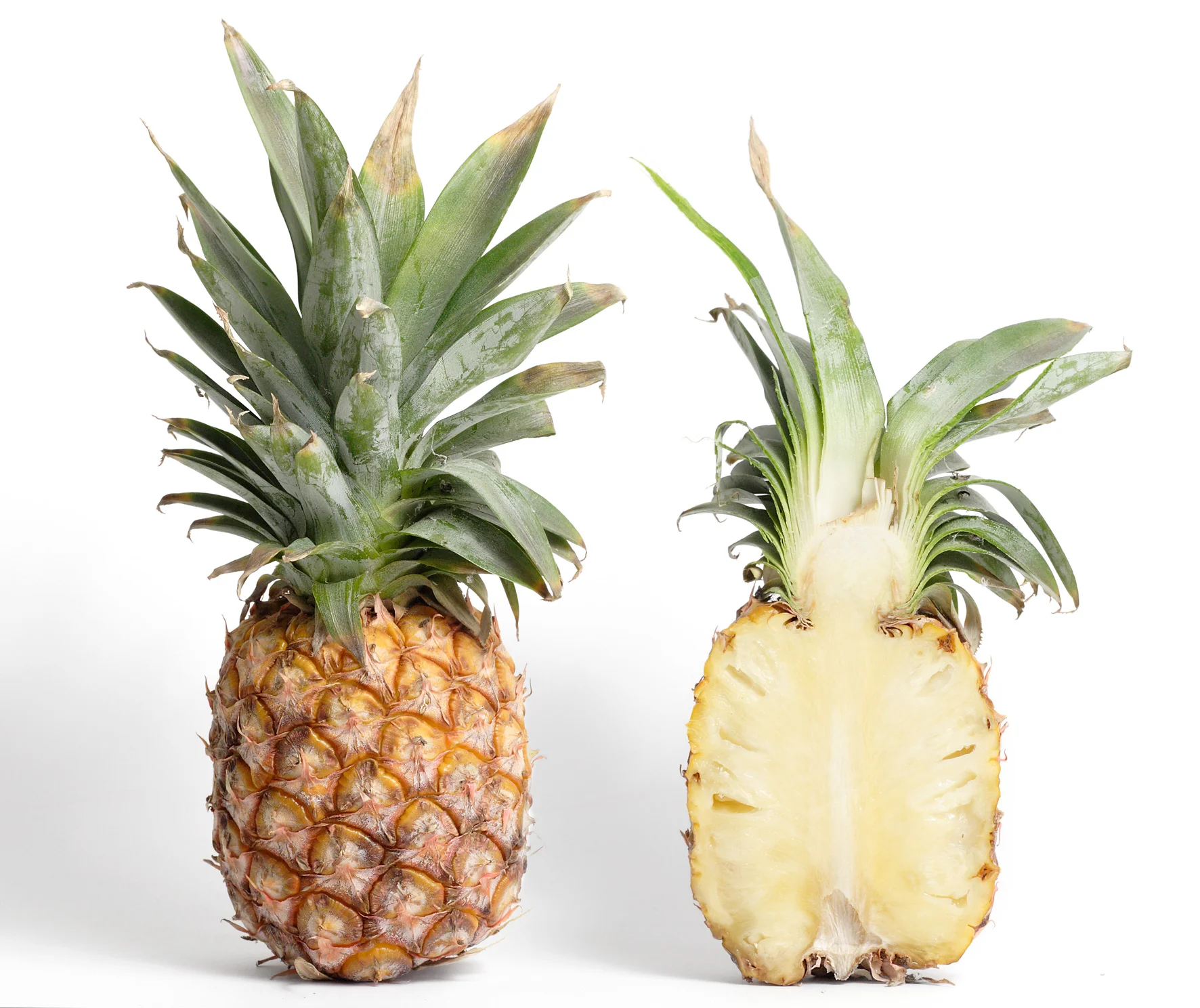
Photo: fir0002/flagstaffotos.com.au · GFDL 1.2
Fruitlet core rot is a hidden fungal rot of pineapple. The fungus sneaks in through the open flower during bloom and quietly rots the core of individual fruitlets (the "eyes" that make up the fruit). From the outside the pineapple can look perfect — the rot only shows when you cut it open. Warm, wet, humid weather during flowering, plus mites and small insects crawling into the flowers, are what let it in.
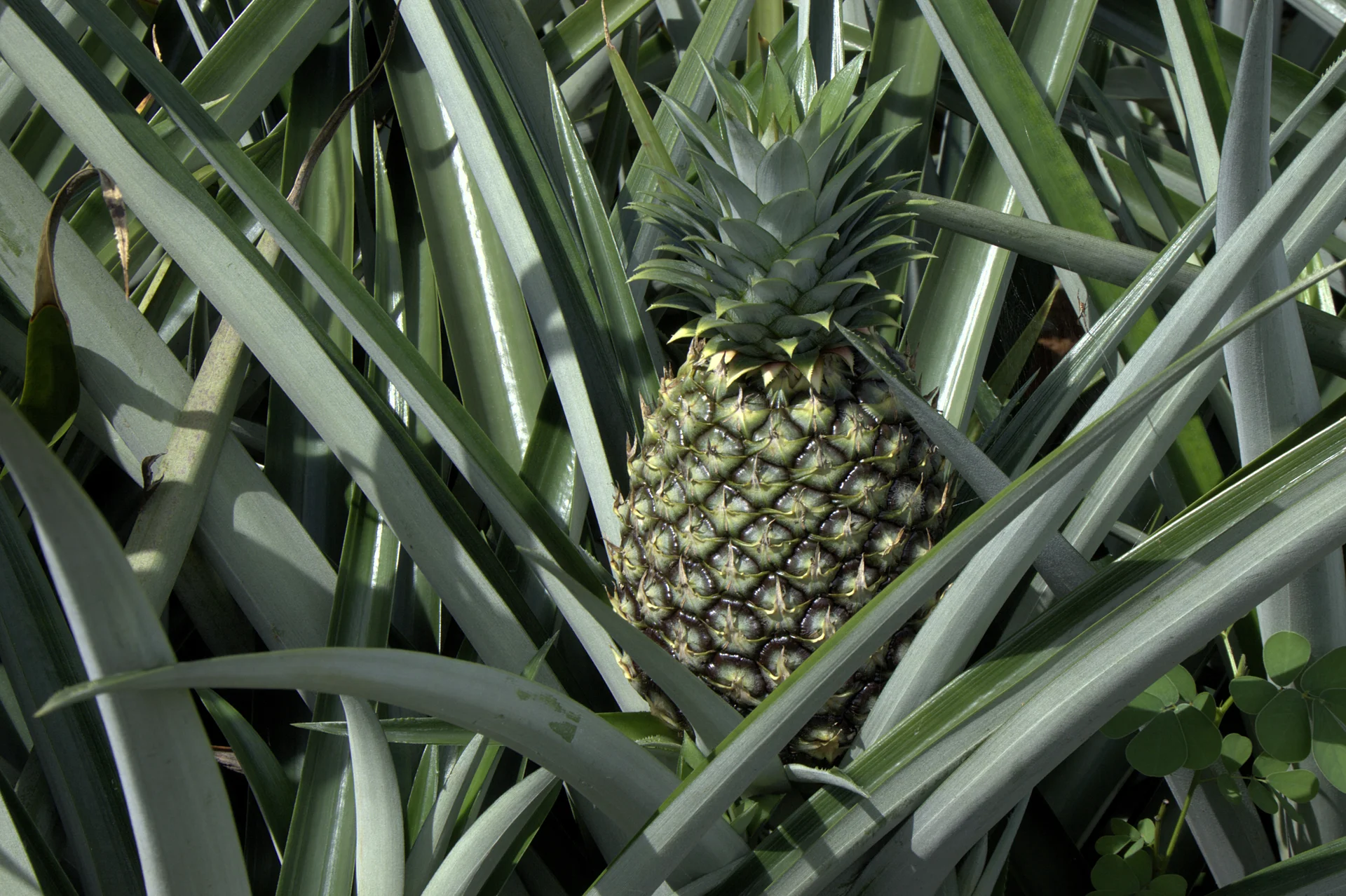
Markus Leupold-Löwenthal · CC BY-SA 3.0
Why it matters
This rot can quietly spoil up to 3 in every 10 fruit — almost a third of your harvest — and it does it where you can't see: a pineapple that looks perfect on the outside can be brown and rotten in the eyes when you or your buyer cuts it, so it gets rejected or downgraded at the worst moment. It is hard to beat because the damage is already done weeks earlier, when the fungus slipped in through the open flower — by the time the fruit is big there is nothing you can do to save it. All you can protect is the next flowering, so knowing which blocks carry the disease is everything.
When to act
internal browning found when cutting sample fruit at or after flowering in a known problem block
This guidance is general, compiled from published agronomic references including FAO and CABI. Thresholds and timing shift with your crop, your variety and the season.
In much of the region a spray is simply called mushonga — medicine. But a chemical group you cannot name is one you cannot rotate, and a product you did not write down has no pre-harvest interval you can observe. Mushonga, and other farming words →
The full Fruitlet core rot field guide
Identify it
What you see when you cut the fruit (the clearest sign)
slice a ripe pineapple down the middle and look at the eyes near the core. Affected fruitlets show a firm brown-to-black rot at their centre, about the size of a small bean, while the flesh around them still looks yellow and healthy. Usually only some eyes in a fruit are rotten, not all of them.
On the outside (easy to miss)
the skin normally looks completely normal. Sometimes an affected eye is slightly sunken or a little darker than its neighbours — but you often cannot tell a rotten fruit from a good one until you open it.
Don't confuse it with black-heart (a cold problem)
black-heart makes a water-soaked, translucent brown patch that starts at the core and spreads outward through the whole fruit, and it comes from fruit getting too cold after harvest — not from the flower. Core rot stays as separate firm brown spots in single eyes, scattered, with good flesh in between.
Don't confuse it with marbling either
marbling (a bacterial problem) turns the lower flesh hard, woody and reddish-brown in streaks. Core rot is a soft-to-firm rot centred on the eye's core, not woody streaks through the flesh.
Scout for it
When to look
from flowering right through to harvest — this is your fruit-filling and ripening window (the crop's mid- and late-season stages), when the rot that entered at bloom is developing inside. Pay special attention to any block where the flowers opened during wet, humid, or rainy weather, because that is when the fungus gets in.
Because it hides, you must cut fruit — you cannot scout it from the outside
Walk a large "W" across the block so you cover all four corners and the middle, not just the row by the path.
Take about 10 fruit
from different points along your "W" (pick fruit that are near maturity), and slice each one down the middle to look at the eyes around the core.
Your action number
if you find brown rotten fruitlet cores in even 1 of the 10 fruit you cut, treat that whole block as a known problem block — the disease is present and will hit again. Mark it, and put your prevention effort into that block's next flowering.
Write down the weather at flowering
(was it wet? humid?) for each block, plus how many flowers were still open and moist. Wet flowering + past rot = the blocks to protect first.
Control it
Prevent first
-
good practices are your strongest tool (they cut the rot by about half):
where you can choose when to force flowering (trigger the crop to bloom), avoid triggering it so the flowers open in the cool, wet season — dry-weather flowering lets far less fungus in. Feed the crop a balanced diet and do not over-do the nitrogen (too much soft growth invites rot). At the end, harvest at the right maturity and cool the fruit quickly after picking, and clear away old rotten fruit so spores don't build up.
-
grow a tougher variety:
where you can get it, plant a less-susceptible variety or clone — especially ones with tighter, more closed flowers that the fungus and mites find harder to enter. This lowers your risk block by block before the season even starts.
Act on the carriers
the fungus is ferried into open flowers by mites and small flower-visiting insects (these are the "vectors" — the little carriers that move the disease). Keep them down: remove weedy flowering plants around the block that feed them, and keep the field clean, so fewer of them reach your open pineapple flowers.
Chemical — last resort, only in a known problem block:
in a high-value block that keeps getting hit, an acaricide (a mite-killing spray) applied around flowering knocks down the mites that carry the fungus into the flowers. Safety every time: cover your skin, eyes, nose and mouth; spray in the cool of morning or evening with the wind behind you so it blows away from your face; keep it off food, drinking water, children and bees; wash yourself and your clothes afterwards; and respect the pre-harvest interval — the number of days you must wait between the last spray and picking the fruit, printed on the label — so no chemical is left on fruit you sell. To stop the mites becoming immune, rotate to a different chemical group each time rather than using the same one over and over (that build-up of immunity is called resistance).
If it keeps spreading — or it's already too late:
once a fruit is rotting inside, you cannot cure it — no spray reaches the core. If a block shows rot at harvest, cut your losses on that fruit: sell or process the affected fruit quickly rather than storing it, keep clearly-rotten fruit out of your good sales lots so a buyer's cut doesn't reject the whole batch, and remove and destroy rotten fruit so it doesn't seed next season. Then put everything into protecting that block's next flowering — dry-weather forcing, a tougher variety, clean fields, and mite control — because that is the only flowering you can still save.
Catch Fruitlet core rot before it costs you the harvest
This guide is the general answer. Divisi works out yours — the week to scout your own field for Fruitlet core rot, and what to do the day you find it.


Crops it affects
Plan the crops it attacks

All planting calendars, country by country
Get Insights by email
A short digest of new Divisi articles. No email on quiet weeks.
Frequently asked questions
How do I identify Fruitlet core rot?
What you see when you cut the fruit (the clearest sign). slice a ripe pineapple down the middle and look at the eyes near the core. Affected fruitlets show a firm brown-to-black rot at their centre, about the size of a small bean, while the flesh around them still looks yellow and healthy. Usually only some eyes in a fruit are rotten, not all of them.
When should I take action against Fruitlet core rot?
internal browning found when cutting sample fruit at or after flowering in a known problem block
How do I control Fruitlet core rot?
Prevent first — good practices are your strongest tool (they cut the rot by about half):. where you can choose when to force flowering (trigger the crop to bloom), avoid triggering it so the flowers open in the cool, wet season — dry-weather flowering lets far less fungus in. Feed the crop a balanced diet and do not over-do the nitrogen (too much soft growth invites rot). At the end, harvest at the right maturity and cool the fruit quickly after picking, and clear away old rotten fruit so spores don't build up.
Which crops are attacked by Fruitlet core rot?
Among the crops covered here: Pineapple.