 Divisi
Sorghum grain mould
· Fungal
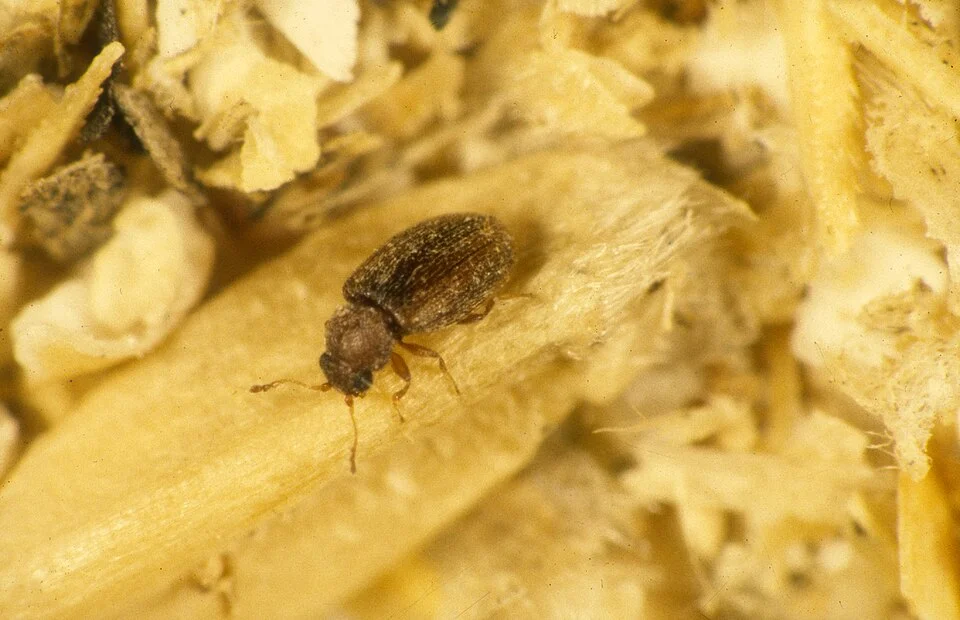
Photo: division, CSIRO · CC BY 3.0
Grain mould is a team of fungi — mainly Fusarium, Curvularia, Alternaria and Phoma — that settle on the developing grain of sorghum and pearl millet when the head flowers and fills during warm, wet, humid weather (about 20-30 degrees C with the air staying damp, above 85% humidity). They rot and discolour the grain while it is still forming, so the harvest is light, chalky and low-value. Worse, some of these fungi make invisible poisons called mycotoxins that can make the grain unsafe to eat or to feed to animals. The same fungi, signs, timing and controls apply to both crops; the only difference is the shape of the head you are checking.
Why it matters
Grain mould attacks the part you actually harvest — the grain itself — so in a bad wet year it can spoil up to half of your crop (50%) on sorghum or pearl millet. Once the fungus is inside the forming grain there is no spray that can un-rot it; the damage is done and locked in. On top of the lost weight and the low price mouldy grain fetches, some of these moulds leave behind mycotoxins — invisible poisons — that can make the grain dangerous to eat or to feed to your animals. That is why this one is about preventing it before the wet weather hits, not curing it after.
When to act
Rain forecast or persistent humidity during grain filling on a susceptible, open-panicle variety; discoloured grain appearing on developing heads.
This guidance is general, compiled from published agronomic references including FAO and CABI. Thresholds and timing shift with your crop, your variety and the season.
In much of the region a spray is simply called mushonga — medicine. But a chemical group you cannot name is one you cannot rotate, and a product you did not write down has no pre-harvest interval you can observe. Mushonga, and other farming words →
The full Sorghum grain mould field guide
Identify it
The damage (first and clearest sign)
instead of the true clean colour of your variety, the grains on the head turn pink, orange, grey, white or black, and the head looks dirty and blotchy. Look closely and you'll see a fuzzy or felty fungus growth sitting right on the kernels, like fine cotton or velvet. This is the same on sorghum and pearl millet — only the head shape differs (sorghum carries an open branching head, pearl millet a dense finger-like candle).
The spoiled grain
moulded grain is light, chalky and poorly filled — squeeze a head and it feels soft and empty compared to a healthy one. If you save it for seed, very little of it will sprout.
When it shows
the discolouring appears on the developing and maturing heads, gets worse after rain, and is heaviest on loose, open heads and on white, food-grade grain. On sorghum the head is called the panicle and on pearl millet the spike or candle; the little husks wrapped around each grain are the glumes.
Don't confuse it
with smut (covered/head smut replaces whole grains with hard black galls or a mass of black powder — that is one solid lump, not fuzzy fungus on normal-shaped grain). Also not the same as sooty mould, a black soot you can rub off the outside of leaves and heads where insects left sticky honeydew, or plain weather/bird staining, which marks the husk but the grain underneath is still firm and full.
Scout for it
When to look
grain mould builds up from flowering right through grain-filling to harvest (the mid- and late-season stages) on both sorghum and pearl millet. The danger window is any spell of rain or damp, humid air while the heads are flowering and filling — that is exactly when to start checking.
How to walk it
every few days during that window, and especially after each rain, walk a big "W" across the field so you check all four corners and the middle, not just the edge near the path. Make about 10 stops.
What to check
at each stop, take a head or two and look at the grain — check for colour that is off (pink/grey/white/black), for fuzzy fungus on the kernels, and squeeze for soft, light, chalky grain. Peek in among the glumes, not just the surface.
The number that means act
if you find 2 or more heads in every 10 (1 in 5) already showing discoloured or fuzzy grain — or rain and damp weather are forecast while an open, loose-headed white variety is flowering — treat it as a mould year and move on your plan now, before it spreads through the field. This same threshold works for both crops.
Control it
Prevent first
-
choose the right variety (your strongest tool):
grow varieties bred to resist mould — ones with tight glumes that seal the grain, and coloured or tannin-containing grain (tannin is a natural bitter compound the fungus struggles with). This holds for both sorghum and pearl millet. Where the market lets you, avoid the loose, open, pure-white food types in wet areas. A resistant variety is the single most effective thing you can do.
-
beat the rain with timing:
plant so that grain-filling and ripening fall AFTER the main rains, in drier air. Don't plant late — late planting pushes the vulnerable filling stage straight into wet weather and almost guarantees mould, on either crop.
-
harvest and dry fast:
cut the heads as soon as they reach physiological maturity (a small dark spot forms at the base of the grain, meaning the grain has finished filling and won't gain more) — don't leave mature heads standing in the field to get rained on. Then dry the heads quickly to below 13% moisture (grain should be hard and crack, not dent, when you bite it). This drying target applies to both sorghum and pearl millet. Clear away old moulded heads and crop trash so the fungus has less to overwinter on.
Act early on high-value seed
if you are growing seed or a high-value crop and the weather has turned against you, a registered fungicide sprayed at flowering can cut the mould (it works as a protectant — a coating that stops new fungus landing, so it must go on before or as the wet spell starts, not after the grain is already mouldy). On ordinary grain sorghum or pearl millet this is usually not worth the cost, so lean on variety and timing instead.
If you must spray — safety and resistance:
wear long sleeves, cover your nose, mouth and eyes, and spray in the cool of the morning or evening with the wind at your back. Keep the spray off food, off drinking water, and away from children, animals and bees. Respect the pre-harvest interval (PHI — the number of days the label says you must wait between the last spray and harvest) so no residue reaches the grain. Wash yourself and your clothes afterwards, and if you spray again, rotate to a different fungicide group so the mould doesn't build resistance.
If it keeps spreading — cut your losses cleanly:
once wet weather sets in and mould is running through the heads, spraying will not save it. Harvest the least-affected heads early, dry them hard and fast, and sort out and throw away the badly moulded grain — do not keep mouldy grain for seed (it won't germinate) or risk it as food or animal feed (the hidden mycotoxins can poison people and livestock). Salvage the clean grain, and next season fix the real cause: a resistant variety planted on time.
Catch Sorghum grain mould before it costs you the harvest
This guide is the general answer. Divisi works out yours — the week to scout your own field for Sorghum grain mould, and what to do the day you find it.


Crops it affects
Plan the crops it attacks


All planting calendars, country by country
Get Insights by email
A short digest of new Divisi articles. No email on quiet weeks.
Frequently asked questions
How do I identify Sorghum grain mould?
The damage (first and clearest sign). instead of the true clean colour of your variety, the grains on the head turn pink, orange, grey, white or black, and the head looks dirty and blotchy. Look closely and you'll see a fuzzy or felty fungus growth sitting right on the kernels, like fine cotton or velvet. This is the same on sorghum and pearl millet — only the head shape differs (sorghum carries an open branching head, pearl millet a dense finger-like candle).
When should I take action against Sorghum grain mould?
Rain forecast or persistent humidity during grain filling on a susceptible, open-panicle variety; discoloured grain appearing on developing heads.
How do I control Sorghum grain mould?
Prevent first — choose the right variety (your strongest tool):. grow varieties bred to resist mould — ones with tight glumes that seal the grain, and coloured or tannin-containing grain (tannin is a natural bitter compound the fungus struggles with). This holds for both sorghum and pearl millet. Where the market lets you, avoid the loose, open, pure-white food types in wet areas. A resistant variety is the single most effective thing you can do.
Which crops are attacked by Sorghum grain mould?
Among the crops covered here: Pearl millet, Sorghum.