 Divisi
Grey leaf spot
Cercospora zeae-maydis · Fungal
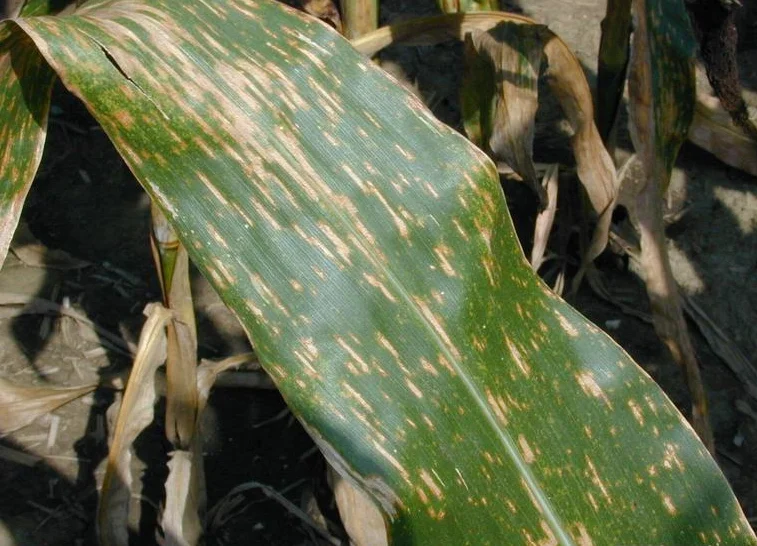
Photo: Daren Mueller, Iowa State University, Bugwood.org · CC BY 3.0 us
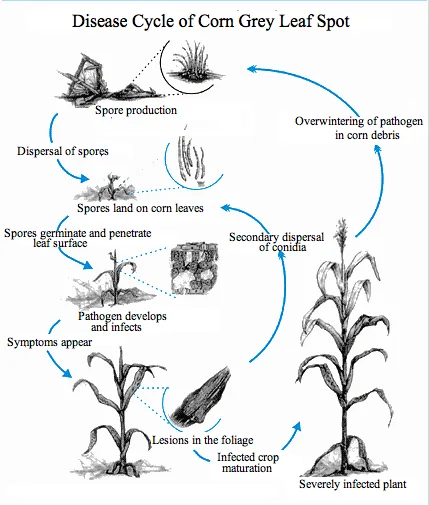
Grey leaf spot is a fungal disease of maize (caused by Cercospora zeae-maydis) that overwinters in old maize trash on the soil surface and attacks the leaves in warm, wet, misty weather. The veins of the leaf pen the fungus into long, straight-sided grey blotches that join up and kill the leaf. When the top leaves die before the grain is filled, the plant robs its own stalk to feed the cob, so stalks go weak and the maize falls over (lodges).
Bosh506 · CC BY-SA 3.0 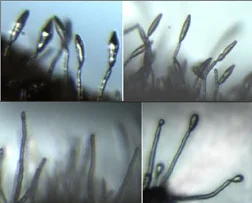
Corn and Sorghum Fungal Disease Laboratory · Public domain
Why it matters
Grey leaf spot kills your maize leaves from the tasselling stage onward, exactly when the plant needs every green leaf to fill the cob. In a bad, wet year on a susceptible variety it can take up to half your harvest (50%) and leave the stalks so weak they snap and fall over before you can pick them. It is hard to beat once it takes hold because the fungus lives on in the old maize stalks lying in your field, so it comes back season after season and, by the time you see the leaves greying, most of the damage to the canopy is already done.
When to act
Lesions present on leaves below the ear before or around tasselling on a susceptible variety in a humid, minimum-till field.
This guidance is general, compiled from published agronomic references including FAO and CABI. Thresholds and timing shift with your crop, your variety and the season.
In much of the region a spray is simply called mushonga — medicine. But a chemical group you cannot name is one you cannot rotate, and a product you did not write down has no pre-harvest interval you can observe. Mushonga, and other farming words →
The full Grey leaf spot field guide
Identify it
What you see first
small, pale, watery spots on the lower, older leaves — the ones nearest the ground. These start low because the fungus splashes up from the old maize trash on the soil, and the bottom of the plant stays wettest and mistiest the longest.
The tell-tale sign
the spots grow into long, narrow, straight-sided grey-to-tan rectangles, like little matchsticks or grey bricks laid end-to-end along the leaf, running the same direction as the veins. The leaf veins act like walls, so the spots stay narrow and boxy instead of round.
As it spreads
many rectangles join side-by-side and the whole leaf turns grey and dries up as if scorched, working upward toward the ear leaf and the top. Badly hit plants dry out early and the stalks go soft and lodge (fall over).
Don't confuse it
with the round or oval, ragged spots of other leaf blights (northern leaf blight makes long cigar-shaped grey-green blotches with rounded ends, not straight-sided boxes), and not with sun-scorch or fertiliser burn, which hits leaf tips and edges evenly, not in vein-bounded rectangles. Rub a fresh grey lesion: grey leaf spot feels dry and papery with a faint grey fuzz on the underside in the morning dew.
Scout for it
When to look
start walking your field from tasselling (when the maize throws its top flower) and keep checking through grain-fill — the mid-season and late-season stages are when this disease strikes and does its harm. Look most closely after a run of warm, misty, humid days with heavy dew, which is the weather it loves.
How to walk
cross the field in a big "W" shape so you cover all four corners and the middle, not just the row by the path. Pay extra attention to low, damp corners, valley bottoms and misty patches where dew sits longest.
How many to check
make about 10 stops along your "W". At each stop look at a few plants — check the lower and middle leaves first, then look at the important ear leaf (the leaf that carries the cob) and note how high up the plant the grey rectangles have climbed.
Your action number
act if you find the grey rectangular lesions on the leaves below the ear at, or just before, tasselling — especially on a variety known to be susceptible in a humid, minimum-till field. In plain terms: if 1 in 5 of the plants you check already show these spots creeping up toward the ear leaf, treat now — waiting until the top leaves grey over is too late.
Watch the ear leaf
the spots reaching and passing the ear leaf during grain-fill is the danger point — that leaf feeds the cob, and losing it is what turns a few spots into lost yield.
Control it
Prevent it
-
plant a resistant variety (your strongest tool):
in humid, high-risk areas choose a maize variety rated resistant or tolerant to grey leaf spot. This is the cheapest and most reliable protection — a resistant variety cuts the disease by roughly two-thirds and saves you from spraying at all in most years. Ask your seed supplier or extension officer which varieties are rated for it.
-
clean up and rotate (starve the fungus):
the fungus survives the dry season in old maize stalks and leaves lying on the ground, so rotate to a non-maize crop (like beans or groundnuts) for a season and plough in, bury, remove or feed off the old maize trash before planting. Don't plant maize-after-maize with heavy surface residue in a wet, misty spot — that is exactly where this disease builds up.
-
open up the canopy:
space and weed your plants so air moves through and leaves dry faster. The fungus needs long hours of leaf wetness; drier leaves mean fewer spots. Keep fertility balanced so plants stay vigorous.
Chemical — a last resort for a valuable, susceptible crop:
if you grow a susceptible variety and the spots are climbing toward the ear leaf around tasselling, a fungicide can protect the crop. Use a fungicide of the triazole or strobilurin group (ask your agro-dealer or extension officer to name a registered product) and apply it early, at the first lesions around tasselling — a spray works far better as a shield before the top leaves are lost than as a rescue afterward.
Spray safely
cover your skin, eyes, nose and mouth, spray in the cool of the morning or evening with the wind behind you, and keep the spray away from food, drinking water, children and bees. Respect the pre-harvest interval — the number of days the product says you must wait between spraying and picking the maize — so no chemical is left on the grain. Wash yourself and your clothes afterward.
Resist resistance
if you must spray in back-to-back seasons, rotate to a different fungicide group each time (don't use the same one over and over) so the fungus can't get used to it and stop responding.
If it keeps spreading
if lesions still race up past the ear leaf despite spraying, focus on saving the stalks — the weakened plants will lodge, so harvest early any cobs that have filled before the plants fall and rot on the wet ground. Then treat next season as a fresh start: plant a resistant variety, rotate out of maize, and bury every bit of the infected trash so you break the cycle instead of feeding it.
Catch Grey leaf spot before it costs you the harvest
This guide is the general answer. Divisi works out yours — the week to scout your own field for Grey leaf spot, and what to do the day you find it.


Crops it affects
Plan the crops it attacks

All planting calendars, country by country
Get Insights by email
A short digest of new Divisi articles. No email on quiet weeks.
Frequently asked questions
How do I identify Grey leaf spot?
What you see first. small, pale, watery spots on the lower, older leaves — the ones nearest the ground. These start low because the fungus splashes up from the old maize trash on the soil, and the bottom of the plant stays wettest and mistiest the longest.
When should I take action against Grey leaf spot?
Lesions present on leaves below the ear before or around tasselling on a susceptible variety in a humid, minimum-till field.
How do I control Grey leaf spot?
Prevent it — plant a resistant variety (your strongest tool):. in humid, high-risk areas choose a maize variety rated resistant or tolerant to grey leaf spot. This is the cheapest and most reliable protection — a resistant variety cuts the disease by roughly two-thirds and saves you from spraying at all in most years. Ask your seed supplier or extension officer which varieties are rated for it.
Which crops are attacked by Grey leaf spot?
Among the crops covered here: Maize.