 Divisi
Groundnut rust
Puccinia arachidis · Fungal
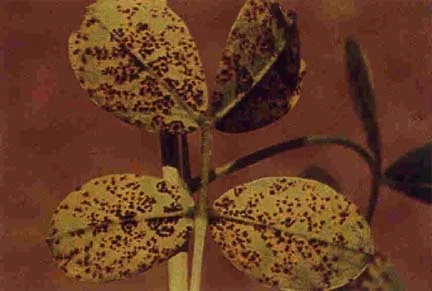
Photo: LandCare Ltd., New Zealand · CC BY-SA 3.0
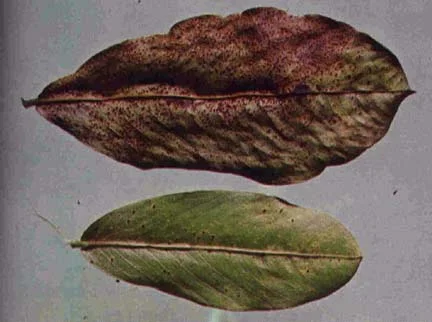
Groundnut rust is a fungal disease (Puccinia arachidis) of groundnut that raises small orange-brown blisters (pustules) on the leaves. Each pustule bursts to release rusty, wind-borne spores that ride the wind to fresh leaves and multiply fast in warm, humid weather. Badly rusted leaves dry up and hang dead on the plant, so the crop cannot fill its pods. It usually travels together with late leaf spot, and the two together do the most damage.
LandCare Ltd., New Zealand · CC BY-SA 3.0 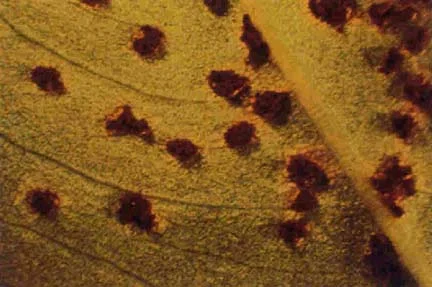
LandCare Ltd., New Zealand · CC BY-SA 3.0
Why it matters
Groundnut rust eats away the green leaves your plant needs to fill its pods, and a bad attack can take up to half your harvest (50%) — fewer, shrivelled nuts and useless dry haulm (the leafy stalks you feed to livestock). Once the orange pustules are spreading up the plant they throw out clouds of wind-blown spores, so it jumps from plant to plant and field to field within days. That is why it is almost impossible to "cure" a field that is already covered — the only real win is to catch it on the lower leaves and act before it climbs.
When to act
First orange rust pustules found on lower leaves during pod development, particularly under warm humid conditions.
This guidance is general, compiled from published agronomic references including FAO and CABI. Thresholds and timing shift with your crop, your variety and the season.
In much of the region a spray is simply called mushonga — medicine. But a chemical group you cannot name is one you cannot rotate, and a product you did not write down has no pre-harvest interval you can observe. Mushonga, and other farming words →
The full Groundnut rust field guide
Identify it
The first thing you see
turn a lower leaf over and look at the underside. Rust starts there as tiny orange to reddish-brown raised bumps (pustules) — like flecks of rust or brick dust, each smaller than a pinhead. Rub one with your thumb and an orange powder comes off on your skin — that powder is the spores.
As it spreads
the bumps grow more numerous and burst open, and matching yellow spots show on the top of the leaf. Heavy infection turns leaves brown and brittle; they dry out but stay hanging on the plant instead of dropping cleanly. The disease climbs from the bottom leaves toward the top.
Don't confuse it with late leaf spot,
which makes round, dark brown-to-black spots (no orange powder rubs off). Rust is the one that leaves rusty powder on your thumb. The two often sit on the same plant at once — if you see both, treat for both.
Also not this
ordinary old-age yellowing near harvest colours the whole leaf evenly with no bumps underneath, and drought scorch dries the leaf edges first. Rust is defined by the raised orange pustules on the leaf underside — always check underneath before you decide.
Scout for it
When to look
start once the crop begins flowering and is filling pods — the development, mid-season and late-season stages are when rust does its harm. Look harder after a run of warm (about 20-28°C), muggy, humid days or heavy dews, because that wet, warm weather is what the fungus loves.
How to walk the field
every few days walk a large "W" shape across the field so you cover all four corners and the middle, not just the edge by the path. Make about 10 stops along the way.
What to check at each stop
pick a plant and turn over its lower, older leaves — rust always shows on the bottom leaves first. Look for the orange pustules and rub one to confirm the rusty powder.
The number that means act now
as soon as you find the first orange pustules on the lower leaves of plants that are filling pods — even a few plants — treat it as the trigger to act. Do not wait for the whole field to turn orange; by then it is too late to save much.
Control it
Prevent it first (your strongest, cheapest defence)
plant a rust-tolerant groundnut variety — many also resist leaf spot, so one good seed choice fights both. Use clean, healthy seed, and don't plant a new crop right beside an older, already-rusted groundnut field.
Keep the field unfriendly to the fungus
rotate — follow groundnut with a cereal like maize or sorghum so rust has no groundnut to survive on. After harvest, gather and destroy (burn or bury) the old rusted haulms and pull out any volunteer groundnut plants, because these carry spores over to the next crop. Avoid over-thick, damp stands — space plants so air moves and leaves dry quickly after dew or rain.
If you must spray — fungicide as the last resort:
if rust appears while pods are still filling and keeps climbing, a fungicide (a triazole type or chlorothalonil) is the strongest tool (about 80% effective). Spray at the first pustules, not later, and you can tank-mix it to cover leaf spot at the same time. Note: chlorothalonil is a protectant (contact) spray — it shields leaf surfaces it lands on but does not move inside the plant, so cover the leaves well, especially the undersides; a triazole is systemic — it moves inside the leaf and gives a little back-action on early infection.
Spray safely
cover your skin, eyes, nose and mouth; spray in the cool of morning or evening with the wind at your back so the mist blows away from you; keep it off food, drinking water, children and bees; wash yourself and your clothes afterward; and always respect the pre-harvest interval (the minimum number of days the label says you must wait between the last spray and lifting your nuts). To stop the fungus getting used to one chemical, rotate between different fungicide groups rather than spraying the same one every time.
If it keeps spreading
repeat the fungicide on the label's schedule and make sure you are covering the leaf undersides. If the field is already mostly brown and the leaves are dead and hanging, stop spending on spray — it will not bring dead leaves back. Instead lift the crop as soon as the pods are mature, then clear and destroy every rusted haulm and volunteer, rotate to a cereal next season, and switch to a rust-tolerant variety so the next crop starts clean.
Catch Groundnut rust before it costs you the harvest
This guide is the general answer. Divisi works out yours — the week to scout your own field for Groundnut rust, and what to do the day you find it.


Crops it affects
Plan the crops it attacks

All planting calendars, country by country
Get Insights by email
A short digest of new Divisi articles. No email on quiet weeks.
Frequently asked questions
How do I identify Groundnut rust?
The first thing you see. turn a lower leaf over and look at the underside. Rust starts there as tiny orange to reddish-brown raised bumps (pustules) — like flecks of rust or brick dust, each smaller than a pinhead. Rub one with your thumb and an orange powder comes off on your skin — that powder is the spores.
When should I take action against Groundnut rust?
First orange rust pustules found on lower leaves during pod development, particularly under warm humid conditions.
How do I control Groundnut rust?
Prevent it first (your strongest, cheapest defence). plant a rust-tolerant groundnut variety — many also resist leaf spot, so one good seed choice fights both. Use clean, healthy seed, and don't plant a new crop right beside an older, already-rusted groundnut field.
Which crops are attacked by Groundnut rust?
Among the crops covered here: Groundnut.