 Divisi
Guava rust
Austropuccinia psidii · Fungal
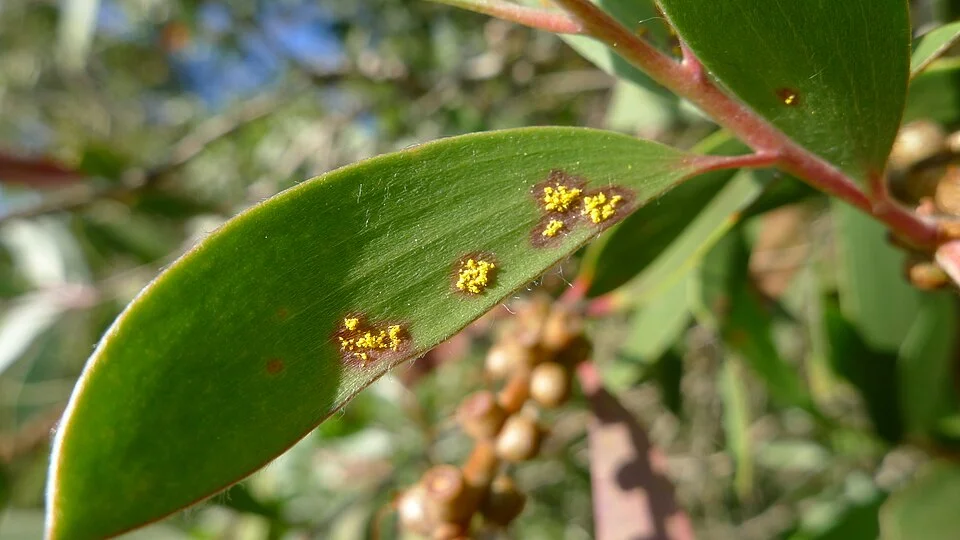
Photo: John Tann from Mullumbimby, Australia · CC BY 2.0
Guava rust (also called myrtle or eucalyptus rust) is a wind-borne fungus that attacks the young, soft, actively growing parts of guava — new leaf flush, shoots, buds and small fruit. Powdery yellow spores land on tender growth in warm, wet, humid weather and infect it within hours. Repeated attacks twist and kill the growing tips, strip the tree of leaves, and scar the fruit, so a susceptible tree keeps getting hit every time it pushes new growth.
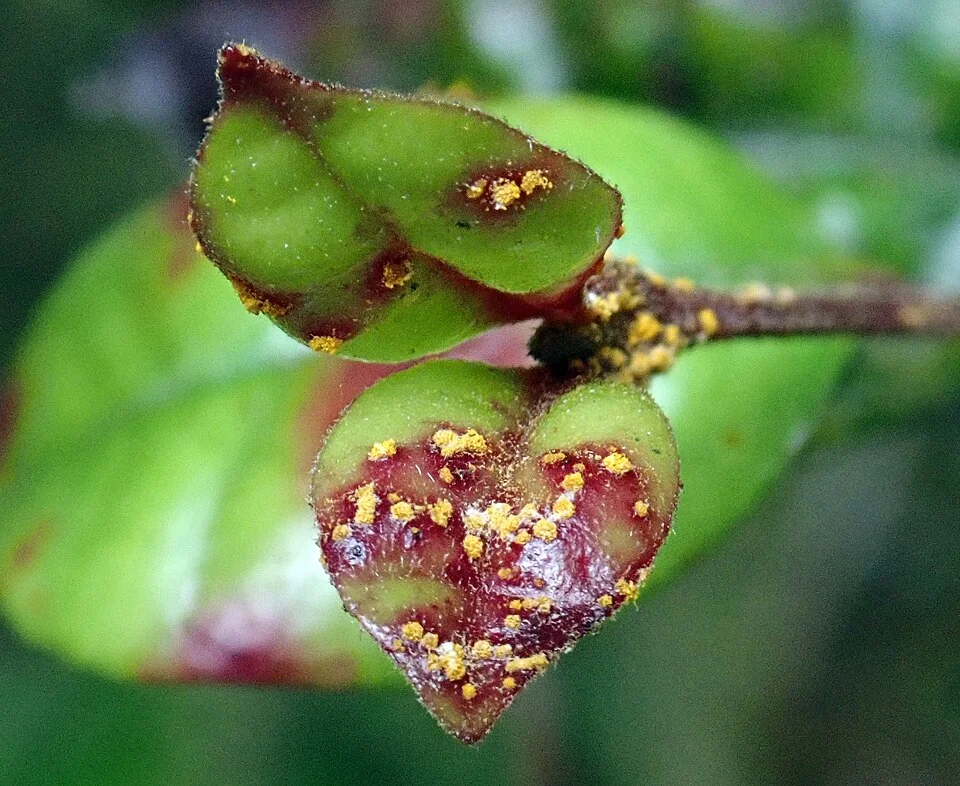
Peter de Lange · CC0 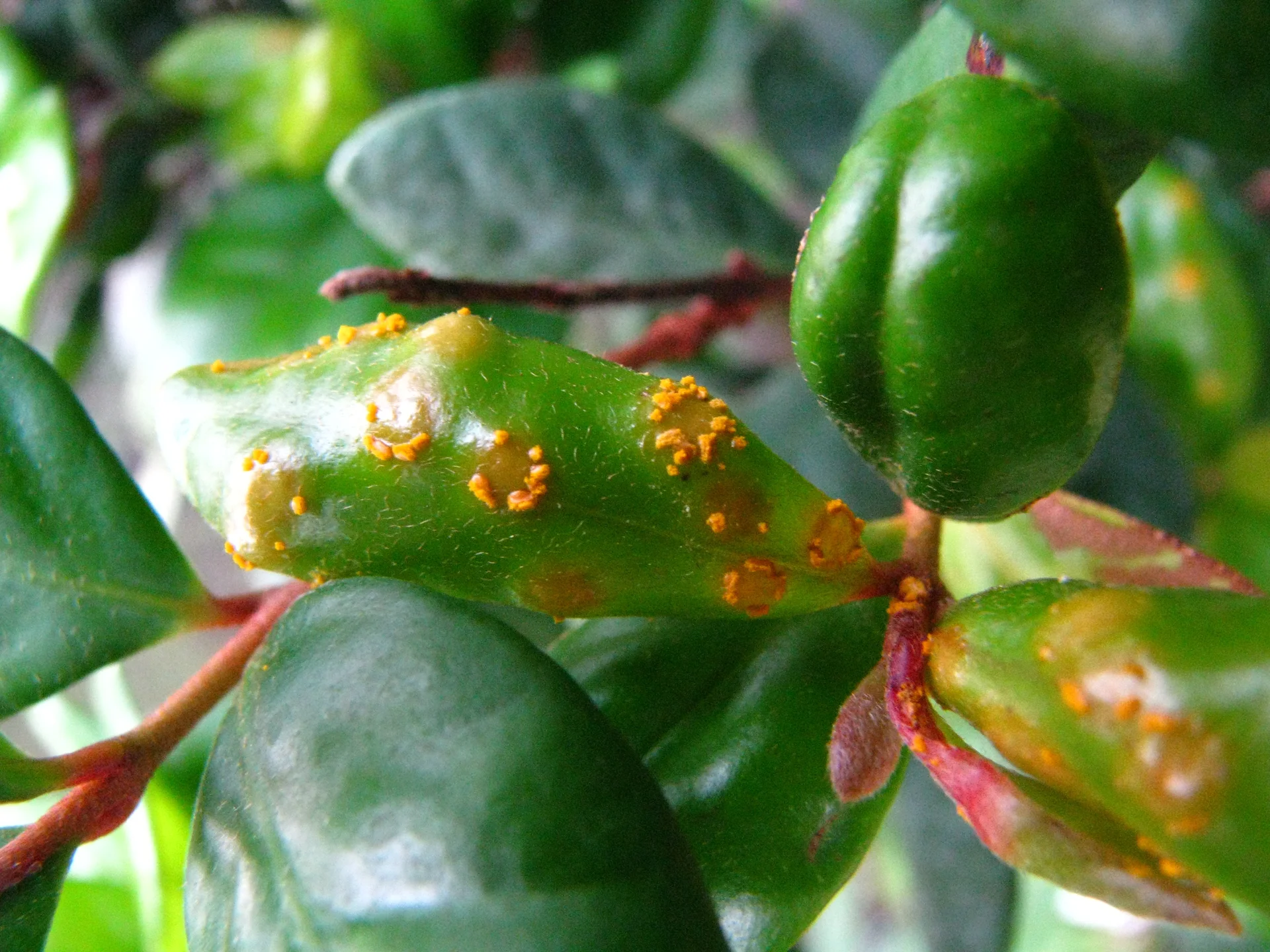
David Eickhoff from Pearl City, Hawaii, USA · CC BY 2.0
Why it matters
Guava rust hits the soft new growth your tree needs to make fruit — and on a badly-hit, susceptible tree it can wipe out up to 70% of your crop. It kills the growing tips and strips the leaves, so the tree keeps re-infecting itself every time it flushes, weakening year after year. Once the fungus is loose in a warm, humid orchard, no spray fully clears it — the only real win is protecting each new flush before the spores get in, so catching it early matters more than curing it late.
When to act
Bright yellow rust pustules found on young flushing leaves, shoots or fruit, especially during warm humid weather and new flush.
This guidance is general, compiled from published agronomic references including FAO and CABI. Thresholds and timing shift with your crop, your variety and the season.
In much of the region a spray is simply called mushonga — medicine. But a chemical group you cannot name is one you cannot rotate, and a product you did not write down has no pre-harvest interval you can observe. Mushonga, and other farming words →
The full Guava rust field guide
Identify it
What you see first
on the newest soft leaves and shoot tips, tiny raised spots that quickly turn into bright yellow to orange, powdery dust — like someone flicked turmeric or yellow chalk powder onto the young growth. Rub a spot and the yellow powder (the spores) comes off on your finger.
As it spreads
the young leaves curl, twist and blister, shoot tips blacken and die back, flower buds drop, and small fruit get rough scabby lesions. Heavily-hit branches lose their leaves and the tips look burnt.
Where to look
always on the youngest, softest growth — the pale new flush, bud tips and baby fruit. Old, hardened dark-green leaves are rarely attacked. That is the giveaway: rust lives on the tender new growth, not the mature leaves.
Don't confuse it
with algal leaf spot (grey-green velvety patches on OLD leaves, no yellow powder), with sunburn or fertiliser scorch (browning at leaf edges, dry, no powder and no pustules), or with plain iron-shortage yellowing (whole leaf goes evenly pale with green veins, but stays smooth with no raised powdery spots). Guava rust is the one with raised, powdery, bright-yellow pustules on the young flush that dust off on your hand.
Scout for it
When to look
guava rust attacks hardest while the tree is putting out new growth (flush and growing shoots), and again later while the fruit is developing, so scout every time a fresh flush appears — and step it up during warm, wet, humid spells (around 18–26 °C with heavy dew, mist or rain), the kind of damp where washing won't dry and dew still sits on the leaves by mid-morning, which is exactly when the spores infect.
How to walk it
every few days during flushing, walk a large "W" through the orchard so you cover all four corners and the middle, not just the trees by the gate. Stop at about 10 trees along the way.
What to check at each tree
bend down a few of the newest shoot tips and look closely at the soft young leaves (top and underside), the bud tips and any small fruit for the bright yellow powdery pustules. Use the shady, cooler part of the morning when the powder shows up clearly.
When to act — lead with the number:
if you find even one shoot, leaf or fruit with fresh bright-yellow pustules on the new flush — especially in warm, humid weather — treat that as your trigger to act now. Rust spreads on the wind and explodes fast, so unlike a nibbling pest there is no "safe" number: 1 infected flush = act.
Control it
Prevent first — plant tough trees and keep the canopy open (cultural and variety, the safest layers):
where you can, plant less-susceptible guava selections — some types shrug off rust far better than others in humid zones. Then prune to open up the canopy so air and sun move through and the leaves dry faster (the fungus needs long wet, still, humid hours to infect), and do not carry infected shoots, prunings or seedlings to a clean tree or a neighbour's orchard — that is how it travels between farms.
Time the flush and go easy on nitrogen
the fungus can only attack soft new growth, so avoid pushing lots of tender flush during the wettest, most humid part of the year. Don't over-feed with nitrogen (the nutrient that drives fast leafy growth) and don't prune heavily right before humid weather — both flood the tree with the exact soft tissue rust loves.
Act early — cut out and destroy the first infections (mechanical):
as soon as you spot pustules, cut off the infected flush, shoots and fruit and burn or bury them well away from the orchard. Do this on a dry day, and clean your tools afterwards, so you are not flicking spores onto healthy growth. Removing the first spots slows the build-up and protects the flush behind them.
Chemical — a fungicide, only as a back-up on the new flush, and used safely:
where rust keeps beating the cultural steps, protect each new flush with a registered fungicide such as a triazole or mancozeb type (a protectant/contact fungicide coats the leaf surface, a systemic one moves inside the plant). Spray at bud-break as the flush opens and repeat through the flushing period, because it shields the new growth rather than curing old scars. Safety: cover your skin, eyes, nose and mouth; spray in the cool, still part of the day with the wind at your back; keep it off food, water sources, children and bees; wait the full pre-harvest interval (the days you must leave between the last spray and picking, written on the label) before harvesting; and wash yourself and your clothes after. Resistance: rotate between different fungicide groups each time so the fungus doesn't learn to survive one — leaning on the same product every flush is how you breed a rust it can't kill.
If it keeps spreading
tighten the cycle — prune harder to open the canopy, cut and destroy every new infection, and keep the flush protected through the whole humid season. If the tree is badly and repeatedly hit — tips dying back, leaves stripped, little fruit setting year after year — accept that this variety cannot win in your climate: cut your losses, remove the worst trees, and replant with a less-susceptible selection rather than spraying a doomed tree forever.
Catch Guava rust before it costs you the harvest
This guide is the general answer. Divisi works out yours — the week to scout your own field for Guava rust, and what to do the day you find it.


Crops it affects
Plan the crops it attacks

All planting calendars, country by country
Get Insights by email
A short digest of new Divisi articles. No email on quiet weeks.
Frequently asked questions
How do I identify Guava rust?
What you see first. on the newest soft leaves and shoot tips, tiny raised spots that quickly turn into bright yellow to orange, powdery dust — like someone flicked turmeric or yellow chalk powder onto the young growth. Rub a spot and the yellow powder (the spores) comes off on your finger.
When should I take action against Guava rust?
Bright yellow rust pustules found on young flushing leaves, shoots or fruit, especially during warm humid weather and new flush.
How do I control Guava rust?
Prevent first — plant tough trees and keep the canopy open (cultural and variety, the safest layers):. where you can, plant less-susceptible guava selections — some types shrug off rust far better than others in humid zones. Then prune to open up the canopy so air and sun move through and the leaves dry faster (the fungus needs long wet, still, humid hours to infect), and do not carry infected shoots, prunings or seedlings to a clean tree or a neighbour's orchard — that is how it travels between farms.
Which crops are attacked by Guava rust?
Among the crops covered here: Guava.