 Divisi
How to grow guava
Psidium guajava · Myrtaceae
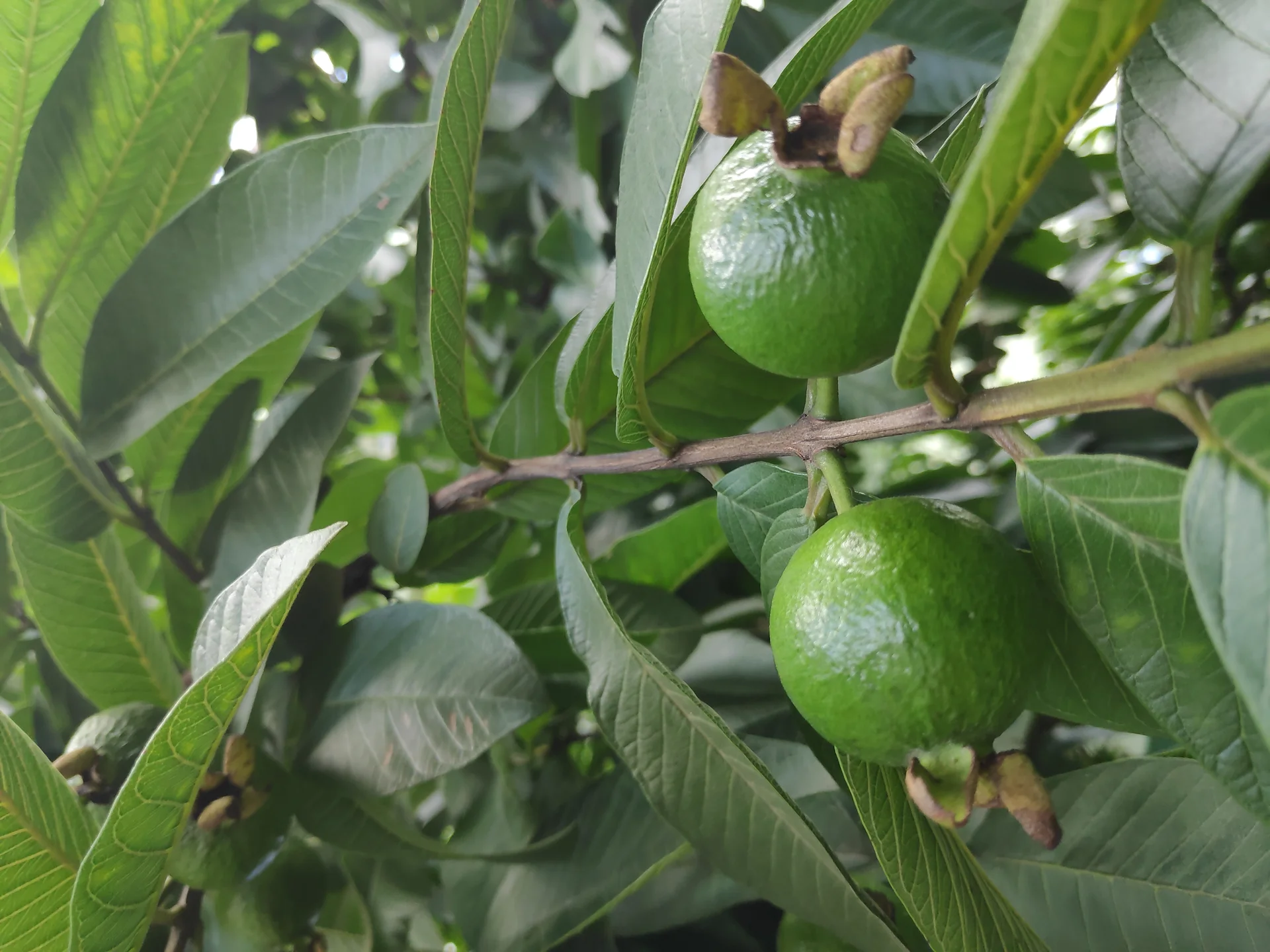
Photo: Gaurav Dhwaj Khadka · CC BY-SA 4.0
Guava is a tough, evergreen little tree that fruits almost anywhere — it shrugs off heat, drought, and poor, sour or salty soil. The one thing it hates is wet feet. Plant a grafted or air-layered tree (a good fruiting variety joined onto tough roots, or a branch that was rooted while still on the mother tree) and it fruits within a year or two and gives exactly the parent's sweet fruit — unlike seed-grown trees, which are slow and each one a gamble. Because guava can flower any time of year, you can even choose when it crops, using a prune plus a dry-then-wet watering trick. Two things make or break the crop: the fruit fly, which loves guava above almost any other fruit, and giving the fruit a dry spell to ripen so it stays sweet and doesn't split. The fruit is rich in vitamin C and full of natural pectin, so it sets beautifully into juice and jam — but it is highly perishable, keeping only a few days once ripe.
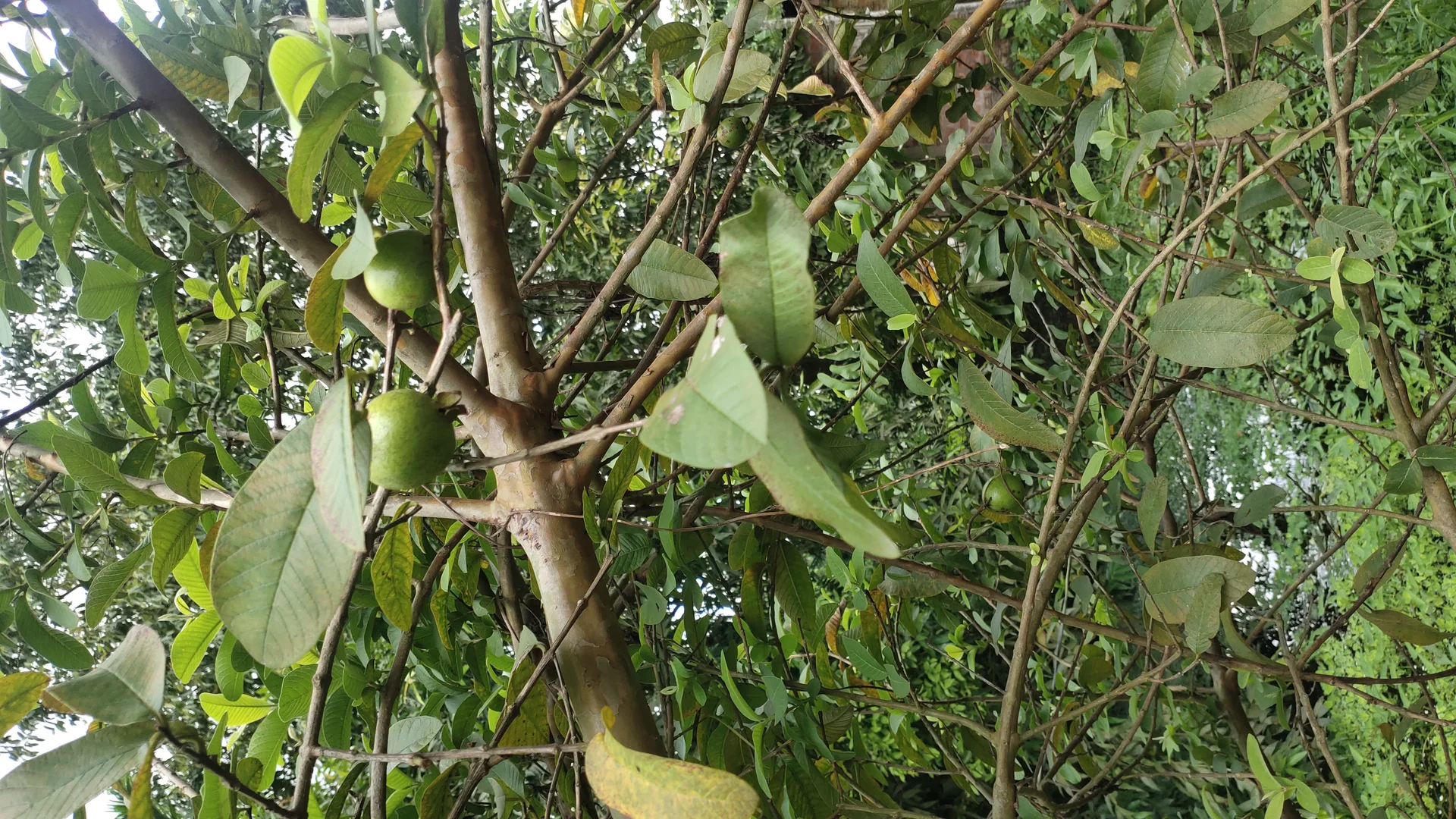
Medhi jyoti · CC BY-SA 4.0 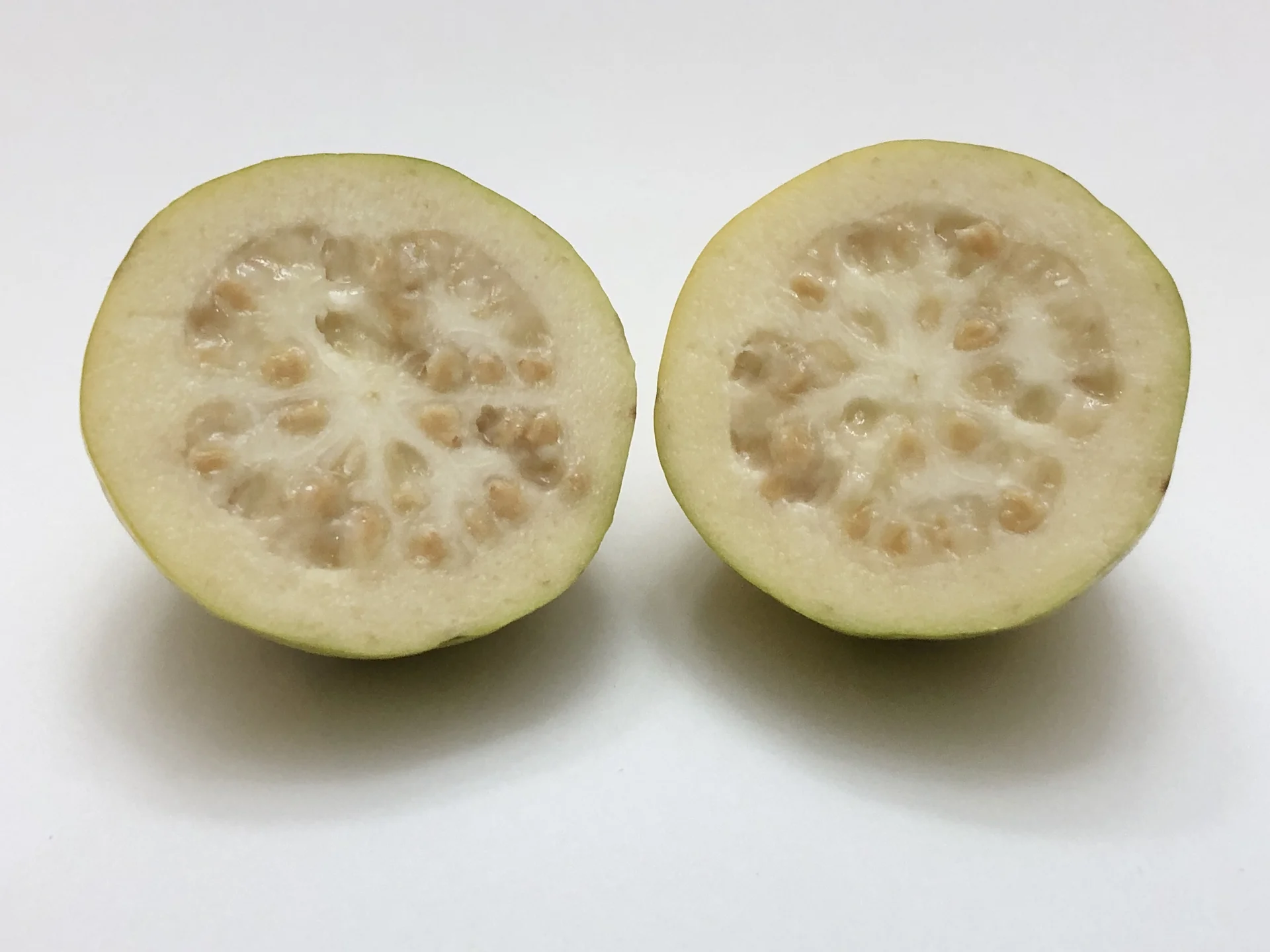
Famartin · CC BY-SA 4.0
- Days to maturity
- 90–150 days
- Row spacing
- 550 cm
- Plant spacing in the row
- 550 cm
These are general figures for the crop, compiled from published agronomic references including FAO and CABI. The right choice for your field depends on your soil, rainfall and the yield you are aiming for.
Will guava actually do well on your field? Check your own field against every crop in the catalogue — no signup. Run the crop check →
Also known as
- French
- goyave
- Hausa
- gwaiba
- Portuguese
- goiaba
- Shona
- gwavha
- Swahili
- pera, mapera
- Xhosa
- igwava
- Zulu
- ugwava
Working in buckets, bags or paces? The farming glossary turns the measures growers actually use into kilograms and hectares — what a 20 litre bucket of each crop really weighs, and how to size a field by walking it — alongside the Shona, Swahili, Ndebele and Yoruba words used in the field. Open the glossary →
Growing guava, stage by stage
Your guava, year by year — from planting a grafted tree and shaping an open, easy-to-pick canopy, to bringing on each crop with a prune-and-water trick and carrying sweet fruit past the fruit fly to a dry, ripe harvest.
Choose your spot and plant the tree
Guava is not fussy — it grows in poor, sour or sweet soil and laughs at heat and drought. The one thing it will not forgive is wet feet. So the whole job here is picking a spot where water drains away, digging a good pit, and setting a grafted or air-layered tree that will fruit within a year or two. A tree stands in one place for many years, so plant the right kind of tree at the right spacing now — you live with this choice for a long time.
Choose a well-drained site Recommended
A guava tree stands in one place for many years, so the spot you pick you are stuck with. Guava forgives poor and sour soil, but it rots and dies in ground that stays wet — and cheap seed-grown trees give slow, unpredictable fruit. Choosing a well-drained spot and a good grafted tree now saves you years of disappointment.
Pick a spot where water drains away after rain — never a dip or hollow where puddles sit. Guava puts up with poor, stony, sour or even salty soil, but wet feet rot its roots.
Test the drainage: dig a hole about knee-deep (half a metre), fill it with water, and come back a few hours later. If water is still standing, choose a better-drained spot or plan to plant on a raised mound.
Leave plenty of room. A guava spreads wide, so allow 5 to 6 big strides between trees (5–6 m) each way. Squeezing them closer (3×2 m) crowds them and gives smaller fruit.
Get the right kind of tree: a grafted or air-layered plant — that is, a good fruiting variety joined onto tough roots, or a branch that was rooted while still on the mother tree. These fruit in year 1–2 and give exactly the parent's fruit. Avoid seed-grown trees — they are slow and each one fruits differently.
- Do:
Buy grafted or air-layered trees from a trusted nursery — you get known, sweet fruit within a year or two instead of a gamble.
- Tip:
Planting in a low, wet spot or heavy soil that holds water — guava roots rot there and guava wilt takes hold.
- Watch out:
Guava wilt: trees that yellow, wilt and die back with black, rotting roots. Start clean — plant healthy trees on well-drained ground; there is no cure once it strikes.
Plant grafted/air-layered material + water in Critical
This is the one moment you set the tree in the ground. Plant it well — at the right depth, firmed in, and watered — and it establishes fast and fruits within a year or two. Plant it badly, too deep or into dry soil, and it sulks, or the buried graft rots.
Plant at the start of the rains (or when you can water), so the young tree settles in with moisture around its roots.
Dig a good pit, about half a metre across and deep (two to three hand-spans). Mix the topsoil back with a little well-rotted manure or compost.
Set the tree at the right spacing — 5 to 6 big strides apart (5–6 m) each way — with the old soil mark on the stem level with the ground. Keep the graft join (the knob low on the stem) well above the soil; burying it invites rot.
Backfill, and firm the soil down around the roots with your foot so there are no air pockets.
Water it in well straight away — a full bucket — to settle the soil around the roots. Keep watering through the first dry months while it takes hold.
- Do:
Water in generously at planting and keep the young tree watered until it is growing strongly — that first season decides whether it lives.
- Tip:
Planting too deep or heaping soil against the stem — keep the graft join above ground or it rots.
- Watch out:
In a windy spot, tie the young stem to a stake until its roots grip, so it doesn't rock loose.
Grow the young tree to its first fruit
From planting to its first real crop — a grafted or air-layered tree fruits in year 1–2. Three jobs carry the young tree there: keep it watered, feed it lightly every month or two (guava is a light feeder — too much nitrogen gives a leafy bush, not fruit), and make one early cut to build 3–4 strong framework branches — the skeleton that will carry every future crop. Watch for wilt, scales and mealybugs while the tree is small.
Scout (scales, mealybugs, wilt) Recommended
A young tree is building the roots and frame it will live on for years. A month of scale or mealybug, or the first touch of wilt, can set it back or kill it while it is still small and weak. A slow walk every few weeks catches trouble while you can still act.
From about a month after planting, walk your trees every 4–5 weeks (about once a month) and look them over closely — leaves, new shoots, and the base of the trunk.
Guava wilt: look for a tree that suddenly yellows, wilts and dies back, often on one side, with black, rotting roots when you scratch down. There is no cure — dig out and burn the whole tree, and do not replant guava in that exact spot.
Scales: look for tiny limpet-like bumps stuck along stems and leaf veins, sticky sweet droplets (called honeydew), and black sooty mould growing on the stickiness.
Mealybugs: look for white cottony blobs tucked into leaf joints and under the leaves, with the same sticky droplets and black mould.
For a few scales or mealybugs, wipe them off or prune out the worst shoot; a strong squirt of water or soapy water knocks them back. Keep the ground around the tree weed-free and tidy.
- Watch out:
Yellowing, wilting and black rotting roots are guava wilt — remove and burn the whole tree at once; there is no reliable cure and it spreads through the soil.
- Do:
Leave the helpers alone — ladybirds and lacewings eat scales and mealybugs for free, so don't spray them out needlessly.
Water + light feed Recommended
A young guava grows fast when it is fed a little and often — but it is a light feeder, and too much nitrogen gives you a big leafy bush and little fruit. Small, regular feeds of a balanced fertiliser, plus steady water, build a strong tree without wasting money.
From a month after planting, through the growing season, feed a small handful of compound (N-P-K) fertiliser every 1–2 months — your recommendation gives the exact amount for the tree's size.
Guava wants potash (K) more than nitrogen, plus a little zinc and boron — so reach for a balanced or potash-rich compound, not a straight nitrogen fertiliser. A ring of well-rotted manure or compost around the tree helps too.
Spread it in a ring around the tree, out near the leaf edges (the drip line) where the feeding roots are — never against the trunk. Scratch it lightly into the soil and water it in.
Keep the young tree watered in dry spells — guava is drought-tough once established, but a young tree needs regular water to grow away.
- Do:
Feed little and often, and lean on potash — guava is a light feeder that fruits better on potash (K) than on heavy nitrogen.
- Tip:
Piling fertiliser against the trunk or over-feeding nitrogen — you get leaves, not fruit, and can scorch the roots.
- Watch out:
Wash your hands after handling fertiliser, and keep it away from food, drinking water and children; keep it off the trunk and wet leaves.
Head back the leader Recommended
Left alone, a guava shoots up as one tall stem with all its fruit out of reach. One early cut, about a year after planting, forces it to throw out 3–4 low, spreading branches — the strong, open framework that carries every crop for the tree's whole life and keeps the fruit within picking reach.
About a year after planting (roughly 10–14 months), once the young stem is well established, cut the single main stem back low — to about knee height (0.3–0.6 m from the ground) — with a clean, sharp blade.
This makes the tree push out several side shoots. Keep the 3–4 strongest, best-spaced ones pointing outwards in different directions; rub off the rest. These become your framework ('scaffold') branches.
When those chosen branches reach about thigh height (0.6–0.9 m), pinch out each tip so they branch again — building a low, open, spreading tree.
Cut on a dry day with a clean blade, and take off any dead or crossing shoots as you go.
- Do:
Be bold with this first cut — a low, hard heading now gives you a strong, reachable tree for decades.
- Tip:
Letting it grow tall and unbranched — the fruit ends up out of reach and the tree is weak and hard to manage.
Shape an open canopy every year
Guava fruits on fresh new shoots, so keeping the canopy open and airy with the knife is what keeps it cropping and healthy. Early on you build the framework; every year after, you thin and shorten to let light and air right in — which also starves the leaf diseases (anthracnose and rust) that thrive in a damp, crowded canopy. Prune early in the season, and keep the tree clean.
Scout (wilt, anthracnose, rust) Recommended
A crowded, damp canopy is where leaf and shoot diseases take hold — anthracnose and the fast-spreading guava (myrtle) rust. Caught early, a snip and better airflow stops them; left alone, they blacken leaves, kill shoot tips, and later rot your fruit.
Through the growing season, walk the trees every 4–5 weeks (about once a month) and check the leaves, new shoots and the base of the trunk.
Guava rust: look for powdery, bright yellow-to-orange dust on the newest leaves and shoot tips; badly hit tips twist, brown and die back. It spreads fast in warm, wet weather — cut out and bag affected tips.
Anthracnose: look for dark, sunken spots on leaves and dieback of shoot tips (later it spots and rots the fruit). Prune out and destroy affected wood.
Algal leaf spot: look for raised, velvety grey-green to rusty spots on the older leaves — usually mild; improve airflow and it fades.
Guava wilt: keep watching for whole-branch or whole-tree yellowing and wilting with black rotting roots — remove and burn affected trees.
Anything you cut out that is diseased, carry away and burn — don't drop it under the tree, or it re-infects.
- Do:
Prune to an open, airy canopy — light and moving air are your cheapest medicine against rust and anthracnose.
- Watch out:
Guava/myrtle rust spreads fast in warm, humid weather and always hits the youngest growth first — check new flushes closely after rain.
Formative/maintenance pruning Recommended
Guava carries its fruit on fresh new shoots, and a jungle of old, crossing wood shades them out and traps the damp that breeds disease. An early-season prune keeps the tree open, low and productive — and, timed right, sets up the flush of new shoots that will flower and fruit.
Prune early in the growing season, in the first month or two, on a dry day with a clean, sharp blade.
On a young tree, keep building the frame: hold to 3–4 well-spaced main branches, and tip new shoots at about thigh height (0.6–0.9 m) so they branch into an open cup.
On a bearing tree, thin and shorten each year: take out dead, diseased and crossing wood first, then open the centre so light and air reach right inside. Shortening the shoots pushes out the new growth that flowers.
Keep the tree low enough to pick from the ground — head it back rather than letting it climb.
Carry away and burn all diseased prunings; don't leave them lying under the tree.
- Do:
Prune every year — an open, well-lit canopy fruits better and shrugs off rust and anthracnose.
- Tip:
Leaving dead and crossing wood in the middle — it shades the fruiting shoots and holds the damp that disease loves.
- Watch out:
Wipe your blade between trees (a little bleach or spirit) so you don't carry disease from a sick tree to a healthy one.
Bring on the flowers (and time the crop)
Guava can flower any time of year, so you choose when to crop it: a prune plus a short dry-then-wet watering trick brings on a burst of flowers all together. Time that burst so the fruit will ripen in a dry spell — wet ripening spoils the flavour and splits the fruit. Keep bees around for good set, and start watching for the fruit fly the moment fruit appears. From flowering onward is the tree's thirstiest stretch — don't let it run dry now.
Prune + withhold-then-water Recommended
Because guava flowers on and off all year, a scattered trickle of fruit is hard to protect and hard to sell. Pruning plus a short water-stress synchronises one strong flowering — a single crop you can guard against fruit fly and time to a dry ripening window, when the fruit is sweetest and doesn't split.
Start this about a month before you want the tree to flower — count back so the fruit will ripen in a dry period (fruit takes about 3–5 months from flower to ripe).
Prune the tree lightly to push out fresh shoots — remember, guava flowers on new growth.
Then withhold water for a short spell to stress the tree (some growers call this a 'bahar'). The leaves may droop a little — that is the point.
Then water well. The tree answers the return of water with a burst of flowers all together, instead of a few at a time.
Keep bees around: leave some flowering plants nearby and don't spray insecticide on open flowers. Bees carry pollen from flower to flower and set more, bigger fruit.
- Do:
Count back 3–5 months from a dry season and start the prune-and-stress then, so the fruit ripens dry and sweet.
- Tip:
Bringing on a crop that will ripen in the rains — wet ripening loses flavour, splits the fruit, and fruit fly is far worse.
- Watch out:
Never spray insecticide on open flowers — you kill the bees that set your fruit.
Scout (fruit flies arriving) Recommended
Guava is one of the fruit fly's favourite targets, and the flies arrive as soon as fruit begins to form. This war is won by starting early — traps up and sanitation going before the first fruit is stung — not by reacting once you already find maggots inside.
From flowering, as the first fruit sets, check the trees every 5–7 days.
Hang a monitoring trap or two in the trees to catch the first flies and tell you they have arrived.
Fruit-fly signs: look for tiny sting marks (pin-pricks) on the young fruit, soft or weeping spots, and fruit that drops early; cut a suspect fruit open and you may find small white maggots inside.
Pick up and destroy every fallen fruit — burn it, bury it deep, or seal it in a bag in the sun. Fallen stung fruit is exactly where the next wave of flies breeds.
Get ready to bag fruit and to bait-spray the moment fruit sets and stings begin — see the fruit-fly task in the next stage.
- Do:
Get traps up and start collecting fallen fruit before you see any damage — early sanitation is what keeps the flies down all season.
- Watch out:
Fruit that softens and drops early with tiny pin-prick stings means the flies are already laying — act now, don't wait for maggots.
Grow the fruit and beat the fruit fly
From fruit-set to ripe is about 3–5 months, and this is where the crop is won or lost — mostly on the fruit fly, guava's number-one enemy. Keep up traps, sanitation, bagging and bait; watch for anthracnose rotting the fruit; water the fruit while it swells, then let it ripen dry so it stays sweet and whole.
Fruit-fly management + bagging Critical
Guava is one of the fruit fly's most-loved hosts — a single fly stings a fruit, lays eggs, and maggots turn it to mush from the inside. This is the make-or-break job of the whole crop: miss it and you can lose most of your fruit. You win by denying the flies fruit to breed in and protecting each fruit before it is stung — not by chasing them once the damage is done.
From about three weeks after flowering (as the little fruits form) right up to harvest, work the trees every 3–4 days — this is the busiest job of the season.
Bag the fruit while it is small — about 3–4 cm across, the size of your top thumb-joint. Slip a paper or newspaper sleeve (or a fine net bag) over each fruit and tie it. Bagged fruit can't be stung.
Hang monitoring traps in the trees so you know when fly numbers climb.
Start protein-bait spraying on the first stings or the first rise in trap catches — do not wait for maggoty fruit. Protein bait is a sticky, sweet lure mixed with a little insecticide: you spot-spray a small patch of leaves on each tree, not the whole tree, and the flies come to feed and die.
Collect and destroy every fallen and stung fruit, every few days — burn, bury deep, or seal in a bag in the sun. This one habit starves the next generation and matters as much as any spray.
When you spray any bait or insecticide: cover your skin, eyes, nose and mouth, spray in the cool of the day with the wind behind you, keep it off food, wait the number of days the label says before picking (the pre-harvest interval), and wash well afterwards.
- Watch out:
The fruit-fly window is the critical one — guava is a favourite host, so bait on the first stings and never let fallen fruit lie.
- Do:
Bag fruit at 3–4 cm and keep collecting the drops — bagging plus sanitation beats spraying alone.
- Tip:
Waiting until you see maggots — by then the fruit is lost and the next generation of flies is already on the way.
Scout (anthracnose on fruit) Recommended
Anthracnose is a fungus that rots the fruit — it turns swelling guavas into dark, sunken, hard 'mummies' that then infect the healthy fruit around them. Spotting and removing them each week keeps one rotten fruit from spoiling the whole branch.
Once a week, from about three weeks after flowering until harvest, look over the developing fruit and the shoot tips.
Anthracnose signs: look for dark, sunken, firm spots on the fruit (with pinkish ooze in wet weather), and fruit that hardens, blackens and dries on the tree (mummifies); on shoots, look for tip dieback.
Pick off and carry away every spotted, rotting or mummified fruit — and any dead shoot tips — and burn or bury them. Left on the tree, each one showers spores onto the healthy fruit.
Keep the canopy open (from your pruning) so fruit dries quickly after rain — the fungus needs wetness to spread.
- Do:
Remove mummified fruit and dead tips whenever you see them — a clean tree carries far less rot.
- Watch out:
Anthracnose spreads worst in warm, wet weather — check more often after rain, and aim for a dry ripening window.
Irrigate for fill, then dry ripening Recommended
The fruit swells with water, so steady watering while it fills gives you big, heavy guavas. But the last stretch is the opposite: a dry ripening keeps the fruit sweet and firm and stops it splitting — wet ripening waters down the flavour and cracks the skin.
While the fruit is swelling — from about three weeks after flowering — water every 7–10 days (more often in heat and on sandy soil) to keep it filling. This flowering-to-fill stretch is the tree's thirstiest; don't let it run dry now.
Water at the soil, out around the drip line — not over the fruit and leaves, since wet fruit and foliage invite rot.
As the fruit nears ripe (the skin starting to lighten), ease off and then stop watering, so the fruit ripens in dry soil.
Let the fruit ripen dry — this holds the sweetness and stops splitting.
- Do:
Water hard while the fruit swells, then dry it off to ripen — full fruit first, dry finish second.
- Tip:
Heavy watering (or bringing the crop on) right at ripening — the fruit splits, dilutes and rots, and fruit fly moves in.
- Watch out:
Waterlogging: guava hates wet feet even now — drain any standing water fast, especially after storms.
Harvest at colour-break
Guava finishes ripening after you pick it (it is 'climacteric', like a banana), so you don't have to let it go soft on the tree. Pick at colour-break — when the skin just turns from deep green toward pale green or yellow — over several passes across 2–4 weeks. Picking a touch early also dodges the last of the fruit fly.
Hand-harvest (multiple pickings) Critical
Guavas don't all ripen at once, and a ripe guava keeps only a few days. Picking over several passes — each fruit at the right moment — gives you sound fruit to sell or eat, and picking a little early keeps it out of the fruit fly's last reach and lets it finish ripening safely off the tree.
Start when the first fruit reaches colour-break: the skin lightens from deep green to pale green or yellowish, the fruit gives slightly to a gentle squeeze, and it begins to smell sweet.
Pick over several passes, every 5–7 days for 2–4 weeks, taking only the fruit that has reached that stage each time — the rest will follow.
Twist or clip each fruit off with its short stalk, and handle it gently — guava bruises easily, and every bruise becomes a rot spot.
For selling or carrying far, pick at mature-green to colour-break and let it finish ripening off the tree; for eating now, pick a little riper.
Lay picked fruit gently in a shallow basket or crate, not a deep heap that crushes the bottom layer, and keep it out of the sun.
- Do:
Pick at colour-break and let it finish ripening off the tree — it's climacteric, so it sweetens after picking, and you escape the last fruit-fly hits.
- Tip:
Tossing or heaping the fruit — bruises turn to rot within a day or two on this soft fruit.
- Watch out:
Check the bagged fruit as you pick — feel for soft, weeping spots that mean a fly got in despite the bag.
Cool, handle and use the fruit
Guava is highly perishable — only about 3–4 days at room temperature, though it keeps 2–3 weeks in a cool 7–10 °C spot. Handle it gently, cool it fast, and turn any surplus into juice, jam or puree before it spoils. Don't chill it too hard, though: long spells below about 5 °C give it cold damage.
Cool, handle gently & process surplus Recommended
You've grown and protected the fruit all season — now most of it can be lost in a few days if it heats up, bruises, or sits too long. Cooling it fast and processing the surplus turns a glut of perishable fruit into food and money that lasts.
On the day you pick, get the fruit out of the sun and into shade or a cool room straight away — heat is what ages it fastest.
Sort as you go: set aside any bruised, stung, cracked or over-ripe fruit to use or process first, and keep the sound fruit for market.
Handle gently and keep it in shallow layers so the fruit underneath isn't crushed.
To hold it longer, keep it cool at about 7–10 °C (2–3 weeks) — but not below about 5 °C for long, or it takes cold damage (pitted skin, off flavour, won't ripen right). At room temperature, plan to use or sell it within 3–4 days.
Process the surplus you can't sell fresh — guava is rich in vitamin C and full of natural pectin, so it sets well into juice, jam, jelly or puree. Cook it up while it's sound rather than watch it rot.
- Do:
Cool the fruit fast and process the surplus the same day — a day in the sun is a day off its already short life.
- Tip:
Storing guava in a very cold fridge (below ~5 °C) for long — cold injury pits the skin and ruins the flavour.
- Watch out:
Ripe guava keeps only 3–4 days at room temperature — move it, sell it, or process it quickly.
Pests and diseases that attack guava


Grow guava with a plan, not a guess
This guide is the general answer. Divisi works out yours — the week to plant guava on your soil and your rainfall, and each job dated for your field.


When to plant guava, country by country
- When to plant guava in Algeria
- When to plant guava in Angola
- When to plant guava in Benin
- When to plant guava in Botswana
- When to plant guava in Burkina Faso
- When to plant guava in Burundi
- When to plant guava in Cabo Verde
- When to plant guava in Cameroon
- When to plant guava in Comores
- When to plant guava in Congo
- When to plant guava in Côte d'Ivoire
- When to plant guava in Egypt
- When to plant guava in Eritrea
- When to plant guava in Eswatini
- When to plant guava in Ethiopia
- When to plant guava in Gabon
- When to plant guava in Gambia
- When to plant guava in Ghana
- When to plant guava in Guinea Ecuatorial
- When to plant guava in Guinea-Bissau
- When to plant guava in Guinée
- When to plant guava in Kenya
- When to plant guava in Liberia
- When to plant guava in Libya
- When to plant guava in Madagascar
- When to plant guava in Malawi
- When to plant guava in Mali
- When to plant guava in Mauritanie
- When to plant guava in Mauritius
- When to plant guava in Morocco
- When to plant guava in Moçambique
- When to plant guava in Namibia
- When to plant guava in Niger
- When to plant guava in Nigeria
- When to plant guava in Rwanda
- When to plant guava in République centrafricaine
- When to plant guava in République démocratique du Congo
- When to plant guava in Sao Tome and Principe
- When to plant guava in Seychelles
- When to plant guava in Sierra Leone
- When to plant guava in Somalia
- When to plant guava in South Africa
- When to plant guava in South Sudan
- When to plant guava in Sudan
- When to plant guava in Sénégal
- When to plant guava in Tchad
- When to plant guava in Togo
- When to plant guava in Tunisie
- When to plant guava in Uganda
- When to plant guava in United Republic of Tanzania
- When to plant guava in Zambia
- When to plant guava in Zimbabwe
Where guava scores best
Districts where Divisi's engine currently rates this crop highest, ranked by fit.
-
 Gokana
 -
 Louetsi-Bibaka
 -
 Chicomba
 -
 Butembo
 -
 Gahombo
 -
 Sheema
 -
 District #4
 -
 Vihiga
 -
 Gicumbi
 -
 Louingui
 -
 Rio Campo
 -
 La Digue
Get Insights by email
A short digest of new Divisi articles. No email on quiet weeks.
Frequently asked questions
How do I grow guava?
How to grow guava: 90–150 days to maturity, 550 cm rows. Also called goyave, gwaiba, goiaba, gwavha, pera, igwava, ugwava.
What is goyave in English?
Goyave is the French name for guava.
What is gwaiba in English?
Gwaiba is the Hausa name for guava.
What is goiaba in English?
Goiaba is the Portuguese name for guava.
What is gwavha in English?
Gwavha is the Shona name for guava.
What is pera in English?
Pera (also mapera) is the Swahili name for guava.
What is igwava in English?
Igwava is the Xhosa name for guava.
What is ugwava in English?
Ugwava is the Zulu name for guava.
How long does guava take to grow?
Guava takes about 90–150 days from sowing to maturity, though the exact length varies with variety, temperature and how the season runs.
What spacing should I use for guava?
Space guava rows about 550 cm apart, with roughly 550 cm between plants within the row.
What pests and diseases attack guava?
The ones covered in this guide are Algal leaf spot, Fruit flies, Guava rust. Each has its own page explaining how to identify, check for and control it.