 Divisi
Fruit flies
Bactrocera dorsalis · Insect
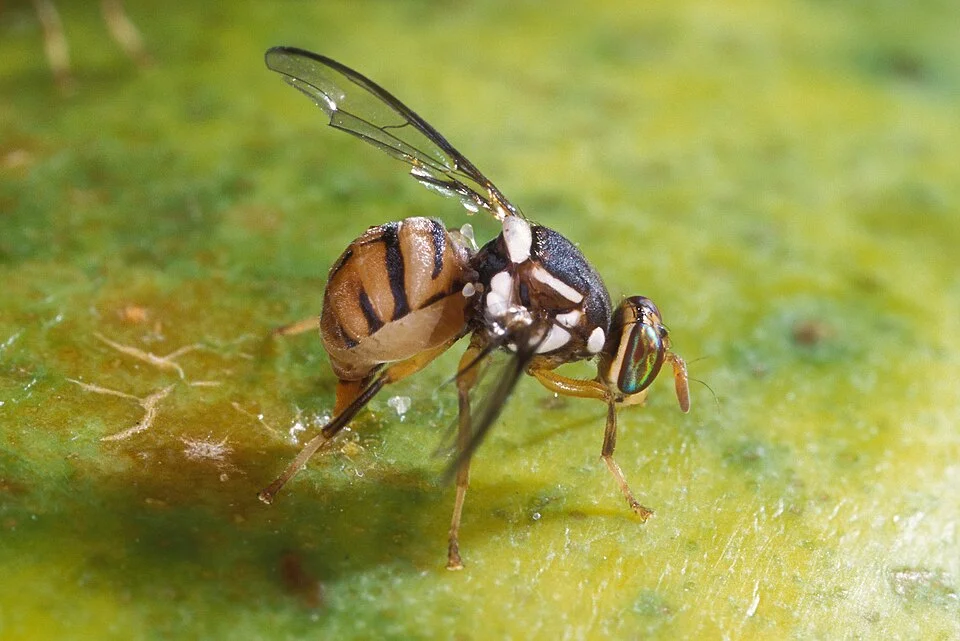
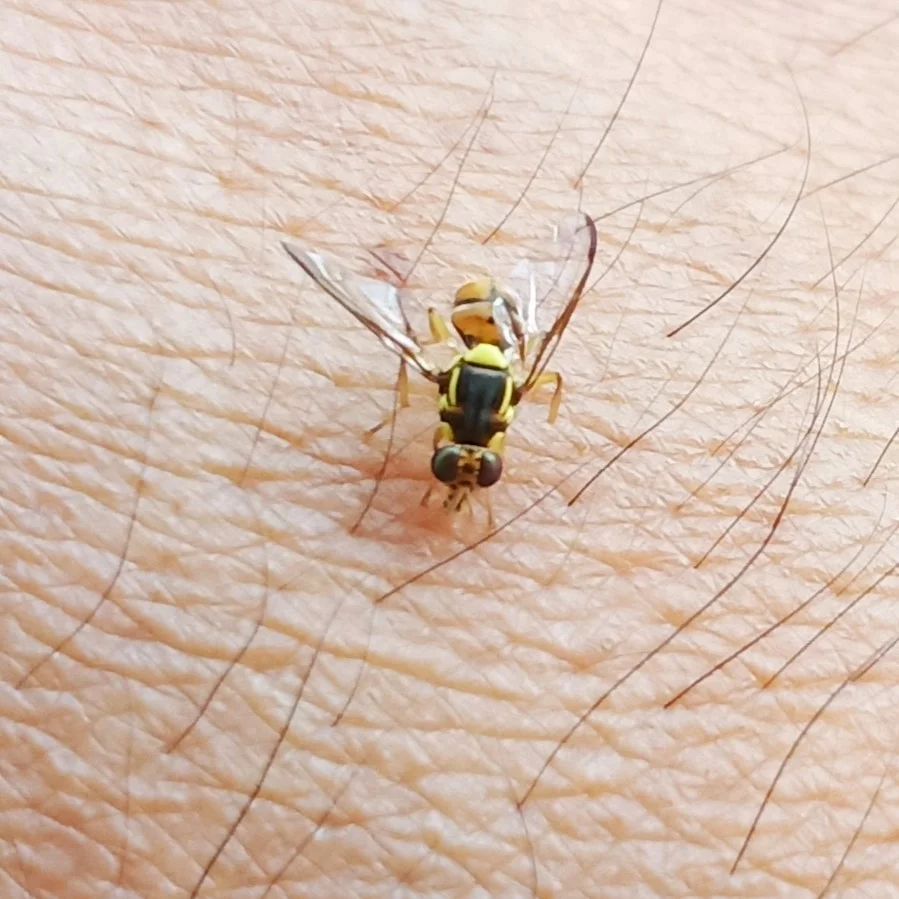
Fruit flies (Bactrocera dorsalis, the Oriental fruit fly) are small, yellow-shouldered flies whose females "sting" ripening fruit — mango, guava, papaya, citrus, avocado and more — jabbing their eggs in just under the skin. The white maggots (fly grubs) that hatch tunnel and feed hidden inside, rotting the flesh so the fruit ripens unevenly and drops early. The full-grown maggots then crawl out into the soil to turn into new flies, so where warm, humid weather keeps some host fruit ripening almost all year, generations overlap and numbers build up fast.
Kembangraps · CC BY-SA 4.0 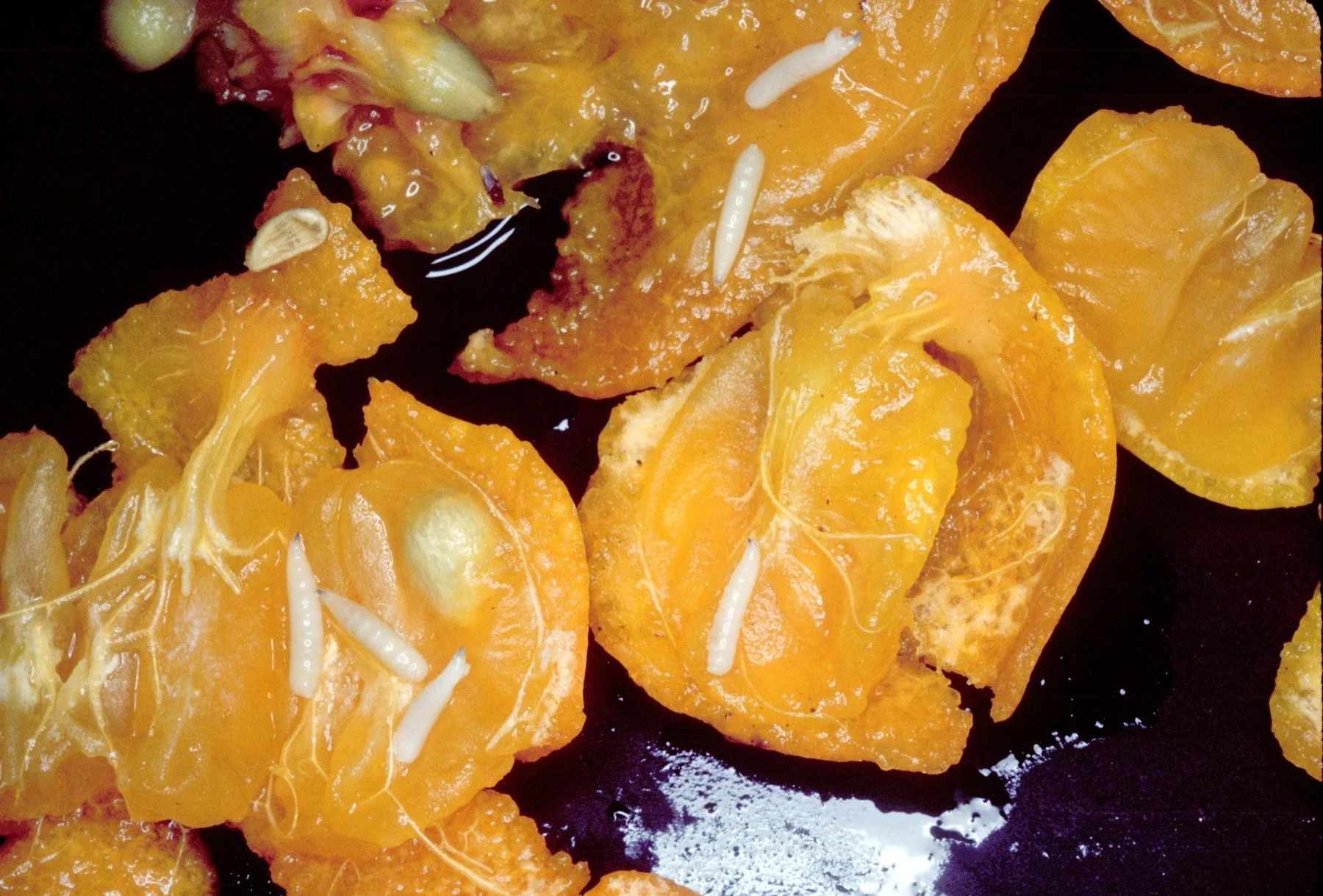
Florida Department of Agriculture · Public domain
Why it matters
Fruit flies can rot up to 6 in every 10 fruit on a tree — mango, guava, papaya, orange, avocado and more — turning a good harvest into piles of maggoty, unsellable windfalls. The female stings the ripening skin and lays her eggs just beneath it, so the damage stays hidden inside: by the time you notice the soft, sunken rotten spot, the maggots are already tunnelling and no spray can reach them. Those maggots then drop with the fruit and burrow into the soil to become the next wave of flies, so once they settle into your orchard they keep coming back — which is why catching them early and destroying every fallen fruit matters so much.
When to act
flies caught rising in pheromone/food-bait traps as fruit begins to mature, or first stung fruit with oozing punctures
This guidance is general, compiled from published agronomic references including FAO and CABI. Thresholds and timing shift with your crop, your variety and the season.
In much of the region a spray is simply called mushonga — medicine. But a chemical group you cannot name is one you cannot rotate, and a product you did not write down has no pre-harvest interval you can observe. Mushonga, and other farming words →
The full Fruit flies field guide
Identify it
The damage you see first
tiny sting punctures on the skin of ripening fruit, each with a bead of clear sap or gum oozing out that later darkens into a soft, sunken brown spot. The flesh beneath rots, the fruit ripens unevenly and drops early, and when you cut a suspect fruit open you find small white maggots tunnelling in the pulp.
The maggot
white, legless and tapered like a tiny grain of rice, up to about 1 cm long. Disturb one in cut fruit and it can suddenly flip or "jump" into the air — a trick no ordinary grub does.
The fly itself
about the size of a housefly (~8 mm), slender and shiny brown-black, with two bright yellow patches on its "shoulders" just behind the head, and clear wings crossed by a dark stripe along the front edge. It struts over fruit and leaves in warm daylight, often flicking its wings; the female carries a pointed tail she jabs into the fruit to lay her eggs.
Don't confuse it
with the common housefly: a housefly rests with its wings folded flat over its back and never stings fruit, while the fruit fly holds its wings out to the sides and shows those yellow shoulders and banded wings. And tell a fruit-fly sting apart from a bird peck or a knock bruise — those don't ooze first and then rot from the inside. A fruit-fly sting is a pinprick with an ooze bead that later hides maggots within, not one big chewed or broken hole.
Scout for it
When to look
start as soon as the fruit begins to size up and change colour — the mid-to-late fruiting stage — because that is when the females start stinging; hard green fruit does not yet attract them. Warm, humid spells sharply raise the danger, so check more often then, and keep checking right through to harvest.
Hang traps and count them every week
put up a few methyl-eugenol traps (methyl-eugenol is a scent lure that pulls in the male flies) or protein food-bait traps in the shaded canopy — at least 3 to 4 spread around the orchard — and write down the catch from each one every week so you can see whether the numbers are climbing.
Walk the orchard and inspect the fruit
cross the block in a big "W" so you cover all four corners and the middle, not just the row beside the path. Make about 5 stops, and at each stop check 10 ripening fruit — about 50 fruit in all — for sting marks, oozing beads and soft spots, cutting open 2 or 3 suspect fruit to look for maggots.
Act on the very first sign — the number is one
Even 1 stung fruit with an oozing puncture in your sample, or a weekly trap catch that has climbed above last week's, means the flies are active and laying → act now. Don't wait for more: once the maggots are inside the fruit, no spray can reach them.
Control it
Prevent it — orchard sanitation is your strongest everyday tool:
twice a week, gather up every fallen and stung fruit, from the ground and off the tree, and destroy it — bury it at least knee-deep (about 50 cm) so the flies inside cannot dig back out, or seal it in a black plastic bag left in the sun for a week, or boil or burn it. This starves the next generation, because the maggots crawl out of dropped fruit into the soil to become new flies. Also bag your high-value fruit (mango, guava) in paper or net sleeves once it sets, and pick at the right maturity instead of leaving ripe fruit hanging as a breeding site. Do this together with your neighbours — flies cross fences.
Act early — trap the males and spare the helpers, don't cover-spray:
hang male-annihilation blocks through the orchard — a wick or block soaked in the male lure (methyl-eugenol) plus a killing agent — so they draw in and kill the male flies, leaving the females unmated to lay far fewer eggs. Add protein food-bait stations that both males and females come to feed on. And protect the tiny parasitic wasps — natural helpers that lay their own eggs inside fruit-fly maggots and kill them — by avoiding broad, whole-tree sprays that wipe them out.
Last resort — spinosad bait, as SPOT patches only:
if stings keep appearing, use a protein bait mixed with spinosad (spinosad is a low-toxicity insecticide made from a soil microbe) — but dab it as a patch on the shaded side of each tree, NOT a full cover spray over the whole canopy. The flies come to feed on the bait and die, while bees and helpful insects are largely spared. Safety: cover your skin, eyes, nose and mouth; spray in the cool of morning or evening with the wind at your back; keep it away from food, drinking water, children and bees; and respect the pre-harvest interval — the number of days the label says to wait between spraying and picking — before you eat or sell the fruit, then wash yourself and your kit afterwards. Resistance: don't lean on one product — rotate to a different type of bait from time to time, and keep the traps and sanitation going, so the flies never get used to it.
If it keeps spreading → go area-wide; when it's too late → cut your losses
If fruit keep getting stung despite traps and bait, treat it as a neighbourhood problem — fresh flies are flying in from unmanaged trees nearby — so get every neighbour burying fallen fruit at the same time, and strip and destroy ALL remaining infested fruit to break the breeding cycle. On badly hit trees, pick the sound fruit a little early at proper maturity rather than lose it to fresh stings, and accept the loss on the rotten and dropped fruit. Then keep destroying every dropped fruit right through the season, so the next flush comes up clean.
Catch Fruit flies before it costs you the harvest
This guide is the general answer. Divisi works out yours — the week to scout your own field for Fruit flies, and what to do the day you find it.


Crops it affects
Plan the crops it attacks
-
 When to plant Avocado in Cassongue
 -
 When to plant Cucumber in Jorquelleh
 -
 When to plant Guava in Gokana
 -
 When to plant Hot pepper in Dekese
 -
 When to plant Mandarin / tangerine in Owensgrove
 -
 When to plant Mango in South Imenti
All planting calendars, country by country
Get Insights by email
A short digest of new Divisi articles. No email on quiet weeks.
Frequently asked questions
How do I identify Fruit flies?
The damage you see first. tiny sting punctures on the skin of ripening fruit, each with a bead of clear sap or gum oozing out that later darkens into a soft, sunken brown spot. The flesh beneath rots, the fruit ripens unevenly and drops early, and when you cut a suspect fruit open you find small white maggots tunnelling in the pulp.
When should I take action against Fruit flies?
flies caught rising in pheromone/food-bait traps as fruit begins to mature, or first stung fruit with oozing punctures
How do I control Fruit flies?
Prevent it — orchard sanitation is your strongest everyday tool:. twice a week, gather up every fallen and stung fruit, from the ground and off the tree, and destroy it — bury it at least knee-deep (about 50 cm) so the flies inside cannot dig back out, or seal it in a black plastic bag left in the sun for a week, or boil or burn it. This starves the next generation, because the maggots crawl out of dropped fruit into the soil to become new flies. Also bag your high-value fruit (mango, guava) in paper or net sleeves once it sets, and pick at the right maturity instead of leaving ripe fruit hanging as a breeding site. Do this together with your neighbours — flies cross fences.
Which crops are attacked by Fruit flies?
Among the crops covered here: Avocado, Cucumber, Guava, Hot pepper, Mandarin / tangerine, Mango, Papaya, Sweet orange.