 Divisi
How to grow mandarin and tangerine
Citrus reticulata · Rutaceae
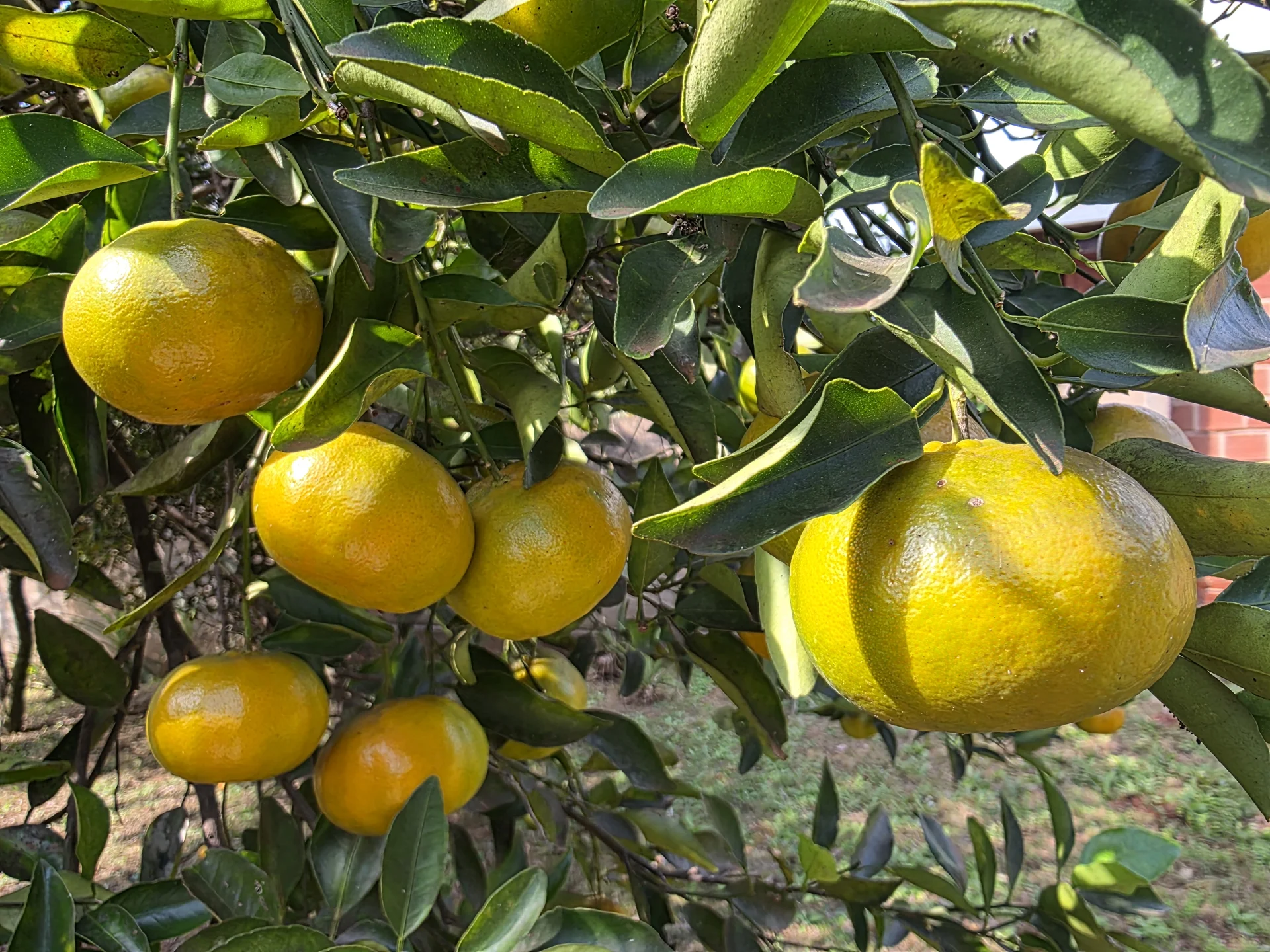
Photo: Horacio Cambeiro (User:Tubby3) · CC BY-SA 3.0
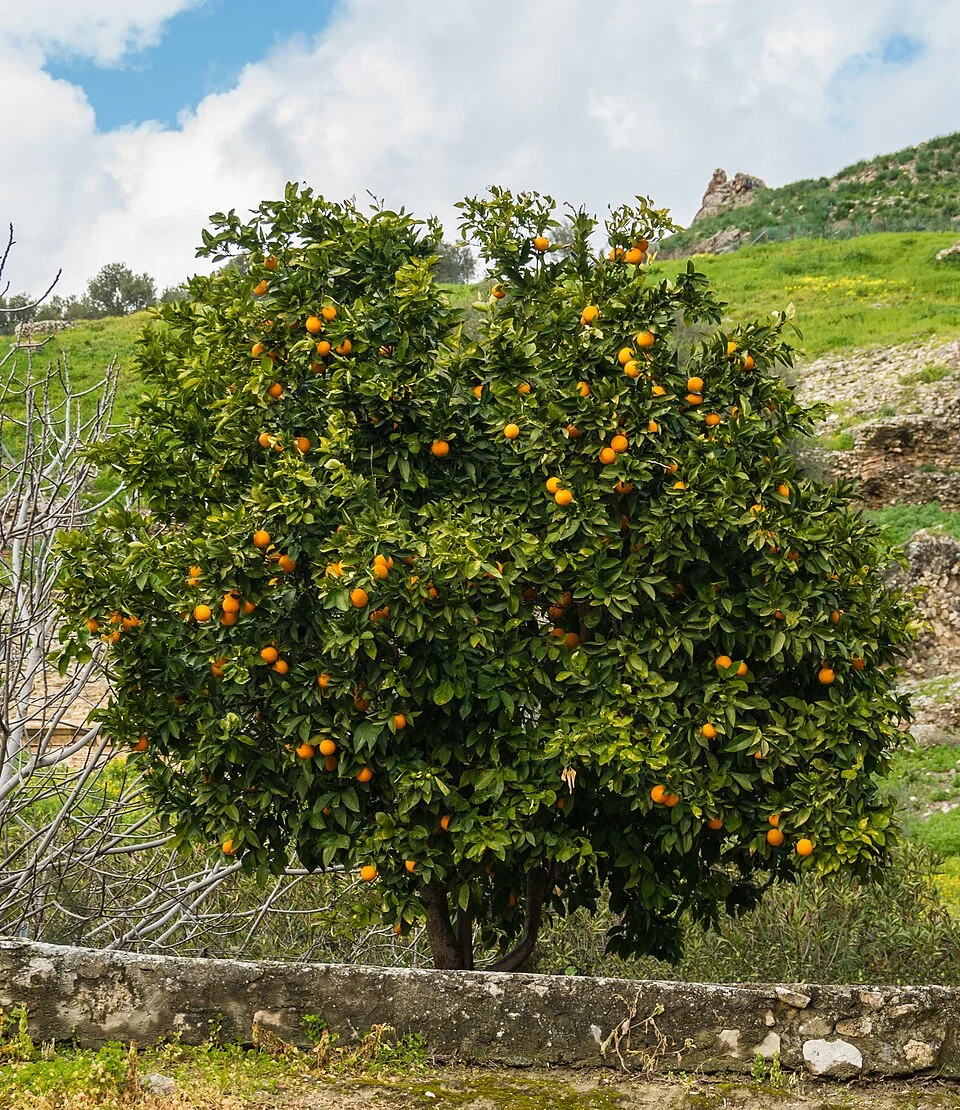
The mandarin (also called tangerine or naartjie) is the hardiest and easiest-to-peel of the citrus trees — a small, spreading evergreen that lives and bears fruit for decades. You do not grow it from seed. You plant a young grafted tree — a chosen sweet fruiting top joined onto a tough root variety — and care for it year after year. Its one famous habit is alternate bearing: a heavy 'on' year of fruit followed by a light 'off' year, and much of the skill of mandarins is evening that out. Get the root variety, the drainage and the graft height right when you plant; keep the tiny sap-sucking psyllid (which carries the incurable greening disease) off every new leaf flush; and stay ahead of fruit fly as the fruit sweetens — and one tree will feed and earn for you for many years.
Jebulon · CC0 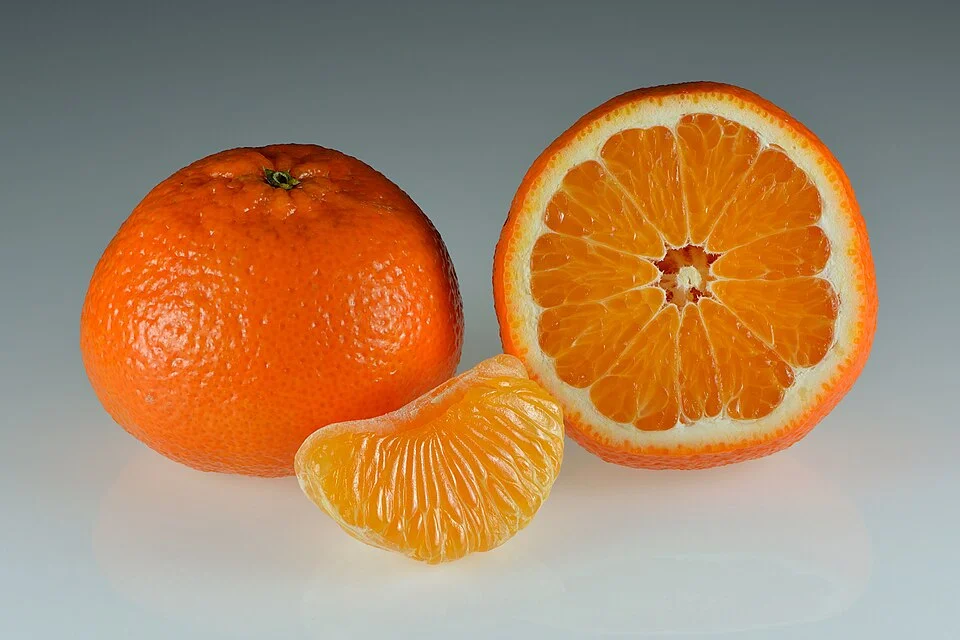
Ivar Leidus · CC BY-SA 4.0
- Row spacing
- 550 cm
- Plant spacing in the row
- 550 cm
These are general figures for the crop, compiled from published agronomic references including FAO and CABI. The right choice for your field depends on your soil, rainfall and the yield you are aiming for.
Will mandarin and tangerine actually do well on your field? Check your own field against every crop in the catalogue — no signup. Run the crop check →
Also known as
Mandarin and tangerine is also called naartjie.
- English
- naartjie
- Afrikaans
- naartjie
- French
- mandarine
- Portuguese
- tangerina
- Swahili
- chenza
Working in buckets, bags or paces? The farming glossary turns the measures growers actually use into kilograms and hectares — what a 20 litre bucket of each crop really weighs, and how to size a field by walking it — alongside the Shona, Swahili, Ndebele and Yoruba words used in the field. Open the glossary →
Growing mandarin and tangerine, stage by stage
Your year-after-year guide to a mandarin tree — planting a grafted tree on well-drained soil, guarding each new flush from greening disease and the fruit from fruit fly, evening out the heavy and light years, and picking sweet, easy-peel fruit at its best.
Plant it right — root, drainage and the first shape
A mandarin is a tree you plant once and keep for decades, so the choices you make now decide how healthy and productive it will be for its whole life. The right grafted tree, deep well-drained soil, the graft join kept above the ground, and an open cup-shaped frame are choices you cannot undo later — a buried graft or a wet hollow will haunt the tree for years. Get these right and the tree comes into bearing sooner and lives longer.
Choose a grafted tree on a suitable rootstock Critical
You are buying a tree that must live and crop for decades, so the roots underneath matter as much as the fruit on top. A grafted tree joins your chosen sweet variety onto a separate tough rootstock (root variety) that decides how well it copes with your soil, wet feet, drought and disease. Cheap, unknown or seed-grown stock can carry the incurable diseases greening and tristeza into your orchard from the very first day.
Buy from a trusted or certified nursery, never a roadside seedling. A grafted tree has a sweet fruiting top (the variety you eat) joined onto a separate root variety called the rootstock — you can see the join as a knuckle-like bulge low on the stem.
Ask for a rootstock matched to your soil and drainage — this is the tree's insurance against root rot and dry spells. Tell the nursery if your soil is heavy, sandy, or lies wet in the rains.
Avoid sour-orange rootstock where citrus tristeza virus (CTV — a sap-borne virus that slowly kills trees on the wrong root) is known in your area: trees on sour orange collapse when it strikes.
Insist on clean, certified stock. Greening — also called HLB (huanglongbing) — and tristeza (CTV) have no cure; a tree that arrives infected will never come right, so you must start clean.
Pick a healthy young tree: a straight stem, deep-green leaves with no blotchy uneven yellowing, and a well-knitted graft join.
- Tip:
Sour-orange rootstock where citrus tristeza virus (CTV) is present — the tree will slowly decline and die on that root.
- Do:
Use clean, certified nursery stock — it is your one real defence against carrying greening (HLB) and tristeza (CTV) home.
- Watch out:
A cheap seed-grown 'mandarin' is not grafted, takes far longer to bear, and may never crop true — pay for a proper grafted tree.
Ensure drainage, plant, stake & water in Critical
Mandarins hate wet feet. Standing water rots the roots and the trunk base — a disease called foot rot / gummosis (a gummy bark rot) — and it is the commonest killer of young citrus. Planting on deep, well-drained soil with the graft join kept well above the ground is the single choice that protects the tree for life, and it cannot be fixed once the tree is in the ground.
Choose the best-drained spot you have — deep soil where no water sits after rain. On a wet or heavy site, plant on a raised mound or ridge so the roots never sit in water.
Give each tree room: about five to six strides apart (≈5.5 m) in every direction, because a mandarin grows into a spreading 3–5 m tree that must not crowd its neighbours.
Dig a hole a little wider than the roots but no deeper than the root ball — dig too deep and the tree sinks as the loose soil settles, and the graft ends up buried.
Set the tree so the graft join (the knuckle low on the stem) sits about a hand-span (≈20 cm) above the soil — never bury it. A buried graft lets the trunk rot and lets the sweet top grow its own weak roots.
Firm the soil around the roots and build a low basin (a ring wall of soil) to hold water, then stake the young tree against wind so the roots are not rocked loose, and water it in well to settle the soil.
Keep a weed-free ring wider than the leaves reach around the tree, clear of grass and weeds, so nothing competes with the young roots for water and food.
- Tip:
Burying the graft join, or planting in a low wet hollow — both invite foot rot, the gummy bark rot that kills young citrus.
- Do:
On heavy or wet soil, plant on a raised mound so water always drains away from the trunk.
- Watch out:
After planting, check that rain runs away from the trunk, not towards it — keep the trunk base dry.
Formative pruning to an open centre Recommended
The frame you build in the first few years carries every future crop. Training the young tree to an open centre — an open, cup-shaped tree with the middle kept clear — lets light and air into the canopy, which means more fruiting wood, better-coloured fruit, and far less of the black spot disease that thrives in a still, damp, shaded tree.
In the first 2–4 years after planting, give the tree a light prune (this task comes round about every 5–7 months) — you are shaping, not cutting hard.
Pick 3–4 strong branches spread evenly around the stem to be the main arms, and remove shoots that compete with them so the middle stays open like a cup or wine glass.
Cut out any dead, crossing or inward-growing shoots and the fast, upright water shoots (thin, whippy shoots that shoot straight up and carry no fruit).
Rub or cut off any shoots growing below the graft join or from the ground — these are rootstock suckers, from the root variety, not your sweet top, and will never give good fruit.
Trim the very lowest branches (the 'skirt') off the ground so that fruit and leaves never touch the soil, where rot and black spot start.
- Do:
Prune little and often in the cool, dry part of the year — big cuts on a hot day sunburn the bark and let in dieback.
- Tip:
Hard, heavy pruning of a young mandarin — it delays fruiting and throws up a mass of useless water shoots.
- Watch out:
Shoots from below the graft are rootstock suckers — remove them early before they steal the tree's strength.
The young, non-bearing years
For the first roughly 1–3 years the young tree is not yet cropping — it is building roots and a frame. Your whole job now is to keep it growing steadily and disease-free: water often but never waterlogged, feed little and often for growth, and guard every new leaf flush from the tiny psyllid that spreads incurable greening disease. Young trees are also more cold-tender than older ones — where frost bites, cover a small tree or wrap its trunk on cold nights. A clean, well-fed young tree comes into bearing sooner.
Scout the young tree Critical
The young tree's worst enemies are small and silent. Greening disease (HLB), carried by the psyllid, has no cure — one infected tree is lost, and it becomes a source that infects the rest of your orchard. Root rot, leafminer and scale also hit young trees hardest. A slow walk-round every 3–4 weeks catches trouble while you can still act.
Every 3–4 weeks, walk slowly around the tree and look closely at the new leaf flush (the soft, bright young leaves) — this is where trouble begins.
Psyllids are the sap-sucking insects that inject greening as they feed: look for insects no bigger than a rice grain, sitting tail-up at an angle (almost standing on their heads) on new shoots, with white, waxy curly threads and twisted young leaves.
Greening / HLB: look for blotchy, lopsided yellowing — patches that do not match on the two sides of the leaf's midrib (unlike hunger, which is even on both sides). Suspect trees are often stunted, with off-shaped, hard, part-green fruit.
Citrus leafminer: look for silvery, snake-like squiggly trails just under the skin of young leaves, and young leaves left curled and twisted.
Scale insects: look for small hard bumps like tiny limpets on twigs and leaves that do not move when you touch them, with sticky honeydew (the sugary droppings sap-suckers leave) and the black sooty mould that grows on it.
Foot / root rot: check the trunk base for gum oozing from the bark near the soil and a thin, yellowing canopy — a sign of wet-soil rot.
If a tree strongly looks like greening, mark it and open the greening (HLB) guide — an infected tree must be removed so it cannot feed psyllids that carry it to the rest.
- Watch out:
Blotchy yellow that is uneven across the midrib points to greening; yellow that is even on both sides points to hunger. Learn the difference — it decides whether you feed the tree or remove it.
- Do:
Scout the new flush hardest — psyllids and leafminer only attack soft young leaves, never the old hard ones.
Water & feed the young tree Recommended
A young mandarin has a small, shallow root system that dries out fast, and it is growing hard to build its frame. Steady water and small, frequent feeds now grow a strong tree that comes into bearing sooner — but too much water, or fertiliser piled against the trunk, does real harm.
Water every 1–2 weeks (more often in heat and on sandy soil), keeping the soil moist but never waterlogged — mandarins rot in standing water.
Check before you water: push a finger into the soil at the drip line (the ring under the outer edge of the leaves, where the feeder roots are) — water when the top few finger-joints (3–5 cm) are dry.
Feed little and often for frame growth — spread the fertiliser your recommendation gives in a ring around the drip line, never against the trunk.
Keep fertiliser a hand-span (≈20 cm) clear of the trunk — piled against the stem it burns the bark and feeds foot rot.
Lay a mulch ring (dry grass or leaves) around the tree but pulled back off the trunk, to hold moisture in and keep weeds down.
- Tip:
Watering into a saucer against the trunk — keep the trunk base dry to stop foot rot; wet the roots out at the drip line instead.
- Do:
Feed in several small doses through the season rather than one big dose — young roots take up only a little at a time.
- Watch out:
Wash your hands after handling fertiliser, and keep it away from food, water and children.
The bearing tree — feed, prune, keep the leaves clean
Once mature, the tree pushes a new flush of leaves each year and carries a crop, and a yearly rhythm sets in. Three jobs matter: a light prune to keep the cup open, steady feeding of nitrogen and potassium plus the trace elements (magnesium, zinc) mandarins go short of, and a constant watch on the leaves for black spot, leafminer, and the aphids that spread tristeza (CTV). A full, healthy leaf canopy is the engine that fills the fruit.
Scout the canopy Critical
The leaves are the tree's food factory — every spot, mine or sap-sucker that damages them costs you fruit. This is when black spot builds on the leaves and rind, leafminer disfigures the flush, and aphids spread tristeza (CTV). A walk-round every 3–4 weeks catches them while they are still easy to stop.
Every 3–4 weeks, look over the whole canopy — leaves, shoots, and later the rind of the fruit.
Citrus black spot (a fungal disease): look for small, dark, slightly sunken spots with a pale grey centre and a dark ring, on leaves and especially on the rind as the fruit colours. Fallen leaves under the tree keep the disease alive.
Citrus leafminer: look again for silvery, winding trails and curled, twisted young leaves on the new flush.
Aphids (tristeza carriers): look for clusters of small, soft insects on the soft new shoots, curling the leaf tips, with honeydew and sooty mould. Aphids spread tristeza (CTV), the sap-borne virus that slowly declines trees.
Tristeza decline: watch for a tree that is yellowing and thinning all over and cropping poorly for no clear reason — on a susceptible rootstock, that can be tristeza.
Rake up and remove fallen leaves and fruit under the tree as you go — they carry black-spot spores across to the next flush.
- Watch out:
Black spot shows most on the sun-exposed side of the rind as fruit ripens — check colouring fruit closely.
- Do:
Keep the canopy open (see the pruning task) and the ground under it clean — airflow and sanitation beat black spot better than any spray.
Light annual pruning Recommended
A once-a-year light prune keeps the mature tree's centre open, so light and air reach the fruiting wood — that means bigger, better-coloured fruit and far less black spot, which loves a still, damp, shaded canopy. Mandarins fruit on the outside of the canopy, so you are opening it up, not cutting it back hard.
Prune once a year in the cool, dry season, after harvest and before the main flush — not in wet weather, when fresh cuts invite rot.
Remove the dead, diseased, crossing and inward-growing shoots and the upright water shoots, so the centre stays open like a cup and light reaches inside.
Cut off any suckers from below the graft join or from the ground — they are rootstock, not your sweet fruiting variety.
Lift the skirt: trim the lowest branches so fruit and leaves never touch the soil, where black spot and rot begin.
Keep it light — a few clean cuts. Hard pruning throws the tree into leafy regrowth and costs you next year's fruit.
- Do:
Prune in dry weather and let the cuts dry and heal — wet-season cuts let in rot and black spot.
- Tip:
Shearing the tree like a hedge — that shades the inside and grows water shoots, the opposite of what you want.
- Watch out:
Burn or bury the prunings, especially any with black spot or dieback — don't leave them lying under the tree.
N + K + micronutrient feeding Recommended
A cropping mandarin is a hungry tree — it pulls nitrogen (N) out of the soil to grow leaves and potassium (K) to size and sweeten fruit, and it is famously short of the trace elements magnesium and zinc, which show up as patterned yellowing on the leaves. Feeding in several small doses through the year keeps the canopy dark green and the fruit sizing, without wasting fertiliser to the rains.
Feed every 2–3 months through the growing season — several small doses, not one big one, so little washes away.
Spread the fertiliser your recommendation gives in a ring around the drip line (under the outer edge of the leaves), where the feeder roots are — never piled against the trunk.
Use a compound that carries nitrogen (N) for leaves and shoots and potassium (K) for fruit size and quality, plus the trace elements mandarins need.
Read the leaves: magnesium hunger shows as yellowing that spreads in from the leaf edges leaving a green arrow-shape at the base; zinc hunger shows as small, narrow leaves with yellow blotches between green veins. Correct either with a leaf-feed (foliar spray) of the missing element — the zinc goes on with the flowering spray.
Feed onto moist soil or water it in so the tree can take it up, and keep the fertiliser a hand-span (≈20 cm) off the trunk.
- Do:
Split the year's feed into several small doses — a mandarin takes up food a little at a time, and split feeding keeps the leaves green right through fruit fill.
- Tip:
Dumping all the fertiliser in one heap or against the trunk — it burns roots and bark, and much is lost to the first heavy rain.
- Watch out:
Wash your hands after handling fertiliser, keep it off wet leaves, and away from food, water and children.
Flowering — set a good crop, guard the flush
The tree flowers once a year — brought on by the cool of winter in the subtropics, or by a short dry spell then watering in the tropics. This is the make-or-break moment for the crop. Protect the sweet-smelling blossom and its tender new flush from the psyllid (greening's carrier), give a zinc-and-boron leaf feed to help the flowers set into fruit, and — if your variety needs it — keep a pollinizer tree nearby so bees can cross the flowers.
Time flowering (dry stress then water) Recommended
In the tropics, mandarins will not flower well on their own — they need a trigger. A short dry spell that stresses the tree, followed by a good watering, wakes up an even, strong bloom, which means a fuller, more even crop. In cooler subtropical areas the winter cold does this job for you.
In the month before you want flowering, hold back water for a few weeks so the tree feels a mild dry stress — the leaves dull and curl slightly, but do not let it wilt hard or drop its leaves.
Then give a good, deep watering (and a feed) to break the stress — this rush of water triggers the tree to burst into bloom together, in one even flush.
In cool subtropical areas you can skip the dry trick — the winter cold already sets the bloom; just keep the tree well watered as it comes into flower.
If your variety needs cross-pollination, make sure a pollinizer tree (a different, compatible citrus that flowers at the same time) is nearby so bees can carry pollen between them.
- Do:
Watch the tree through the dry spell — you want a mild stress, not a collapse. Dulled, slightly curled leaves are enough.
- Tip:
Stressing a young, newly-planted or unhealthy tree this way — only push an established, healthy tree into bloom.
- Watch out:
Break the dry spell as the season is warming — bloom that opens into cold or a dry hot spell sets poorly.
Scout psyllids at the flush Critical
The tiny citrus psyllid carries greening disease (HLB), which has no cure, and it breeds on exactly the soft new flush that comes with flowering. One psyllid can infect a tree for good. Checking the flush every week or so and acting on the first sighting is the difference between a clean orchard and a lost one.
From two weeks before flowering and right through the first month of new flush, check the soft young shoots every 7–10 days.
Look for psyllids — insects no bigger than a rice grain — sitting tail-up at an angle on the new shoots, their white, waxy curly threads, and the twisted, curled young leaves their feeding leaves behind.
Look too for greening (HLB) signs on nearby trees: blotchy, uneven yellowing across the leaf midrib, and stunted, lopsided, part-green fruit.
Act on the very first psyllids — open the psyllid / greening guide and treat the flush across the whole block; do not wait for numbers to build.
If a tree shows clear greening, mark it for removal — an infected tree left standing feeds psyllids that carry it to the rest.
- Watch out:
Psyllids only breed on soft new flush — make your closest checks when the tree is flushing, and knock them out before the flush hardens.
- Do:
Treat the whole block, not one tree — psyllids fly, so a single treated tree in an untreated orchard stays at risk.
Zinc/boron foliar Recommended
A mandarin needs zinc and boron to turn flowers into fruit — short of them, blossoms drop and fewer fruit set. A foliar (leaf-fed) spray just before flowering puts these straight into the leaves at the moment the tree needs them most, because the roots take up these trace elements too slowly to help in time.
Spray in the two weeks before flowering, as the flower buds swell — this is the window when zinc and boron do the most for fruit set.
Foliar means leaf-fed: mix the zinc and boron your recommendation gives and spray it onto the leaves until they are just wetted, not dripping.
Spray in the cool of early morning or evening, with the wind behind you, so the leaves take it in and the spray does not scorch the tree or blow back onto you.
Cover your skin, eyes, nose and mouth while spraying, keep it off any food, and wash well afterwards.
Do not overdo the boron — a little helps, too much harms. Use only the amount your recommendation gives.
If flowers still drop badly after spraying, have the tree's zinc and magnesium checked and step up the leaf feeds next season — repeated poor set usually means a trace-element shortage to fix over the year.
- Do:
Time it to the swelling buds before the flowers open — spraying open blossom can harm the bees and the flowers.
- Tip:
Guessing the boron rate — boron has a narrow safe range, so stick to the recommended amount exactly.
- Watch out:
Spray in the cool, calm part of the day — a hot midday spray burns the leaves and dries off before it can work.
Fruit set to fill — thin the heavy years, beat fruit fly
Over the next 6–9 months the fruit grows and sweetens, and two jobs decide the size of this crop and the next. First, in a heavy 'on' year, thin some of the small fruit — mandarins are the worst citrus for alternate bearing (a heavy year then a light year), and thinning evens it out and protects next year's bloom. Second, from the time the fruit starts to size, run hard against fruit fly, false codling moth and black spot, which spoil the fruit you have already grown. Keep the water steady the whole way — this is a thirsty stage.
Thin fruit in 'on' years Recommended
Mandarins are the most alternate-bearing of all citrus — a heavy 'on' year exhausts the tree and suppresses next year's flowers, so a bumper crop is followed by a near-empty 'off' year of small, poor fruit. Removing some of the small fruit in the on-year, before the tree pours everything into it, evens out the two years and protects the return bloom. It feels wrong to drop good fruit, but it pays.
Judge the crop 1–3 months after flowering, once the tree has finished its own natural fruit drop (a wave of tiny fruitlets it sheds by itself a few weeks after flowering).
Only thin in a clearly heavy 'on' year — a tree carrying far more small fruit than it can ever size up. In a light 'off' year, thin nothing.
While the fruitlets are still small (marble-sized), pick or snip off the smallest, blemished and tightly-clustered fruit, leaving the rest evenly spaced along the branches.
Thin hardest where fruit is jammed together in bunches and on over-loaded branches bending under the weight.
The tree then keeps fewer but bigger, better fruit this year, and flowers properly next year — the aim is a steady crop every year, not a feast then a famine.
- Do:
Thin early, while the fruit is small — thinning does the most good before the tree has spent its strength sizing a huge crop.
- Tip:
Thinning in an off year, or thinning nothing in a big on year — either way the tree keeps swinging between feast and famine.
- Watch out:
A branch bending to the ground under fruit will snap or make only tiny fruit — relieve the load.
Scout fruit fly & black spot Critical
As the fruit sizes and sweetens it becomes a target. Fruit fly stings it and its maggots rot it from the inside; false codling moth bores in; black spot blemishes the rind. These attack the crop you have already grown, so catching the first stings — with traps and a twice-weekly look — lets you act before the whole crop is spoiled.
From about two weeks after flowering right through fruit growth, check the fruit every 3–4 days, and hang fruit-fly traps in the trees to catch the first flies.
Fruit fly: look for tiny sting marks (small punctures) on the fruit, soft rotting patches around them, and fruit dropping early; cut a suspect fruit open and look for small white maggots inside.
False codling moth: look for a small entry hole with crumbly droppings, a single fruit that colours and drops early, and a caterpillar inside when you cut it.
Black spot: look for dark, sunken spots with pale centres on the rind, worst on the sun-facing side as the fruit colours.
Collect and bury (or deep-bin) every fallen and stung fruit twice a week — this breaks the fruit-fly and moth life cycle better than any spray on its own.
If trap catches rise, or you find the first stings, start the fruit-fly management task now — do not wait.
- Watch out:
Fresh stings on firm fruit mean the fly is active now — the moment to bait; old dropped rotten fruit is past damage.
- Do:
Hang traps early, before you expect flies — they warn you of the first arrivals so you bait at the right moment.
Steady irrigation through set & fill Recommended
Fruit set and fill are the mandarin's thirstiest stage — the fruit is mostly juice. Steady, even moisture now sizes the fruit and keeps it juicy; swings between bone-dry and soaked make fruit split and drop, and drought shrinks the whole crop. This is one of the two stages (with flowering) where water matters most.
Water every 7–10 days (more often in heat and on sandy soil), keeping the soil evenly moist through the whole fruit-growing period.
Even is everything: never let the tree go bone-dry and then flood it — that sudden swing splits the fruit and knocks it off.
Water out at the drip line where the feeder roots are, and keep the trunk base dry to avoid foot rot.
Hold a mulch ring under the tree (off the trunk) to even out the soil moisture between waterings.
If water is short, flowering and this stage are the last two you should ever let go dry — protect them ahead of everything else.
- Tip:
Dry-then-drench swings — the commonest cause of split, dropped mandarins.
- Do:
Mulch under the canopy to hold moisture steady between waterings.
- Watch out:
Fruit splitting or dropping after a heavy watering means the tree got too dry first — even the water out.
Fruit-fly management Recommended
Fruit fly can ruin a whole mandarin crop from the inside — the maggots you never see until the fruit rots and drops. Beating it takes three things together: sanitation (clearing fallen fruit), protein bait (a spot-spray that kills the flies before they sting), and traps. Started on the first stung or dropping fruit, it saves the crop; started late, it cannot.
Start on the first stung or dropping fruit, or the first rise in trap catches — usually from about two months after flowering, as the fruit sizes and sweetens.
Protein bait works because the flies must eat protein before they can lay eggs: spray small bait spots (a dab on part of each tree, not the whole tree) so flies come to it and die before they sting the fruit.
Collect and bury (or deep-bin) all fallen and stung fruit twice a week — sanitation starves the next generation and is the backbone of control.
Keep the traps hung and topped up, to keep knocking down and tracking the adult flies.
When you spray any bait or pesticide: cover your skin, eyes and nose, spray in the cool with the wind behind you, keep it off fruit you will eat soon, respect the pre-harvest interval (the least number of days the label says to wait between spraying and picking), and wash after.
- Do:
Bait spots, not whole-tree cover sprays — spot-baiting uses far less chemical, spares helpful insects, and works because the flies feed before they sting.
- Tip:
Leaving stung and fallen fruit lying under the tree — every one is a nursery for the next wave of flies.
- Watch out:
Respect the pre-harvest interval on the label — the days you must wait between the last spray and picking, so the fruit is safe to eat.
Pick sweet — mandarins don't ripen off the tree
Citrus is non-climacteric — it does not sweeten after picking, so a mandarin picked sour stays sour. Wait until the fruit is truly ripe (coloured, sweet, juicy and easy to peel), then pick promptly, because mandarins do not hold long on the tree and go coarse or drop if left. Always hand-clip: the loose rind tears and 'plugs' (leaves a hole) if you pull the fruit.
Hand-clip mature fruit Critical
A mandarin only tastes as good as it is the day you pick it — it will not get sweeter off the tree (it is non-climacteric), and it will not wait long on the tree either. Picking at true ripeness, and clipping rather than pulling, is the difference between sweet, sound, sellable fruit and torn, sour, quick-rotting fruit.
Pick from about 7–10 months after flowering, when the fruit is fully coloured, sweet and juicy on a taste-test and peels easily — taste a few from different trees first, because colour alone can mislead.
Never pull or twist the fruit off — the loose rind tears and leaves a hole ('plugging') that rots. Clip each fruit with scissors or secateurs.
Clip the stalk flush with the top of the fruit (leave no sharp stub) so the fruit do not pierce and bruise each other in the picking bag.
Pick every 10–21 days across the harvest window, taking the ripe fruit each round — mandarins ripen in flushes and do not all come at once.
Pick in the cool of the day and keep the fruit out of the sun; handle it like eggs, because the thin rind bruises easily.
If a taste-test says the fruit is not yet sweet, leave it — but check often, as ripe mandarins soon go coarse or drop if left too long.
- Do:
Clip, don't pull — clipping keeps the rind whole; pulling plugs and tears it and lets in rot.
- Tip:
Picking on colour alone, or in the heat of the day — taste-test for sweetness, and pick cool.
- Watch out:
Long fingernails and rough handling bruise the thin rind — keep nails short and lower fruit gently into the bag.
Handle gently, colour up, store cool
The crop is picked — now don't bruise it away. A mandarin's thin, loose rind marks and tears at the least rough handling, and every bruise becomes a rot within a day or two. Handle it like eggs, colour up any fruit that is ripe inside but still green outside if you have the means, cure it briefly to heal the rind, and keep it cool — that is what carries mandarins to market sound.
Handle gently, degreen & store Recommended
More mandarins are lost after picking than most farmers realise — the soft rind bruises, tears and rots with rough handling and warmth. Gentle handling, a short cure to heal skin nicks, and cool storage keep the fruit sound and sellable; warm, rough handling turns a good crop into rejects within days.
Handle the fruit gently at every step — tip, don't drop, and don't overfill bags and crates; the thin rind bruises, and each bruise turns to rot.
Cure freshly-picked fruit for a few days in a cool, shaded, airy place — this heals tiny skin nicks and toughens the rind against rot before storage.
Degreening (colouring up): where the fruit is ripe and sweet inside but the rind is still green (common in warm areas, where the nights are too warm for the green to fade), hold it with ethylene gas in a closed, ventilated space to bring out the orange. If you have no way to do this, sell the green-but-ripe fruit locally — it is just as sweet.
Store the fruit as cool as you can (a cool room, a shaded store, or a cold room if you have one) and out of the sun — cool fruit keeps far longer than warm fruit.
Sort out any bruised, stung or split fruit before storing or selling — one rotting fruit spreads to its neighbours in the crate.
- Do:
Cool the fruit down soon after picking and keep it cool — every hour spent warm is keeping-life lost.
- Tip:
Tipping mandarins from a height or overfilling crates — the soft rind bruises, and each bruise becomes a rot.
- Watch out:
Check stored fruit often and pull out any that starts to rot before it spreads through the crate.
Pests and diseases that attack mandarin and tangerine


Grow mandarin and tangerine with a plan, not a guess
This guide is the general answer. Divisi works out yours — the week to plant mandarin and tangerine on your soil and your rainfall, and each job dated for your field.


When to plant mandarin and tangerine, country by country
- When to plant mandarin and tangerine in Algeria
- When to plant mandarin and tangerine in Angola
- When to plant mandarin and tangerine in Benin
- When to plant mandarin and tangerine in Botswana
- When to plant mandarin and tangerine in Burkina Faso
- When to plant mandarin and tangerine in Burundi
- When to plant mandarin and tangerine in Cabo Verde
- When to plant mandarin and tangerine in Cameroon
- When to plant mandarin and tangerine in Comores
- When to plant mandarin and tangerine in Congo
- When to plant mandarin and tangerine in Côte d'Ivoire
- When to plant mandarin and tangerine in Egypt
- When to plant mandarin and tangerine in Eritrea
- When to plant mandarin and tangerine in Eswatini
- When to plant mandarin and tangerine in Ethiopia
- When to plant mandarin and tangerine in Gabon
- When to plant mandarin and tangerine in Gambia
- When to plant mandarin and tangerine in Ghana
- When to plant mandarin and tangerine in Guinea Ecuatorial
- When to plant mandarin and tangerine in Guinea-Bissau
- When to plant mandarin and tangerine in Guinée
- When to plant mandarin and tangerine in Kenya
- When to plant mandarin and tangerine in Liberia
- When to plant mandarin and tangerine in Libya
- When to plant mandarin and tangerine in Madagascar
- When to plant mandarin and tangerine in Malawi
- When to plant mandarin and tangerine in Mali
- When to plant mandarin and tangerine in Mauritanie
- When to plant mandarin and tangerine in Mauritius
- When to plant mandarin and tangerine in Morocco
- When to plant mandarin and tangerine in Moçambique
- When to plant mandarin and tangerine in Namibia
- When to plant mandarin and tangerine in Niger
- When to plant mandarin and tangerine in Nigeria
- When to plant mandarin and tangerine in Rwanda
- When to plant mandarin and tangerine in République centrafricaine
- When to plant mandarin and tangerine in République démocratique du Congo
- When to plant mandarin and tangerine in Sao Tome and Principe
- When to plant mandarin and tangerine in Seychelles
- When to plant mandarin and tangerine in Sierra Leone
- When to plant mandarin and tangerine in Somalia
- When to plant mandarin and tangerine in South Africa
- When to plant mandarin and tangerine in South Sudan
- When to plant mandarin and tangerine in Sudan
- When to plant mandarin and tangerine in Sénégal
- When to plant mandarin and tangerine in Tchad
- When to plant mandarin and tangerine in Togo
- When to plant mandarin and tangerine in Tunisie
- When to plant mandarin and tangerine in Uganda
- When to plant mandarin and tangerine in United Republic of Tanzania
- When to plant mandarin and tangerine in Zambia
- When to plant mandarin and tangerine in Zimbabwe
Where mandarin and tangerine scores best
Districts where Divisi's engine currently rates this crop highest, ranked by fit.
-
 Owensgrove
 -
 Abala
Abala -
 Oued El Aneb
 -
 Kasangulu
 -
 Oyi
Oyi -
 Mkinga
 -
 Vohipeno
 -
 Hoima
Hoima -
 Buco Zau
 -
 Agnewak
 -
 Bonthe
 -
 Mouloundou
Get Insights by email
A short digest of new Divisi articles. No email on quiet weeks.
Frequently asked questions
How do I grow mandarin and tangerine?
How to grow mandarin and tangerine: 550 cm rows. Also called naartjie, mandarine, tangerina, chenza.
What is naartjie in English?
Naartjie is the Afrikaans name for mandarin and tangerine.
What is mandarine in English?
Mandarine is the French name for mandarin and tangerine.
What is tangerina in English?
Tangerina is the Portuguese name for mandarin and tangerine.
What is chenza in English?
Chenza is the Swahili name for mandarin and tangerine.
What spacing should I use for mandarin and tangerine?
Space mandarin and tangerine rows about 550 cm apart, with roughly 550 cm between plants within the row.
What pests and diseases attack mandarin and tangerine?
The ones covered in this guide are False codling moth, Fruit flies. Each has its own page explaining how to identify, check for and control it.