 Divisi
False codling moth
Thaumatotibia leucotreta · Insect
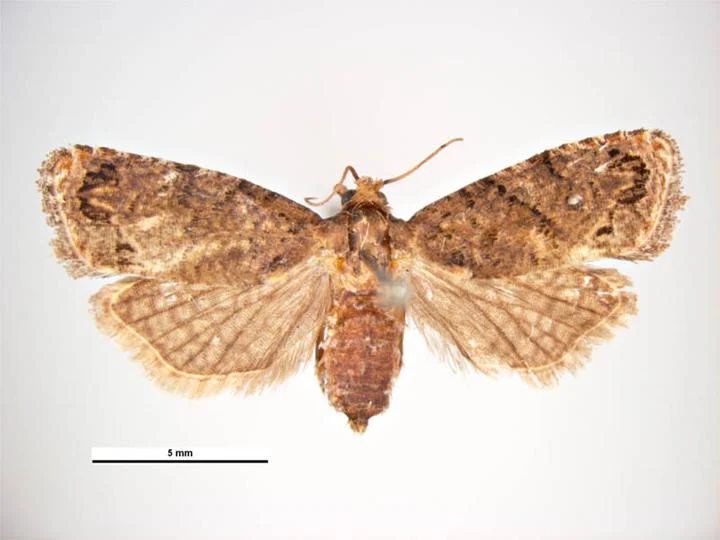
Photo: Simon Hinkley & Ken Walker, Museum Victoria · CC BY 3.0 au
False codling moth (Thaumatotibia leucotreta) is a small, drab, night-flying moth whose caterpillar feeds hidden inside the fruit — of citrus (oranges, grapefruit, mandarins), avocado, cashew and sweet or hot peppers. The female glues single eggs onto the fruit skin, and within hours of hatching the tiny caterpillar bores straight in and tunnels through the flesh, so the fruit colours early and drops before its time. The full-grown caterpillar then leaves the fruit to turn into a moth in the soil (this is called pupating), and in warm weather one generation follows another all year with no clear break. It is a quarantine pest — one the authorities restrict — so infested fruit must never be moved or sold to a new area.
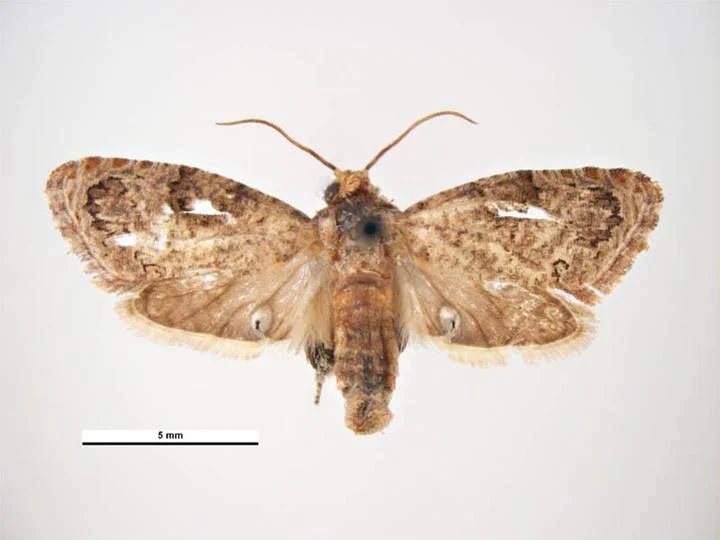
Simon Hinkley & Ken Walker, Museum Victoria · CC BY 3.0 au 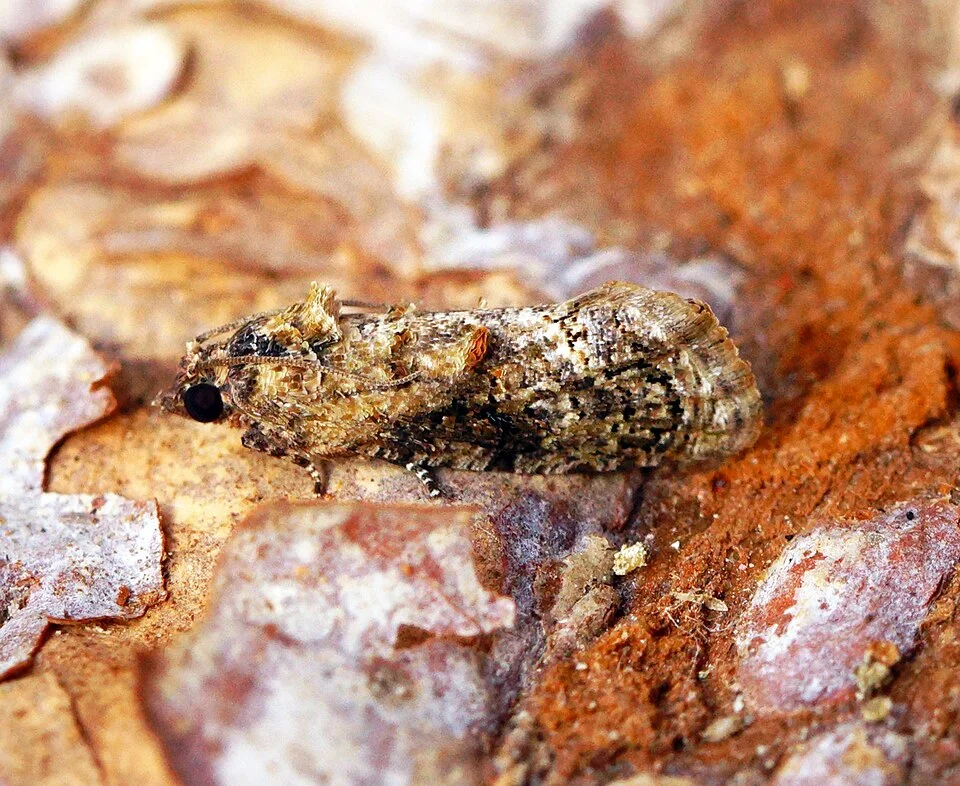
Ben Sale from UK · CC BY 2.0
Why it matters
False codling moth attacks the one thing you actually sell — the fruit — and a bad infestation can cost you up to a third (30%) of your harvest. The trouble is that the caterpillar bores inside the fruit within hours of hatching, so by the time you see fruit colouring early and dropping, the damage is already done and no spray can reach the pest hidden inside. It breeds all year round in warm weather and drifts easily from farm to farm, so once it builds up in your orchard it is very hard to shake off. Your real defence is to stop it early and keep the ground under your trees clean.
When to act
any dropped fruit with entry holes, or moths caught in pheromone traps above the local trap threshold
This guidance is general, compiled from published agronomic references including FAO and CABI. Thresholds and timing shift with your crop, your variety and the season.
In much of the region a spray is simply called mushonga — medicine. But a chemical group you cannot name is one you cannot rotate, and a product you did not write down has no pre-harvest interval you can observe. Mushonga, and other farming words →
The full False codling moth field guide
Identify it
The damage you notice first
a few fruit that colour up or ripen too early while the fruit around them is still green — and then drop to the ground before they should. Look closely at the skin for a tiny entry hole, like a pin-prick, often ringed with crumbly brown, sawdust-like droppings (this waste is called frass) and sometimes a small bead of dried gum.
Cut a dropped fruit open
and you will find brown tunnels and rot running through the flesh, with a small caterpillar inside. That caterpillar is the pest: up to about 1.5 cm long — the width of your fingernail — with a pinkish-red body and a dark brown head. It lives inside the fruit, never out on the leaves.
The moth itself is easy to miss
a small, dull grey-brown moth about the size of your thumbnail (roughly a finger-width across the wings). It flies at dusk and through the night and hides in the tree by day, so you will rarely catch it in the open. The female lays tiny, single, flat eggs stuck onto the fruit skin — too small to spot without looking hard.
Tell it apart from the look-alikes
Fruit-fly damage is a soft, watery rot full of white, legless maggots — not a firm pink caterpillar, and not a neat pin-hole with sawdust. Natural fruit drop (young fruit the tree sheds on its own) has no hole, no rot and no caterpillar. The sure signs of false codling moth are the pin-prick hole with sawdust frass, a pinkish caterpillar tunnelling inside, and fruit that colours early then falls. On peppers, look for the hole and frass near the stem cap, with the pod rotting from the inside.
Scout for it
When to look
start once the fruit has set and begins to swell, and keep at it hard right through ripening until harvest — that is the mid- and late-season window when this moth goes for your fruit. Warm spells (around 20-30°C) speed the moth up, so check more often in hot weather.
Hang pheromone traps and read them once a week
A pheromone trap uses a lure that copies the female moth's scent to draw in the males. Catches that climb week on week are your early warning that moths are active and laying — time your action to that rise, don't wait for the damage to show.
Walk a big "W" across the block
so you cover the middle and all four sides, not just the edge trees by the path. Make about 10 stops along the way.
At each stop, check two things
(1) fruit on the tree, for pin-prick holes ringed with sawdust frass and any fruit colouring early; and (2) — most important — the fruit lying on the ground (windfalls), cutting a few open to look for the pinkish caterpillar and the brown tunnels inside.
Act on the very first sign — the threshold is almost zero
Even ONE dropped fruit with an entry hole, or a jump in your trap catches above the local trap level, means act now. Because the caterpillar feeds hidden inside the fruit, if you wait until you can see "a lot" of damage you have already lost fruit and grown the next batch of moths.
Control it
Prevent it first — keep the orchard floor clean (your cheapest, strongest tool)
At least once a week, pick up EVERY fallen fruit and strip any hanging fruit that has a hole, then bury them deep (half a metre or more) or seal them in a closed drum or bag so the caterpillars inside die. Do not just heap them at the field edge — the caterpillars crawl out to turn into moths in the soil and come straight back. And don't leave over-ripe fruit hanging on the tree for them to feed on.
Prevent it wide — hang mating-disruption dispensers
Put up pheromone mating-disruption dispensers right through the orchard: they flood the air with the female's scent so the males cannot find the females, which means fewer matings, fewer eggs and less damage. This works best over a wide area, so team up with your neighbours and do it together — one small block on its own gains little.
Act early — spray the granulovirus onto the fruit
When your traps show moths are active and laying, spray the granulovirus — a natural virus that harms only this moth and nothing else. The newly hatched caterpillar swallows it as it starts to bore in, and dies — so hitting the young caterpillar before it gets deep inside is everything; a late spray is wasted. You can also release tiny egg-eating wasps (a natural enemy) when egg-laying peaks. Spray safety, every time: cover your skin, eyes, nose and mouth; spray in the cool of the morning or evening with the wind behind you; keep it off drinking water, food, children and bees; wash yourself and your sprayer afterwards; and respect any pre-harvest interval on the label (the wait between spraying and picking).
Know the honest truth: there is no chemical rescue once the fruit is holed
No spray — not even a strong insecticide — reaches the caterpillar after it has tunnelled inside the fruit, so you cannot spray your way out of an infestation and no product can save fruit that is already holed. That is exactly why the clean orchard floor, the granulovirus and the mating-disruption above are the real answer. Don't lean on one tool alone — combine sanitation + the virus + mating-disruption + egg-wasps so the pest never gets the chance to build up or adapt to any single one.
If it keeps spreading — go harder and wider, then cut your losses
Tighten the cycle: strip and destroy ALL infested and dropped fruit every single week, and get your neighbours doing the same at the same time, because this moth flies between farms and no one orchard can win alone. If a late-season crop is badly hit, harvest the clean fruit early rather than leaving it to feed another generation, and destroy the rest. And remember it is a quarantine pest — never sell, dump or move visibly infested fruit, or you will carry it straight to new orchards.
Catch False codling moth before it costs you the harvest
This guide is the general answer. Divisi works out yours — the week to scout your own field for False codling moth, and what to do the day you find it.


Crops it affects
Plan the crops it attacks
-
 When to plant Avocado in Cassongue
 -
 When to plant Cashew in Machinda
 -
 When to plant Grapefruit in Makoua
 -
 When to plant Hot pepper in Dekese
 -
 When to plant Mandarin / tangerine in Owensgrove
 -
 When to plant Sweet orange in Buikwe
All planting calendars, country by country
Get Insights by email
A short digest of new Divisi articles. No email on quiet weeks.
Frequently asked questions
How do I identify False codling moth?
The damage you notice first. a few fruit that colour up or ripen too early while the fruit around them is still green — and then drop to the ground before they should. Look closely at the skin for a tiny entry hole, like a pin-prick, often ringed with crumbly brown, sawdust-like droppings (this waste is called frass) and sometimes a small bead of dried gum.
When should I take action against False codling moth?
any dropped fruit with entry holes, or moths caught in pheromone traps above the local trap threshold
How do I control False codling moth?
Prevent it first — keep the orchard floor clean (your cheapest, strongest tool). At least once a week, pick up EVERY fallen fruit and strip any hanging fruit that has a hole, then bury them deep (half a metre or more) or seal them in a closed drum or bag so the caterpillars inside die. Do not just heap them at the field edge — the caterpillars crawl out to turn into moths in the soil and come straight back. And don't leave over-ripe fruit hanging on the tree for them to feed on.
Which crops are attacked by False codling moth?
Among the crops covered here: Avocado, Cashew, Grapefruit, Hot pepper, Mandarin / tangerine, Sweet orange, Sweet pepper.