 Divisi
How to grow grapefruit
Citrus paradisi · Rutaceae
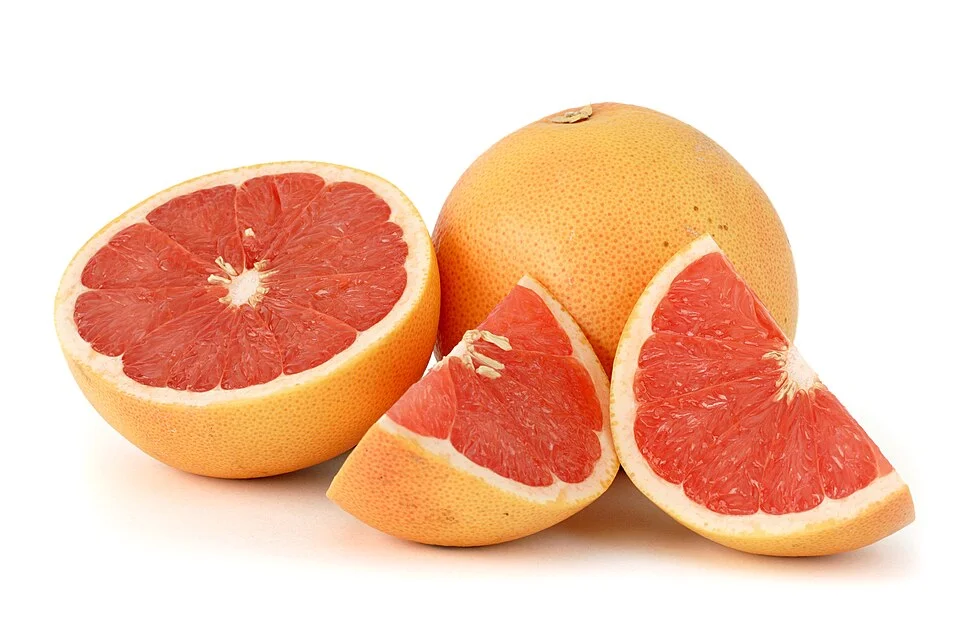
Photo: Citrus_paradisi_(Grapefruit,_pink).jpg: א (Aleph) derivative work: — raeky · CC BY-SA 2.5
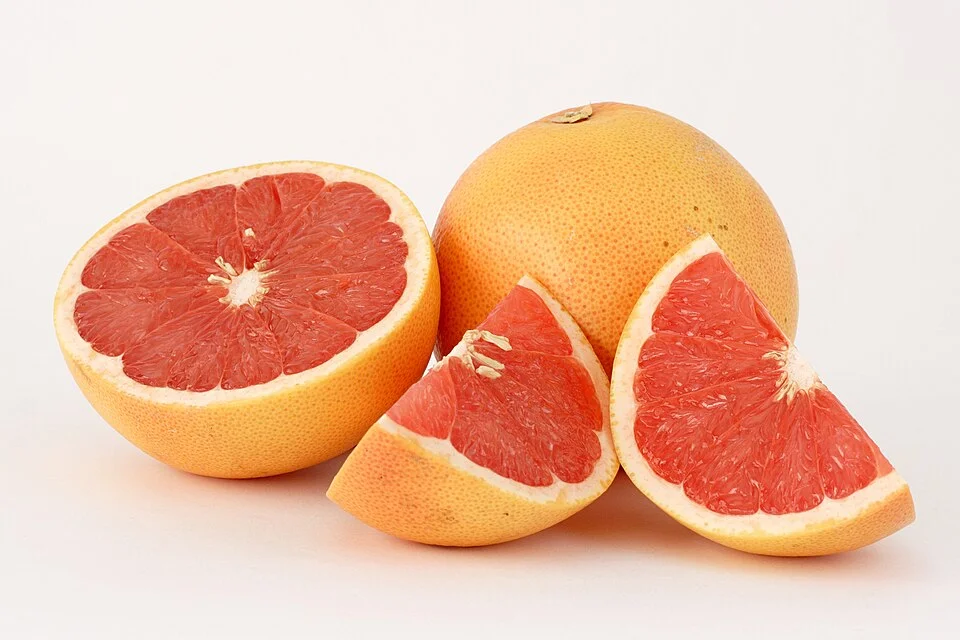
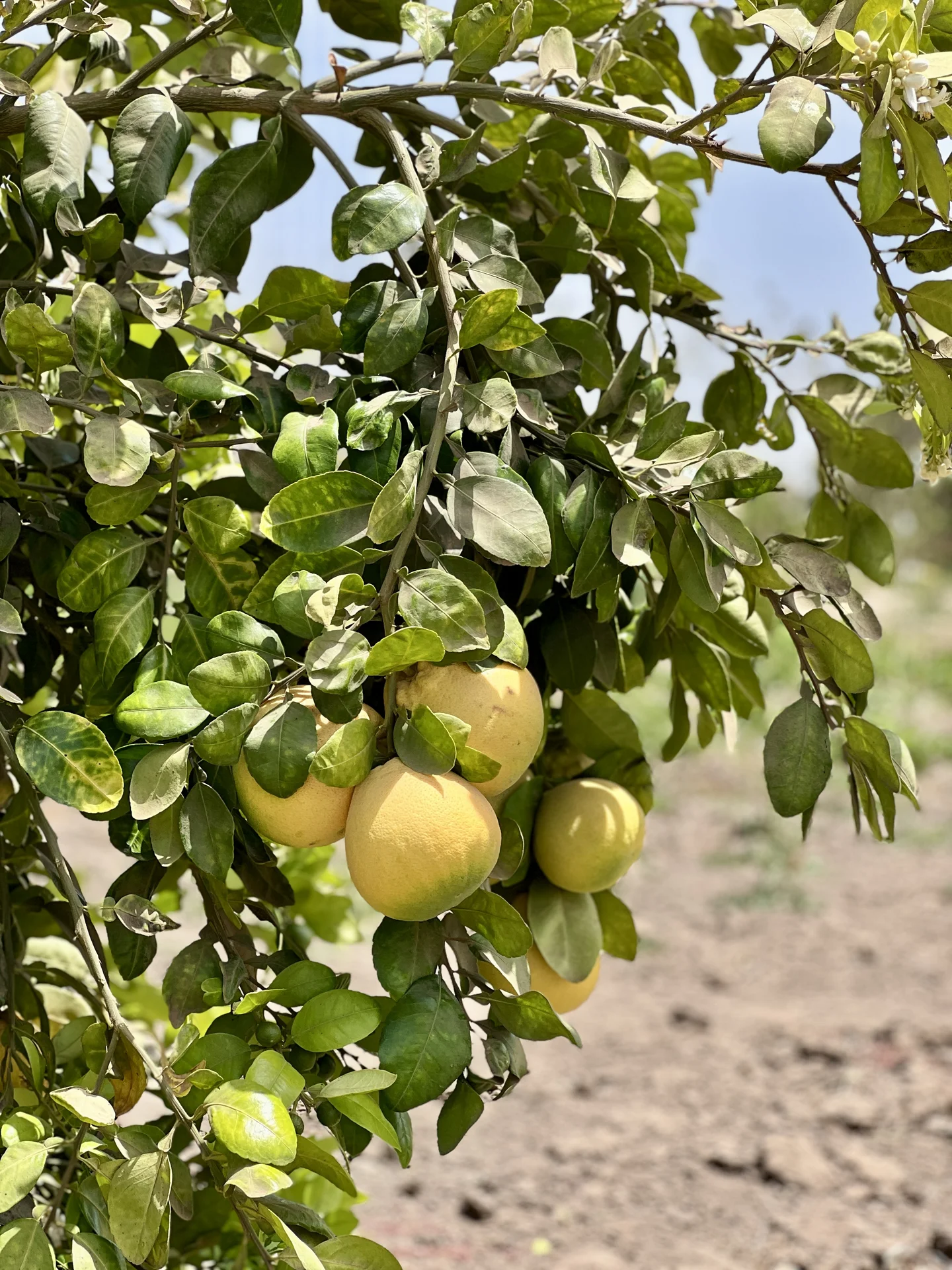
Grapefruit (Citrus paradisi) is a big, dense evergreen citrus tree you plant once and pick from for decades. You don't grow it from a pip — you plant a grafted tree: a chosen fruiting top joined onto a tough root variety called the rootstock. Of all the citrus, grapefruit needs the most steady heat to turn sweet, and it carries each crop the longest — 12–14 months from flower to ripe fruit. It does not sweeten one bit once picked, so it must ripen fully on the branch, and it is the most cold-tender of the common citrus: a hard frost can kill it. Orange, lemon, lime and mandarin are close cousins, each with its own guide.
- Days to maturity
- 360–420 days
- Row spacing
- 650 cm
- Plant spacing in the row
- 650 cm
These are general figures for the crop, compiled from published agronomic references including FAO and CABI. The right choice for your field depends on your soil, rainfall and the yield you are aiming for.
Will grapefruit actually do well on your field? Check your own field against every crop in the catalogue — no signup. Run the crop check →
Also known as
- Afrikaans
- pomelo
- French
- pamplemousse
- Portuguese
- toranja
- Swahili
- balungi
Working in buckets, bags or paces? The farming glossary turns the measures growers actually use into kilograms and hectares — what a 20 litre bucket of each crop really weighs, and how to size a field by walking it — alongside the Shona, Swahili, Ndebele and Yoruba words used in the field. Open the glossary →
Growing grapefruit, stage by stage
Your grapefruit orchard from the ground up — pick a hot site and a clean grafted tree, spend the patient early years building a strong, open tree, then each year carry the fruit through its long 12–14-month ripening until it is sweet on the branch.
Choose a hot site and a healthy tree, and plant it well
A grapefruit tree lives and bears for decades, so almost everything you decide here is locked in for good: a hot enough site, a clean grafted tree on the right root variety, deep well-drained soil, the correct planting depth, and wide spacing. You cannot move a tree or swap its roots later — so slow down and get these once-only choices right before the first tree goes in.
Choose a hot lowland/subtropical site Critical
Grapefruit only turns sweet where it gets long, sustained heat. On a site that is too cool or frosty the fruit stays sour, and a hard frost can kill the tree outright — and because each crop takes over a year to ripen, you would wait a very long time to find out you chose wrong. This one choice, made before you plant, decides whether the orchard can ever pay.
Pick a hot, low-lying or warm subtropical spot with a long warm season. Grapefruit needs more heat than orange or lemon to sweeten, and it holds each crop for over a year, so it must stay warm through most of the year.
Avoid frost pockets. Grapefruit is the least cold-hardy of the common citrus — cold below about -3°C (a hard, killing frost) damages or kills it. Low valley bottoms, where cold air sinks and pools on clear nights, are the worst spots.
Choose deep, well-drained soil — grapefruit roots rot in wet ground. Test the drainage: dig a hole about a metre deep (waist-deep on you), fill it with water, and check it soaks away within a day rather than sitting for hours.
Gently sloping land is ideal — it sheds both surplus water and cold night air.
Make sure there is water you can reach all year — a well, borehole, dam or river — because the tree drinks heavily right through the long fruit fill, and is thirstiest of all at flowering.
- Do:
Choose a hot lowland or warm subtropical site — too cool and the fruit never sweetens, and you only find that out after years of waiting.
- Tip:
Frost pockets and cold valley bottoms — one hard frost can wipe out years of growth on this cold-tender tree.
- Watch out:
Water still standing in your test hole a day after you filled it means the site drains too poorly — pick higher ground or plant on raised mounds.
Choose grafted tree on a suitable rootstock Critical
A grapefruit tree is not grown from a pip — it is a fruiting top grafted (joined) onto a separate root variety called the rootstock. Buy a clean, certified grafted tree on the right rootstock for your soil and pests and you get decades of healthy bearing. Buy a cheap, disease-carrying or wrong-rootstock tree and you plant a problem you can never dig out.
Buy a grafted tree, not a seedling. The grapefruit top is joined onto a hardy root variety; look for the graft union — the knobbly join low on the stem — as proof it is grafted. A grafted tree bears true to type, sooner and stronger than a pip-grown one.
Buy from a registered, trusted nursery and ask for certified clean stock — trees raised free of citrus greening and virus. A cheap tree from an unknown source can carry disease into your orchard for life.
Match the rootstock to your ground — ask the nursery which one. On wetter or heavier soil, choose a rootstock known to stand damp and resist foot rot (a soil-borne rot at the base of the trunk).
Avoid a sour-orange rootstock where citrus tristeza virus (CTV — a sap disease spread by aphids) is around: trees on sour orange collapse when they catch it. Ask the nursery or your extension officer which viruses are in your area.
Choose healthy trees only: a straight single stem, a clean well-healed graft union, and green, unblemished leaves with no blotchy yellow mottling. Leave behind any tree with mottled leaves or dark, wet, gummy bark at the base.
- Do:
Find the graft union (the knobbly join) low on the stem — it proves the tree is grafted, and shows you the join to keep well above the soil when you plant.
- Tip:
A sour-orange rootstock where citrus tristeza virus is present — the tree will slowly decline and die whatever you do.
- Watch out:
Blotchy yellow leaves or wet, gummy bark on a nursery tree are signs of greening or foot rot — don't buy it, and don't carry it home near your other trees.
Ensure drainage; plant + stake + water in Critical
How you plant sets the tree up — or holds it back — for its whole life. Two mistakes here are permanent: burying the graft union lets rot into the fruiting top, and crowding the trees starves the big, dense canopy of light and air. Get the depth, spacing, staking and first watering right and the tree romps away.
Plant at the start of the warm, rainy season, so the young tree settles in with warmth and water ahead of it.
Space the trees wide: about 6–7 m apart every way — roughly 6–7 strides (count one steady pace as about a metre) between trees, and the same between rows. Grapefruit grows big and dense; crowd it and the inside goes dark, bare and diseased.
Dig a wide planting pit on the deep, well-drained spot — about two to three times the width of the root ball, and no deeper than the root ball is tall, so the tree won't sink as the loose soil settles.
Set the tree so the graft union sits a good hand-span (about 20 cm) ABOVE the soil line. Buried, the join lets in foot rot and the tree slowly dies. This is the one depth mistake you can never undo.
Backfill with the topsoil, firm it gently with your hands (don't stamp it hard), and leave no air pockets around the roots.
Drive a stake in beside the trunk and tie it with a soft, loose band, so wind can't rock the young tree and tear its new roots.
Water in thoroughly straight away — a full can or two — to settle the soil against the roots, and build a low ring of soil around the tree to hold water over them.
Keep a clean, weed-free ring about a stride (1 m) wide around the trunk and mulch it — but keep the mulch a hand-span (20 cm) back from the bark, so the stem stays dry and doesn't rot.
- Do:
Keep the graft union a hand-span above the soil for the life of the tree — check now and again that mulch or washed-in soil hasn't buried it.
- Tip:
Squeezing the trees close together to fit more in — a crowded grapefruit orchard goes dark inside, bears poorly and holds disease. 6–7 m is not wasted space.
- Watch out:
Mulch or heaped soil creeping up against the trunk — pull it back; wet bark at the base is an open door to foot rot.
Formative pruning Recommended
The shape you build in the first few years is the frame that carries fruit for decades. A tree left to grow as it likes becomes a tangled, weak-forked bush that is hard to pick and splits in wind. A few well-chosen cuts now build a strong, open, reachable tree.
Start shaping from about 3 months after planting, then go over the young tree every 6–12 months through its first 3–4 years.
Choose 3–4 strong branches, spaced evenly around the trunk and pointing outward and upward, to become the tree's main arms (its 'scaffold' — the permanent frame). Rub or cut off shoots competing low on the trunk.
Keep the frame low and open so you can reach the fruit from the ground — you will pick this tree by hand for years.
Cut off any shoot growing from BELOW the graft union (or straight from the ground). These 'suckers' come from the root variety, not the grapefruit, and will never bear good fruit. Snap or cut them off flush as soon as you spot them.
Use clean, sharp tools, cut close to the branch leaving no stub, and prune in dry weather so the wounds heal fast and don't let in disease.
- Do:
Wipe your blade with disinfectant or pass it through a flame between trees, so you don't carry greening or virus from a sick tree to a healthy one.
- Tip:
Heavy cutting of the young tree — leave plenty of leaf, because the leaves feed the roots and build the frame. Over-pruning just stunts it.
- Watch out:
Suckers springing from below the graft union or the ground — remove them early or they steal the tree's strength and never fruit.
Grow the young tree through its first years
The young tree is not fruiting yet — its whole job now is to build a big, healthy frame of roots and branches. Water it steadily, feed it little and often for growth, keep the ring around it clean, and guard it hard against citrus greening and foot rot, which can kill a young tree before it ever bears.
Scout (HLB/psyllid, leafminer, scales) Critical
Citrus greening (HLB) has no cure — a tree that catches it is lost — and the tiny psyllid insect that spreads it hits the soft new leaves of young trees hardest. Catching psyllids early and pulling a sick tree out fast is the only way to stop the disease walking through the whole orchard.
Walk the trees about once a month (more often when they are pushing soft new leaves) and look each one over closely.
Check the flush (the soft new leaves) for citrus psyllids: insects smaller than a grain of rice that sit tail-up at an angle and jump when disturbed, often with white waxy curls and sticky honeydew.
Check the leaves for citrus greening (HLB): a blotchy yellow mottle that is patchy and does NOT match across a leaf-vein from one side to the other (plain hunger, by contrast, is even on both sides). Later signs are small, lopsided, bitter fruit that stays green at the bottom.
Look for leafminer: silvery, snaking tunnels just under the skin of young leaves, which then curl and pucker.
Look for scales — little limpet-like or waxy bumps stuck to stems and leaves — and the black sooty mould that grows on their sticky honeydew.
Check the trunk base and lower bark for oozing gum and dark, wet patches — the sign of foot rot.
If a tree clearly has greening (blotchy uneven mottle plus lopsided, bitter fruit) → dig it out and burn it; it will never recover and it feeds the disease to the rest. If you find psyllids on the flush → treat the flush to knock them down before they breed and spread greening.
- Watch out:
Blotchy-mottled leaves and small, lopsided, bitter fruit are citrus greening (HLB) — there is no cure. Remove the tree so it can't infect the others.
- Do:
Look hardest at the soft new flush — that is where psyllids feed and breed, and where greening gets in.
- Tip:
Shrugging off 'just a few' psyllids on a young tree — a handful now becomes a greening outbreak that can end the orchard.
Water + feed young tree Recommended
A young tree grows fastest on small, frequent meals — steady water and light feeding through the warm months build the roots and branches that will one day carry fruit. Big, rare doses burn the roots and wash away; little and often grows a strong frame quickly. Feed it the growth nutrients it wants most now: nitrogen and potassium (N and K).
Water regularly so the soil in the root zone stays moist but never waterlogged — young roots are shallow and dry out fast, but they also rot in standing water.
Feed little and often through the warm growing season: a light dose of a nitrogen-and-potassium (N + K) compound roughly every 6–8 weeks, not one big dose. Your recommendation gives the amount for the tree's age.
Spread the fertiliser evenly on moist soil out under the leaf-edge (where the feeding roots are), in a ring around the trunk — never piled against the stem, which burns the bark.
Keep the fertiliser a good hand-span (20 cm) clear of the trunk, then water it in so it reaches the roots.
Wash your hands after handling fertiliser, keep it off the leaves, and store it away from food, water and children.
- Tip:
One big feed instead of several small ones — a young tree's roots can't use it all, and heavy rain washes it straight past them.
- Do:
Feed onto moist soil and water it in — dry fertiliser on dry ground just sits there or gasses away.
- Watch out:
Keep fertiliser off the trunk and off wet leaves — it scorches bark and foliage. Wash your hands afterwards.
Weed the ring + protect the young tree Recommended
A young tree has few roots and can't fight grass and weeds for water and food — a clean ring makes every drop and every meal go to the tree, not the weeds. Bare, mulched soil also keeps the trunk dry and safe from rot.
Every 4–6 weeks, clear all grass and weeds from a ring about a stride (1 m) wide around each young trunk.
Weed shallowly — just scrape the surface with a hoe. Grapefruit's feeding roots run right under the top of the soil, and deep hoeing tears them.
Spread a mulch of dry grass or leaves over the cleared ring to hold moisture and smother new weeds — but keep it a hand-span (20 cm) back from the trunk, so the bark stays dry.
While you are there, check the stake and the base of the tree for damage, oozing gum, or pests.
- Do:
Keep a clean, mulched ring around each young tree — it is the cheapest growth you will ever buy.
- Tip:
Deep hoeing close to the trunk — it cuts the shallow feeding roots and can wound the bark, letting in rot.
- Watch out:
Mulch touching the bark — pull it back a hand-span; damp mulch against the stem invites foot rot.
Keep the bearing tree open and well fed
Once the tree is bearing, its yearly upkeep is simple but vital: a light prune to keep the big, dense canopy open to light and air, and steady feeding — including the micronutrients citrus so often runs short of — to keep the leaves green and the crop coming. An open, well-fed tree also shrugs off the black spot and virus troubles that shade and hunger invite.
Scout (black spot, leafminer, CTV/aphids) Recommended
On the bearing tree, two slow diseases do the damage: citrus black spot marks and drops the very fruit you are growing, and citrus tristeza virus (CTV), spread by aphids, quietly declines the tree. Both are far easier to hold off than to cure, and a walk every few weeks catches them while you still can.
Walk the orchard every 3–4 weeks through the growing season and look over the leaves, new shoots and any fruit on each tree.
Look for citrus black spot on leaves and rind: small dark spots, often sunken, with a pale grey centre ringed in dark, worst on sun-exposed fruit. Rake up and remove fallen spotted leaves and fruit — they store the spores that re-infect the next flush of leaves.
Check the soft new shoots for aphids — small, soft green or black insects clustered on the tips, with sticky honeydew and ants tending them. Aphids spread citrus tristeza virus (CTV), a sap disease.
Watch for CTV in the tree itself: slow decline, small pale leaves, a thinning canopy and die-back, worst on trees on a sour-orange rootstock. There is no cure — keep aphids down, and never take grafting cuttings from a sick tree.
Look for silvery leafminer tunnels in the new flush, and note anything that is spreading.
If black spot is building → start a protectant spray program on the fruit through the wet months (a 'protectant' coats the fruit surface so the fungus can't get in) and keep up the fallen-fruit clean-up. If aphids are heavy on the flush → knock them down to slow CTV spread.
- Do:
Light annual pruning keeps the big, dense canopy open to sun and airflow — dry, sunlit leaves and fruit get far less black spot.
- Watch out:
Aphids on the new flush spread citrus tristeza virus — keep them down, especially on young or sour-orange-rootstock trees.
- Tip:
Leaving fallen, spotted fruit and leaves under the tree — they are the store of black-spot spores that re-infects next season.
Light annual pruning Recommended
The grapefruit canopy grows thick and shady, and a dark, crowded inside bears little and traps the damp that breeds black spot and rot. A light prune once a year opens it to sun and air so the whole tree fruits and stays healthy — without cutting so hard that you throw away next year's crop.
Prune once a year, early in the season, before the tree flushes and flowers.
Take out dead, broken, diseased and crossing branches first, then a few inward-growing shoots that clog the centre — open it up so light and air reach the middle of the tree.
Keep it light — remove only a small part of the canopy. Grapefruit fruits on last year's wood, so heavy cutting throws away your next crop.
Remove any water-sprouts (fast, upright, unfruitful shoots) and any suckers from below the graft union or the ground.
Cut cleanly with sharp, disinfected tools, close to the branch with no stub, in dry weather so the wounds heal.
- Do:
Open the centre enough that a bird could fly through — sun and airflow inside the tree mean more fruit and less disease.
- Tip:
Hard pruning — it costs you next season's fruit and pushes out soft, watery growth that pests love.
- Watch out:
Disinfect the blade between trees so a single cut doesn't carry greening or virus across the orchard.
N + K + micronutrient feeding Recommended
A bearing grapefruit is a hungry tree — it needs plenty of nitrogen and potassium (N and K) to grow leaves and fill fruit, and it very often runs short of magnesium, zinc and manganese, which show up as tell-tale yellow patterns on the leaves. Fixing these keeps the leaf 'factory' green and the crop coming.
Feed the main nitrogen-and-potassium (N + K) compound to the soil in 3–4 light rounds through the growing season, every 2–3 months, rather than all at once. Your recommendation gives the amount.
Spread it evenly on moist soil under the whole canopy out to the leaf-edge, keeping it a hand-span (20 cm) off the trunk, and water it in.
Correct citrus's common micronutrient shortages with a foliar spray (feed sprayed straight onto the leaves, where the tree takes it up fast). Learn the leaf signs: magnesium short = a yellow-green wedge spreading from the leaf base, leaving a green arrow-tip; zinc short = small, narrow leaves with green veins on a yellow, blotchy background; manganese short = a fainter version of the same, on the newest leaves.
Spray the micronutrient mix onto the new flush when the leaves are dry, in the cool of morning or evening, covering the leaves top and bottom.
Wash your hands after mixing and spraying, keep the spray off food, out of your eyes and nose, spray with the wind behind you, and keep it away from children and water.
- Do:
Learn to read the leaves — the yellow pattern tells you which micronutrient is short (magnesium from the base, zinc a blotchy small leaf, manganese on the newest leaves).
- Tip:
Piling all the fertiliser on in one go — split it so the tree can use it and the rain can't wash it away.
- Watch out:
Spray foliar feed in the cool of the day with the wind behind you, off food and water, and wash your hands afterwards.
Bring on the bloom and set the fruit
Flowering is the make-or-break window for this year's crop — and the tree pushes tender new flush just as psyllids swarm to spread citrus greening. Nudge the bloom out evenly, feed zinc and boron to help the flowers set into fruit, and guard that flush hard. This is also the tree's thirstiest time — never let it go dry once the flowers are on.
Time flowering (dry stress → water) Recommended
An even, well-timed bloom gives you one main crop that ripens together, instead of a scatter of fruit at all stages that is hard to protect and pick. In warm areas you can trigger it: a short, deliberate dry spell followed by a good watering wakes the tree into flower all at once.
In the subtropics, the cool, dry winter brings the bloom on its own in spring — mostly you just let it happen and keep the tree healthy and fed.
In the warm tropics, with no cold trigger, hold water back for a few weeks to give the tree a short, deliberate dry stress — just enough that the leaves lose their gloss and slightly curl, but NOT until they wilt badly and drop.
Then water heavily. The flush of water after the dry spell wakes the tree into a strong, even bloom — aim to do this about 3 weeks before you want fruit-set to begin.
Before the flowers open, give a foliar spray of zinc and boron (see the zinc/boron task) to help the blooms set into fruit.
Once bloom starts, keep the water steady — don't let the tree dry out again while it is flowering and setting fruit, its most water-sensitive moment of the whole year.
- Do:
In the tropics, a short dry stress then a heavy watering flushes an even bloom; feed zinc and boron before the flowers open to help them set.
- Tip:
Stressing the tree so hard it actually drops its leaves — you want a gentle check to trigger flowers, not real damage.
- Watch out:
Once the flowers and tiny fruit are on, never let the tree go dry — water stress now drops the crop.
Zinc/boron foliar before flowering Recommended
Zinc and boron are the two nutrients flowers need to set well and hold their young fruit. A tree short of them drops most of its bloom and sets fewer, poorer fruit. A cheap foliar spray (fed straight onto the leaves) in the two weeks before the flowers open is one of the surest, cheapest ways to lift the number of fruit that stick.
Time it for the two weeks before the flowers open, when the buds are swelling — that is when the spray does the most good. Your recommendation gives the amount to mix.
Mix the zinc and boron into water as directed and spray it onto the leaves and buds until they are just wet all over, top and bottom.
Spray in the cool of early morning or late evening, off the heat of the day, so the leaves take it up and don't scorch.
Don't overdo the boron — a little helps, too much poisons the tree. Follow the recommended rate exactly; more is not better.
Cover your skin, eyes and nose, spray with the wind behind you, keep it off food and water, and wash well afterwards.
- Do:
Spray in the cool of the day with the wind at your back, so the mist blows away from you and the leaves take it up.
- Tip:
Guessing the boron rate or doubling it — too much boron is toxic to the tree. Measure it.
- Watch out:
Cover skin, eyes and nose when spraying and wash afterwards; keep the spray off anything you will eat.
Scout psyllids at the flush Critical
Flowering pushes out a burst of soft new flush — exactly what citrus psyllids swarm to, and every psyllid can carry citrus greening (HLB) from tree to tree. This is the highest-risk moment of the year for the disease that has no cure, so check the flush closely every few days and knock the psyllids down fast.
From two weeks before bloom until about a month after, check the soft new flush on your trees every 5–7 days — more often than at any other time of year.
On the tips of the new shoots, look for citrus psyllids: tiny insects that perch tail-up at an angle, jump when disturbed, and leave white waxy curls and sticky honeydew.
Turn a few new leaves over and look for their yellow, spiral eggs and flat, scale-like young (nymphs) on the underside.
Look too for the blotchy, uneven yellow mottle of citrus greening on older leaves — patchy, and not matching across the leaf-vein.
If you find psyllids on the flush → treat promptly (a horticultural oil or an approved insecticide on the flush) to stop them breeding and spreading greening. If a tree shows clear greening → remove it.
When you spray, cover skin, eyes and nose, spray in the cool with the wind behind you, avoid drenching open flowers where bees are working, keep it off food, respect the pre-harvest interval (the label's wait between spraying and picking), and wash well afterwards.
- Watch out:
A flush of soft new leaves is a psyllid magnet — that is when greening spreads, so scout the flush hardest of all right now.
- Do:
Knock psyllids down while their numbers are low — a few controlled today prevents a greening outbreak that has no cure.
- Tip:
Spraying insecticide over open flowers in the heat of the day when bees are working — spray early or late, and pick bee-safer options.
Carry the fruit through the long ripening
Grapefruit holds its fruit on the tree for a full 12–14 months while it slowly sweetens in the heat — the longest ripening of any citrus. Through this long stretch your job is steady water and feeding, evening out a heavy crop, and protecting the fruit from fruit flies, false codling moth and black spot right up to harvest.
Even irrigation + sustained feeding Recommended
The fruit sits on the tree for over a year, drawing water and food the whole time — so steady, even moisture is what fills it out and sweetens it. Let the tree swing between bone-dry and soaked and the fruit splits, drops, or comes out small and coarse-skinned.
Water every 1–2 weeks right through the long fruit fill — often enough that the root zone never dries out hard, but never leaving the tree standing in water.
Water more often in the hot, dry months and on sandy soil, less in cool or wet weather. Check by digging a hand-span (20 cm) deep near the leaf-edge — water when it is dry down there.
Keep the moisture even as the fruit sizes up — a sudden heavy watering onto a dried-out tree makes the fruit split.
Keep the feeding going through the year (see the feeding task) so the tree can both hold this crop and start setting next year's.
As the fruit sizes, watch for the first fruit-fly stings on the rind (tiny dimpled puncture marks) and rising catches in your traps — that is your signal to start protein-bait spraying (see the fruit-fly task).
- Do:
Keep even moisture and steady feeding — the fruit is on the tree 12–14 months and feels every dry spell.
- Watch out:
First fruit-fly stings on the rind, or rising trap catches, mean start protein-bait spraying now — don't wait.
- Tip:
Long dry spells broken by a sudden flood of water — the swing splits the fruit and drops it.
Fruit-fly management (sanitation + bait + traps) Critical
Fruit flies are the single biggest threat to the crop you have spent a year growing — a female stings the rind and lays eggs, and the maggots rot the fruit from the inside, often only showing after you have picked it. Left alone they spoil much of a crop and get your fruit rejected at market. Sanitation, traps and bait together keep them down.
Hang a few monitoring traps in the trees as the fruit starts to size up, and check them every few days so you know when flies arrive and how many.
Learn the sting: a tiny puncture or dimple on the rind, sometimes with a bead of gum or a soft, discoloured patch that spreads as the inside rots. Cut a suspect fruit open and look for white maggots.
Collect ALL fallen and stung fruit off the ground every few days and bury it at least knee-deep (about 45 cm) or drown it — never leave it lying, or the maggots finish in the soil and the next wave of flies comes straight back. This clean-up is the backbone of control.
Start protein-bait spraying at the first stings, or when trap catches pass the local threshold. Protein bait is a sweet, protein spray the flies come to feed on, laced with a little insecticide; you dab it in patches on the trees, not over the whole tree.
Keep baiting and clearing windfalls on the trap's schedule right through to harvest.
When you spray or bait, cover skin, eyes and nose, work in the cool with the wind behind you, keep it off food, respect the pre-harvest interval (the label's wait between spraying and picking), and wash well afterwards.
- Do:
Pick up and bury every fallen and stung fruit — denying the flies a place to breed does more than any spray.
- Watch out:
Watch for false codling moth too — a small entry hole with crumbly droppings (frass) on the rind, and fruit that colours and drops early; cut it open to find the caterpillar inside. Collect and destroy those fruit the same way.
- Tip:
Leaving windfalls under the tree 'to clear later' — each one is a nursery pumping out the next wave of flies.
Thin fruit in a heavy "on" year Optional
Grapefruit tends to alternate bearing — a heavy 'on' year that exhausts the tree, then a light 'off' year with almost nothing. Taking some small fruit off in a heavy year leaves bigger, better fruit now AND lets the tree set a crop for next year, evening out the swing so you get fruit every season.
Only thin in a heavy 'on' year, when the tree has set far more small fruit than it can size up well. In a normal or light year, leave the fruit alone.
Do it while the fruit is still small, about 1–3 months after bloom — thinning early is what frees the tree to build next year's crop.
Pinch or snip off the smallest, damaged and tightly clustered fruit, leaving the rest well spaced along the branches.
Thin hardest where branches are bending under the weight — an overloaded branch grows tired, small fruit and may even break.
- Do:
Thin in a heavy year to get bigger fruit now and a crop next year too — it beats a bumper year followed by nothing.
- Tip:
Thinning in a normal or light year — you would just throw away fruit you could have sold.
- Watch out:
Branches bending under a heavy set — thin those first, before the weight snaps them.
Harvest — pick only when it's truly ripe
Grapefruit does not sweeten one bit after it is picked ('non-climacteric', meaning picking won't ripen it any further) — so the only test that matters is taste, not colour. In warm areas the rind can still look green while the inside is perfectly ripe. Pick by tasting, clip rather than pull, and the fruit will even hold on the tree for weeks once it is ready.
Hand-clip mature fruit Critical
This is the payoff of a year on the tree — and the one thing you must get right is ripeness, because grapefruit will NOT sweeten any more once it is off the branch (it is 'non-climacteric' — picking does not ripen it further). Pick too early and you have sour fruit that never comes right; pick carefully and clip cleanly and it stores and sells well.
Judge ripeness by TASTE, not colour. Pick one fruit, cut it, and taste: it is ready when it is full-size, juicy, and a pleasant sweet-tart balance (not harshly sour). In warm areas the rind may still look green when the inside is ripe.
If it is still sharply sour → leave the fruit on the tree and taste again in a couple of weeks. It keeps sweetening on the branch — but never once picked.
When it is ready, clip each fruit with hand shears, leaving a short stalk. Do NOT pull or twist it off — pulling tears a plug out of the rind, and that wound rots in storage.
Handle the fruit gently, like eggs — lay it in the basket, don't throw or drop it; a bruise becomes a rot.
Pick in the cool of the day and keep the picked fruit out of the hot sun.
You don't have to strip the whole crop at once — ripe grapefruit holds well on the tree for weeks, so pick over the tree as you need it or as the market wants it.
- Tip:
Picking early because the rind is green — under-ripe grapefruit is sour and will never sweeten off the tree. Taste first.
- Do:
Clip each fruit with a short stalk — pulling tears the rind and lets in rot.
- Watch out:
Long fingernails and rough handling nick the rind — those nicks are exactly where rot starts in the store.
Grade, colour up and store
The fruit is grown and picked — now handle it gently, bring out the colour where the rind is still green, and cool it so it keeps. Careful, clean handling here is the difference between fruit that reaches the market bright and sound and fruit that rots on the way.
Grade, pack & cold-store Recommended
Grapefruit is ripe inside long before its skin turns, and buyers often want a coloured rind — so ripe-but-green fruit is 'degreened' to bring the colour out. Careful grading and cool storage after that keep the fruit sound; rough handling and warmth turn a good crop into rot before it sells.
Sort the fruit first: set aside anything stung, split, bruised, rotting or badly marked — one rotting fruit spreads mould to the whole box. Grade the rest by size.
Where the inside is ripe but the rind is still green and the market wants colour, degreen it: hold the fruit in a warm, closed space with a little ethylene (the natural ripening gas) for a few days to turn the skin yellow. A simple smallholder way is to keep the fruit in a closed room with ripe bananas, which give off the same gas. This changes only the skin colour — it does NOT sweeten the fruit.
Let the fruit 'cure' for a day or two in the shade after picking, so small skin nicks dry and heal over before storage.
Store cool: grapefruit keeps for weeks in a cool, airy, shaded place, and longer in cold storage. Keep it off the ground and out of the sun.
Pack gently into clean boxes and don't overfill — pack too tight and the bottom fruit bruises.
- Do:
Where the fruit is ripe inside but green outside, degreen it with ethylene (or ripe bananas in a closed room) to bring out the colour, then cure and cool-store.
- Tip:
Storing stung, split or bruised fruit in with the good fruit — one rotten grapefruit spoils the whole box.
- Watch out:
Keep the fruit cool and shaded all the way from picking to market — heat is what turns sound fruit to rot.
Pests and diseases that attack grapefruit


Grow grapefruit with a plan, not a guess
This guide is the general answer. Divisi works out yours — the week to plant grapefruit on your soil and your rainfall, and each job dated for your field.


When to plant grapefruit, country by country
- When to plant grapefruit in Algeria
- When to plant grapefruit in Angola
- When to plant grapefruit in Benin
- When to plant grapefruit in Botswana
- When to plant grapefruit in Burkina Faso
- When to plant grapefruit in Burundi
- When to plant grapefruit in Cabo Verde
- When to plant grapefruit in Cameroon
- When to plant grapefruit in Comores
- When to plant grapefruit in Congo
- When to plant grapefruit in Côte d'Ivoire
- When to plant grapefruit in Egypt
- When to plant grapefruit in Eritrea
- When to plant grapefruit in Eswatini
- When to plant grapefruit in Ethiopia
- When to plant grapefruit in Gabon
- When to plant grapefruit in Gambia
- When to plant grapefruit in Ghana
- When to plant grapefruit in Guinea Ecuatorial
- When to plant grapefruit in Guinea-Bissau
- When to plant grapefruit in Guinée
- When to plant grapefruit in Kenya
- When to plant grapefruit in Liberia
- When to plant grapefruit in Libya
- When to plant grapefruit in Madagascar
- When to plant grapefruit in Malawi
- When to plant grapefruit in Mali
- When to plant grapefruit in Mauritanie
- When to plant grapefruit in Mauritius
- When to plant grapefruit in Morocco
- When to plant grapefruit in Moçambique
- When to plant grapefruit in Namibia
- When to plant grapefruit in Niger
- When to plant grapefruit in Nigeria
- When to plant grapefruit in Rwanda
- When to plant grapefruit in République centrafricaine
- When to plant grapefruit in République démocratique du Congo
- When to plant grapefruit in Sao Tome and Principe
- When to plant grapefruit in Seychelles
- When to plant grapefruit in Sierra Leone
- When to plant grapefruit in Somalia
- When to plant grapefruit in South Africa
- When to plant grapefruit in South Sudan
- When to plant grapefruit in Sudan
- When to plant grapefruit in Sénégal
- When to plant grapefruit in Tchad
- When to plant grapefruit in Togo
- When to plant grapefruit in Tunisie
- When to plant grapefruit in Uganda
- When to plant grapefruit in United Republic of Tanzania
- When to plant grapefruit in Zambia
- When to plant grapefruit in Zimbabwe
Where grapefruit scores best
Districts where Divisi's engine currently rates this crop highest, ranked by fit.
-
 Makoua
 -
 Nambale
 -
 Karluway #1
 -
 Manafwa
 -
 Luozi
Luozi -
 Central 2 Mahe
 -
 Mongomeyen
 -
 Quitexe
 -
 Magharibi
 -
 Ikongo
 -
 Oichili-Dimani
 -
 Etimboue
Get Insights by email
A short digest of new Divisi articles. No email on quiet weeks.
Frequently asked questions
How do I grow grapefruit?
How to grow grapefruit: 360–420 days to maturity, 650 cm rows. Also called pomelo, pamplemousse, toranja, balungi.
What is pomelo in English?
Pomelo is the Afrikaans name for grapefruit.
What is pamplemousse in English?
Pamplemousse is the French name for grapefruit.
What is toranja in English?
Toranja is the Portuguese name for grapefruit.
What is balungi in English?
Balungi is the Swahili name for grapefruit.
How long does grapefruit take to grow?
Grapefruit takes about 360–420 days from sowing to maturity, though the exact length varies with variety, temperature and how the season runs.
What spacing should I use for grapefruit?
Space grapefruit rows about 650 cm apart, with roughly 650 cm between plants within the row.
What pests and diseases attack grapefruit?
The ones covered in this guide are Citrus tristeza virus, False codling moth, Foot rot. Each has its own page explaining how to identify, check for and control it.