 Divisi
Citrus tristeza virus
Citrus tristeza virus · Viral
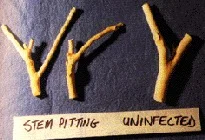
Photo: Arizona Department of Agriculture · Public domain
Citrus tristeza (‘tristeza’ means sadness in Portuguese and Spanish — named for the grief of watching whole groves die) is a virus of citrus — orange, lemon, lime, grapefruit and their relatives. It is carried tree to tree by aphids and passed on inside infected budwood when new trees are grafted. What it does depends on the tree's rootstock: on sour-orange rootstock severe strains kill the graft join and the tree declines and dies; on tolerant rootstocks some strains still pit the wood, stunting the tree and shrinking the fruit. There is no cure — the whole fight is won or lost at planting, with the right rootstock and clean, tested trees.
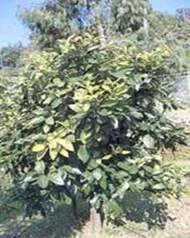
Arizona Department of Agriculture · Public domain
Why it matters
Tristeza is a virus — once a tree catches it there is no medicine and no cure, and no spray can save it. On the wrong rootstock the virus kills trees outright, so a bad outbreak can wipe out up to 100% of your grove — every last tree. Worse, it hides for months and rides from tree to tree on aphids, so by the time trees are visibly dying it has usually already spread through the block. That is why the whole fight is won before you plant — with the right rootstock and clean, tested trees.
When to act
Prevention threshold: never plant on sour-orange rootstock in tristeza areas and use only certified virus-tested trees; on established trees, decline symptoms confirm infection but there is no cure.
This guidance is general, compiled from published agronomic references including FAO and CABI. Thresholds and timing shift with your crop, your variety and the season.
In much of the region a spray is simply called mushonga — medicine. But a chemical group you cannot name is one you cannot rotate, and a product you did not write down has no pre-harvest interval you can observe. Mushonga, and other farming words →
The full Citrus tristeza virus field guide
Identify it
What you notice first
is a tree that was healthy going backwards: the leaves lose their shine, turn dull and pale-yellow, wilt as if thirsty even when the ground is wet, and drop. New shoots are few and weak. A declining tree often throws one last heavy crop of small fruit and then dies back from the top down — sometimes slowly, sometimes in a sudden collapse (“quick decline”).
The surest sign is at the graft join
Most grafted citrus is two trees in one: a chosen fruiting variety joined onto a different root-and-base part called the rootstock (the roots the tree is grown on). The join shows as a slight ring low on the trunk — the bud union. On the killer decline form (trees on sour-orange rootstock), scrape a little bark just below that ring: healthy wood is smooth and pale, but infected wood shows a brown, honeycombed line pitted with tiny pin-holes and pegs.
Stem-pitting
strains show even on tolerant trees (worst on grapefruit and lime): the tree is stunted and bushy, twigs die back at the tips, leaves are sparse and pale, and fruit is small and light. Peel back a strip of bark on the trunk or a twig and you will see pits and grooves cut into the wood, with matching pegs on the inside of the bark — as if the wood has been gouged.
On lime especially, hold a young leaf up to the light
Infected leaves show clear, glassy veins — faint watery lines where the leaf should be solid green — and the leaf may cup or curl. Limes often show this early, before the whole tree looks sick.
Don’t confuse it with
foot rot (a soil fungus) — that oozes gum and rotting bark at the base of the trunk in wet soil, with no honeycomb at the bud union; drought or root damage — that yellows a patch tied to poor soil, not spreading tree-to-tree from a sick neighbour; and citrus greening — that gives blotchy, lopsided yellow mottling that does not match across the leaf and bitter, one-sided fruit. The honeycomb bud union and the pitted wood are the tells that point to tristeza.
Scout for it
There is no spray-day to hit, so scouting is about catching spread early and buying only clean trees. Watch your grove right through the growing and fruiting season — from the first new-growth flush to late in the season (the flush is the burst of tender young leaves and shoots). That is when the warm weather has aphids busiest and the virus can move.
Don’t only look at the trees by the path. Walk a big “W” across the block so you cover all four corners and the middle, stopping at about 10 trees (more in a large grove). Give extra attention to trees next to any tree that has already declined — that is where the aphids carry the virus next.
At each stop, on trees grafted on sour-orange rootstock, scrape a coin-sized patch of bark just below the bud union and look for the brown honeycomb pitting. On any stunted tree, peel a little bark on a twig to check for wood pits and grooves. Mark every suspect tree with a rag or paint so you can watch it or remove it.
On the tender new flush, turn over the youngest leaves and shoot tips and look for aphids — soft, pear-shaped insects in green, brown or black clusters, often with ants and sticky honeydew (the shiny sugar they leave behind). Aphids are the vector — the insect that carries the virus from a sick tree to a healthy one — so busy aphids on the flush mean the virus can be on the move.
The trigger is one, not many
Because there is no cure and a single sick tree seeds the rest, treat even 1 declining tree with a honeycomb bud union as an outbreak — and act on the whole block at once. And at planting the trigger is the tree itself: any tree on sour-orange rootstock, or any tree that is not certified virus-tested → do not plant it.
To be certain before you pull out a whole block or bring cuttings into a clean nursery, a lab can run an ELISA test — a simple laboratory test that detects the virus in a leaf or bark sample. It is the only way to know a tree that looks healthy is truly clean.
Control it
Prevent it — the rootstock is everything (your single strongest measure)
Never plant citrus on sour-orange rootstock in a tristeza area. Choose trees grown on a tolerant rootstock — the trifoliate-orange types and their hybrids — which don’t collapse from decline. You usually can’t tell the rootstock by looking at a finished tree, so ask the nursery in writing what it is grown on, and refuse sour orange.
Plant only certified, virus-tested trees and budwood
The virus also travels inside budwood — the bud or cutting used to graft a new tree — so a tree grafted from an infected mother tree is born infected. Buy only from a certified, virus-tested (indexed) nursery, never graft with budwood from an unknown or declining tree, and don’t carry budwood or cuttings from an infected grove into a clean one.
Remove sick trees early — this is called roguing
Once a tree shows decline and the honeycomb bud union it will never recover, and while it stands it feeds the aphids that infect its neighbours. Cut it out and destroy it (burn or bury) rather than nursing it — the sooner it is gone, the fewer trees catch it — then replace it with a certified tree on tolerant rootstock.
Protect the aphid-eaters
Ladybirds, hoverfly maggots, lacewings and tiny parasitic wasps feed on the aphids that spread the virus. Avoid broad poisons that kill these helpers — and the bees your fruit needs to set. Just remember this only slows spread; it does not replace clean trees and tolerant rootstock.
Where a programme exists
, growers of stem-pitting-prone types (like grapefruit) use mild-strain cross-protection — trees are deliberately given a harmless mild strain that shields them from the severe strains, a little like a vaccine. This is a specialist nursery job, not something to brew yourself — ask your extension officer or a certified nursery whether it is offered near you.
There is no spray that cures the virus — don’t waste money on one
No chemical kills a virus inside a tree, and blanket aphid spraying does not stop tristeza (an aphid passes the virus in seconds, before any spray works) and can make things worse by killing the natural enemies. If a product is ever used against aphids for other reasons, keep it off flowers, water, food, children and bees, spray in the cool of the day with the wind at your back, cover your skin, nose and eyes, and wash afterwards — but understand it will not save an infected tree.
If it keeps spreading → change the block, not the treatment
When trees on sour orange keep declining across a block, stop nursing them: remove the infected trees to cut off the aphid source, then replant or re-graft the block on tolerant, trifoliate-based rootstock with certified clean trees. For a grove already collapsing on sour orange, replanting on the right rootstock is cheaper in the long run than losing every tree — plan it now rather than watching tree after tree die.
Catch Citrus tristeza virus before it costs you the harvest
This guide is the general answer. Divisi works out yours — the week to scout your own field for Citrus tristeza virus, and what to do the day you find it.


Crops it affects
Plan the crops it attacks
-
 When to plant Grapefruit in Makoua
 -
 When to plant Lemon in Chesumei
 -
 When to plant Lime in Webuye West
All planting calendars, country by country
Get Insights by email
A short digest of new Divisi articles. No email on quiet weeks.
Frequently asked questions
How do I identify Citrus tristeza virus?
What you notice first. is a tree that was healthy going backwards: the leaves lose their shine, turn dull and pale-yellow, wilt as if thirsty even when the ground is wet, and drop. New shoots are few and weak. A declining tree often throws one last heavy crop of small fruit and then dies back from the top down — sometimes slowly, sometimes in a sudden collapse (“quick decline”).
When should I take action against Citrus tristeza virus?
Prevention threshold: never plant on sour-orange rootstock in tristeza areas and use only certified virus-tested trees; on established trees, decline symptoms confirm infection but there is no cure.
How do I control Citrus tristeza virus?
Prevent it — the rootstock is everything (your single strongest measure). Never plant citrus on sour-orange rootstock in a tristeza area. Choose trees grown on a tolerant rootstock — the trifoliate-orange types and their hybrids — which don’t collapse from decline. You usually can’t tell the rootstock by looking at a finished tree, so ask the nursery in writing what it is grown on, and refuse sour orange.
Which crops are attacked by Citrus tristeza virus?
Among the crops covered here: Grapefruit, Lemon, Lime.