 Divisi
Foot rot
· Fungal
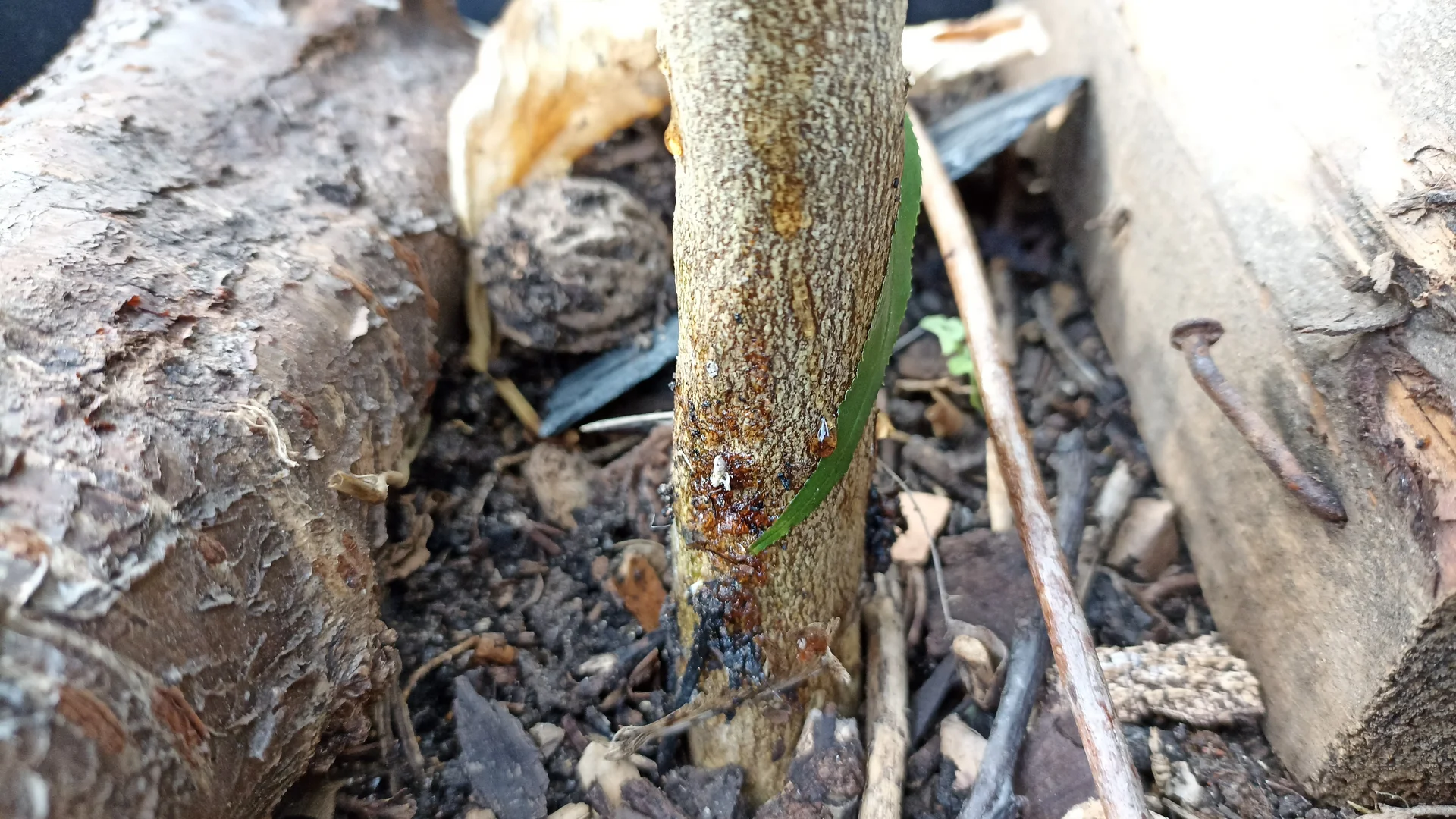
Photo: Eiku · CC BY-SA 4.0
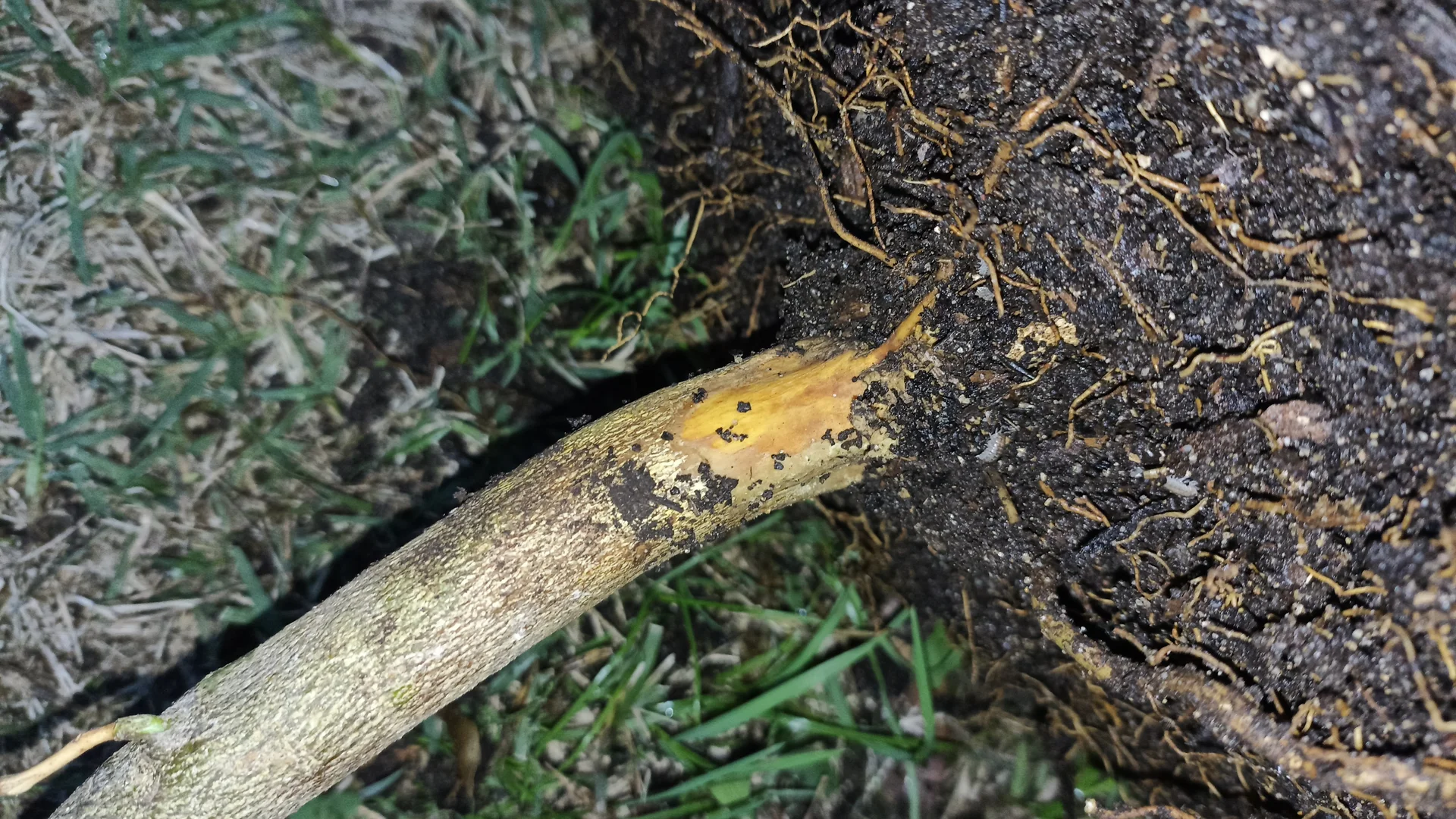
Foot rot is a soil- and water-borne fungal rot of the stem base, collar and lower roots — the collar is the spot where the stem meets the soil. It is caused by fungi such as Phytophthora, Fusarium and Sclerotium that live in wet soil and invade the plant at or just below ground level, especially where the soil stays soggy or the stem has been wounded. Once inside, the rot spreads sideways around the stem until it rings it completely (this is called girdling), cutting the pipe that carries water and food up to the top of the plant.
Eiku · CC BY-SA 4.0 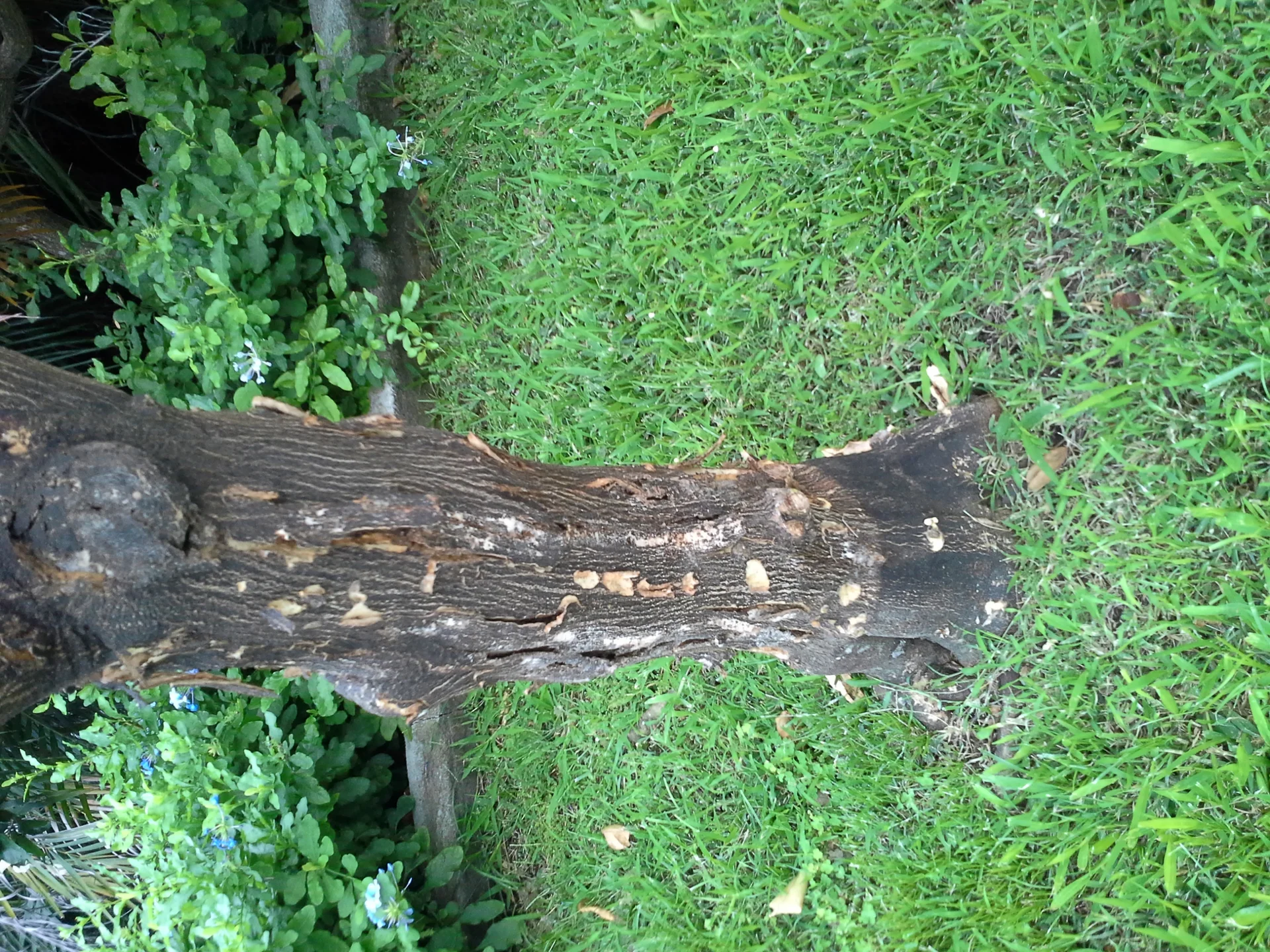
Scot Nelson · CC BY 2.0
Why it matters
Foot rot attacks the one part a plant cannot regrow — the base of its stem — so when it strikes it can wipe out whole plants and take up to 40% of your crop (about 2 plants in every 5). It matters because the damage is hidden down at the soil line, so by the time the leaves wilt the stem is already ringed and choking. And it is hard to fix once it takes hold: the fungus lives in your wet soil for years, sprays can't reach a rotted-through stem, and a girdled plant almost never recovers — so this is a disease you stop before it starts, not one you cure.
When to act
any plant showing dark, girdling lesions or gumming at the stem base or collar
This guidance is general, compiled from published agronomic references including FAO and CABI. Thresholds and timing shift with your crop, your variety and the season.
In much of the region a spray is simply called mushonga — medicine. But a chemical group you cannot name is one you cannot rotate, and a product you did not write down has no pre-harvest interval you can observe. Mushonga, and other farming words →
The full Foot rot field guide
Identify it
The first thing you see
is a plant that suddenly wilts and yellows from the top even though the soil is wet — the leaves droop, go pale, then dry and die back, as if the plant is thirsty in a flood.
Go down to the soil line
and you'll find the real sign: a dark brown to black, sunken, water-soaked patch on the stem at the collar (where stem meets soil). On tomato and bean it looks like a soft, wet rot; the outer skin cracks and peels and the tissue underneath is mushy and discoloured.
On citrus (orange, lemon, lime, grapefruit)
the collar oozes a sticky, gummy sap — this gumming dries into brown blobs on the bark, and the bark splits, dies and peels away from the wood.
The killer sign is girdling
— the dark rot spreads sideways until it makes a complete ring right around the stem base. Once the ring closes, everything above it is cut off and dies. Scratch the bark with your thumbnail: healthy tissue is green and firm, rotted tissue is brown, soft and lifts away easily.
Don't confuse it with look-alikes
A cutworm chops the seedling cleanly off at ground level in one night (no rot, no smell) — foot rot is a slow brown rotting, not a clean cut. Drought or termites can also wilt a plant, but drought wilt recovers after watering and termites leave dry soil tunnels and mud, not a wet dark lesion. If the base is dark, soft and girdling after wet weather, it is foot rot.
Scout for it
When to look
foot rot hits hardest during the development and mid-season stages, when the plant is growing fast and carrying a heavy top. Check the field after every heavy rain or flood irrigation and during warm, muggy spells (about 18–28°C with wet, poorly drained soil is exactly what the fungus loves).
How to walk it
walk a big "W" across the field so you cover all four corners and the middle, not just the row by the path. Make about 10 stops along the W.
What to check at each stop
kneel at the plants and look at the stem base and collar right at the soil line — the part you'd normally never notice. Pull mulch and loose soil away from the collar, feel for soft or sunken spots, and check citrus trunks for gum blobs and peeling bark.
Watch the low, wet patches first
Walk the dips, the poorly drained corners, and the ends of furrows where water sits — foot rot almost always shows up there before the rest of the field.
When to act
the threshold is low because this disease spreads through the soil and kills what it touches. Even ONE plant showing a dark, girdling lesion or gumming at the stem base means act now — mark it, and treat it as a warning that the fungus is active in that wet spot and will spread to neighbours.
Control it
PREVENT
-
keep the collar dry (your strongest tool)
The fungus needs standing water, so plant on ridges or raised beds and make sure water drains away fast. Never pile soil, mulch or manure up against the stem, and keep flood or furrow water from pooling around the collar. Dry feet, no foot rot.
-
start clean and don't wound the stem
Use disease-free, certified planting material so you don't bring the fungus in. For citrus, plant a resistant rootstock (the tough lower root-and-stem the tree is grafted onto) and graft high, so the join sits well above the wet soil. Handle plants gently — every hoe nick or slash at the stem base is a door for the rot to enter.
-
break the cycle with rotation
The fungus survives for years in the soil, so rotate away from susceptible crops (tomato, bean, wheat) for a few seasons and plant something that isn't a host, so the fungus in that soil starves out before you come back.
ACT EARLY — cut out and destroy the sick plants
As soon as you find a girdled or gumming plant, dig it out with the soil around its roots and burn or bury it far from the field — don't throw it on the compost or leave it in the furrow, or it seeds the next outbreak. Scrape mulch and soil back from the collars of nearby plants to dry them out.
CHEMICAL — last resort, where Phytophthora is the cause
Only after drainage and sanitation, reach for a phosphonate product (a systemic fungicide — systemic means it is taken up inside the plant and moves in the sap, unlike a contact spray that only coats the surface). Apply it as a soil drench poured around the base, or as a trunk paint on high-value citrus; on wheat a seed treatment protects the young plants. Match the higher-value crops first.
SAFETY when you apply any fungicide
cover your skin, eyes, nose and mouth; work in the cool of the morning or evening with the wind at your back so the spray blows away from you; keep it off food crops you'll eat soon, off open water, and away from children and bees; respect the pre-harvest interval (the number of days the label says you must wait between treating and picking, so no chemical is left on the food); and wash yourself and your tools well afterwards.
IF IT KEEPS SPREADING
if new plants keep girdling after you've drained, sanitised and treated, the fungus is established in that ground. Stop replanting the same crop there — pull the worst plants, harvest whatever the healthy ones give you early rather than losing it, and rest that block from host crops for two or more seasons while you fix the drainage. On badly waterlogged land, cut your losses in the low spots and replant only on well-drained, ridged ground next season.
Catch Foot rot before it costs you the harvest
This guide is the general answer. Divisi works out yours — the week to scout your own field for Foot rot, and what to do the day you find it.


Crops it affects
Plan the crops it attacks
-
 When to plant Common bean in Dilolo
 -
 When to plant Grapefruit in Makoua
 -
 When to plant Lemon in Chesumei
 -
 When to plant Lime in Webuye West
 -
 When to plant Roselle in Rutshuru
 -
 When to plant Sweet orange in Buikwe
All planting calendars, country by country
Get Insights by email
A short digest of new Divisi articles. No email on quiet weeks.
Frequently asked questions
How do I identify Foot rot?
The first thing you see. is a plant that suddenly wilts and yellows from the top even though the soil is wet — the leaves droop, go pale, then dry and die back, as if the plant is thirsty in a flood.
When should I take action against Foot rot?
any plant showing dark, girdling lesions or gumming at the stem base or collar
How do I control Foot rot?
PREVENT — keep the collar dry (your strongest tool). The fungus needs standing water, so plant on ridges or raised beds and make sure water drains away fast. Never pile soil, mulch or manure up against the stem, and keep flood or furrow water from pooling around the collar. Dry feet, no foot rot.
Which crops are attacked by Foot rot?
Among the crops covered here: Common bean, Grapefruit, Lemon, Lime, Roselle, Sweet orange, Tomato, Wheat.