 Divisi
How to grow cucumber
Cucumis sativus · Cucurbitaceae
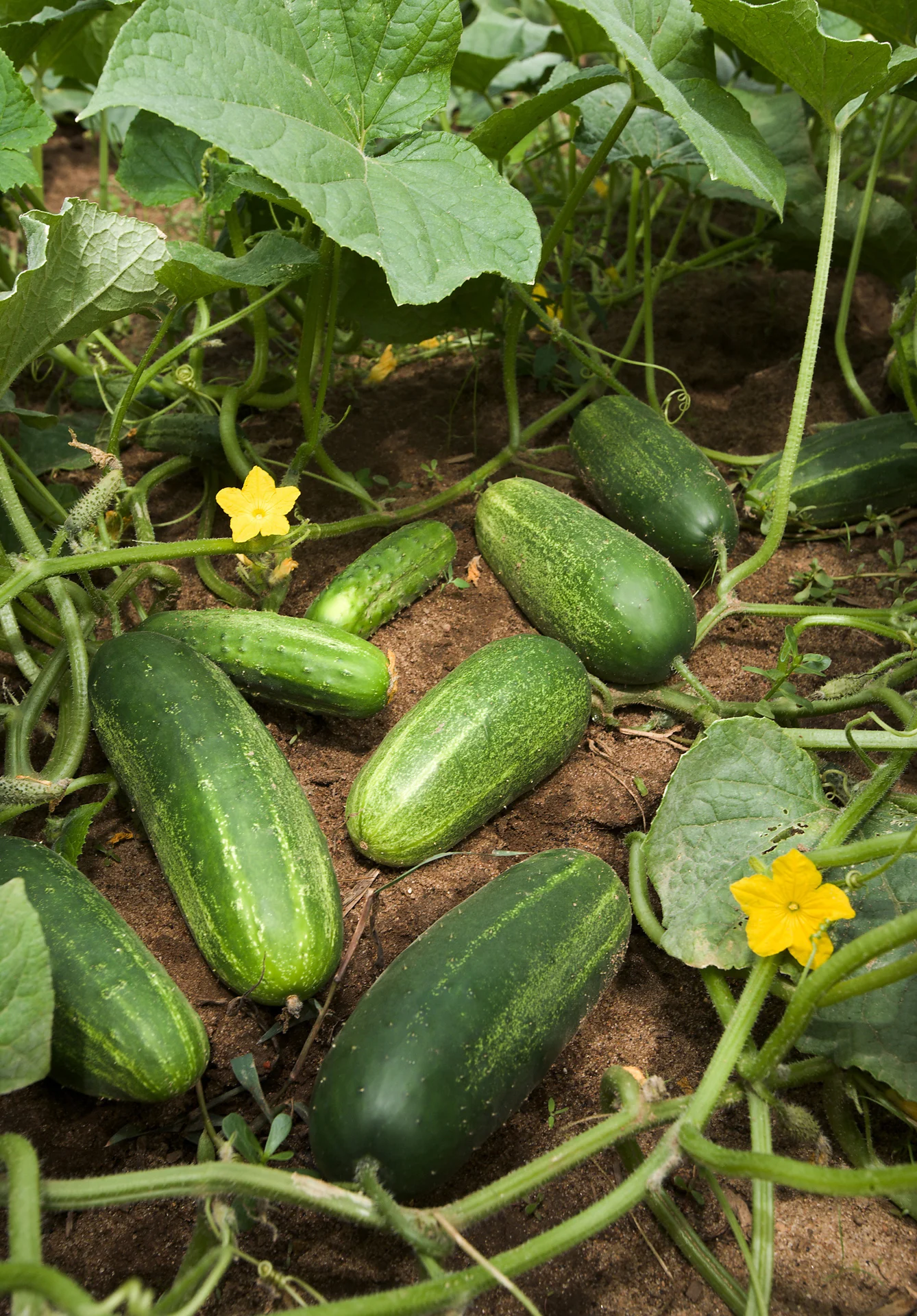
Photo: Stephen Ausmus, USDA ARS · Public domain
Cucumber is a fast, thirsty climbing vine grown for its crisp young fruit — picked small and often, before the seeds inside go hard. It is a cousin of pumpkin, melon, squash and watermelon. Three things make or break it: steady, even water; bees to set the fruit (in open-field types); and picking young fruit every 2–3 days so the plant keeps making more. Give it a warm start, a trellis to climb, and never let it go thirsty, and it pays back fast — often ready to pick in just 6–9 weeks. Let it dry out, swing wet-then-dry, or bake in the heat, and the fruit turns bitter and crooked.
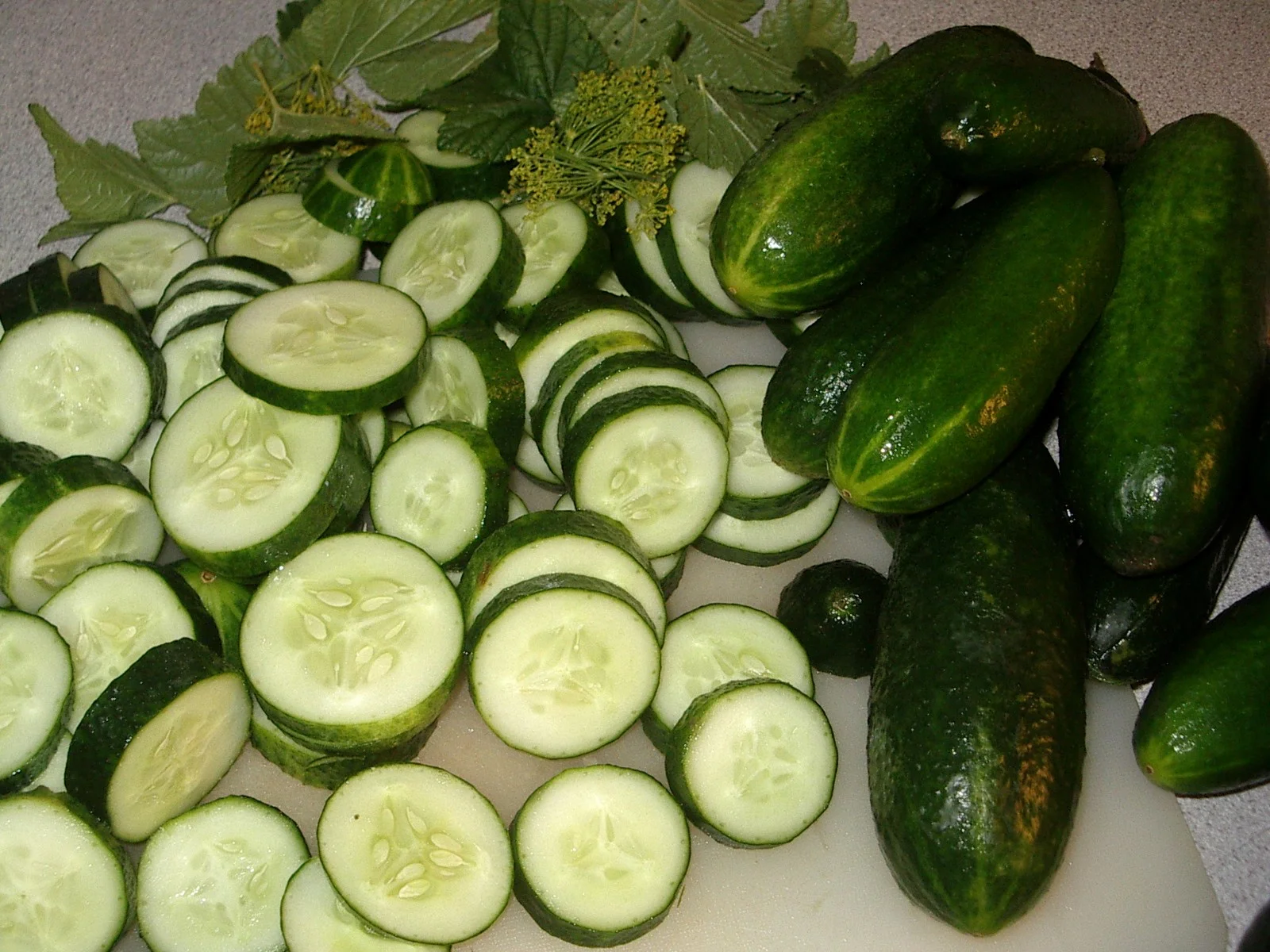
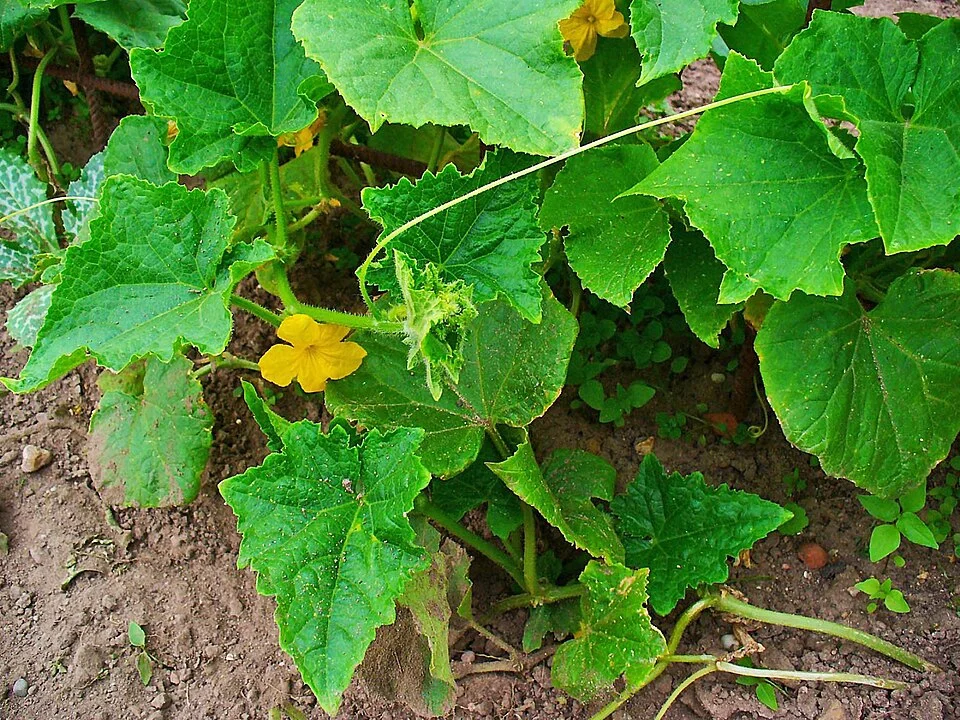
- Days to maturity
- 45–70 days
- Row spacing
- 150 cm
- Plant spacing in the row
- 40 cm
- Sowing depth
- 2–3 cm
These are general figures for the crop, compiled from published agronomic references including FAO and CABI. The right choice for your field depends on your soil, rainfall and the yield you are aiming for.
Will cucumber actually do well on your field? Check your own field against every crop in the catalogue — no signup. Run the crop check →
Also known as
- Afrikaans
- komkommer
- Amharic
- kiyar
- French
- concombre
- Portuguese
- pepino
- Swahili
- tango
Working in buckets, bags or paces? The farming glossary turns the measures growers actually use into kilograms and hectares — what a 20 litre bucket of each crop really weighs, and how to size a field by walking it — alongside the Shona, Swahili, Ndebele and Yoruba words used in the field. Open the glossary →
Growing cucumber, stage by stage
Your cucumber season, step by step — from a warm, rich, well-drained bed and a trellis to climb, through steady watering and bee-set flowers, to picking crisp young fruit every 2–3 days before it turns bitter.
Get ready before you sow
Almost everything that decides your cucumber crop is set before the first seed goes in. Cucumber is thirsty, hungry and disease-prone, so it needs a loose, rich, well-drained bed, a trellis to climb, and land that has not grown cucumber or its cousins (pumpkin, melon, squash, watermelon) for 2–3 years — that break starves out the beetles and mildews that ruin this crop. Get everything ready in the days before, so you can sow the moment the soil is warm (at least 13 °C).
Source clean seed & prepare a fertile, drained bed Critical
Cucumber is fast and unforgiving — a poor bed or dirty seed shows up within weeks, and there is no fixing it mid-season. Good disease-resistant seed, rich loose soil and a clean rotation give the strong, healthy start that a thirsty, disease-prone crop lives or dies by.
Buy fresh seed of a downy-mildew-resistant variety from a registered dealer, in a sealed, labelled packet. Downy mildew is cucumber's number-one killer, and a resistant variety is the cheapest protection you can buy against it.
Pick land that has not grown cucumber, pumpkin, melon, squash or watermelon for the last 2–3 years. These are all one family — the cucurbits (the cucumber family) — and growing them on the same ground season after season lets the beetles and diseases that attack them build up in the soil. Moving to a fresh spot breaks that cycle.
Choose a warm, sunny, well-drained spot. Cucumber roots rot in soggy ground — if water pools there after rain, build raised beds or ridges so it drains away.
Dig the bed loose and deep — about a spade's depth (20–30 cm) — and break up the clods, so roots and water move down easily.
Work in plenty of well-rotted manure or compost — dark, crumbly, no strong smell. It feeds the soil all season and helps it hold the even moisture cucumber needs. Fresh manure burns young roots and carries weed seeds, so use it only when it is well rotted. Your recommendation gives the amount for your field.
- Do:
Source a downy-mildew-resistant variety and plan a cucurbit (cucumber-family) rotation — it is the cheapest disease control you have.
- Tip:
Fresh, raw manure at bed prep — it scorches young roots and brings weed seeds. Use only well-rotted manure or compost.
- Watch out:
Wash your hands after handling manure, and keep the bed away from low spots where water collects — cucumber hates wet feet.
Erect the trellis Recommended
A trellis — a frame of poles and string or wire that the vine climbs — lifts the crop off the ground. That keeps the fruit clean and straight, lets air dry the leaves so mildew struggles to take hold, and makes picking and spotting pests far easier. Vines left to sprawl on the soil grow rotten, curled fruit and hide disease.
Put the trellis up in the week before sowing, or on sowing day — while you can still walk the bed freely. Once the vines run, it is too late to build around them.
Set strong posts down each row and run wire or strong string between them, about 1.5–2 m tall — head height — because cucumber climbs fast and tall.
Add strings or netting for the vines to grip. Cucumber climbs with little curly threads called tendrils, and they need something thin to grab onto.
Make it sturdy. A vine loaded with fruit and wet leaves is heavy, and a weak trellis that collapses in a storm takes the whole crop down with it.
- Do:
Build it strong and head-high now — a loaded vine is heavy, and rebuilding under a full crop is impossible.
- Watch out:
Line the rows up so the trellis does not shade the next row — cucumber needs full sun to fruit well.
Sowing & getting a strong stand
The plants you get up now are the ones you will harvest — cucumber is quick and won't wait for a second try. Sow into warm soil (at least 13 °C), because cold, wet soil rots the seed before it can sprout. Keep the bed evenly moist, thin to the single strongest seedling per station, and guard the tender young plants — cucumber beetles, cutworms and damping-off can clear a young stand in days.
Sow (or transplant) Critical
This is your one shot at a full stand — cucumber is fast and won't wait for a re-sow. The right depth, spacing and warm soil now give even emergence and vines with room to climb, breathe and fruit. Crowd them or chill them and you lose plants you can never replace.
Sow only when the soil is warm — at least 13 °C. Cold, wet soil rots the seed before it can sprout. If the mornings are still cold, wait a week — cucumber grows so fast it soon catches up.
Mark your stations at the final spacing: rows about 1.5 m apart (roughly one and a half strides) with stations about 40 cm apart (two hand-spans) along the row. This wide spacing gives every vine sun and moving air — crowded vines get mildew.
Drop 2–3 seeds per station, about 2–3 cm deep — as deep as the top joint of your finger, no deeper. Cucumber seed is small, and pushed in too deep it may never reach the surface.
Cover and firm the soil gently so each seed sits snug in moist earth, then keep the bed evenly moist (never soaked) until the seedlings appear — this takes about 4–10 days.
You sow a few seeds per station as insurance against gaps; you will thin down to the single strongest plant once they are up (see the thinning task).
- Tip:
Sowing into cold soil below 13 °C — the seed just rots and you get gaps. Wait for warmth.
- Tip:
Sowing too deep — cucumber seed is small; past the top finger-joint (about 3 cm) many seedlings never make it up.
- Watch out:
Keep the bed damp but never waterlogged while you wait — soggy soil rots the seed and invites damping-off (a disease that rots young seedlings at the soil line).
Thin to the strongest Recommended
You sowed 2–3 seeds per station for insurance, but if you let them all grow they fight each other for water, food and light, and all end up small and weak. Keeping the one strongest plant per station gives it everything it needs to make a big, productive vine.
Thin about 10–15 days after sowing, once the seedlings have their first one or two true leaves and you can see which is strongest.
At each station, keep the single healthiest, sturdiest seedling and remove the rest.
Snip or pinch the extras off at ground level — don't pull them out, or you tear the roots of the one you are keeping.
Water gently afterwards to settle the soil back around the plant you kept.
- Tip:
Pulling the spare seedlings out by hand — it disturbs the roots of the keeper. Snip them off at the soil instead.
- Do:
Thin on a cool, damp evening so the seedling you keep is not stressed by the heat.
Scout (beetles, cutworms) Recommended
The first two weeks are when a young cucumber stand is most easily wiped out. Cucumber beetles chew the seedlings and spread wilt, cutworms cut them off at night, and damping-off rots them at the soil line — any one of these can clear a patch in days. Catch it early and you can still act; miss it and the gaps are permanent.
Walk the bed twice a week from about 5 days after sowing, looking closely at the young seedlings — especially the soft new leaves and the base of each stem.
Cucumber beetles: look for small beetles — about the size of a grain of rice — that are yellow-green and either striped or spotted, on the leaves and stems, and ragged round holes chewed in the young leaves. They also spread a wilt disease, so don't shrug off even a few.
Cutworms: look for seedlings cut clean off at ground level, lying on the soil in the morning. Scratch the soil near a cut plant to find the fat, grey, curled-up caterpillar that did it.
Damping-off: look for seedlings that suddenly flop over with a thin, dark, water-soaked pinch at the base of the stem, usually in wet patches, with whole groups collapsing together.
Write down what you find and where. If beetles or cutworms are taking plants, act now (open the matching pest guide). If seedlings are damping off, ease off the watering and improve drainage — it thrives in soggy soil.
- Watch out:
Damping-off is a wet-soil disease — if seedlings keep collapsing at the base, you are almost always watering too much.
- Do:
Scout in the early morning — cutworm damage is freshest then, and beetles are slow and easy to spot in the cool.
Vine growth & training
Now the vine runs, climbs and builds the frame that will carry all your fruit. Three jobs matter most: train it up the trellis and open it up so air moves and the leaves dry, feed it nitrogen to build strong vines, and never let it go thirsty. This is also when downy mildew — cucumber's number-one killer — arrives in warm, humid weather, so scout hard and stay ahead of it.
Trellis, train & prune laterals Recommended
A cucumber vine left to sprawl becomes a damp, tangled mat where mildew thrives and fruit rots on the soil. Leading the main vine up the trellis and thinning its low side-shoots keeps air moving and light coming in — that lifts both how much you pick and how clean and straight it is.
Start once the vines begin to run, about 2 weeks after sowing, and keep at it every 5–7 days — cucumber grows fast and gets away from you quickly.
Lead the main vine up the trellis and tie it loosely at intervals with soft string, in a loose figure-of-eight so the string cushions the stem instead of cutting into it.
Guide the curly tendrils (the little grabbing threads) onto the strings or wire so the vine can hold its own weight up off the ground.
Pinch out the small side-shoots — the laterals, the branches growing out low on the main vine. Opening up the base lets air through and keeps the lowest fruit off the ground.
Never let the vine flop back onto the soil — sprawling leaves stay wet and are the first to catch mildew.
- Do:
Weed shallowly around the base — cucumber's feeding roots run just under the surface and are easily cut. Where you can, water at the base to keep the leaves dry.
- Tip:
Tying the stem tight — it strangles the vine as it swells. Always tie loosely.
- Watch out:
Train and handle the vines only when the leaves are dry — working through a wet canopy carries mildew from plant to plant.
Top-dress nitrogen Recommended
Cucumber grows a big, hungry vine fast, and nitrogen (N) is the fuel for the strong, dark-green leaves that later feed every fruit. A feed now, as the vine runs, builds the frame that carries your whole harvest. Top-dressing just means feeding the growing crop, on top of what went into the bed.
Feed about 3–4 weeks after sowing, once the vine is running well but before it is covered in flowers.
Put the nitrogen your recommendation gives in a band — a line about a hand-span (20 cm) to the side of the plants — never on the stems or over the roots, where it burns.
Feed onto moist soil (after watering or light rain) and water it in, so it soaks down to the roots instead of gassing away into the air.
Keep the fertiliser off the leaves — grains on wet leaves scorch them. Wash your hands afterwards, and keep fertiliser away from food, water and children.
- Tip:
Piling on too much nitrogen — an overfed vine makes lots of leaf and few fruit, and flowers late. Feed the amount recommended, no more.
- Watch out:
Keep fertiliser off wet leaves and out of the root zone — banded to the side, not on the plant.
Irrigate steadily Critical
Water is everything for cucumber. Its roots are shallow and its big leaves lose water fast, so steady, even moisture keeps it growing without a check. Let it dry out, then flood it, and the fruit turns bitter and crooked — the single most common way this crop is spoiled.
Water every 2–3 days from about 2 weeks after sowing onward — more often in heat or on sandy soil that dries fast. Aim for roughly 25 mm of water a week (a good soaking, not a daily splash).
Keep the soil evenly moist down to the roots — never bone-dry, never waterlogged. Push a finger in, and water before the top few centimetres go completely dry.
Water at the base of the plant (drip, or a can at the roots), not over the top — wet leaves invite downy mildew.
Water in the cool of the morning so the plant goes into the heat of the day full, and the leaves dry off quickly.
- Do:
Mulch around the base with dry grass or straw — it holds the even moisture cucumber needs and saves water.
- Tip:
Long gaps between waterings and then a flood — the wet-then-dry swing is what makes fruit bitter and misshapen. Little and often, evenly.
- Watch out:
Keep water off the leaves where you can — a dry leaf is a mildew-resistant leaf.
Scout (downy mildew, aphids, mites) Critical
This is when the diseases and sap-suckers that cripple cucumber move in — above all downy mildew, which can strip a crop in a week in warm, humid weather. Twice-weekly scouting is the difference between spraying early and winning, or spraying late and losing the crop.
Walk the crop twice a week and turn the leaves over — most trouble starts on the underside.
Downy mildew (the big one): look for angular yellow patches on top of the leaf, boxed in by the veins so they look square rather than round. Turn the leaf over and in damp weather you may see a grey-purple fuzz underneath. It spreads upward from the older leaves — act at the very first patch.
Aphids: look for clusters of tiny soft green or black insects on the growing tips and leaf undersides, sticky leaves, and curled new growth. They also carry virus, so don't let them build up.
Whitefly: shake a plant — if a cloud of tiny white flies lifts off, you have whitefly. They cluster under the leaves and, like aphids, spread virus.
Red spider mite (in hot, dry spells): the leaves look finely speckled and dusty or bronzed, with fine webbing on the undersides and growing tips. The mites themselves are almost too small to see.
Cucumber mosaic virus: look for mottled light-and-dark (mosaic) leaves, puckered and distorted, on stunted plants. There is no cure — pull out and remove badly affected plants (this is called roguing) so aphids don't carry the virus to the rest.
Write down what you find. At the first sign of downy mildew, protect the crop (see the tips); for aphids, whitefly and mites, act while their numbers are still low.
- Do:
Use a protectant spray for mildew where your variety needs it — a protectant sits on the leaf like a raincoat and stops the disease landing, but it cannot cure leaves that are already infected, so spray before it takes hold, every 5–7 days in warm, humid weather.
- Watch out:
When you spray any pesticide or fungicide: cover your skin, eyes, nose and mouth, spray in the cool of the day with the wind behind you, keep it off food, and wash afterwards. Because you pick cucumber every few days, check the pre-harvest interval — the number of days you must wait after spraying before it is safe to pick — and choose a short-interval product.
- Tip:
Working through a wet canopy — you carry mildew and virus from plant to plant on your hands and clothes. Scout and handle when the leaves are dry.
Flowering & pollination
Cucumber flowers open male first, then female — and a female flower has a tiny cucumber already sitting behind it. In open-field types, bees must carry pollen from the male to the female flowers, or the fruit never sets, or sets crooked. So this fortnight is about two things: protect your bees, and keep the water dead steady, because stress now aborts fruit and turns it bitter.
Protect pollinators Critical
In open-field cucumber, bees set your fruit. They carry pollen from the male flowers to the female flowers (the ones with a tiny cucumber behind the petals). Kill or drive off the bees and the flowers drop without fruiting, or the fruit comes out bent and stunted. No bees, no crop.
From the first flowers, learn to tell them apart: male flowers sit on a thin stalk and open first; female flowers have a tiny cucumber swelling behind the petals. Bees must move pollen from the male to the female.
Do not spray insecticide on or near open flowers, and never in the morning bee hours when the bees are working. If a pest forces you to spray, do it late in the evening when the flowers are closing and the bees have gone home, and choose a bee-safe product.
Give bees a reason to visit — avoid blanket spraying and leave a little flowering growth nearby. More bee visits mean more, straighter fruit.
Some special greenhouse varieties set fruit without bees. If that is what you are growing you can skip the bee worry, but open-field crops depend on them.
- Tip:
Mid-day insecticide sprays during bee hours — open-field cucumber needs bees to set fruit, and you will spray your own crop away.
- Watch out:
Water stress right now aborts fruit and causes bitterness; fruit also sets poorly above about 35 °C — keep the crop cool and well-watered through flowering.
Keep water steady & even Critical
Flowering and fruit-set is the thirstiest, most sensitive moment of the whole season — cucumber's critical stage. A dry check now makes flowers drop, fruit abort, and whatever fruit does set turn bitter and misshapen. Dead-steady water here protects the harvest you are about to pick.
Keep watering every 2–3 days right through flowering — never let the plants wilt, not even for one hot afternoon.
Keep the moisture even — the same steady damp each time. It is the wet-then-dry swings that ruin fruit, even more than being a little dry overall.
Water at the base, in the cool of the morning, so the leaves dry fast and the bees have dry flowers to work.
In real heat, water more often — hot, dry air empties the plant fastest at exactly the moment the fruit is trying to set.
- Tip:
Letting the crop dry out and then flooding it — that swing is what makes cucumbers bitter and bent. Little and often, evenly.
- Watch out:
Leaves that wilt at midday but recover by evening are normal; leaves still wilted in the cool of the morning mean you are behind on water — catch up.
Fruit set & continuous harvest
Now the crop pays you back — but only if you pick young and pick often. Cucumber fruit swells fast; pick every 2–3 days while it is firm, deep green and glossy, before the seeds harden. Leaving fruit to over-ripen doesn't just waste it — it signals the plant to stop making new fruit. Keep potassium (K) and water high for quality and continued set, and keep scouting mildew right to the end.
Pick young fruit Critical
Frequent picking of young fruit is the engine of your yield. Every fruit you leave to grow old tells the plant its job is done, and it stops setting new fruit — so a few over-ripe cucumbers can shut down the whole vine. Young fruit is also what the market wants: firm, green and sweet, not yellow and bitter.
Start picking about 6–7 weeks after sowing (around 45 days), then pick every 2–3 days — cucumbers double in size fast, and 'just right' turns into 'too old' in a couple of days.
Pick a fruit when it is firm, an even deep green, glossy-skinned, and at the size your variety should be — the seeds inside are still soft, just how you and the market want it.
Cut the fruit off with a knife or secateurs, leaving a short stalk. Don't yank it — pulling tears the vine, and the wound lets in disease.
Pick in the cool of the morning when the fruit is firm and full of water, and get it straight into the shade.
If it fails — the fruit has gone dull, is yellowing, or the belly has swollen (the seeds have hardened) — it is over-mature and bitter. Pick it off and throw it out (or compost it) anyway, because leaving it on the vine tells the plant to stop fruiting. Then pick more often — every 2 days — so it doesn't happen again.
- Do:
Pick young firm fruit every 2–3 days — over-mature fruit signals the plant to stop setting new fruit, so frequent picking keeps the harvest coming.
- Watch out:
A fruit turning yellow or fat-bellied is past its best and bitter — the sign you are picking too slowly. Speed up to every 2 days.
Keep K + water high Recommended
Once fruit is coming, potassium (K) is the nutrient that fills it out and keeps it firm, sweet and well-shaped — cucumber pulls more K than any other food. Paired with steady water, a regular K feed keeps the plant setting and sizing fruit right through the long picking run instead of fading early.
From your first pickings (about 6 weeks after sowing), feed potassium (K) every 7–10 days through the harvest run — the amount is in your recommendation.
Band it or water it in at the base of the plants, on moist soil, and never onto wet leaves.
Keep the water steady and even alongside the feed — K and water work together to keep fruit firm and sweet. A thirsty plant cannot use the food you give it.
Wash your hands after handling fertiliser, and keep it away from food, water and children.
- Do:
Feed a little and often through the picking run — steady K plus steady water keeps fruit coming and keeps it from turning bitter.
- Watch out:
Don't swap water for fertiliser — no amount of K fixes a plant that has gone dry. Water first, feed second.
Keep scouting downy mildew Recommended
The crop is not safe just because it is fruiting. Downy mildew, powdery mildew and fruit flies attack right through harvest, and a mildew outbreak now strips the leaves that are still feeding your fruit. Staying on top of it keeps the pickings coming for weeks longer.
Keep walking the crop twice a week and turning leaves over, even while you are busy picking.
Downy mildew: the same angular yellow patches boxed in by the veins, with grey-purple fuzz underneath in damp weather, spreading up from the older leaves. Stay ahead of it with a protectant spray in warm, humid spells.
Powdery mildew (tell them apart): look for white, powdery, flour-like patches on top of the leaves. Downy is yellow-and-angular with fuzz underneath; powdery is white-and-dusty on top. It worsens in warm days with humid nights.
Fruit flies: look for small sting marks or oozing spots on the young fruit, and fruit that then rots or drops with maggots inside. Pick up and destroy any fallen or stung fruit so the maggots don't breed on.
Act at the first sign. When you spray: cover up, spray in the cool with the wind behind you, keep it off the fruit you will pick, and respect the pre-harvest interval — you are picking every few days, so mind the wait between spraying and picking.
- Watch out:
Downy = angular yellow under the leaf with fuzz; powdery = white dust on top. They need different sprays, so name it before you spray.
- Do:
Clear away over-ripe and fallen fruit as you scout — it is where fruit flies and rot breed.
After the pick — keep it fresh
Cucumber is highly perishable — it wilts and softens within a day in the heat, so the value you grew is saved or lost in the hours after each pick. Cool it quickly, keep it out of the sun, and never let it bruise. Get fruit into the shade the moment it is picked, keep it cool and lightly damp (not wet), and move it to market fast — a crisp, cool cucumber sells; a warm, soft, bruised one does not.
Pests and diseases that attack cucumber
-
 Cotton aphid
 -
 Cucumber beetles
 -
 Cucumber mosaic virus
 -
 Cucurbit mosaic virus
 -
 Cucurbit virus complex
 -
 Downy mildew
 -
 Fruit flies
 -
 Leaf miners
 -
 Melon fly
 -
 Root-knot nematode
Where to sell cucumber
Markets that trade this crop — what each one sells it by, when supply peaks there, and the currency used.

Grow cucumber with a plan, not a guess
This guide is the general answer. Divisi works out yours — the week to plant cucumber on your soil and your rainfall, and each job dated for your field.


When to plant cucumber, country by country
- When to plant cucumber in Algeria
- When to plant cucumber in Angola
- When to plant cucumber in Benin
- When to plant cucumber in Botswana
- When to plant cucumber in Burkina Faso
- When to plant cucumber in Burundi
- When to plant cucumber in Cabo Verde
- When to plant cucumber in Cameroon
- When to plant cucumber in Comores
- When to plant cucumber in Congo
- When to plant cucumber in Côte d'Ivoire
- When to plant cucumber in Egypt
- When to plant cucumber in Eritrea
- When to plant cucumber in Eswatini
- When to plant cucumber in Ethiopia
- When to plant cucumber in Gabon
- When to plant cucumber in Gambia
- When to plant cucumber in Ghana
- When to plant cucumber in Guinea Ecuatorial
- When to plant cucumber in Guinea-Bissau
- When to plant cucumber in Guinée
- When to plant cucumber in Kenya
- When to plant cucumber in Lesotho
- When to plant cucumber in Liberia
- When to plant cucumber in Libya
- When to plant cucumber in Madagascar
- When to plant cucumber in Malawi
- When to plant cucumber in Mali
- When to plant cucumber in Mauritanie
- When to plant cucumber in Mauritius
- When to plant cucumber in Morocco
- When to plant cucumber in Moçambique
- When to plant cucumber in Namibia
- When to plant cucumber in Niger
- When to plant cucumber in Nigeria
- When to plant cucumber in Rwanda
- When to plant cucumber in République centrafricaine
- When to plant cucumber in République démocratique du Congo
- When to plant cucumber in Sao Tome and Principe
- When to plant cucumber in Seychelles
- When to plant cucumber in Sierra Leone
- When to plant cucumber in Somalia
- When to plant cucumber in South Africa
- When to plant cucumber in South Sudan
- When to plant cucumber in Sudan
- When to plant cucumber in Sénégal
- When to plant cucumber in Tchad
- When to plant cucumber in Togo
- When to plant cucumber in Tunisie
- When to plant cucumber in Uganda
- When to plant cucumber in United Republic of Tanzania
- When to plant cucumber in Zambia
- When to plant cucumber in Zimbabwe
Where cucumber scores best
Districts where Divisi's engine currently rates this crop highest, ranked by fit.
-
 Jorquelleh
 -
 Buta
Buta -
 Offinso Municipal
 -
 Boundji
 -
 Aiyedade
 -
 Vallée-du-Ntem
 -
 Yumbe
Yumbe -
 Corisco
 -
 Hamisi
 -
 Mongo
Mongo -
 Pita
Pita -
 Ouango
Get Insights by email
A short digest of new Divisi articles. No email on quiet weeks.
Frequently asked questions
How do I grow cucumber?
How to grow cucumber: 45–70 days to maturity, 150 cm rows, 2–3 cm deep. Also called komkommer, kiyar, concombre, pepino, tango.
What is komkommer in English?
Komkommer is the Afrikaans name for cucumber.
What is kiyar in English?
Kiyar is the Amharic name for cucumber.
What is concombre in English?
Concombre is the French name for cucumber.
What is pepino in English?
Pepino is the Portuguese name for cucumber.
What is tango in English?
Tango is the Swahili name for cucumber.
How long does cucumber take to grow?
Cucumber takes about 45–70 days from sowing to maturity, though the exact length varies with variety, temperature and how the season runs.
What spacing should I use for cucumber?
Space cucumber rows about 150 cm apart, with roughly 40 cm between plants within the row.
How deep should cucumber be planted?
Sow cucumber at about 2–3 cm deep. Shallower risks drying out; deeper wastes seed energy before the shoot reaches light.
What pests and diseases attack cucumber?
The ones covered in this guide are Cotton aphid, Cucumber beetles, Cucumber mosaic virus. Each has its own page explaining how to identify, check for and control it.