 Divisi
Cotton aphid
Aphis gossypii · Insect
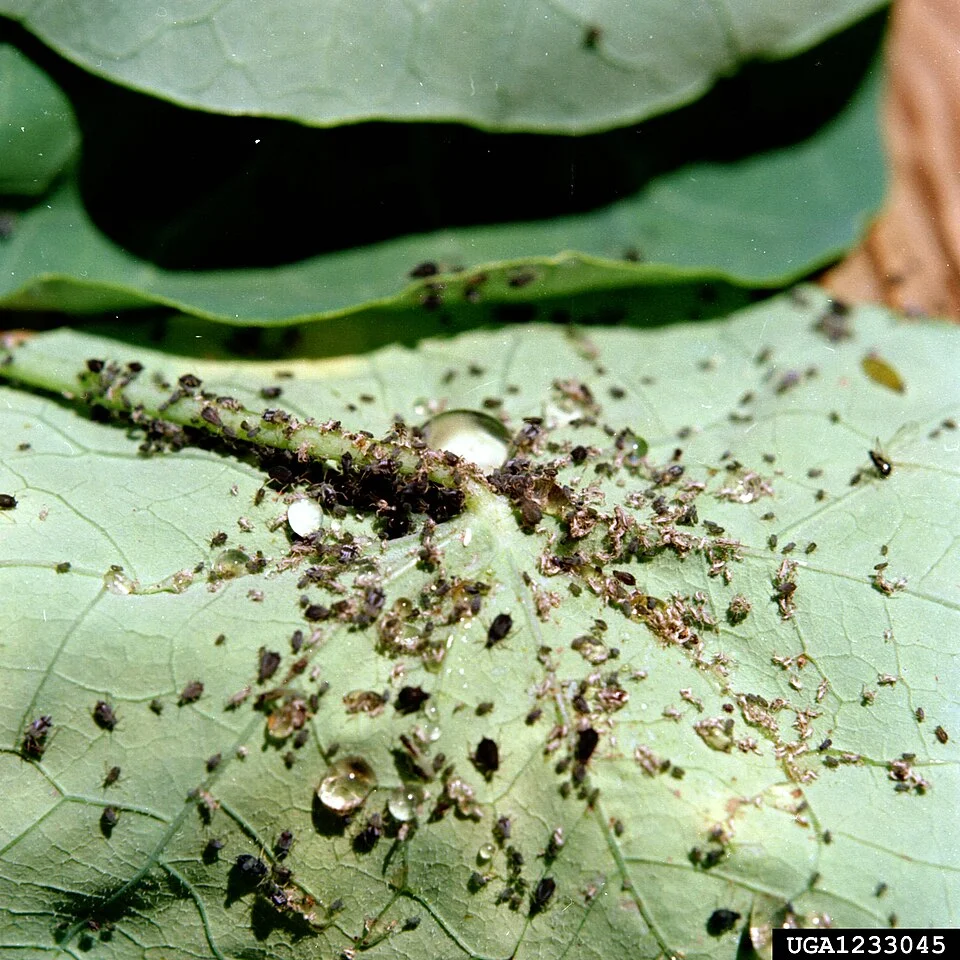
Photo: Clemson University - USDA Cooperative Extension Slide Series, , United States · Public domain
Cotton aphid (Aphis gossypii) is a tiny, soft-bodied, sap-sucking insect — barely the size of a pinhead — that gathers in dense clusters on the growing tips and the undersides of young leaves. Cotton is its main target, but it also feeds on okra, cucumber and melon. The females give birth to live young without mating, so a handful becomes thousands within days in warm, dry weather. As they suck the sap the young leaves curl, pucker and stunt; the aphids rain down sticky, sugary honeydew that turns leaves shiny and then black with sooty mould, and they can carry plant viruses from plant to plant. Late in the season honeydew dripping onto the open bolls makes 'sticky cotton' that stains the white lint and lowers its grade.
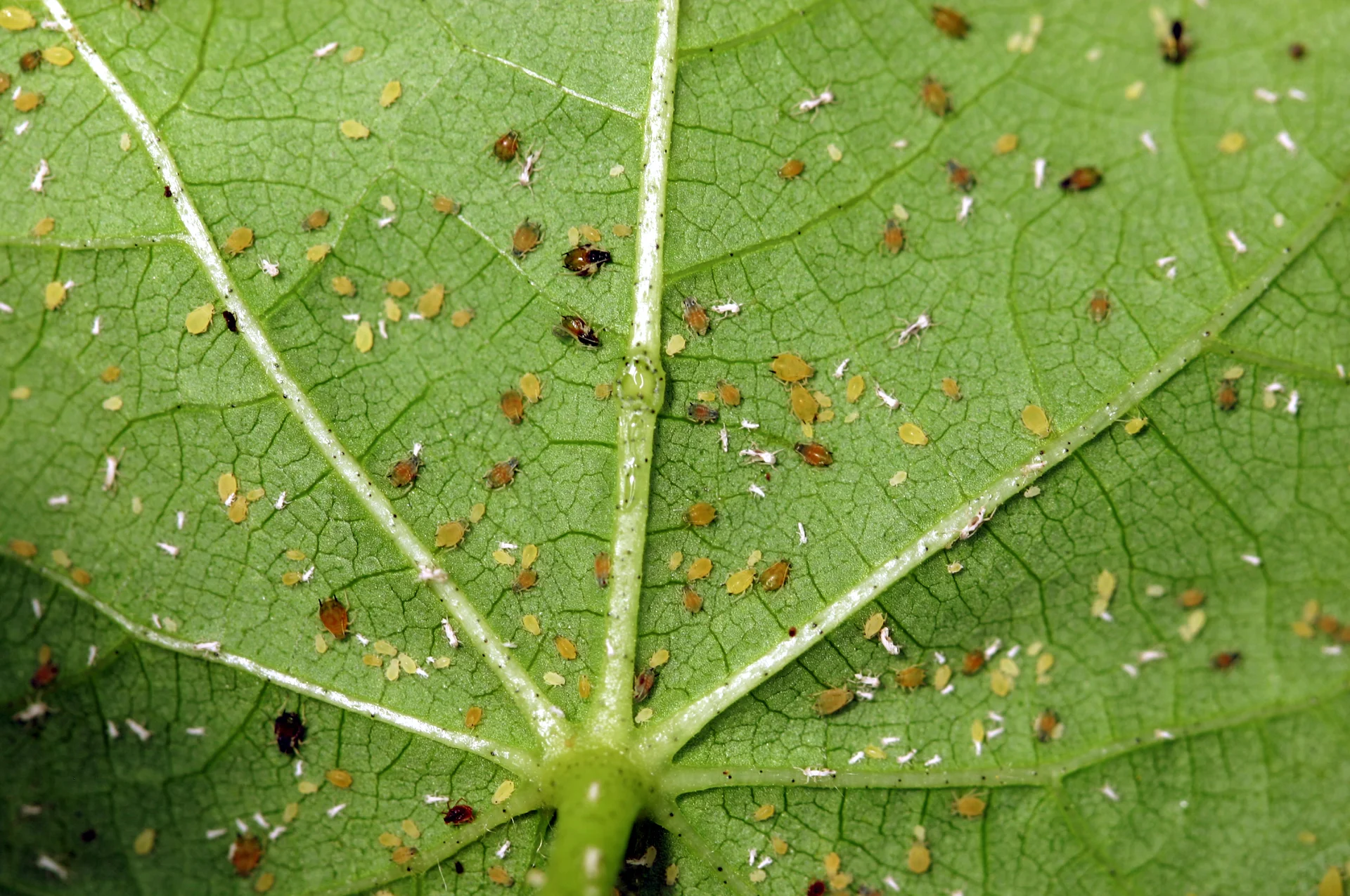
Dr Lewis Wilson, CSIRO · CC BY 3.0 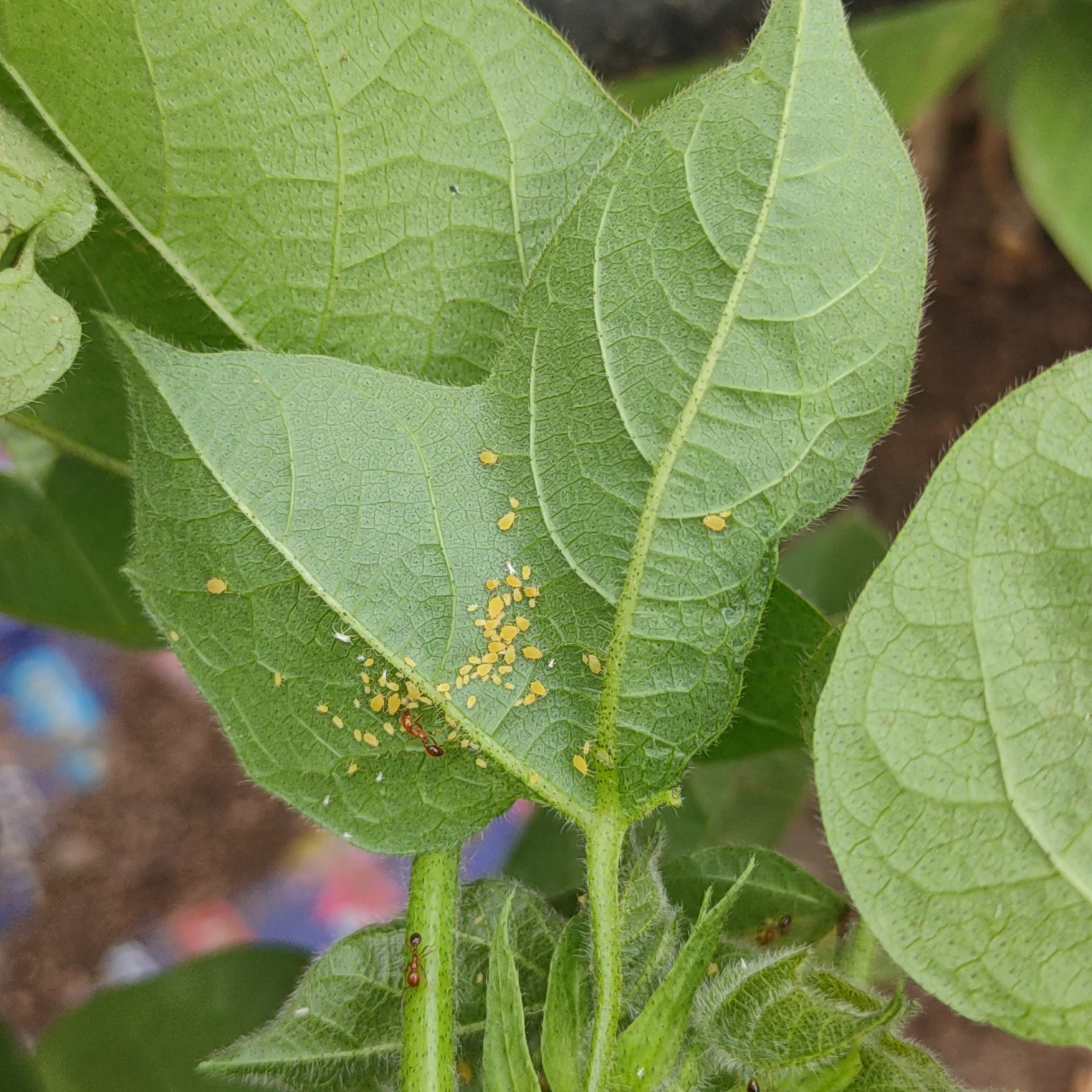
Kirubar · CC BY-SA 4.0
Why it matters
A heavy aphid attack can cost you almost a third of your crop — up to 30% — and even the plants that pull through give you dirty, honeydew-stained 'sticky' lint that buyers pay less for. They are hard to stop once they take hold: the females breed without mating, so a few aphids become thousands in just a few days, and they hide on the undersides of leaves and inside curled tips where a careless spray never reaches them. Worse, the wrong poison kills the ladybirds and tiny wasps that were eating them for free, and the aphids then flare back in far bigger numbers. Catching them early, while the colonies are small and their natural enemies are still winning, is everything.
When to act
Colonies on the growing points/undersides of leaves with visible curling, or sticky honeydew and early sooty mould on most plants.
This guidance is general, compiled from published agronomic references including FAO and CABI. Thresholds and timing shift with your crop, your variety and the season.
In much of the region a spray is simply called mushonga — medicine. But a chemical group you cannot name is one you cannot rotate, and a product you did not write down has no pre-harvest interval you can observe. Mushonga, and other farming words →
The full Cotton aphid field guide
Identify it
The first thing you notice
the youngest leaves at the growing tips curl and cup downward and pucker, and the plant seems to stall and stop growing. Soon those leaves feel shiny and sticky to the touch — that stickiness is honeydew, the sugary liquid the aphids squirt out as they feed — and a black, sooty coating (called sooty mould, a harmless mould that grows on the sugar) spreads over it, so the leaves look dirty and dusted with black. Ants running up and down the stems are a dead giveaway: they guard the aphids and feed on the honeydew.
The aphid itself
turn over a young leaf or look right at the growing tip and you will find them packed in dense clusters — soft, pear-shaped insects about the size of a pinhead (1–2 mm across), so small you must look close. Their colour varies a lot, from pale yellow-green to dark green, grey or almost black, and each one carries two tiny 'exhaust pipes' (called cornicles) sticking up from its tail end — a feature none of the look-alikes has. Most have no wings, but when a colony gets crowded a few grow wings: winged aphids are a warning the colony is about to fly off and start new ones on fresh plants.
Tell them apart from the look-alikes
whitefly are tiny white specks that fly up in a little cloud when you shake the plant, while aphids stay put in their clusters and do not fly off. Jassids (leafhoppers) are green and hop or dart sideways the instant you touch the leaf; aphids are slow and sit still. And red spider mite leaves fine pale speckling and faint cobwebby threads but no stickiness — only aphids leave the tell-tale sticky honeydew and black sooty mould behind them.
Scout for it
Check every week, and start early
The danger runs from the young seedling stage, right through squaring (when the plant sets its flower buds) and on into flowering and boll-filling — this whole early-to-mid stretch is when aphids rob the most yield. Watch even harder during warm, dry spells when the crop is putting out soft, lush green growth, because that is exactly when their numbers explode.
Walk a big 'W' shape across the whole field so you cover all four corners and the middle — not just the edge by the path where you always end up looking. Make about 10 stops, and at each stop turn over the youngest top leaves and feel the growing tip of a few plants.
At each plant look for clusters of aphids on the underside of the young leaves, tips that are curling and feel sticky, ants marching up the stems, and any winged aphids. While you are there, look for the aphids' enemies too — ladybirds and their alligator-shaped young, lacewings, hoverfly maggots, and swollen bronze 'mummy' aphids (ones already killed by tiny wasps). If plenty of these helpers are about and the colonies are still small, they may well clear it for you — so do not rush to spray.
Act once about 5 in every 10 plants (half or more)
carry aphid colonies on the growing tips with curling leaves, or show sticky, sooty-black leaves — that is the point where they start stealing real yield. A few scattered aphids with ladybirds already working on them is not a reason to spray. Near harvest, keep watching the opening bolls: honeydew dripping onto the white lint makes 'sticky cotton' that drops your price, so a late flare-up still matters.
Control it
Prevent it — don't grow an aphid nursery:
aphids breed fastest on soft, over-fed growth, so go easy on nitrogen fertiliser and never pile on extra 'to push the crop' — that flush of lush green leaf is exactly what they multiply on. Pull out weeds in and around the field, because aphids shelter and breed on them between crops. After harvest, plough in or burn the old cotton stalks and trash so the pest has nothing to carry over on. Where you can, choose a tolerant variety and plant early, together with your neighbours, so the crop is past its most tender stage before aphid numbers peak.
Protect the aphids' natural enemies — they work for free:
ladybirds, lacewings, hoverfly maggots and tiny parasitic wasps eat huge numbers of aphids. The single biggest mistake is spraying a broad poison early for just a few aphids — it wipes out these helpers, and the aphids then flare back worse than before because nothing is left to eat them. Leave the helpers to do their job.
Act early, while the colonies are small
in a small field you can knock the aphids off with a strong splash of water, and pinch off and destroy the few worst, tightly-curled tips where they cluster — this cuts their numbers by hand without harming the ladybirds. Then give the natural enemies a few days to catch up before you even think about a spray.
Only if it crosses the threshold — spray as a last resort:
when half your plants or more carry building colonies and the natural enemies cannot keep up, reach for a selective aphicide — an insecticide made to kill aphids while sparing ladybirds and bees — rather than a cheap broad-spectrum poison that only triggers a worse flare-up. Aim the spray under the leaves and into the growing tips, where the aphids actually sit; a spray that only wets the top of the leaf misses them completely. Spray in the cool of early morning or evening with the wind at your back so the drift blows away from you; cover your skin, eyes, nose and mouth; keep it well away from food, drinking water, children and bees (spray when bees are not visiting the flowers). Respect the pre-harvest interval — the set number of days you must leave between the last spray and picking so no poison stays on the cotton — and wash yourself and your clothes as soon as you finish.
Rotate your chemicals, and know when to stop
cotton aphids build resistance fast — meaning a poison you lean on again and again slowly stops killing them — so each time you truly must spray, switch to a different chemical group and never repeat the same product back-to-back. If they keep spreading after a spray, do not just re-spray the same thing: change to another group and check you are really hitting the leaf undersides. When it is too late — the crop is near maturity and most bolls are already open — extra spraying will not pay: stop spending on chemicals, pick the clean cotton promptly, keep any honeydew-stained 'sticky' lint separate so it does not downgrade the rest, and fix the real causes next season (balanced nitrogen, clean fields, a tolerant variety, and early planting).
Catch Cotton aphid before it costs you the harvest
This guide is the general answer. Divisi works out yours — the week to scout your own field for Cotton aphid, and what to do the day you find it.


Crops it affects
Plan the crops it attacks
-
 When to plant Cotton in Kalemie
 -
 When to plant Cucumber in Jorquelleh
 -
 When to plant Okra in Kouroussa
All planting calendars, country by country
Get Insights by email
A short digest of new Divisi articles. No email on quiet weeks.
Frequently asked questions
How do I identify Cotton aphid?
The first thing you notice. the youngest leaves at the growing tips curl and cup downward and pucker, and the plant seems to stall and stop growing. Soon those leaves feel shiny and sticky to the touch — that stickiness is honeydew, the sugary liquid the aphids squirt out as they feed — and a black, sooty coating (called sooty mould, a harmless mould that grows on the sugar) spreads over it, so the leaves look dirty and dusted with black. Ants running up and down the stems are a dead giveaway: they guard the aphids and feed on the honeydew.
When should I take action against Cotton aphid?
Colonies on the growing points/undersides of leaves with visible curling, or sticky honeydew and early sooty mould on most plants.
How do I control Cotton aphid?
Prevent it — don't grow an aphid nursery:. aphids breed fastest on soft, over-fed growth, so go easy on nitrogen fertiliser and never pile on extra 'to push the crop' — that flush of lush green leaf is exactly what they multiply on. Pull out weeds in and around the field, because aphids shelter and breed on them between crops. After harvest, plough in or burn the old cotton stalks and trash so the pest has nothing to carry over on. Where you can, choose a tolerant variety and plant early, together with your neighbours, so the crop is past its most tender stage before aphid numbers peak.
Which crops are attacked by Cotton aphid?
Among the crops covered here: Cotton, Cucumber, Okra.