 Divisi
Cucumber mosaic virus
Cucumber mosaic virus · Viral
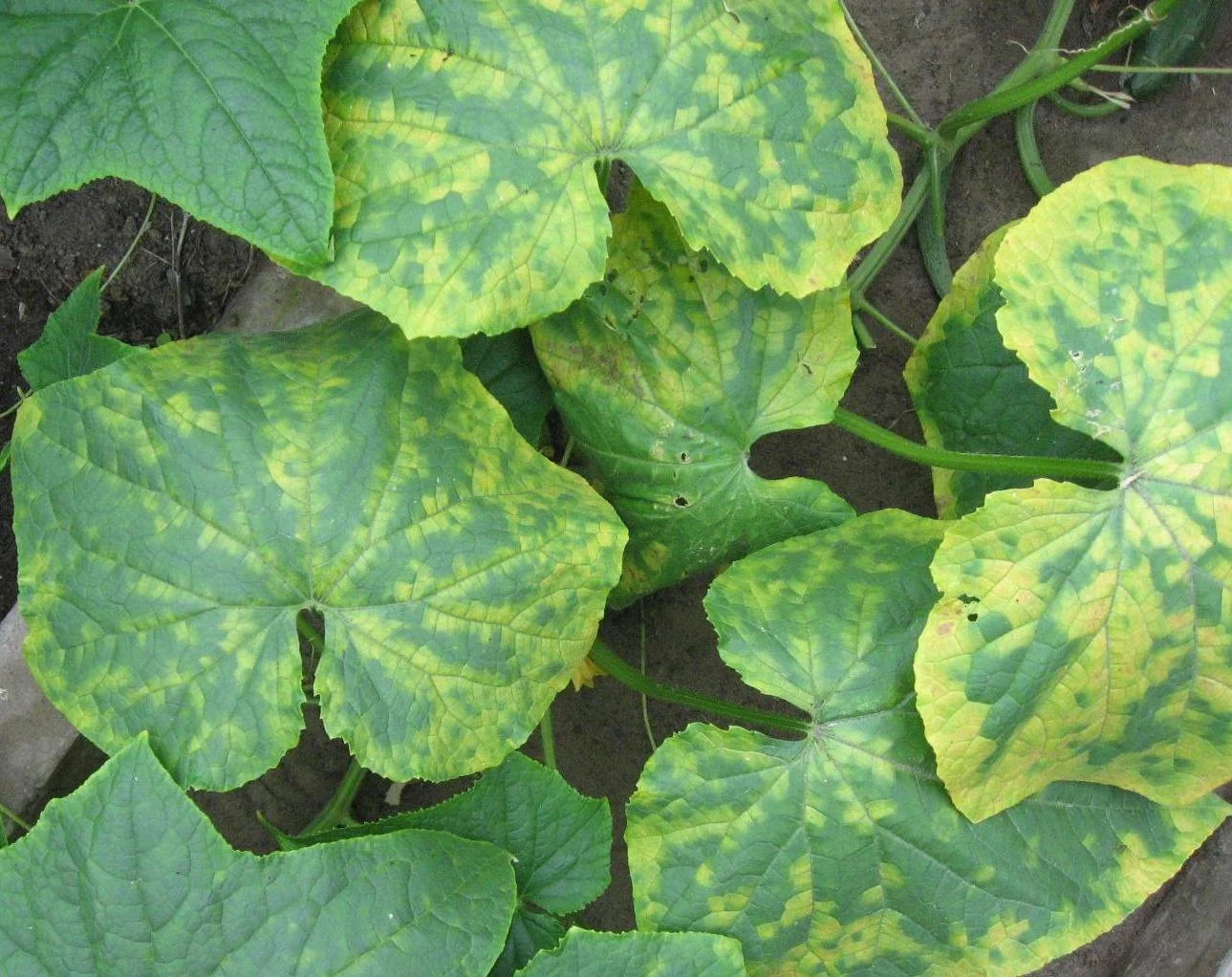
Photo: DieterO · Public domain
Cucumber mosaic virus (CMV) is one of the most widespread plant viruses, attacking a very broad range of vegetables — cucumber, pumpkin, squash, melon, tomato and pepper — as well as many weeds that keep it alive between seasons. It is carried plant-to-plant by aphids (tiny sap-sucking insects) that pass it on in seconds of feeding, and it also travels on sap left on hands and tools, and inside some seed. Once a plant is infected there is no cure — the virus lives in the whole plant's sap.
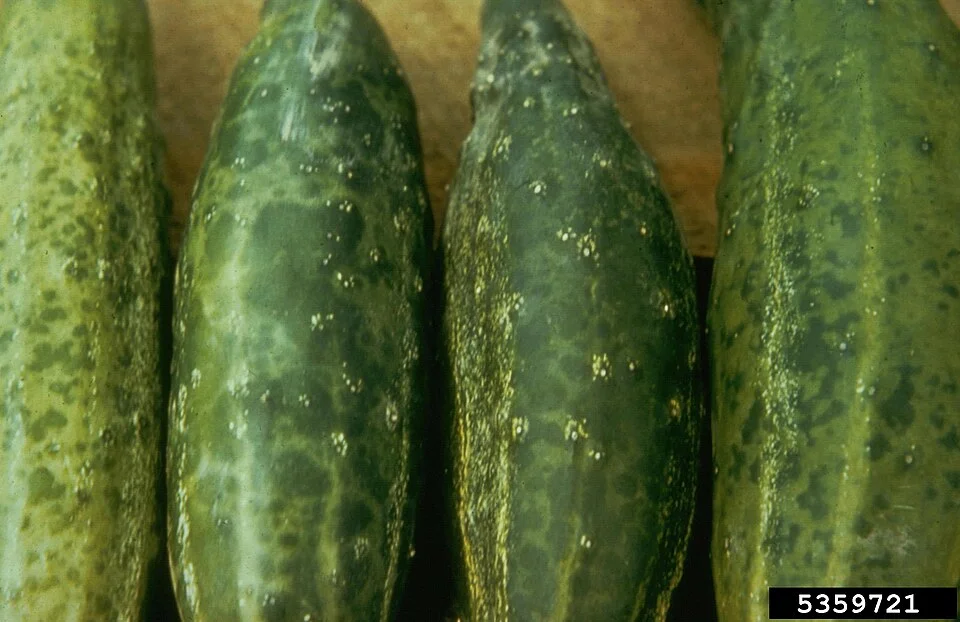
William M. Brown Jr. · CC BY 3.0 us 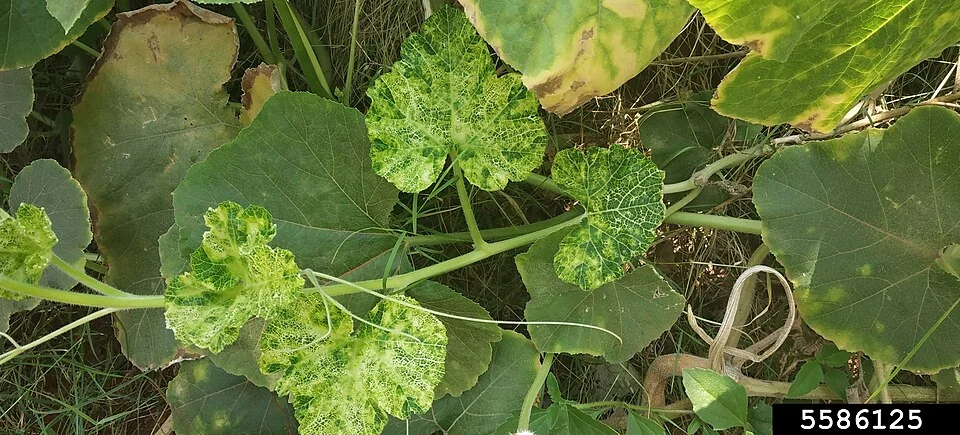
Dr. Parthasarathy Seethapathy, Amrita School of Agricultural Sciences, Bugwood.org · CC BY 3.0
Why it matters
Cucumber mosaic virus can take up to half your crop (50%) — infected plants stay small, and the fruit comes out warty, blotchy and twisted, so buyers won't touch it. It is a virus: it lives inside the whole plant's sap, so there is no spray that can cure a plant once it is sick. That is why it is so hard to fix — your only real power is to stop it reaching healthy plants and to pull out the sick ones fast.
When to act
Rogue at first sight of mosaic; treat aphid colonies before they establish on young plants.
This guidance is general, compiled from published agronomic references including FAO and CABI. Thresholds and timing shift with your crop, your variety and the season.
In much of the region a spray is simply called mushonga — medicine. But a chemical group you cannot name is one you cannot rotate, and a product you did not write down has no pre-harvest interval you can observe. Mushonga, and other farming words →
The full Cucumber mosaic virus field guide
Identify it
The first sign — the leaves:
young leaves show a yellow-and-green patchwork (mosaic) — irregular light-green and dark-green blotches mixed together, like a badly dyed cloth. The newest leaves at the growing tip are always the worst hit.
Twisted, puckered leaves
sick leaves curl, wrinkle and pucker. On tomato and pepper they can go thin and strap-like — narrow "shoestring" leaves instead of normal broad ones.
The whole plant
the plant is stunted and bushy — the joints between leaves stay short, so it looks squashed and crowded, with few flowers and little new growth.
The fruit tells the story
cucumbers and squash come out warty, lumpy and mottled with pale and dark green patches — hard bumps, twisted shape, unmarketable.
Don't confuse it
with a feeding shortage (hunger yellows the whole leaf evenly between the veins and improves when you feed the plant — mosaic is a patchy green-on-green mix that feeding does not fix). It is also not spider-mite damage (that is fine pale speckling with tiny webs on the leaf underside). True mosaic is blotchy, worst on new leaves, and jumps from plant to plant.
Scout for it
Watch hardest while plants are young
CMV hurts most at the seedling and early-growth stages (the first few weeks after your plants come up or are transplanted, while they are still building vines) — a plant infected young is the most badly stunted. Walk the field twice a week during this window.
Walk a large "W" across the field so you check all four corners and the middle — not just the row by the path where you always look.
At about 10 stops, check the growing tips and youngest leaves of the plants for the yellow-green mosaic patchwork and any puckering or stunting.
Turn leaves over and inspect the shoot tips for aphids
— the vector (the insect that carries the virus from plant to plant). They are soft, pinhead-sized green or black insects clustered on leaf undersides and tender tips, often with sticky shine (honeydew) and ants climbing to farm them.
Act the moment you see it. Because there is no cure, even 1 plant with mosaic is your signal — pull it out today
And if you find aphid colonies building on young plants, deal with them straight away, before they settle in and carry the virus down the row.
Control it
Prevent first
-
plant resistant and clean (your strongest tools):
where you can, choose CMV-tolerant or resistant varieties of cucumber, squash, melon and tomato, and always start from virus-free (clean) seed. Resistant varieties are the single most reliable defence against this virus.
-
starve the virus of hiding places (cultural control):
clear broadleaf weeds in and around the field — they shelter the virus between crops. Don't plant a new susceptible crop (cucurbits, tomato, pepper) right next to an old infected one, and rotate to a non-host crop where you can. Laying reflective/silver mulch on the beds confuses and repels aphids so fewer land on your young plants.
-
keep your own hands and tools clean:
the virus rides on sap, so wash hands and tools between plants with milk or soapy water, handle your healthy plants first and the suspect ones last, don't work among the plants while they are wet, and keep tobacco away from the crop.
Act early — rogue the sick plants (this is the key action):
the moment you spot mosaic, "rogue" that plant — uproot it and destroy it by burning or burying it well away from the field. Do not leave it or compost it beside the crop. Roguing early, before aphids spread it further, is what saves the rest of the field.
Chemical is a last resort, and only against the aphids — never a cure:
an insecticide cannot heal an infected plant, and it barely slows the spread, because an aphid passes the virus on in seconds of nibbling — before the poison can kill it. Use it only to knock back building aphid colonies as a support to roguing, not in place of it. If you do spray: use a recommended insecticide, aim at the leaf undersides where aphids hide, spray in the cool of morning or evening with the wind behind you, and cover your skin, eyes, nose and mouth. Keep spray off food, off water, and away from children and bees (spray in the evening when bees are home), wait out the pre-harvest interval (the number of days you must leave between spraying and picking) before you harvest, wash yourself and your clothes afterwards, and rotate to a different chemical group each time so aphids don't build resistance.
If it keeps spreading → cut your losses and protect the next crop
if many plants are already infected, stop trying to nurse individual sick plants — there is no cure. Pull out the worst block, harvest any healthy fruit early, and put your effort into the next planting: clean seed, a resistant variety, weed-free margins, silver mulch and a rotation to a non-host crop so the virus has nothing to jump back into.
Catch Cucumber mosaic virus before it costs you the harvest
This guide is the general answer. Divisi works out yours — the week to scout your own field for Cucumber mosaic virus, and what to do the day you find it.


Crops it affects
Plan the crops it attacks


All planting calendars, country by country
Get Insights by email
A short digest of new Divisi articles. No email on quiet weeks.
Frequently asked questions
How do I identify Cucumber mosaic virus?
The first sign — the leaves:. young leaves show a yellow-and-green patchwork (mosaic) — irregular light-green and dark-green blotches mixed together, like a badly dyed cloth. The newest leaves at the growing tip are always the worst hit.
When should I take action against Cucumber mosaic virus?
Rogue at first sight of mosaic; treat aphid colonies before they establish on young plants.
How do I control Cucumber mosaic virus?
Prevent first — plant resistant and clean (your strongest tools):. where you can, choose CMV-tolerant or resistant varieties of cucumber, squash, melon and tomato, and always start from virus-free (clean) seed. Resistant varieties are the single most reliable defence against this virus.
Which crops are attacked by Cucumber mosaic virus?
Among the crops covered here: Cucumber, Tomato.