 Divisi
Cucurbit mosaic virus
Watermelon mosaic virus · Viral
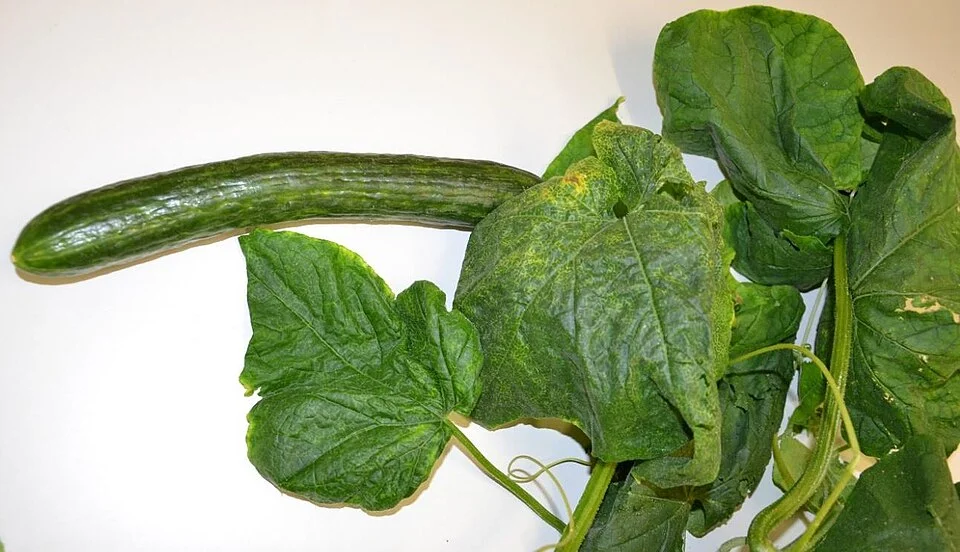
Photo: Dr. Jan Hinrichs-Berger, Landwirtschaftliches Technologiezentrum Augustenberg, Karlsruhe. · CC BY 4.0
Cucurbit mosaic (Watermelon mosaic virus and related potyviruses) is a virus disease of cucumber, pumpkin, squash, melon and watermelon. Winged aphids carry it on their mouthparts and pass it from plant to plant in seconds as they probe (a non-persistent virus — caught and spread almost instantly). It survives the off-season in weeds and volunteer cucurbits, then rides warm-weather aphid flights into the crop, so early plots next to old fields and weedy edges are hit first.
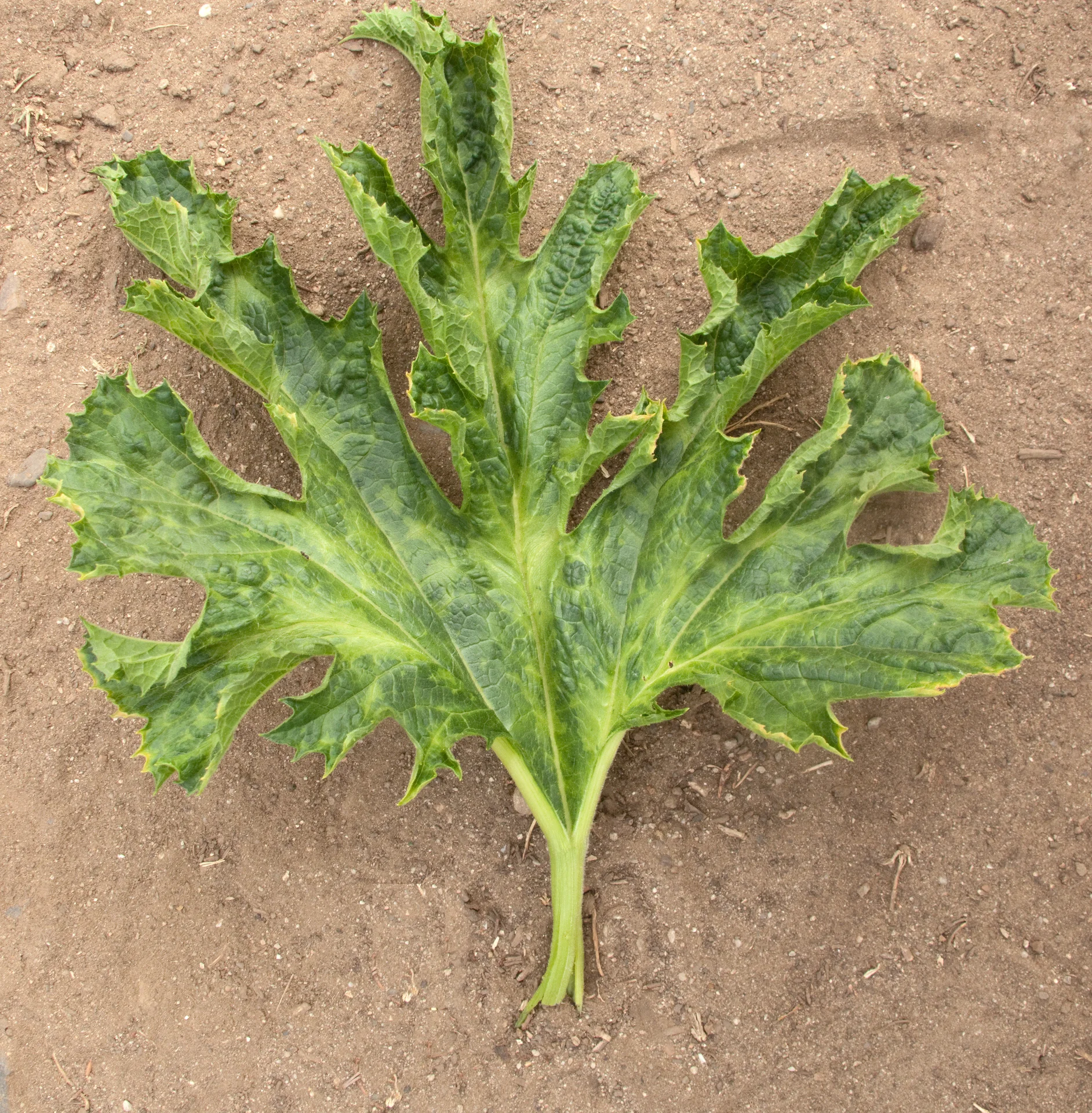
Downtowngal · CC BY-SA 4.0 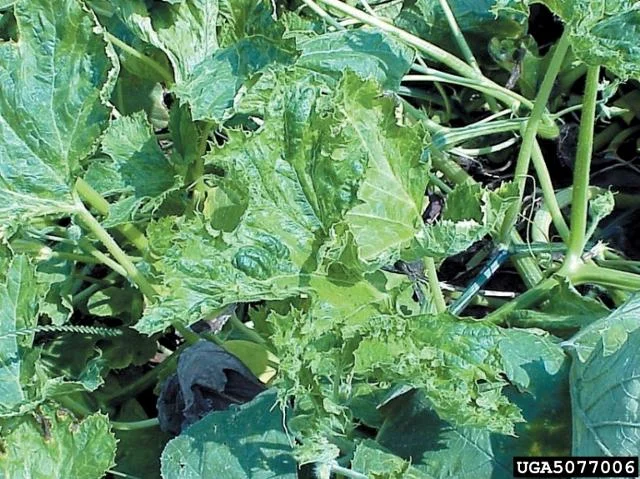
OllieMartin on WikiGardener · CC BY-SA 3.0
Why it matters
Cucurbit mosaic can take up to half your crop (50%) — the vines stay stunted and the fruit come out mottled, warty and misshapen, so buyers won't take them. The hardest part: once a plant catches the virus there is no cure and no spray that fixes it — the plant carries it for life. And because aphids pass it in seconds as they probe a leaf, it moves through a field fast before you even see the insects. Your only real power is to keep it out and pull out sick plants early.
When to act
Rogue at first mosaic symptom; act on aphids before winged migrants build up.
This guidance is general, compiled from published agronomic references including FAO and CABI. Thresholds and timing shift with your crop, your variety and the season.
In much of the region a spray is simply called mushonga — medicine. But a chemical group you cannot name is one you cannot rotate, and a product you did not write down has no pre-harvest interval you can observe. Mushonga, and other farming words →
The full Cucurbit mosaic virus field guide
Identify it
What you see first
on the youngest leaves at the shoot tips, a patchy bright yellow-green mosaic — light and dark green mixed together like a patchwork quilt, not an even yellowing. The leaf often puckers and blisters, with raised bumpy areas between the veins.
As it spreads
new leaves come out narrow and strap-like (fern-like, twisted or shoe-string thin), the vine stunts with short, bunched-up growth, and the fruit turns mottled, warty and lumpy, distorted in shape with poor fruit set. A plant this far gone will not recover.
Tell it apart from look-alikes
a feeding shortage (like nitrogen) yellows the older, lower leaves evenly and follows the veins — mosaic is a green-on-green patchwork on the young top leaves with distorted leaf shape. Powdery or downy mildew sits on the surface as white dust or dry angular patches you can see or wipe — mosaic colour is inside the leaf and cannot be wiped off. And unlike a spray burn, mosaic spreads from plant to plant, usually starting at the field edge nearest weeds or an older cucurbit plot.
Scout for it
When to look
start at emergence / young seedlings and keep going hard through vine run and early fruiting — these are the stages when the virus does the most damage. Check twice a week, and step it up in warm, dry spells (about 20–32°C) when aphids take flight.
How to walk it
walk a big "W" across the field so you cover all four corners and the middle, not just the row by the path. Make about 10 stops.
What to check at each stop
look at the youngest leaves at the shoot tips of a few plants for mosaic mottling and narrowed leaves, then turn the tender leaves over and look for aphids — soft, pear-shaped insects about the size of a pinhead, green or black, clustered on the growing tips. Also glance at the field margins for winged aphids arriving.
When to act (the number)
the threshold is rogue at the very first mosaic symptom — so even 1 plant showing mosaic means act that same day: pull it out. Don't wait for a count. And if you see winged aphids building up on the young growth, act on the aphids before their numbers swell, because each one can seed many new infections.
Control it
Prevent first
-
best protection is a resistant variety:
grow mosaic-tolerant cucurbit varieties suited to your area. This is the single strongest tool you have, because it protects the plant even when aphids do land on it.
-
keep the virus's home away from your crop:
the virus overwinters in weeds and volunteer (self-sown) cucurbits, so clear weeds and old cucurbit plants from around the field before you plant. Plant early and away from older cucurbit fields and weedy edges, keeping distance (isolation) so the young crop escapes the peak aphid flight coming off older plots.
-
block and confuse the aphids on young plants:
lay reflective / silver mulch on the beds — the shine confuses incoming aphids and keeps them off. Float row covers (light fabric or net) over the seedlings and leave them on until flowering, then lift them so bees can pollinate.
Act early — rogue (pull and destroy) sick plants:
at the first mosaic sign, uproot the whole plant — roots and all — bag it, and carry it out of the field; do not drop it between the rows or compost it there, or it stays a source. Handle healthy plants first and suspect ones last, and wash your hands and tools afterwards so you don't carry sap to clean plants.
About sprays — the honest truth (last resort):
there is no chemical that cures mosaic virus once a plant is infected, and spraying insecticide at the aphids does not reliably stop it, because they pass the virus in seconds — long before the poison kills them — and broad poisons also kill the ladybirds and wasps that keep aphids down. IF you still choose to treat an aphid outbreak, protect yourself: cover your skin, eyes, nose and mouth; spray in the cool of morning or evening with the wind at your back; keep it off food, water sources, children and bees; wait out the pre-harvest interval (the safe number of days between spraying and picking) before you harvest; wash well afterwards; and rotate to a different chemical group each time so aphids don't build resistance. But put your effort into prevention — it pays far better here.
If it keeps spreading → cut your losses
if most plants are already showing mosaic early in the season, the field will not recover its yield — pull out the crop, clear all weed and volunteer hosts, and start fresh with a resistant variety, planted early and well away from the old, infected ground next time.
Catch Cucurbit mosaic virus before it costs you the harvest
This guide is the general answer. Divisi works out yours — the week to scout your own field for Cucurbit mosaic virus, and what to do the day you find it.


Crops it affects
Plan the crops it attacks
-
 When to plant Cucumber in Jorquelleh
 -
 When to plant Egusi melon in Onitsha North
 -
 When to plant Watermelon in Dékoa
All planting calendars, country by country
Get Insights by email
A short digest of new Divisi articles. No email on quiet weeks.
Frequently asked questions
How do I identify Cucurbit mosaic virus?
What you see first. on the youngest leaves at the shoot tips, a patchy bright yellow-green mosaic — light and dark green mixed together like a patchwork quilt, not an even yellowing. The leaf often puckers and blisters, with raised bumpy areas between the veins.
When should I take action against Cucurbit mosaic virus?
Rogue at first mosaic symptom; act on aphids before winged migrants build up.
How do I control Cucurbit mosaic virus?
Prevent first — best protection is a resistant variety:. grow mosaic-tolerant cucurbit varieties suited to your area. This is the single strongest tool you have, because it protects the plant even when aphids do land on it.
Which crops are attacked by Cucurbit mosaic virus?
Among the crops covered here: Cucumber, Egusi melon, Watermelon.