 Divisi
Cucurbit virus complex
· Viral
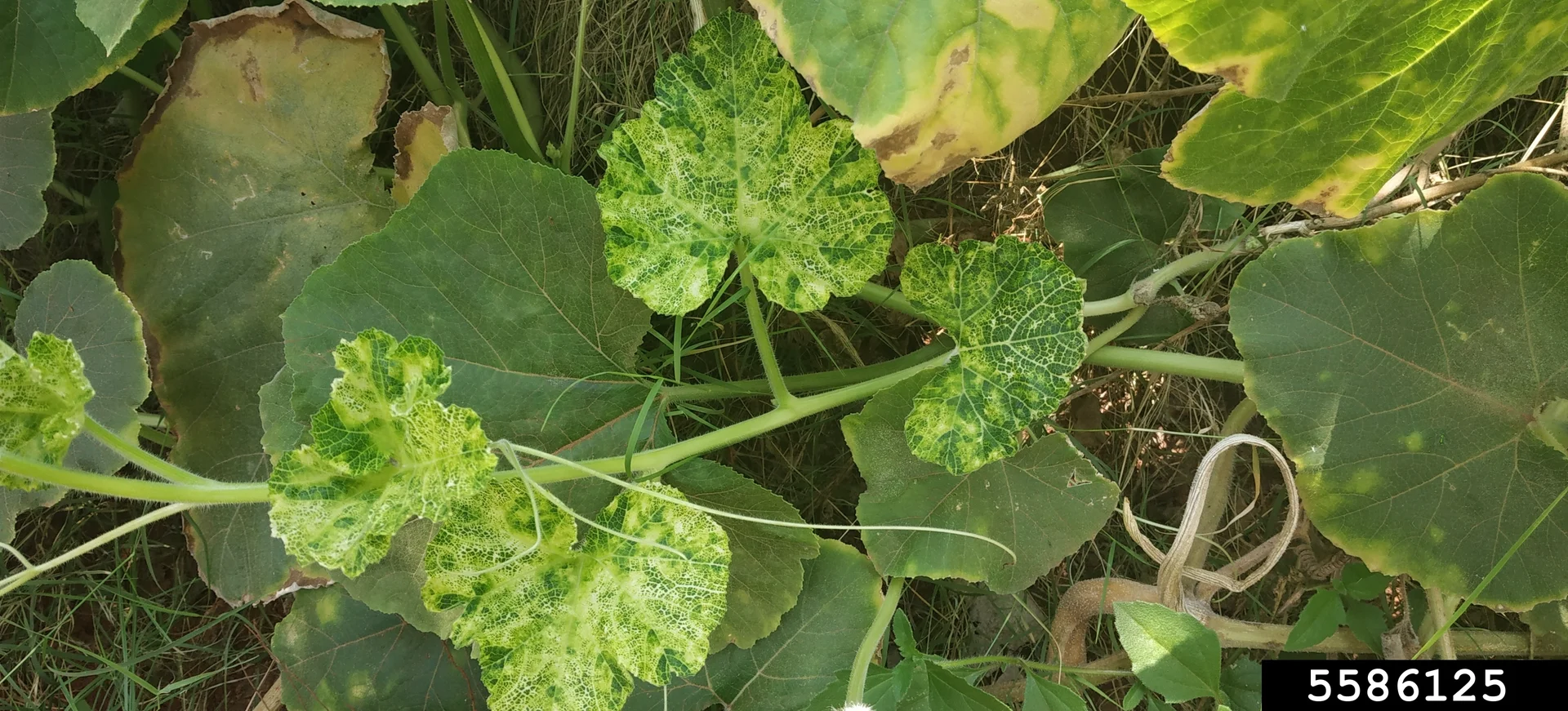
Photo: Dr. Parthasarathy Seethapathy, Amrita School of Agricultural Sciences, Bugwood.org · CC BY 3.0
A mix of viruses that attack the cucurbit family — cucumber, pumpkin, squash, melon and watermelon — including cucumber mosaic, watermelon mosaic, zucchini yellow mosaic and whitefly-borne yellowing viruses. They do not spread by themselves: tiny sap-sucking insects (the vectors — mostly aphids and whiteflies) carry the virus from a sick plant to a healthy one as they feed. Aphids pick it up and pass it on in just a few seconds of probing, so they infect plants faster than any spray can kill them. Several of these viruses often infect one plant at the same time, and the damage adds up.
Downtowngal · CC BY-SA 4.0 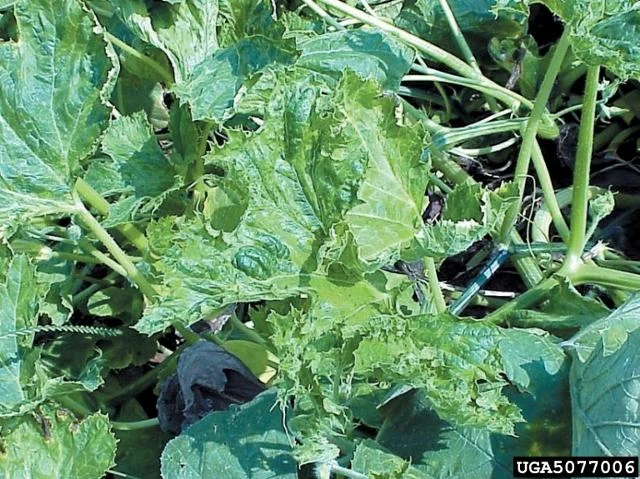
OllieMartin on WikiGardener · CC BY-SA 3.0
Why it matters
Once a virus is inside a plant there is no cure — no spray, no medicine will clean it out; that plant stays sick and spreads it to the rest of your field through aphids and whiteflies. A bad outbreak can wipe out up to 60% of your harvest: plants stay small, and the fruit comes out warty, blotchy and twisted so no one will buy it. Because the insects that carry it move and breed fast in warm weather, the only way to win is to stop it before it takes hold — pull out the first sick plants and keep the insects down.
When to act
Rogue at first mosaic symptom and control vectors before winged migrants build up.
This guidance is general, compiled from published agronomic references including FAO and CABI. Thresholds and timing shift with your crop, your variety and the season.
In much of the region a spray is simply called mushonga — medicine. But a chemical group you cannot name is one you cannot rotate, and a product you did not write down has no pre-harvest interval you can observe. Mushonga, and other farming words →
The full Cucurbit virus complex field guide
Identify it
The first thing you see
young leaves turn a patchy light-and-dark green, like a badly mixed paint — this patchwork is called mosaic. Older leaves may go yellow and mottled and feel blistered (raised bumpy areas) instead of smooth and flat.
As it spreads
whole plants stay small and stunted while healthy neighbours grow away. New leaves come out narrow and strappy (like shoestrings) and curl or wrinkle at the edges instead of opening flat.
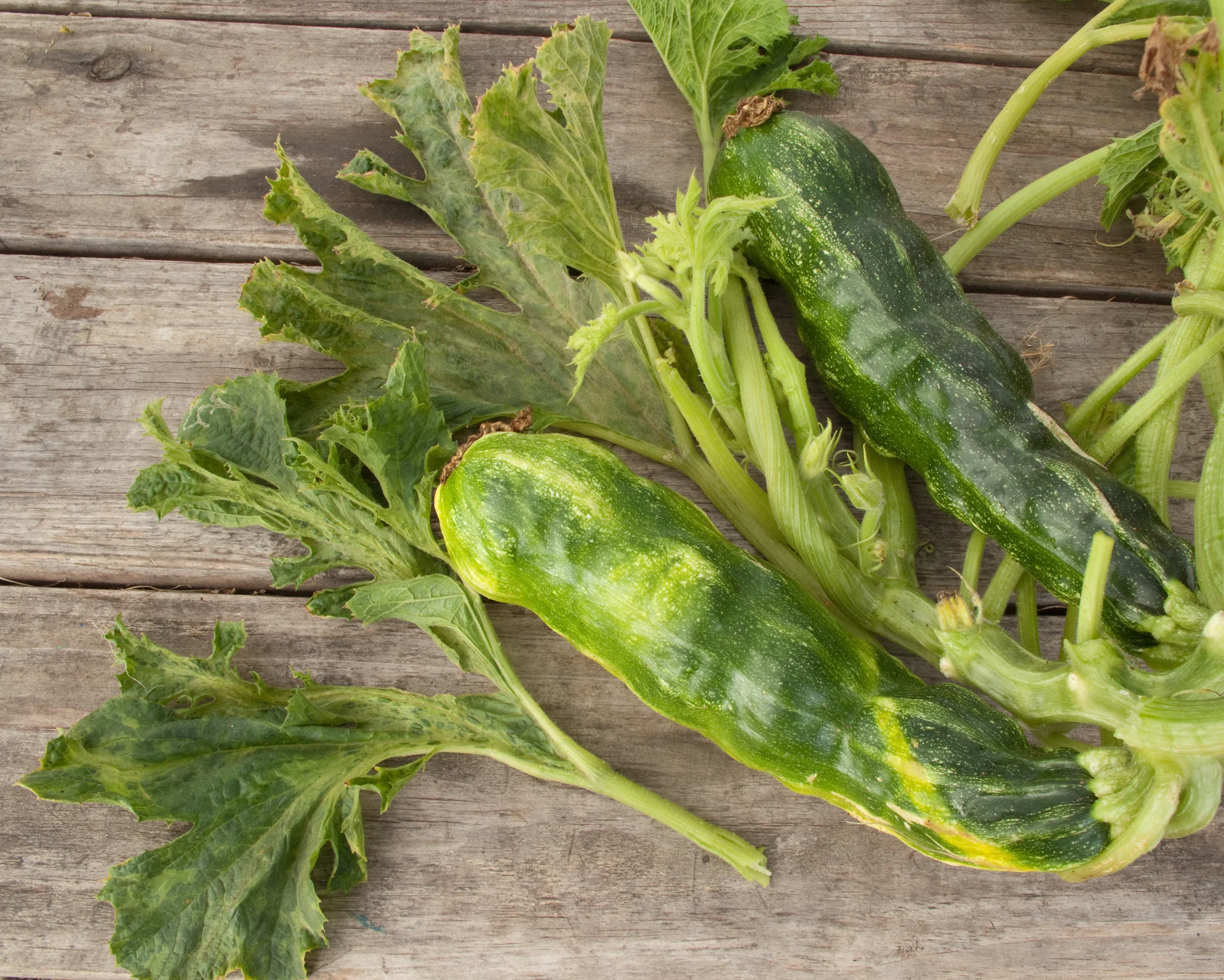
On the fruit — the money loss:
cucumbers, pumpkins and melons come out warty, bumpy, blotchy and twisted, with mottled light-and-dark skin. Many flowers drop and never set fruit at all, and what does set is unsellable.
Don't confuse it
with a feeding shortage (that yellows leaves evenly from the tips or between veins, no patchy mosaic and no fruit warts) or with weedkiller drift (leaves cup and twist, but usually in a strip on the downwind edge of the field, not scattered plant-by-plant). Powdery or downy mildew leaves a white powder or fuzzy patch you can see and rub — virus leaves nothing to rub off, only the colour patchwork and distortion.
Scout for it
When
start the day your seedlings come up and keep going through vining and right up to flowering and early fruiting — the young, seedling and growing stages are when the crop catches it easiest. Walk the field twice a week.
How — walk a big "W":
cross the field in a W shape so you check all four corners and the middle, not just the row beside the path where you always look.
Make about 10 stops
along the W. At each stop check a few plants for the tell-tale signs: patchy mosaic, yellow mottling, curled or strappy new leaves, and stunted plants next to healthy ones.
Look for the insects that carry it (the vectors)
turn over the growing shoot tips and look for aphids — soft, pinhead-sized green or black insects clustered on the tender tips. Turn over the leaf undersides and look for whitefly — tiny white specks that puff up in a little cloud when you shake the plant.
The number that means ACT NOW
you do not wait for many plants. Even ONE plant showing mosaic is your trigger — pull it out that same day, before winged aphids and whiteflies breed up and fly off to spread it to the whole field.
Control it
Prevent first
-
plant tough seed:
the strongest single tool is a resistant or tolerant variety. Buy clean, certified seed of a variety bred to shrug off several of these viruses at once and suited to your area. It won't get sick as easily even when the insects are about.
-
clean out the hideouts:
aphids and whiteflies rest and breed in weeds and in volunteer cucurbits (self-sown pumpkins and melons from last season). Clear weedy field margins and pull these volunteers so the virus has nowhere to survive between crops. Don't plant a new cucurbit crop right next to an old one — overlapping plantings pass the virus straight across.
-
protect the young crop:
lay reflective mulch (silver plastic or bright straw) between the rows — the shine confuses flying aphids so they land less. Cover seedlings with fine netting (row covers) to keep insects off during the tender early weeks, and time your planting to miss the peak insect flights in your area.
Act early — rogue the sick plants:
as soon as you spot the first mosaic plant, pull it out, and bury or burn it away from the field the same day. Handle sick plants last, after you've finished the healthy ones, and wash your hands and any tools afterwards so you don't carry sap to clean plants.
Chemical is a LAST RESORT, and only a helper
an insecticide can knock down aphid and whitefly numbers to slow the build-up, but on its own it will NOT stop the spread — an aphid passes the virus in a few seconds, long before the spray kills it. Only use it alongside roguing and clean seed, never instead of them.
If you do spray — stay safe:
cover your skin, eyes, nose and mouth; spray in the cool of morning or evening with the wind behind you; keep it well away from food, drinking water, children and bees; wait the full pre-harvest interval (the number of days the label says you must leave between spraying and picking) before you harvest; and wash yourself and your clothes after. Rotate to a different insecticide group each time so the insects don't build up resistance (stop being killed by it).
If it keeps spreading — cut your losses:
when most of the field is already showing mosaic, roguing won't save it. Pull the whole crop, clear every cucurbit plant, weed and volunteer, and rest the land from cucurbits next season — plant an unrelated crop (like maize or beans) instead, so the virus and its insects have nothing to live on and you start the next cucurbit crop clean.
Catch Cucurbit virus complex before it costs you the harvest
This guide is the general answer. Divisi works out yours — the week to scout your own field for Cucurbit virus complex, and what to do the day you find it.


Crops it affects
Plan the crops it attacks


All planting calendars, country by country
Get Insights by email
A short digest of new Divisi articles. No email on quiet weeks.
Frequently asked questions
How do I identify Cucurbit virus complex?
The first thing you see. young leaves turn a patchy light-and-dark green, like a badly mixed paint — this patchwork is called mosaic. Older leaves may go yellow and mottled and feel blistered (raised bumpy areas) instead of smooth and flat.
When should I take action against Cucurbit virus complex?
Rogue at first mosaic symptom and control vectors before winged migrants build up.
How do I control Cucurbit virus complex?
Prevent first — plant tough seed:. the strongest single tool is a resistant or tolerant variety. Buy clean, certified seed of a variety bred to shrug off several of these viruses at once and suited to your area. It won't get sick as easily even when the insects are about.
Which crops are attacked by Cucurbit virus complex?
Among the crops covered here: Cucumber, Watermelon.