 Divisi
Downy mildew
Peronosporaceae · Fungal
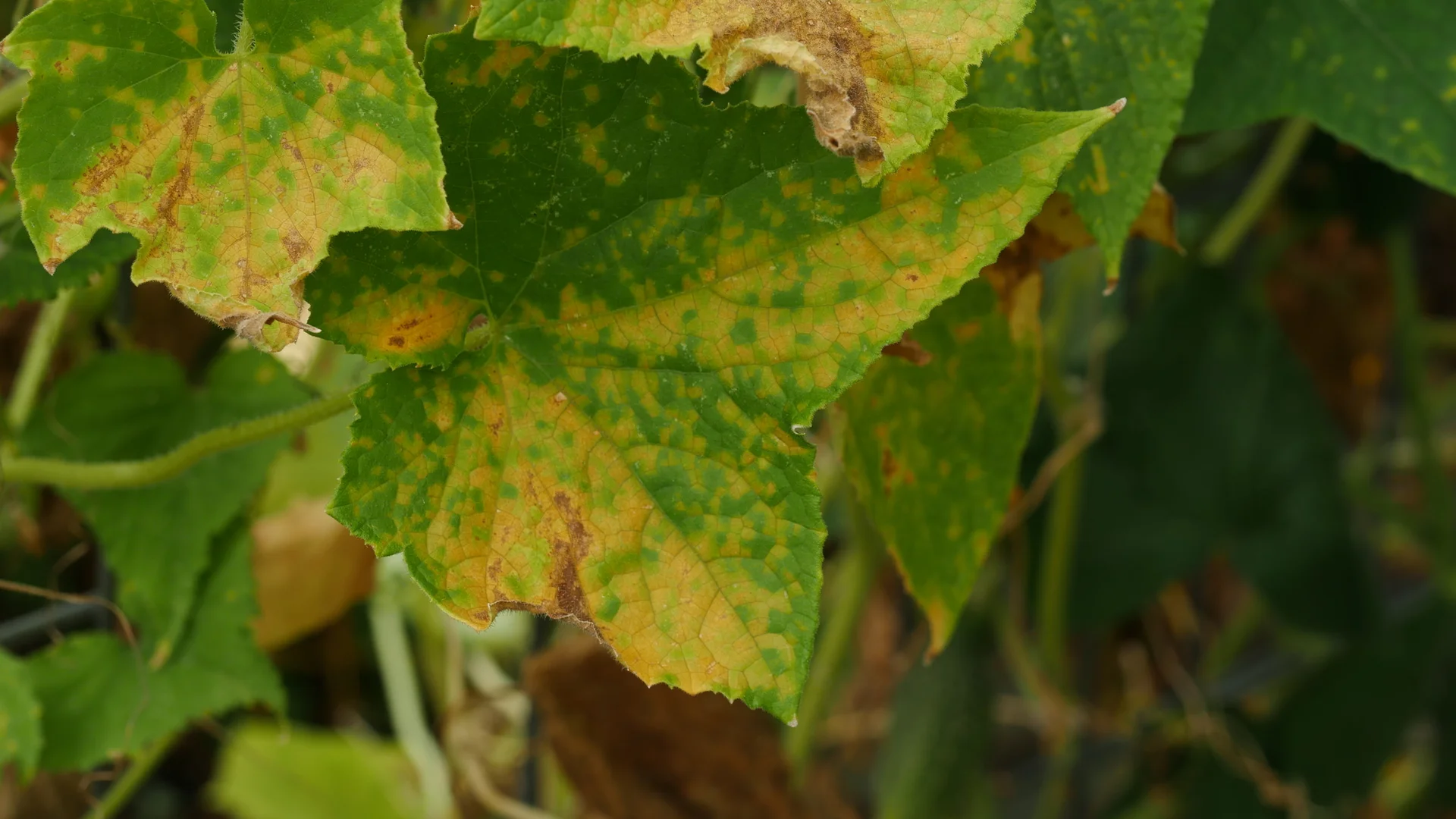
Photo: blastcat (iNaturalist) · CC BY 4.0
Downy mildew is a family of fungus-like water moulds (oomycetes) that attack the leaves of many crops — cucumber, pumpkin and other vegetables, onion, cabbage, sorghum and grape. Its spores need a film of water to grow, so cool nights, heavy dew, fog, rain and high humidity drive fast, leaf-killing outbreaks. Some kinds blow in on the wind from far away each season, arriving before you ever see them.
Jochen Kreiselmaier, DLR-Rheinpfalz · CC BY 4.0 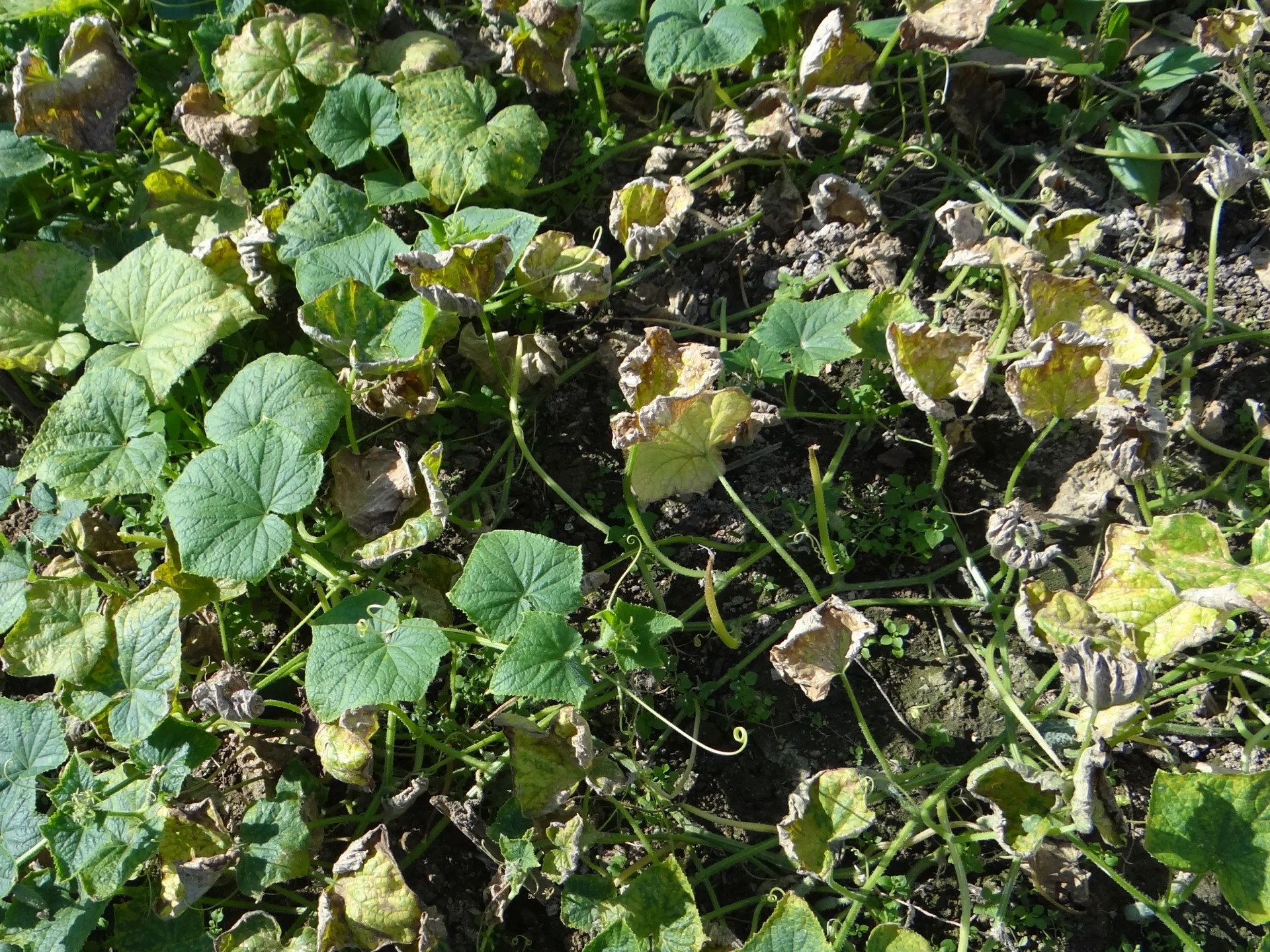
Jerzy Opioła · CC BY-SA 4.0
Why it matters
Downy mildew rots the leaves that feed your crop, and once it takes hold in cool, wet weather it can spread across a whole field in days and cost you up to 60% of your harvest. It is hard to stop once it is established because by the time you see the fuzzy growth underneath a leaf, the spores have already blown onto dozens of other leaves, and a leaf that has browned and died will never recover. The only reliable win is to prevent it and catch the very first spots — chasing it after it is everywhere rarely works.
When to act
Begin protectant sprays when cool humid weather with leaf wetness sets in, or at the first angular leaf lesions.
This guidance is general, compiled from published agronomic references including FAO and CABI. Thresholds and timing shift with your crop, your variety and the season.
In much of the region a spray is simply called mushonga — medicine. But a chemical group you cannot name is one you cannot rotate, and a product you did not write down has no pre-harvest interval you can observe. Mushonga, and other farming words →
The full Downy mildew field guide
Identify it
The first sign you see
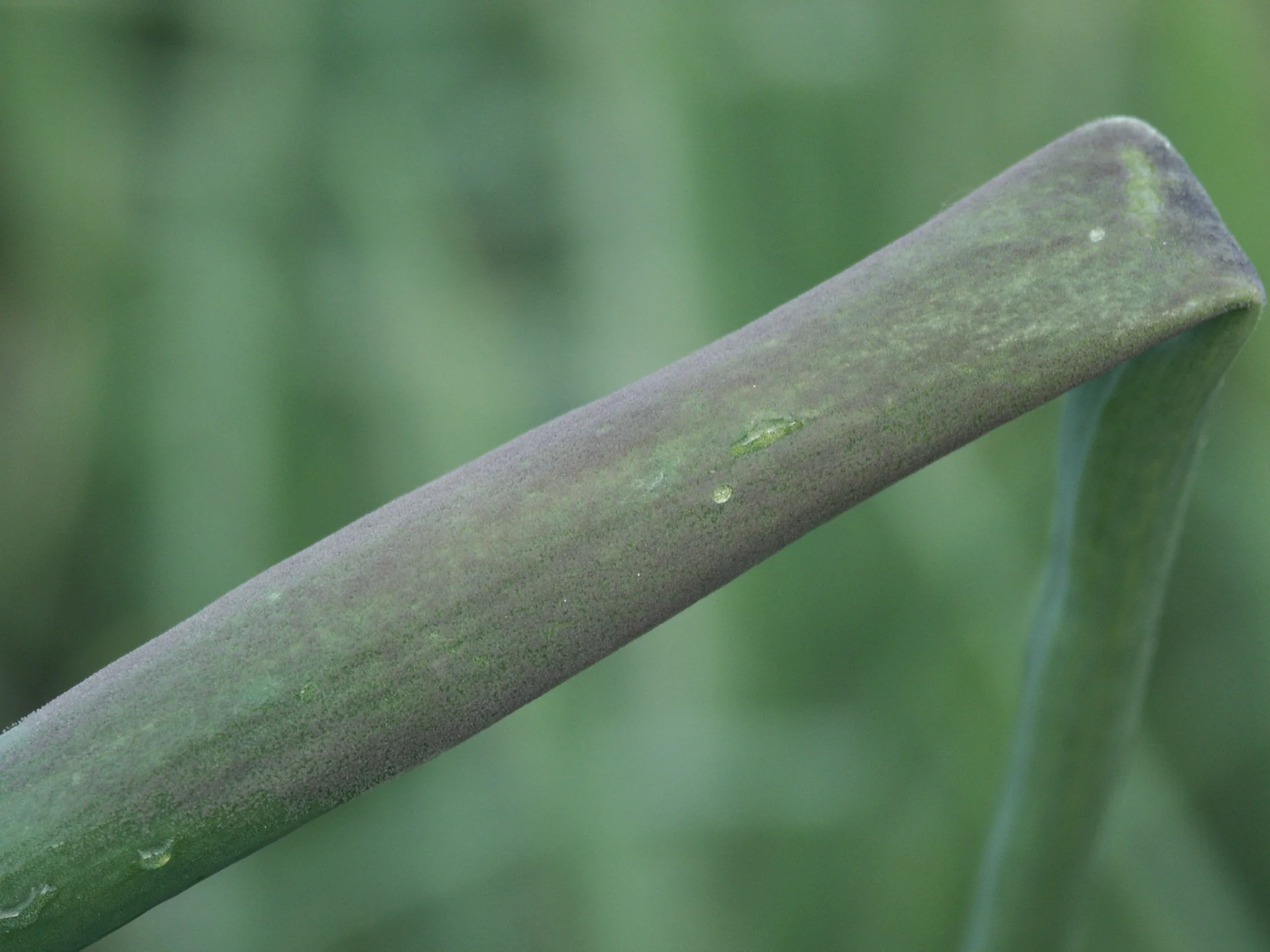
pale yellow patches on the TOP of the leaf. On many crops the patches are angular — blocky, squared-off little tiles, because the leaf veins fence them in (this 'boxed-in' shape is the giveaway). On onion and sorghum they show as long pale streaks running along the leaf.
The tell-tale sign — flip the leaf over:
directly under each yellow patch you will find a soft, downy fuzz — a fine grey, purplish or greyish-white felt, like a thin mould. It shows best early in the morning while the leaf is still damp; it can dry away and hide in the heat of the day.
As it spreads
the yellow patches turn brown and papery and die, patches join up, and in a bad attack whole leaves collapse and the plant is stripped bare (defoliated) and stunted.
Don't confuse it with powdery mildew
powdery mildew is a white, dusty powder on the TOP of the leaf that rubs off with your finger and likes warm, dry weather. Downy mildew is the opposite — the fuzz is on the UNDERSIDE, the top just goes yellow then brown, and it needs cool and wet.
Also not the same as
plain hunger-yellowing (a whole leaf yellowing evenly, no patches and no fuzz underneath) or spider-mite speckling (fine pale dots with tiny webs, no angular patches, and it worsens in hot dry weather, not wet).
Scout for it
When to look hardest
from the time the crop is growing fast and filling out its leaves through to mid-season (its most vulnerable stages), and above all after a spell of cool nights, heavy dew, fog, rain, or overhead watering — those are the conditions the disease waits for.
How often
check twice a week during any cool, humid or wet weather. Go out early in the morning while the dew is still on, when the fuzz underneath is easiest to see.
Walk a big "W"
across the field so you cross all four corners and the middle — not just the row by the path. Make about 10 stops along the W.
At each stop, turn leaves over
Check the undersides of the older, lower leaves first and look inside the dense, shaded part of the canopy where the leaves stay wet the longest — that is where it starts.
Your trigger to act
even ONE leaf with the first angular yellow patch and downy fuzz underneath means start now. Don't wait for a count to build up — also begin protective sprays as soon as a run of cool, humid, leaf-wetting weather sets in, because the outbreak follows the weather.
Control it
Prevent it first
-
plant resistant varieties (your strongest tool):
where you can get them, grow downy-mildew-resistant or tolerant varieties bred for your crop and area. This is the single most effective non-chemical step and cuts the disease before it starts.
-
keep the leaves dry and airy (cultural control):
give plants wider spacing and line rows up with the prevailing wind so air moves through; stake or trellis vines and tall crops to lift leaves off the wet ground; and keep on top of weeds so the canopy is not a damp, still thicket. Dry leaves cannot be infected.
-
water the right way:
avoid overhead irrigation; water at the base of the plant early in the day so any wet leaves dry off well before the cool of night.
-
break the cycle:
rotate to an unrelated crop next season, and remove and destroy (burn or bury away from the field) all infected leaves and old crop debris — never leave them or compost them beside the crop, as they carry the spores over.
Act early — pick off the first spots:
as soon as scouting finds those first spotted leaves, remove and destroy them and open up the canopy around that spot to dry it out. Getting the first few leaves out slows the spread while your sprays take hold.
Chemical
-
last resort, and get the timing right:
the recommended spray is a fungicide. Know the two kinds: a protectant (contact) fungicide sits on the leaf surface and must be on the leaf BEFORE the spores land — spray it ahead of a humid, wet spell, and cover both sides of the leaf, especially the undersides. A systemic fungicide moves inside the plant and can knock back an infection that has just started — use it at the very first symptoms.
-
protect yourself and others (every spray):
cover your skin, eyes, nose and mouth; spray in the cool of the morning or evening with the wind at your back; keep spray off food, drinking water, children, animals and bees; wash yourself and your clothes afterwards; and always wait the full pre-harvest interval (the number of days the product label says you must leave between the last spray and picking or eating the crop).
-
stop resistance:
downy mildews become immune to a fungicide quickly, so rotate between different chemical groups (modes of action) rather than spraying the same product again and again — otherwise it will stop working on your farm.
If it keeps spreading
if new spots keep appearing despite your sprays and good airflow, pull out and destroy the worst plants so they stop feeding the outbreak, and harvest whatever is mature early, before the leaves collapse. Badly defoliated plants will not recover — cut your losses, clear the field completely, and come back next season with a resistant variety and a rotated, non-host crop.
Catch Downy mildew before it costs you the harvest
This guide is the general answer. Divisi works out yours — the week to scout your own field for Downy mildew, and what to do the day you find it.


Crops it affects
Plan the crops it attacks
-
 When to plant Cucumber in Jorquelleh
 -
 When to plant Onion in Sandoa
 -
 When to plant Sorghum in Maracha
 -
 When to plant Cabbage in Les Eucalyptus
All planting calendars, country by country
Get Insights by email
A short digest of new Divisi articles. No email on quiet weeks.
Frequently asked questions
How do I identify Downy mildew?
The first sign you see. pale yellow patches on the TOP of the leaf. On many crops the patches are angular — blocky, squared-off little tiles, because the leaf veins fence them in (this 'boxed-in' shape is the giveaway). On onion and sorghum they show as long pale streaks running along the leaf.
When should I take action against Downy mildew?
Begin protectant sprays when cool humid weather with leaf wetness sets in, or at the first angular leaf lesions.
How do I control Downy mildew?
Prevent it first — plant resistant varieties (your strongest tool):. where you can get them, grow downy-mildew-resistant or tolerant varieties bred for your crop and area. This is the single most effective non-chemical step and cuts the disease before it starts.
Which crops are attacked by Downy mildew?
Among the crops covered here: Cabbage, Cucumber, Onion, Sorghum.