 Divisi
How to grow papaya
Carica papaya · Caricaceae
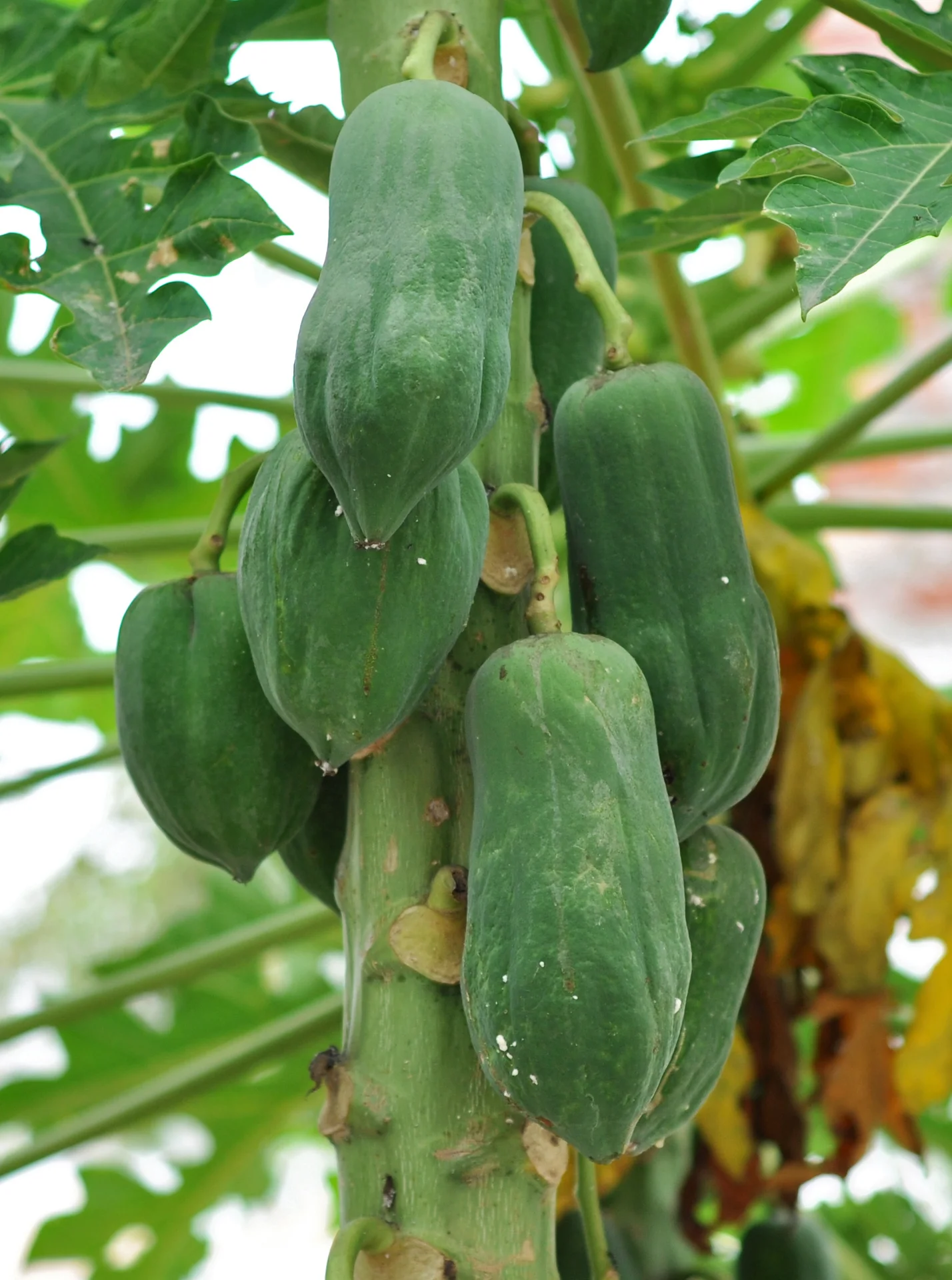
Photo: Joydeep · CC BY-SA 3.0
Papaya (pawpaw) is a fast, soft-stemmed tree you grow from seed. Unlike maize, which you plant and harvest once, a single papaya planting bears fruit for about three to four years, picking every few days. Two things make or break it. First, drainage: papaya roots drown and rot within a day or two in wet soil, so every tree must sit on a high, well-drained mound and never where water stands. Second, sex: each seedling grows up male, female, or hermaphrodite (carrying both male and female parts), and only female and hermaphrodite plants bear fruit — so you plant several seedlings on each mound and cut out the useless males once the flowers show you which is which.
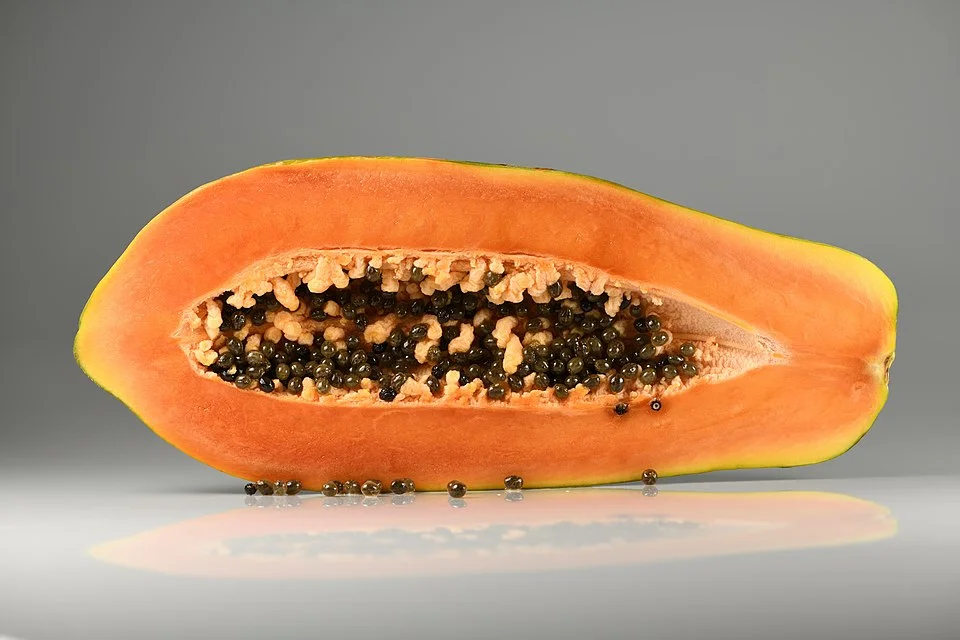
Ivar Leidus · CC BY-SA 4.0 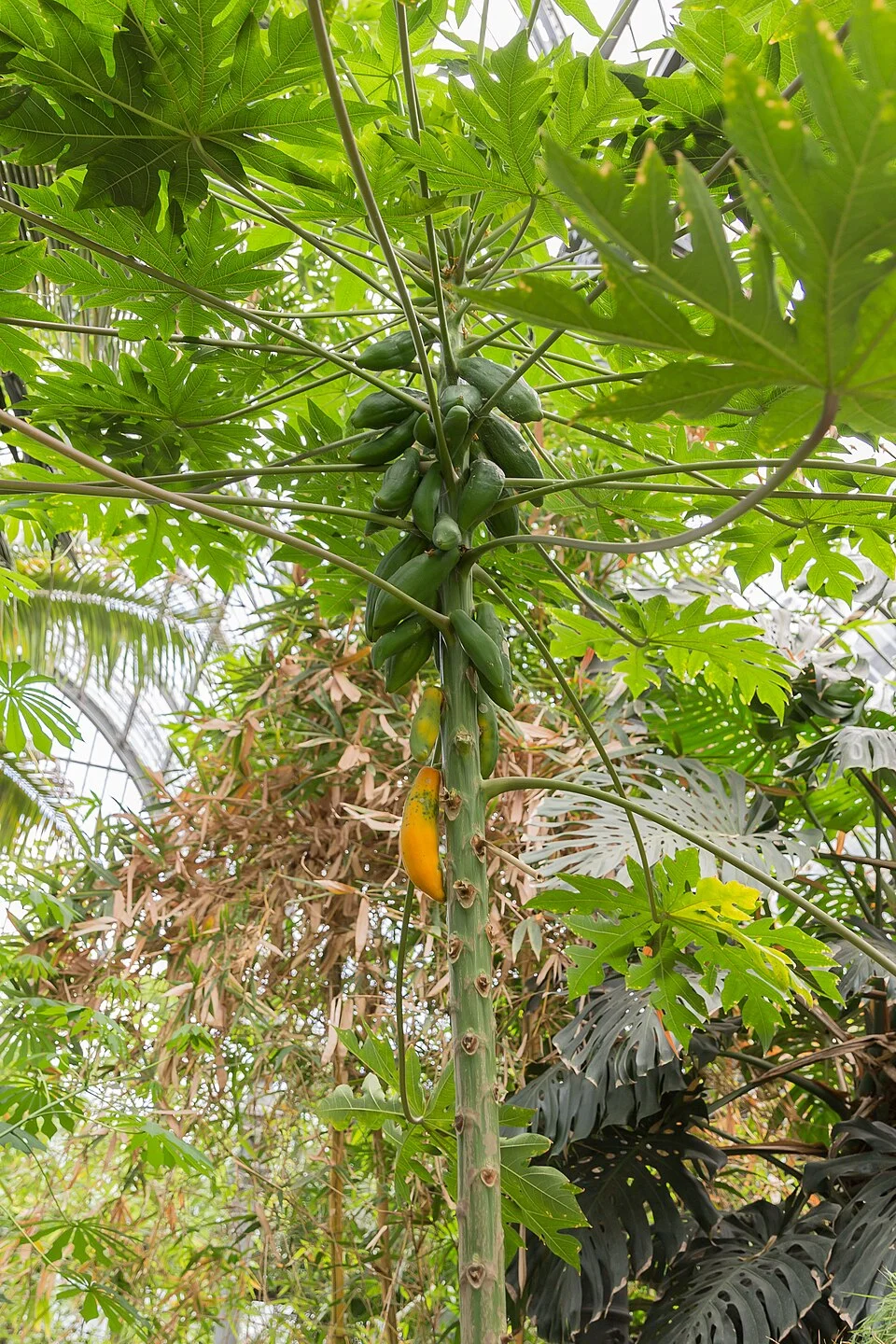
Another one of my pictures: This photograph was taken by Medium69 (William Crochot) and released under the license stated below. You are free to use it for any purpose as long as you credit the author (William Crochot), the Source (Wikimedia Commons) and the license (CC-BY-SA 4.0) in close relation · CC BY-SA 4.0
- Row spacing
- 250 cm
- Plant spacing in the row
- 250 cm
These are general figures for the crop, compiled from published agronomic references including FAO and CABI. The right choice for your field depends on your soil, rainfall and the yield you are aiming for.
Will papaya actually do well on your field? Check your own field against every crop in the catalogue — no signup. Run the crop check →
Also known as
Papaya is also called pawpaw.
- English
- pawpaw
- Afrikaans
- papaja
- Amharic
- papaya
- French
- papaye
- Hausa
- gwanda
- Portuguese
- mamão, papaia
- Shona
- popo, papaya
- Swahili
- papai, papaya
Working in buckets, bags or paces? The farming glossary turns the measures growers actually use into kilograms and hectares — what a 20 litre bucket of each crop really weighs, and how to size a field by walking it — alongside the Shona, Swahili, Ndebele and Yoruba words used in the field. Open the glossary →
Growing papaya, stage by stage
Your papaya is not a plant-once crop — one planting feeds you for three to four years. This guide runs from raising seedlings in a nursery, onto tall, well-drained mounds, through cutting out the males at flowering, to feeding, watering and picking ripe fruit week after week for the life of the tree.
Raise seedlings and drain the site
Papaya begins in a nursery, not in the field. In these first weeks you do two things that decide everything later: raise strong seedlings in a light, sandy mix, and — most important of all — get the ground drained by building high mounds before any seedling goes out. Papaya roots die within a day or two in soggy soil, so winning the drainage battle now wins you half the crop.
Sow the nursery Critical
Papaya is grown from seed, and it starts life in a nursery so you can baby the tender seedlings and pick out the good ones later. You cannot tell a seedling's sex from the seed — and only female and hermaphrodite plants ever bear fruit — so you raise several plants for every spot you will fill. Strong, healthy seedlings now become trees that take hold fast and fruit sooner.
Fill pots, polybags or a raised seedbed with a light, fast-draining mix — about half sand to half soil or compost. Heavy, wet soil rots papaya seedlings, so the mix must let water run straight through.
Sow 2–3 seeds in each pot, cover them shallow — about 1–2 cm, just a fingertip of mix over the seed — and press lightly. Use fresh seed; papaya seed loses its strength fast once it is old.
Keep the nursery warm, lightly shaded and just damp. The seeds are slow — they sprout in about 10–15 days, so don't give up and re-sow too early.
Sow 6–8 weeks before you plan to plant out, so the seedlings are a hand-span tall (about 20 cm) with 4–6 leaves by the time the mounds are ready.
- Do:
Sow more pots than the number of trees you want — you will throw away every male plant later, so start with plenty of spares.
- Tip:
A heavy, water-holding mix — the seedlings damp-off (rot and topple over at the soil line) and die. Cut it with plenty of sand.
- Watch out:
Keep the nursery out of harsh midday sun and lightly shaded until the seedlings are up and growing strongly.
Prepare well-drained mounds Critical
This is the single most important thing you do for papaya. The roots drown and rot within a day or two in soil that holds water, and once a trunk rots at the base the tree is finished. Planting on high mounds lifts the roots clear of standing water — it is the difference between a tree that lives for years and one that collapses after the first heavy rain.
Pick the best-draining spot you have — sandy or loamy ground, never a low place where water sits after rain. Avoid heavy clay bottoms.
Build a mound at each planting spot, knee-high or higher (50–75 cm) and about a stride wide (1 m). Loose, heaped soil lets water drain away from the roots fast.
Space the mounds two and a half strides apart (2.5 m), the same in both directions — papaya grows a broad crown and needs the room and the moving air.
Mix well-rotted manure or compost into each mound as you build it, so food is waiting when the roots spread out. Never use fresh manure — it burns the soft roots and brings weed seeds.
Build the mounds in the month before you plant out, so they settle firm before the seedlings go in.
- Do:
On flat, wet or clay land, build the mounds even higher and cut a channel between the rows to lead water away.
- Watch out:
If water ever stands around a mound after rain, dig a drain to let it out the same day — papaya will not wait.
Manage nursery watering Recommended
Papaya seedlings are killed as easily by too much water as by too little. Crowded, soggy pots bring damping-off — a rot that pinches through the stem right at the soil line and topples seedlings overnight. Steady, light watering keeps them growing without drowning them.
Water little and often — every 2–3 days — just enough to keep the mix damp, never wet. Let the surface dry a little between waterings.
Water in the morning, so the leaves and surface dry through the day. Seedlings left wet overnight rot far more easily.
Keep the pots spaced out, not crowded, with air moving between them. Thin, drawn, crowded seedlings damp-off fastest.
Look for damping-off: a seedling flopped over with a dark, pinched, water-soaked stem right at the soil line. Pull it out at once and ease off the watering so it doesn't spread to its neighbours.
- Tip:
Standing pots in a tray of water — the roots suffocate and rot. Let every pot drain freely.
- Watch out:
Seedlings toppling in patches is damping-off, not thirst — the cure is less water and more air, never more water.
Plant out and settle the trees in
Now the seedlings move from the nursery onto the mounds. Papaya roots are soft and easily torn, so you lift them with care, plant several on each mound, and water them in gently. These first months are all about steady moisture — never sodden — while the young roots take hold. Root rot in wet soil is the main thing that kills trees now.
Transplant several seedlings per hill + water in Critical
How you plant decides whether the tree ever thrives. Papaya roots tear easily and hate wet feet, so you plant several seedlings on each mound (you can't yet tell which will be female), set them at the right depth, and firm them in gently. Get it right and the tree races away; get it wrong and it sulks or rots at the collar.
Plant out when the seedlings are about a hand-span tall (20 cm) with 4–6 leaves and the mounds have settled. Do it in the cool of evening or on a dull, cloudy day, never in hot sun.
Water the pots an hour before, so the soil holds together and slides out without breaking the roots.
On top of each mound, plant 3–4 seedlings in a small group, a hand-span (20 cm) apart — you plant several because only females and hermaphrodites fruit, and you will keep the single best one later.
Set each seedling at the same depth it grew in the pot — no deeper. Burying the soft stem invites rot at the collar (the base, where stem meets root).
Firm the soil gently around each seedling and water it in to settle the roots. Keep the mounds two and a half strides (2.5 m) apart, as you laid them out.
- Do:
Handle seedlings by the leaves or the ball of soil, never by the soft stem — a pinched stem never recovers.
- Tip:
Planting deep or heaping soil against the stem — papaya's trunk rots easily; keep the collar at soil level and clear.
- Watch out:
Plant in the evening or on a cloudy day; midday sun on freshly-moved roots wilts and checks the seedlings.
Scout (root rot, aphids/PRSV) Recommended
In the first months two things quietly kill a young papaya: root rot in wet soil, and ringspot virus (a leaf-and-fruit disease) carried in by aphids. Both are far easier to stop early — a rotting plant you pull before it spreads, a virus plant you remove before aphids carry it down the row. Ten minutes a week protects the whole planting.
Walk the whole planting once a week, looking at every young tree — not just the ones beside the path.
Root rot: look for a seedling that wilts even though the soil is wet, with the base going soft and brown. Pull it and improve the drainage on that mound at once — water is standing where it shouldn't.
Ringspot virus (PRSV — Papaya Ringspot Virus): look for young leaves turning mottled yellow-and-green, crinkled or distorted, with oily, greasy streaks on the leaf stalks and stem. There is no cure — pull and destroy that plant the same day, before aphids spread it.
Aphids — tiny soft green or black insects that carry the virus — cluster on the soft growing tip and under young leaves. Lay shiny, reflective mulch (bright plastic or foil strips) around the plants to confuse them and keep them off.
- Do:
Pull a virus-looking plant immediately — one left standing seeds the whole field. Sprays do not cure or stop this virus.
- Watch out:
A young tree wilting in soil that is still wet is root rot, not thirst — the answer is better drainage, never more water.
Steady irrigation Recommended
Young papaya has shallow roots and needs steady moisture to grow away strongly — but the one thing it cannot survive is wet feet (waterlogged soil sitting around the roots). Your job is to keep the mound damp and never soggy. More young trees are lost here to over-watering than to drought.
Water every 3–5 days in dry weather — more often in heat and on sandy soil, less in cool or cloudy spells.
Check first with your finger: push it into the mound beside the plant and water only if the top few centimetres are dry. If it comes out muddy, skip the watering.
Water the base of the mound and let it soak in and drain through. Never let water pool around the stems.
After heavy rain, don't water at all for several days, and make sure no water is standing on the mounds.
- Tip:
Watering on a fixed day no matter the weather — a soaked mound after rain drowns the roots. Always feel the soil first.
- Watch out:
In the rains, your job flips from watering to draining — keep the channels open so water runs off.
Grow on, feed, and remove the males
The trees now shoot up fast. Two jobs define this stage. First, feeding begins — papaya is a hungry, fast grower that will soon fruit almost non-stop. Second, at about 5–6 months the flowers open and finally reveal each plant's sex — this is when you cut out the useless males and keep one good fruiting plant per mound. Keep watching for ringspot virus, spider mites and mealybug all the while.
Scout (PRSV, mites, mealybug) Critical
As the trees grow big and lush, ringspot virus is still the number-one danger, and now red spider mites and mealybugs move in too. This is the stage the virus does its worst damage, so scouting is critical — catch and pull a sick plant this week and you save the ones around it.
Walk the field every week, checking leaves top and bottom, stems and the growing tips.
Ringspot virus (PRSV): mottled yellow-green, crinkled, or thin, distorted 'shoe-string' leaves (leaves shrunk to narrow straps), plus oily streaks on the stems and leaf stalks. Pull and burn the plant the same day — don't wait, and don't waste money spraying; nothing cures it.
Red spider mite: leaves looking dusty, stippled and bronzed, with fine webbing underneath and tiny moving specks. Worst in hot, dry, dusty weather. Open the spider-mite guide if it is spreading.
Mealybug: white, waxy, cottony blobs on leaves, stems and fruit, with sticky honeydew (a shiny, sticky coating they leave behind) and black sooty mould. Spot-treat only the plants that have it — blanket spraying kills the tiny wasp that keeps mealybug down.
- Do:
Rogue (pull out and destroy) each plant on the first ringspot symptom — don't wait; sprays don't stop this non-curable virus.
- Tip:
Blanket-spraying for mealybug — it wipes out the natural wasp that controls it and makes the problem worse.
Sex-thin at flowering Critical
This is papaya's make-or-break job. Male plants never bear fruit — they only drink water and eat food while holding down a mound. At flowering (about 5–6 months after planting out) you can finally tell the sexes apart, so you cut out the males and keep one good fruiting plant on each mound. Skip this and mounds full of males give you nothing.
Wait until the plants flower, around 5–6 months after planting out — you cannot tell a plant's sex before the flowers open.
Read the flowers: male plants carry small flowers on long, branched, dangling stalks held well out from the trunk; female and hermaphrodite plants carry larger flowers tight against the trunk, and a female already shows a tiny round green fruit behind the flower.
On each mound, keep the single best female or hermaphrodite — sturdy, healthy, flowering close to the stem — and cut the rest off at ground level, males first.
If your variety is a dioecious type (separate male and female plants, not self-fruiting), keep just one male for every 10–25 females across the whole field to pollinate them; hermaphrodite types fruit on their own and need no male at all.
- Do:
Cut unwanted plants off at the base rather than yanking them out, so you don't tear the roots of the one you keep.
- Tip:
Keeping two plants 'to be safe' on one mound — they crowd and shade each other and both fruit poorly. One good plant per mound.
- Watch out:
Don't pull out every male if your plants are the separate-sex kind — you need a few for pollen, or the females set no fruit.
Begin monthly feeding Recommended
Papaya grows fast and will soon fruit almost without stopping, so it is always hungry. Regular monthly feeding from now builds a strong trunk and frame and sets up heavy fruiting. Starve it and the trunk stays thin and the fruit stays small.
Start feeding at about 3 months after planting out, then once a month. Your recommendation gives the exact fertiliser and amount for your trees.
Use a compound (N-P-K) fertiliser — papaya needs plenty of nitrogen, phosphorus and potassium together, and it will lean hardest on potassium (K) once fruiting starts.
Spread it in a ring around each tree, about an arm's length out from the trunk where the feeding roots reach — not against the stem, which it would rot.
Feed when the soil is moist (after watering or rain) and lightly work it in or water it, so it doesn't blow or wash away.
Keep boron in the picture — papaya needs this trace food, and your recommendation adds it if your soil is short. It stops lumpy, deformed fruit later on.
- Do:
Keep fertiliser off the soft trunk and off the leaves — piled against the stem it rots the collar; on wet leaves it scorches them.
- Tip:
Guessing extra boron — too much is a poison that burns the tree. Only ever apply the amount recommended.
- Watch out:
Wash your hands after handling fertiliser, and keep it away from food, water and children.
Flowering and setting fruit
Flowering runs on and on and turns into fruit. This is papaya's thirstiest, most delicate stage — dry soil or fierce heat now spoils the flowers and drops the young fruit. Keep the water steady, shift the feeding toward potassium, and make sure boron is there to stop lumpy, misshapen fruit.
Scout (PRSV, powdery mildew, boron deficiency) Recommended
As flowers and young fruit form, three things can ruin them: ringspot virus still, powdery mildew on leaves and young fruit, and a boron shortage that turns fruit lumpy and deformed. Spotting these early keeps your fruit clean, smooth and worth selling.
Walk the field every week, checking leaves, flowers and the first small fruit.
Powdery mildew: white, powdery patches on the leaves and on young fruit, as if dusted with flour. Worst in warm, humid, still weather. Open the mildew guide if it spreads.
Boron shortage: bumpy, lumpy or misshapen fruit, sometimes with milky sap weeping from young fruit, and thick, distorted young leaves. If you see it, correct the feeding — boron in the recommended dose fixes it.
Keep pulling any ringspot-virus plant (mottled, crinkled, distorted leaves; oily streaks on the stems) the same day you spot it.
- Do:
Make sure boron is adequate — it prevents bumpy fruit and carpellody (deformed, hollow, part-female fruit with an open seed cavity).
- Watch out:
If you spray for mildew, cover your skin, eyes and nose, spray in the cool with the wind at your back, keep it off fruit you'll eat soon (respect the pre-harvest interval — the set waiting time between spraying and safe picking), and wash after.
K-forward feed + boron Recommended
Fruiting papaya eats more potassium (K) than anything else — it is potassium that fills and sweetens the fruit. And a tiny amount of boron keeps the fruit smooth and well-shaped instead of lumpy. This monthly feed is what turns flowers into good, saleable fruit.
Once a month from first flowering, feed a potassium-forward compound — your recommendation gives the fertiliser and amount.
Spread it in a ring around each tree, an arm's length out from the trunk where the roots feed, kept off the soft stem.
Include boron exactly as recommended — it prevents the bumpy, misshapen fruit and the hollow, deformed fruit (carpellody) that boron-short trees make.
Feed onto moist soil and water it in; feeding into dry ground wastes it.
- Tip:
Adding extra boron 'to be safe' — the gap between enough and poison is small, so use only the recommended amount.
- Do:
Keep fertiliser off the trunk and off wet leaves, and wash your hands afterwards.
- Watch out:
Keep fertiliser away from food, water and children.
Steady irrigation Recommended
This is the one stage where water matters most. Let the soil dry out or the heat climb while the tree is flowering and setting fruit, and the flowers drop and the young fruit falls — you lose the crop those flowers would have become. Steady water now is the best-paid job of the whole season.
Keep the soil evenly moist — water every 5–7 days, more often in heat and on sandy soil. Never let the tree wilt while it is flowering.
Still never waterlog it — steady damp, not soaked. Water the base and let it drain; papaya drowns as easily as it wilts.
In a heat spell (above about 32–35 °C), papaya flowers can turn sterile and set no fruit — keep the soil moist to carry the tree through, and mulch the mound to hold moisture and cool the roots.
Feel the soil with your finger before each watering — water when the top few centimetres are dry, skip it when they're still damp.
- Watch out:
If you can water at only one stage of the whole crop, water now — through flowering and fruit set is when dry soil costs you the most fruit.
- Tip:
Swinging between bone-dry and flooded — the shock drops flowers and fruit. Aim for steady, even moisture.
Steady fruiting — keep it going for years
The tree now fruits continuously and will keep going for three to four years. The work settles into a steady rhythm: feed every month, keep the drainage open, and watch the two big fruit-spoilers — fruit flies and anthracnose rot. Waterlogging can still kill even a big tree, so never drop your guard on drainage.
Scout (fruit fly, anthracnose, root rot) Recommended
Now that fruit hangs on the tree, fruit flies sting and maggot it and anthracnose (a fungus) rots it as it ripens — both attack fruit you've already grown. And root rot can still take a whole tree in wet weather. Weekly scouting lets you clear spoiled fruit and fix drainage before the losses spread.
Walk the field every week, checking hanging fruit, fallen fruit and the trees themselves.
Fruit fly: small sting marks or soft, sunken spots on the fruit, with maggots inside and fruit that rots and drops early. Pick up and destroy every fallen and stung fruit — bury it deep or seal it in a bag in the sun; don't leave it lying, or the flies breed up. Traps and protein bait help.
Anthracnose: sunken, dark, round spots on ripening fruit that spread and may ooze pink. Remove and destroy the affected fruit, and keep the field clear of rotting fruit.
Root rot: a tree wilting or collapsing with its base going soft and brown, in wet ground. Improve the drainage on that spot straight away.
- Do:
Gather and destroy fallen and stung fruit every round — cleaning up is the cheapest, strongest fruit-fly control you have.
- Watch out:
Harvest at colour-break rather than dead-ripe on the tree — you beat the fruit flies and anthracnose to the fruit.
Monthly feed Recommended
A tree that fruits every week for years is feeding heavily all the time. Keep the monthly feed going and the fruit keeps coming, well-sized and steady; stop feeding and the tree tires, the fruit shrinks, and picking tails off.
Keep feeding once a month, right through the tree's life — your recommendation gives the fertiliser and amount for a bearing tree.
Stay potassium-forward, with boron, just as through flowering — that is what keeps the fruit filling well and smooth.
Spread it in a ring around each tree, an arm's length out from the trunk, kept off the stem, onto moist soil, and water it in.
As the tree gets bigger, make the ring wider — feed out where the spreading roots now reach, not tight against the old trunk.
- Do:
Keep fertiliser off the trunk and off wet leaves; wash your hands after, and keep it away from food, water and children.
- Tip:
Letting a heavy picking month go unfed — a bearing papaya that misses its feed makes smaller fruit the next month.
Maintain drainage Recommended
Papaya never outgrows its hatred of wet feet. Even a big, fruiting tree rots and dies within days if water sits around its roots after heavy rain. A quick drainage check every month or two, especially in the rains, keeps your trees standing.
Every month or two — and after every heavy storm — walk the field and look for water standing on or around any mound.
Open or dig drainage channels to lead water away from the mounds and off the field. Water must run off, never pool.
Top up the mounds where rain has washed them down, so each tree keeps sitting high and dry.
Clear weeds, trash or silt blocking the channels, so they actually carry the water away.
- Watch out:
If water ever stands around a trunk after rain, drain it the same day — papaya roots rot in a day or two, not weeks.
- Do:
Keep a light mulch on the mound for moisture in dry spells, but pull it back from the trunk so the base stays dry and airy.
Pick at colour-break
From the first fruit at about 8–11 months, and on through the tree's life, you pick every few days. The whole trick is timing: pick at colour-break, the moment the first yellow shows, so the fruit ripens sweet off the tree and travels without bruising. Handle it gently — the milky latex (sap) stains and can burn skin.
Harvest at colour-break (3–4×/week) Critical
Pick too green and the fruit never ripens sweet; pick too ripe and it bruises and rots before it reaches market. Colour-break — the very first yellow — is the sweet spot: the fruit is mature enough to ripen properly yet firm enough to carry. Getting this moment right, several times a week, is where your money is made or lost.
Check the trees 3–4 times a week and pick fruit at colour-break — when the first one or two yellow streaks appear at the blossom (bottom) end of a still-green fruit.
Confirm with the latex (the milky sap): a tiny nick near the stem should run watery and clear, not thick and milky. Thick, milky sap means the fruit is still too green.
Cut or gently twist the fruit off with a short piece of stalk left on. Handle it like eggs — papaya bruises easily and every knock turns into a rot spot.
Protect your skin and eyes from the latex — it stains cloth and can burn skin. Pick into a padded basket, and wash any sap off your hands.
If no yellow has shown and the sap is still thick and milky → leave that fruit on the tree and check again in 2–3 days. Picked dead-green, it shrivels instead of ripening sweet.
- Do:
Pick at colour-break, when a nick of latex runs watery rather than thick and milky — that is your ripeness signal.
- Tip:
Waiting for fruit to turn fully yellow on the tree — it goes soft, bruises, and fruit flies and birds get it first.
- Watch out:
Pick in the cool of the morning and keep the fruit out of the sun — papaya softens fast in the heat.
Clean, cool and store the fruit
Papaya is soft, perishable and ripens fast — most of what you lose is lost after picking. Wash off the sticky latex, handle the fruit gently in a single layer, and cool it — but never cold — and it reaches market whole. A hot-water dip stops the anthracnose rot that shows up in transit.
Wash off latex, handle gently & cool Recommended
The fruit is grown — now don't lose it in the last stretch. Latex stains the skin of the fruit, rough handling bruises it, heat ripens it too fast, and anthracnose rots it on the way to market. A little care in the hours after picking is the difference between fruit that sells and fruit that spoils.
On the same day you pick, gently wash the latex (milky sap) off the fruit in clean water and let it dry — the streaks stain and mark the skin.
Sort out any stung, bruised or spotted fruit for eating at home, so only clean fruit goes to market.
Anthracnose control: if you can, dip the fruit in hot water at about 46–48 °C for around 20 minutes — warm-bath temperature, not boiling — to stop the rot that shows as dark, sunken spots as the fruit ripens.
Pack in a single layer in padded or lined crates — never piled deep, or the bottom fruit crushes. Keep it in the shade, out of the sun.
Store and move it cool, at about 10–12 °C if you can — but never colder than about 10 °C, or cold injures the fruit, spoils it and stops it ripening.
- Tip:
Chilling the fruit below about 10 °C — it causes cold injury and the fruit never ripens properly.
- Do:
A hot-water dip (about 46–48 °C for ~20 minutes) controls anthracnose; then keep the fruit cool at 10–12 °C.
- Watch out:
Papaya ripens fast — move it to market quickly; even a day in the heat softens it past selling.
Pests and diseases that attack papaya


Where to sell papaya
Markets that trade this crop — what each one sells it by, when supply peaks there, and the currency used.


Grow papaya with a plan, not a guess
This guide is the general answer. Divisi works out yours — the week to plant papaya on your soil and your rainfall, and each job dated for your field.


When to plant papaya, country by country
- When to plant papaya in Algeria
- When to plant papaya in Angola
- When to plant papaya in Benin
- When to plant papaya in Botswana
- When to plant papaya in Burkina Faso
- When to plant papaya in Burundi
- When to plant papaya in Cabo Verde
- When to plant papaya in Cameroon
- When to plant papaya in Comores
- When to plant papaya in Congo
- When to plant papaya in Côte d'Ivoire
- When to plant papaya in Egypt
- When to plant papaya in Eritrea
- When to plant papaya in Eswatini
- When to plant papaya in Ethiopia
- When to plant papaya in Gabon
- When to plant papaya in Gambia
- When to plant papaya in Ghana
- When to plant papaya in Guinea Ecuatorial
- When to plant papaya in Guinea-Bissau
- When to plant papaya in Guinée
- When to plant papaya in Kenya
- When to plant papaya in Liberia
- When to plant papaya in Libya
- When to plant papaya in Madagascar
- When to plant papaya in Malawi
- When to plant papaya in Mali
- When to plant papaya in Mauritanie
- When to plant papaya in Mauritius
- When to plant papaya in Morocco
- When to plant papaya in Moçambique
- When to plant papaya in Namibia
- When to plant papaya in Niger
- When to plant papaya in Nigeria
- When to plant papaya in Rwanda
- When to plant papaya in République centrafricaine
- When to plant papaya in République démocratique du Congo
- When to plant papaya in Sao Tome and Principe
- When to plant papaya in Seychelles
- When to plant papaya in Sierra Leone
- When to plant papaya in Somalia
- When to plant papaya in South Africa
- When to plant papaya in South Sudan
- When to plant papaya in Sudan
- When to plant papaya in Sénégal
- When to plant papaya in Tchad
- When to plant papaya in Togo
- When to plant papaya in Tunisie
- When to plant papaya in Uganda
- When to plant papaya in United Republic of Tanzania
- When to plant papaya in Zambia
- When to plant papaya in Zimbabwe
Where papaya scores best
Districts where Divisi's engine currently rates this crop highest, ranked by fit.
-
 Hamahamet-Mboinkou
 -
 Zanaga
 -
 Moanda
 -
 Mougoutsi
 -
 Ambaca
 -
 Sanquin Dist #3
 -
 Bukoba
 -
 Nyaribari Chache
 -
 Nsork
Nsork -
 Praslin
 -
 Ugu
Ugu -
 Mahanoro
Get Insights by email
A short digest of new Divisi articles. No email on quiet weeks.
Frequently asked questions
How do I grow papaya?
How to grow papaya: 250 cm rows. Also called pawpaw, papaja, papaye, gwanda, mamão, popo, papai.
What is papaja in English?
Papaja is the Afrikaans name for papaya.
What is papaya in English?
Papaya is the Amharic name for papaya.
What is papaye in English?
Papaye is the French name for papaya.
What is gwanda in English?
Gwanda is the Hausa name for papaya.
What is mamão in English?
Mamão (also papaia) is the Portuguese name for papaya.
What is popo in English?
Popo (also papaya) is the Shona name for papaya.
What is papai in English?
Papai (also papaya) is the Swahili name for papaya.
What spacing should I use for papaya?
Space papaya rows about 250 cm apart, with roughly 250 cm between plants within the row.
What pests and diseases attack papaya?
The ones covered in this guide are Fruit flies, Papaya mealybug, Papaya ringspot virus. Each has its own page explaining how to identify, check for and control it.