 Divisi
Stem-end rot
· Fungal
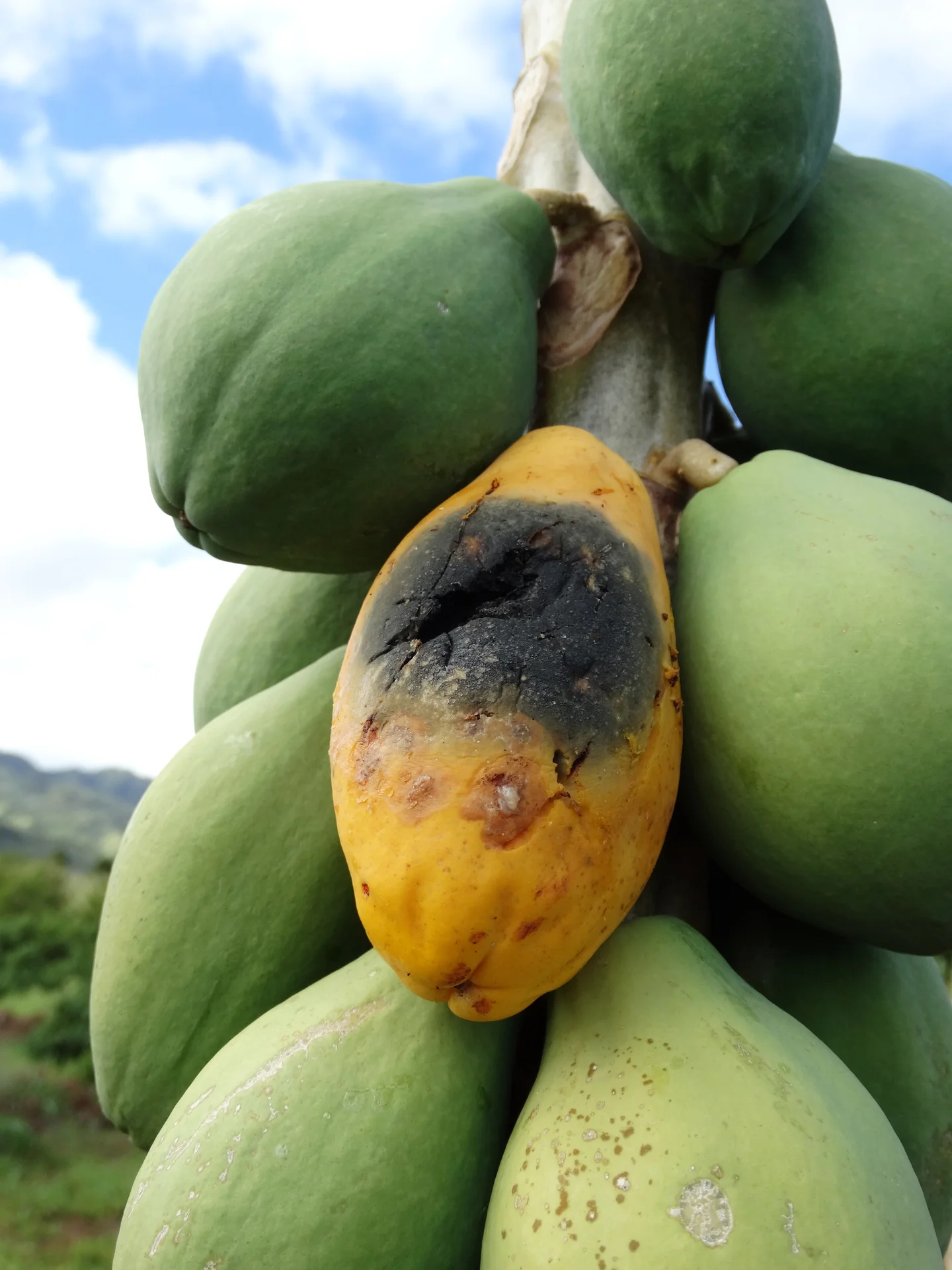
Photo: Scot Nelson from USA · CC0
Stem-end rot is a fungal rot of tree fruit (mango, avocado, citrus, papaya and banana) caused by fungi such as Lasiodiplodia, Dothiorella, Phomopsis and Colletotrichum. The fungus lives in dead wood and dieback in the tree and quietly infects the fruit stalk and button while the fruit is still on the tree. The infection then sleeps (stays latent — hidden and doing nothing you can see) until the fruit ripens, when a soft brown-black rot spreads out of the stem end into the flesh. It is above all a postharvest disease: the damage you paid for in the orchard shows up in the store, the truck and the market.
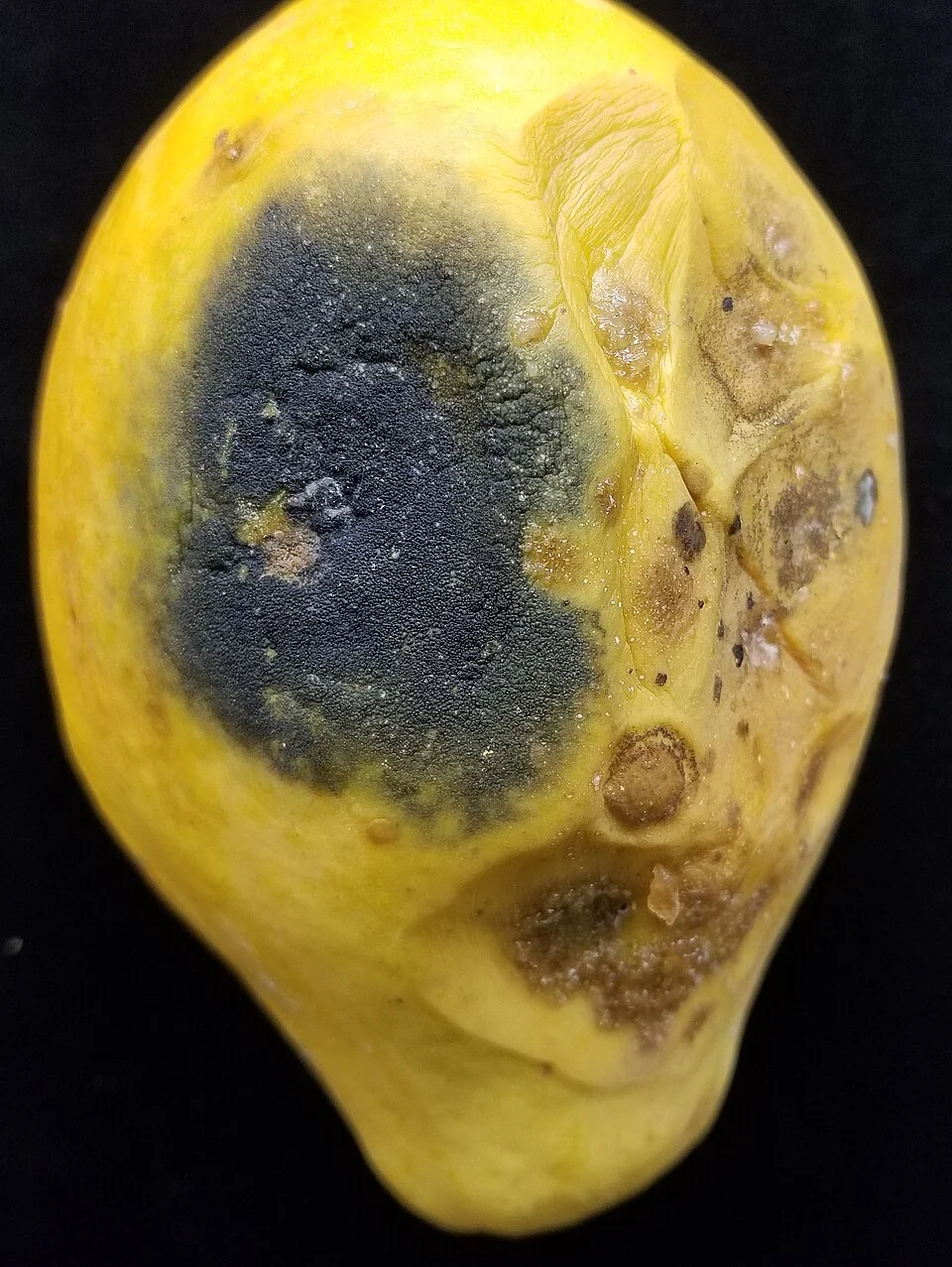
Scot Nelson · CC0
Why it matters
Stem-end rot is a thief that robs you after the hard work is done. Because the fungus sneaks in at the button while the fruit is still green and then hides, the fruit can look perfect when you pick it and pack it — then rot from the stalk end in the store, the truck or on the market table, so you can lose up to 4 in every 10 fruit (40%) after harvest. That is money already spent on growing, picking and transport, thrown away at the last step. It is hard to fix once it has taken hold because you cannot see the hidden infection to sort it out, and no spray reverses a rot that has already started — the whole fight has to be won before and during harvest, not after.
When to act
A postharvest fruit disease; act pre-emptively with orchard sanitation, careful harvest and cool handling rather than a field count, as rot appears mainly after harvest.
This guidance is general, compiled from published agronomic references including FAO and CABI. Thresholds and timing shift with your crop, your variety and the season.
In much of the region a spray is simply called mushonga — medicine. But a chemical group you cannot name is one you cannot rotate, and a product you did not write down has no pre-harvest interval you can observe. Mushonga, and other farming words →
The full Stem-end rot field guide
Identify it
The first and clearest sign
a dark brown to black, soft, wet rot that begins right at the stem end — the button where the stalk joined the fruit — and spreads out from there like a stain into the sound flesh. Press it and it gives way, mushy and watery, not firm. This almost always shows up as the fruit ripens in the store, the crate or on the way to market, not on the tree.
As it spreads
the dark patch grows outward from the button in a widening ring or tongue. Cut the fruit open and you will see the brown, water-soaked decay reaching in from the stalk end deeper than the skin colour suggests. In warm, damp conditions a grey-to-black fuzzy or sooty fungal growth may appear on the skin at the stem end.
On the tree, look for the source
dead twigs, dying branch tips (dieback) and dead bark or wood in the canopy. This is where the fungus lives and breeds — a tree full of dead wood is feeding the rot into your fruit.
Don't confuse it with anthracnose
anthracnose makes small, round, sunken black spots scattered anywhere over the fruit skin (often with a pinkish ooze), while stem-end rot starts at the button and spreads as one broad rotting front from the stalk end. Also don't confuse it with plain bruising or chilling damage — those come from a knock or from cold, are not centred on the stem end, and do not have the spreading soft-rot edge.
Scout for it
When to watch hardest
in the late season, from the last weeks before harvest right through picking, storage and transport — that is when the fruit is most at risk, especially in warm, humid weather (about 20–32°C) near harvest and in warm stores or trucks. Warm plus damp plus ripe is exactly when a hidden infection wakes up.
This is a postharvest rot, so you cannot count it in the field like a caterpillar
— the infection is hidden while the fruit is green. Instead, scout in two places: the trees (for the source) and your harvested and ripening fruit (for the outcome).
Scout the trees
walk a large "W" across the orchard so you cover all corners and the middle, stopping at about 10 trees. At each stop look up into the canopy for dead wood, dieback and dead bark. If you are seeing dead wood in more than about 1 in 5 trees (20%), treat that as your signal to prune and sanitise now — that dead wood is your rot factory.
Check the fruit as it ripens
take a sample of harvested fruit — about 20 fruit — let them ripen, and watch the stem end. Cut a few open at the button. If about 1 in 5 (or more) start to rot from the stem end, take it as a clear warning that your orchard sanitation, harvest handling and cool chain need tightening for the rest of the harvest.
Feel the temperature of your handling
if fruit is sitting warm and un-cooled for hours after picking, or riding in a hot crate or truck, count that as high risk even before you see rot — heat is what lets the latent fungus race.
Control it
Prevent first — clean up the tree (your strongest non-chemical tool):
prune out all dead wood, dead branch tips and dieback and carry it away from the orchard, and keep trees healthy and unstressed. This is the single best lever because it removes where the fungus lives and breeds, lowering the inoculum (the fungus's "seed" — the spores that start new infections) before it ever reaches the fruit.
Harvest kindly and dry
pick in dry conditions (never off wet, dewy trees), leave a short, clean stalk and do not bruise or tear the button — every wound at the stem end is a door for the rot. Handle fruit gently; rough handling spreads and speeds decay.
Break the warmth — cool and move fast:
get fruit out of the sun and cooled promptly after picking, keep it cool right through storage and transport (the cool chain), and sell and move it quickly. Warm, ripe, slow-moving fruit is what turns a hidden infection into a rotten one.
Sanitise the packing side
keep packhouse wash water, crates and packing lines clean — dirty water and dirty crates carry spores from bad fruit to good. Clean, cool handling slows the rot from taking hold in the bin.
Chemical — a last resort, only where recommended:
where advised, apply a fungicide as pre-harvest field sprays and/or a postharvest dip, or a hot-water dip, strictly per the label, to knock back the latent infections that sanitation and handling alone cannot reach. Safety: cover your skin, eyes, nose and mouth; mix and spray in the cool of the day with the wind at your back; keep it away from food, drinking water, children and bees; respect the pre-harvest interval (the minimum number of days the label says must pass between the last spray and picking, so no chemical remains on the fruit you sell); and wash yourself and your clothes well afterwards. Resistance: do not lean on one chemical — rotate to a different fungicide group between uses so the fungus does not learn to survive it.
If it keeps spreading
if fruit is still rotting from the stem end after you have cleaned up dead wood, tightened harvest and cooling and (where allowed) treated, sort ruthlessly — pull and destroy every rotting fruit so it cannot infect the rest, sell the sound fruit fast and locally rather than risking a long warm journey, and go back to the trees: heavy repeat rot means there is still dead wood and dieback feeding it, so prune harder and keep the trees healthy before the next season. When a batch is too far gone, cut your losses early — bin the rotten fruit, keep it away from the clean fruit, and protect next season's crop rather than chasing this one.
Catch Stem-end rot before it costs you the harvest
This guide is the general answer. Divisi works out yours — the week to scout your own field for Stem-end rot, and what to do the day you find it.


Crops it affects
Plan the crops it attacks
-
 When to plant Avocado in Cassongue
 -
 When to plant Mango in South Imenti
 -
 When to plant Papaya in Hamahamet-Mboinkou
All planting calendars, country by country
Get Insights by email
A short digest of new Divisi articles. No email on quiet weeks.
Frequently asked questions
How do I identify Stem-end rot?
The first and clearest sign. a dark brown to black, soft, wet rot that begins right at the stem end — the button where the stalk joined the fruit — and spreads out from there like a stain into the sound flesh. Press it and it gives way, mushy and watery, not firm. This almost always shows up as the fruit ripens in the store, the crate or on the way to market, not on the tree.
When should I take action against Stem-end rot?
A postharvest fruit disease; act pre-emptively with orchard sanitation, careful harvest and cool handling rather than a field count, as rot appears mainly after harvest.
How do I control Stem-end rot?
Prevent first — clean up the tree (your strongest non-chemical tool):. prune out all dead wood, dead branch tips and dieback and carry it away from the orchard, and keep trees healthy and unstressed. This is the single best lever because it removes where the fungus lives and breeds, lowering the inoculum (the fungus's "seed" — the spores that start new infections) before it ever reaches the fruit.
Which crops are attacked by Stem-end rot?
Among the crops covered here: Avocado, Mango, Papaya.