 Divisi
Papaya ringspot virus
Papaya ringspot virus · Viral
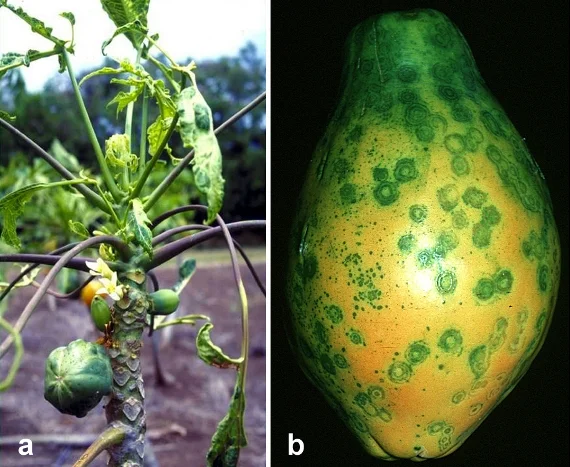
Photo: APS · Public domain
Papaya ringspot virus is a virus (a tiny germ that lives inside the plant's sap) carried from tree to tree by aphids — small soft green or black insects that suck plant juice. The aphid picks up the virus and passes it on within seconds of tasting a leaf, so once a tree is infected it stays infected for life; you cannot cure it. Sick trees show yellow-and-green mottled leaves, oily streaks on the stems, and rings on the fruit, and both yield and fruit quality fall away.
Plant pests and diseases · CC0 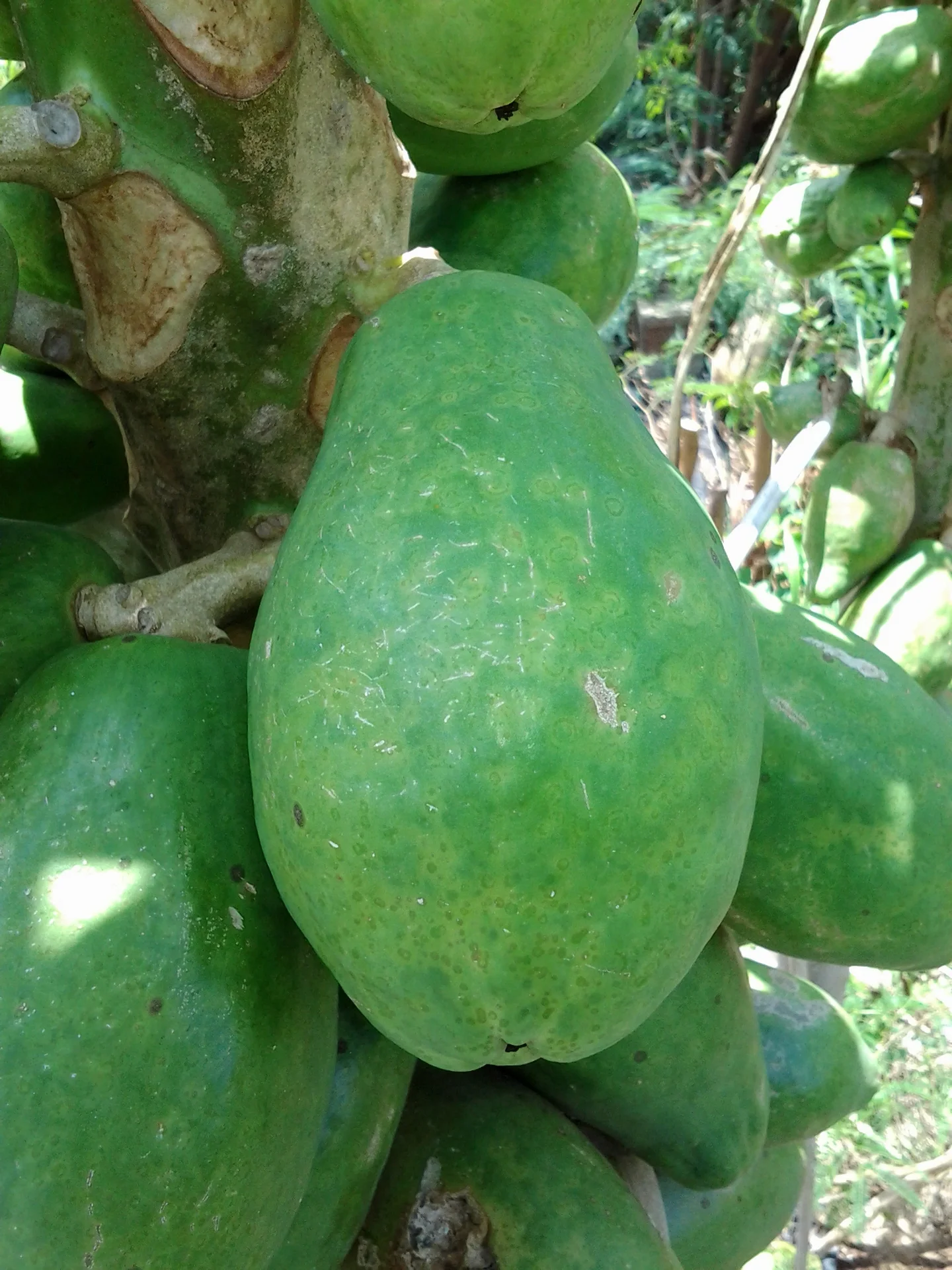
Plant pests and diseases · CC0
Why it matters
Once a papaya tree catches ringspot it is sick for life — there is no medicine that cures it, and a bad outbreak can wipe out as much as 80% of your harvest. The fruit turn lumpy and bitter with ugly rings, so even what you do pick is hard to sell. It spreads fast because tiny aphids carry the virus from a sick tree to a healthy one in seconds, and spraying to kill those aphids does not stop it — so the only real defence is stopping it before it arrives and pulling out sick trees early.
When to act
First mosaic or oily streaking on young leaves; rogue infected trees immediately, as spread is by transient aphid probes and cannot be stopped by spraying the vector.
This guidance is general, compiled from published agronomic references including FAO and CABI. Thresholds and timing shift with your crop, your variety and the season.
In much of the region a spray is simply called mushonga — medicine. But a chemical group you cannot name is one you cannot rotate, and a product you did not write down has no pre-harvest interval you can observe. Mushonga, and other farming words →
The full Papaya ringspot virus field guide
Identify it
What you see first
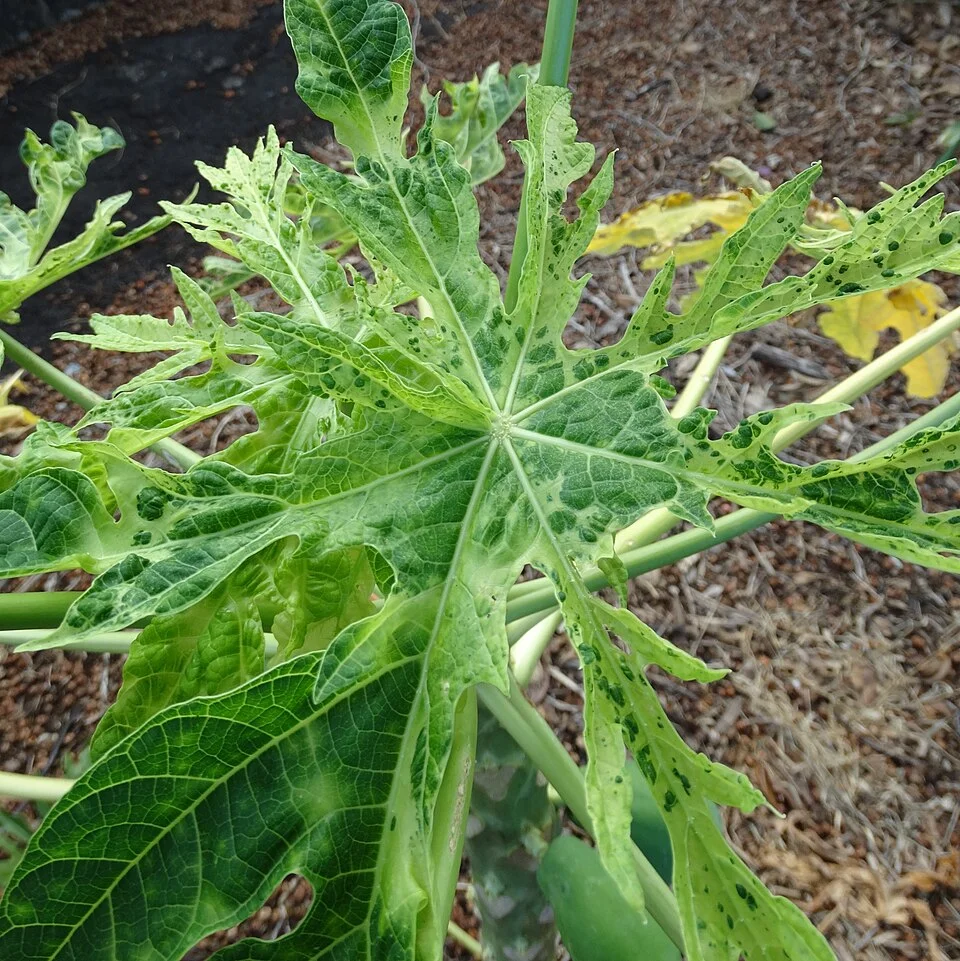
on the youngest leaves at the top of the tree, a mixed pattern of light-yellow and dark-green patches — like a mosaic or army camouflage. Hold a young leaf up to the light and the small veins look pale and clear, as if washed out.
As it spreads
the young leaves grow crinkled and twisted, and the deep finger-lobes shrink down to thin straps — people call it the "shoestring" look, like the leaf has been cut into laces. The tree stops growing tall and stays stunted.
The give-away on the stem
dark oily or greasy streaks run along the leaf stalks (petioles) and the top of the trunk, as if someone smeared them with wet grease. This oily streaking is the surest sign it is ringspot and not something else.
On the fruit
faint rings and C-shaped circles appear on the skin — like water-marks or bruises in a ring pattern. The flesh loses its sweetness and turns lumpy.
Don't confuse it
with plain hunger (nitrogen shortage), which yellows the oldest bottom leaves evenly with no mosaic and no oily streaks; or with mite or thrip damage, which bronzes and speckles the leaf but never gives the greasy stem streaks or the fruit rings. Ringspot always hits the young top leaves first and leaves the tell-tale oily streaks.
Scout for it
When to look
start once your trees enter their growing and fruiting life — from active leaf-and-shoot growth, right through mid-season and late-season fruiting — because a tree can be caught at any point in these stages, and aphids fly most in warm weather (about 22-33°C).
How to walk
once a week, walk a large "W" shape across the block so you pass through all four corners and the middle — not just the trees by the path. Make about 10 stops along the way.
What to check at each stop
look at the newest top leaves of the tree for the yellow-green mosaic and pale clear veins, run your eye down the leaf stalks and trunk for oily streaks, and check any fruit for ring marks.
Your action number
the moment you find even ONE tree with fresh mosaic or oily streaking on its young leaves, act that same day. There is no "wait and see" — one sick tree is a source that infects the rest. (Don't count on aphid numbers: because the virus jumps in seconds, one probe is enough.)
Also scout the neighbours
check for old papaya trees and any cucurbit crops (pumpkin, cucumber, melon, squash) near your block — these can quietly hold the virus and feed it to your young trees.
Control it
Prevent
-
start clean:
plant only virus-free seedlings from a trusted source, and isolate a new block well away from older papaya trees and from cucurbits (pumpkin, cucumber, melon, squash), which carry the same virus. Clean starting material and separation are your strongest, cheapest protection.
-
grow a resistant variety:
where you can get resistant or tolerant papaya varieties, plant them — this is the most durable protection of all, because the tree itself shrugs off the virus even when aphids visit.
Slow the aphids without spraying them
ring your block with a barrier or border crop (a taller non-host planting) and lay reflective/silver mulch on the ground — the shine confuses incoming aphids and cuts down landings. Remember: killing the aphids with insecticide does not stop this virus, because it is passed on in seconds before any spray can act, so do not waste money spraying the vector.
Act early — rogue the sick trees:
as soon as you spot the first mosaic or oily streaks, pull out (rogue) that whole tree and destroy it — chop and bury it or burn it, don't leave it lying in the field. Do this the same day you find it. Every sick tree left standing is a fresh supply of virus for the aphids to carry on.
No chemical cures this
— there is no spray that heals an infected tree or reliably blocks the virus, so don't be sold a "cure". The honest tools are clean seedlings, resistant varieties, separation, barriers, and fast roguing.
If it keeps spreading
keep walking the field and roguing every new sick tree without delay, and tighten your isolation from cucurbits and old papaya. When most of a block is infected and stunted, cut your losses — clear out the whole block, rest the ground away from papaya and cucurbits, and replant clean, resistant seedlings in a fresh, isolated spot rather than nursing a doomed stand.
Catch Papaya ringspot virus before it costs you the harvest
This guide is the general answer. Divisi works out yours — the week to scout your own field for Papaya ringspot virus, and what to do the day you find it.


Crops it affects
Plan the crops it attacks

All planting calendars, country by country
Get Insights by email
A short digest of new Divisi articles. No email on quiet weeks.
Frequently asked questions
How do I identify Papaya ringspot virus?
What you see first. on the youngest leaves at the top of the tree, a mixed pattern of light-yellow and dark-green patches — like a mosaic or army camouflage. Hold a young leaf up to the light and the small veins look pale and clear, as if washed out.
When should I take action against Papaya ringspot virus?
First mosaic or oily streaking on young leaves; rogue infected trees immediately, as spread is by transient aphid probes and cannot be stopped by spraying the vector.
How do I control Papaya ringspot virus?
Prevent — start clean:. plant only virus-free seedlings from a trusted source, and isolate a new block well away from older papaya trees and from cucurbits (pumpkin, cucumber, melon, squash), which carry the same virus. Clean starting material and separation are your strongest, cheapest protection.
Which crops are attacked by Papaya ringspot virus?
Among the crops covered here: Papaya.