 Divisi
Mosquito bug (Helopeltis)
Helopeltis · Insect
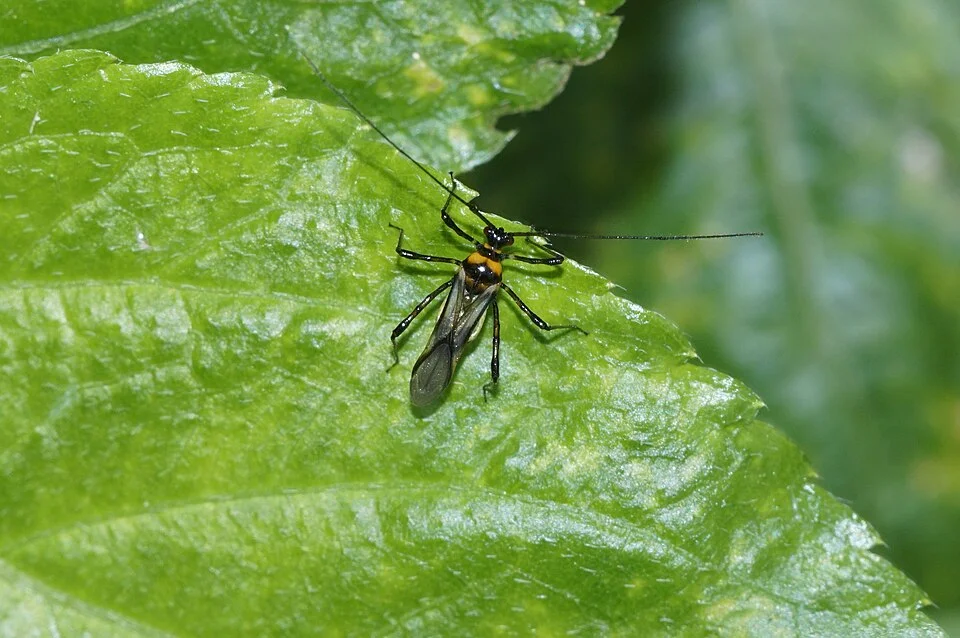
Photo: Vengolis · CC BY-SA 4.0
The mosquito bug (Helopeltis) is a slender, long-legged sap-sucking bug — about the size of a mosquito, with a tiny pin-like knob standing straight up on the middle of its back — that attacks tree and bush crops such as cashew, cocoa, tea, guava and black pepper. Both the young bugs (nymphs) and the winged adults stab the soft new leaves, flower sprays and young nuts or fruit and inject a toxic spit that kills the tissue around each puncture, leaving dark, sunken, scabby spots. When it strikes during flushing and flowering it blackens the flower sprays, deforms and drops the young fruit, and kills back the shoot tips.
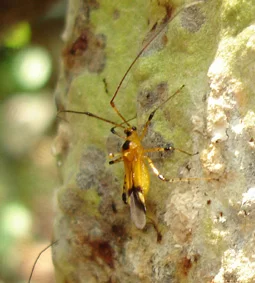
Roy Bateman · CC BY-SA 3.0 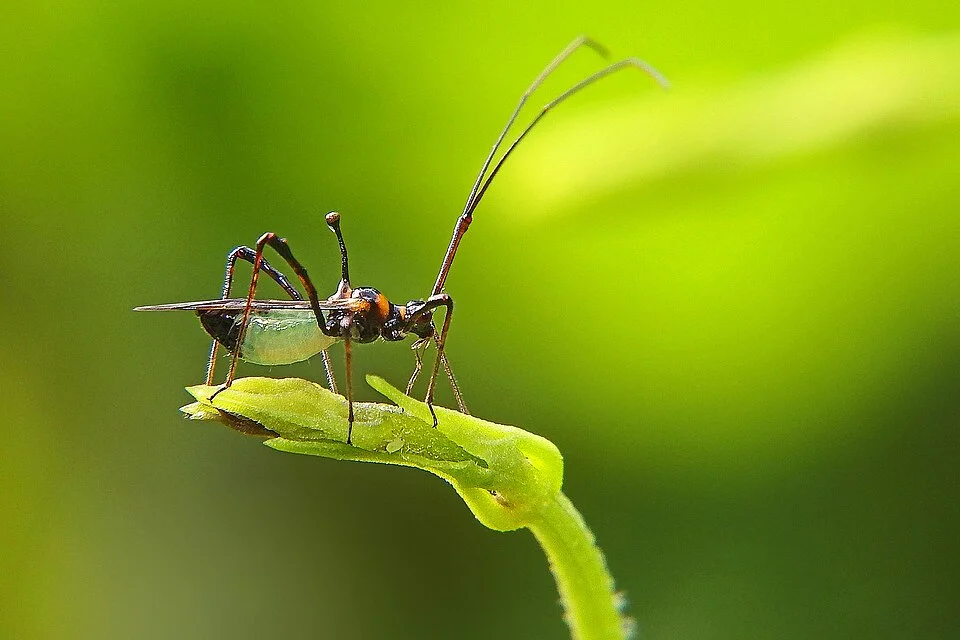
Rison Thumboor · CC BY-SA 4.0
Why it matters
The mosquito bug is one of the worst pests of cashew, cocoa and tea — a heavy hit during flowering and fruiting can wipe out more than half your crop (up to 60%). It is hard to shake once it settles in: your trees keep pushing out the soft new flush and flowers that feed it, the bugs are shy and hide on the shaded underside where you miss them, and a blackened flower spray or a scarred young nut never heals — that yield is simply gone. Its feeding wounds also let dieback rots in, killing the shoot tips from the top down. That is why opening up the canopy and catching it early, on the new flush, matters far more than spraying once the damage is already done.
When to act
Fresh feeding lesions on new flush, panicles or young nuts and fruit, or bugs seen on tender shoots during flushing and flowering.
This guidance is general, compiled from published agronomic references including FAO and CABI. Thresholds and timing shift with your crop, your variety and the season.
In much of the region a spray is simply called mushonga — medicine. But a chemical group you cannot name is one you cannot rotate, and a product you did not write down has no pre-harvest interval you can observe. Mushonga, and other farming words →
The full mosquito bug (Helopeltis) field guide
Identify it
Look at the soft new leaves and shoot tips first
The earliest sign is many small dark-brown to black sunken spots and streaks, like little scabs or dried water-blisters, often bunched together where the bug fed over and over. A fresh spot may weep a bead of gum or look water-soaked, then dries down to a black, sunken scar.
Then check the flower sprays and young fruit
On the flower sprays (the panicles — the branched heads of tiny flowers) the flowers blacken and dry up — this is called 'blight' — and set no nuts or fruit. On young nuts and fruit you see rough, scabby, cracked, corky patches, and many of the small ones drop off. Badly hit shoot tips curl, wilt and die back from the tip downward.
The bug itself
is slender and long-legged — about the size of a mosquito, roughly 6–10 mm long — with thread-like feelers (antennae) longer than its own body. Its give-away is a tiny pin or nail standing straight up on the middle of its back; no other bug on your crop carries this. Colour varies: on cashew it is often a reddish-orange front body, a dark head and black-and-white banded legs; on tea it looks more greenish-brown.
The young bugs (nymphs — the wingless, not-yet-grown stage)
are just a smaller copy of the adult: pale yellow to reddish, slightly fuzzy, and they run fast, almost like tiny ants. The mosquito bug is shy — it hides on the shaded underside of shoots and is easiest to spot in the cool of early morning or late afternoon. In the hot middle of the day it hides, and when you disturb it, it darts to the far side of the shoot, drops, or flies off.
Don't confuse it
It is not a true mosquito — it does not bite people, it is bigger, and it carries that pin on its back. Its spotting can look like anthracnose dieback (a fungus disease), but the fungus spreads as soft blotches in wet weather and leaves no insect behind — with the mosquito bug you find separate puncture-spots plus the slender bug itself on the tender growth. Silvery, scratchy leaf-bronzing with no sunken black spots is thrips or mites, not this pest.
Scout for it
Scout hardest when the tree is tender
when it pushes out new flush (the soft reddish new leaves and shoot tips) and when it is flowering and setting young nuts or fruit. These are the two windows when the bug feeds and breeds, so go through them at least twice a week — not just now and then.
Go out in the cool of early morning or late afternoon
, when the bugs are active and out in the open. In the hot middle of the day they hide on the shaded underside and you will walk straight past them.
Walk a large 'W' across the plot
so you cover all four corners and the middle — not only the trees along the path. Stop at about 10 trees spread along the way.
At each tree, look closely at 3–5 tender shoots
and every flower spray and young nut or fruit cluster you can reach, turning them over to check the shaded underside. Hunt for the fresh dark sunken spots and for the slender long-legged bug with the pin on its back.
Even 1 fresh bug — or 1 patch of fresh dark sunken spots — on the new flush or flowers is enough to act
You do not wait for many. Put simply: if you find fresh feeding or a live bug on about 1 in 10 trees during flushing or flowering, start control now. This pest builds fast and does its worst quietly, so early is everything.
Control it
Prevent it — open up the tree
The mosquito bug loves warm, damp, shady, crowded canopies (still, humid air is where it thrives). Prune your trees so light and air pass right through, cut out crowded and dead wood, and clear weeds and bushy plants around them. A drier, airier canopy is far less welcoming to the bug.
Take away its food and hiding
Pull out nearby other host plants it also lives on (other bushy hosts and volunteer seedlings), and where you can, help the tree flush all at once instead of dribbling out soft new growth non-stop — a short, even flush gives the bug less tender food to jump between. The moment you see them, cut off and burn or bury the worst blackened shoots and blighted flower sprays — this takes out bugs and damage in one move.
Protect your natural helpers — above all the weaver ants
In cashew, the reddish weaver ants (Oecophylla) that stitch leaves into nests up in the tree are a proven control: they patrol the shoots all day long and drive off and eat the bugs. Do not destroy their leaf-nests, and tie strings or lean branches between trees so the ants can spread from tree to tree. Spiders and other small predators help too — so avoid broad, everything-killing poisons that wipe them out.
Spray only as a last resort — and time it right
If your scouting hits the threshold during flushing or flowering and the natural helpers cannot hold it, use a registered insecticide (one approved for your crop and this pest), aimed to cover the tender flush, flower sprays and young fruit where the bugs actually feed. Spray in the cool, still hours of early morning or evening. It is the strongest tool, but it also kills weaver ants and other helpers, so use it sparingly and only when the count says you must.
Stay safe when you spray
Cover your skin, eyes, nose and mouth; spray with the wind at your back so the mist blows away from you; keep it off food, off drinking water, and away from children, animals and bees; and wash yourself and your clothes well afterwards. Always wait the pre-harvest interval — the number of days the label tells you to leave between the last spray and picking — so the nuts, fruit or tea leaf are safe to eat and sell.
Keep the poison working
If you must spray again, rotate to a different chemical group each time (ask your agro-dealer which group a product belongs to). Using the same one over and over lets the bug become resistant — used to the poison — until it no longer kills.
If it keeps spreading
go back over the plot, cut out and burn or bury every blackened, dying shoot and blighted flower spray, tighten your pruning and weeding to dry out the canopy, and switch to a different insecticide group for the next round. When a flush or a flowering is already lost, stop spraying a ruined crop — that yield is gone. Instead keep the tree itself strong with water and feeding, and put your effort into protecting the next flush, which on these tree crops is your real chance to recover.
Catch mosquito bug (Helopeltis) before it costs you the harvest
This guide is the general answer. Divisi works out yours — the week to scout your own field for mosquito bug (Helopeltis), and what to do the day you find it.


Crops it affects
Plan the crops it attacks
-
 When to plant Cashew in Machinda
 -
 When to plant Cocoa in Mbini
 -
 When to plant Guava in Gokana
 -
 When to plant Tea in Kabarole
All planting calendars, country by country
Get Insights by email
A short digest of new Divisi articles. No email on quiet weeks.
Frequently asked questions
How do I identify mosquito bug (Helopeltis)?
Look at the soft new leaves and shoot tips first. The earliest sign is many small dark-brown to black sunken spots and streaks, like little scabs or dried water-blisters, often bunched together where the bug fed over and over. A fresh spot may weep a bead of gum or look water-soaked, then dries down to a black, sunken scar.
When should I take action against mosquito bug (Helopeltis)?
Fresh feeding lesions on new flush, panicles or young nuts and fruit, or bugs seen on tender shoots during flushing and flowering.
How do I control mosquito bug (Helopeltis)?
Prevent it — open up the tree. The mosquito bug loves warm, damp, shady, crowded canopies (still, humid air is where it thrives). Prune your trees so light and air pass right through, cut out crowded and dead wood, and clear weeds and bushy plants around them. A drier, airier canopy is far less welcoming to the bug.
Which crops are attacked by mosquito bug (Helopeltis)?
Among the crops covered here: Cashew, Cocoa, Guava, Tea.