 Divisi
Algal leaf spot
Cephaleuros virescens · Other
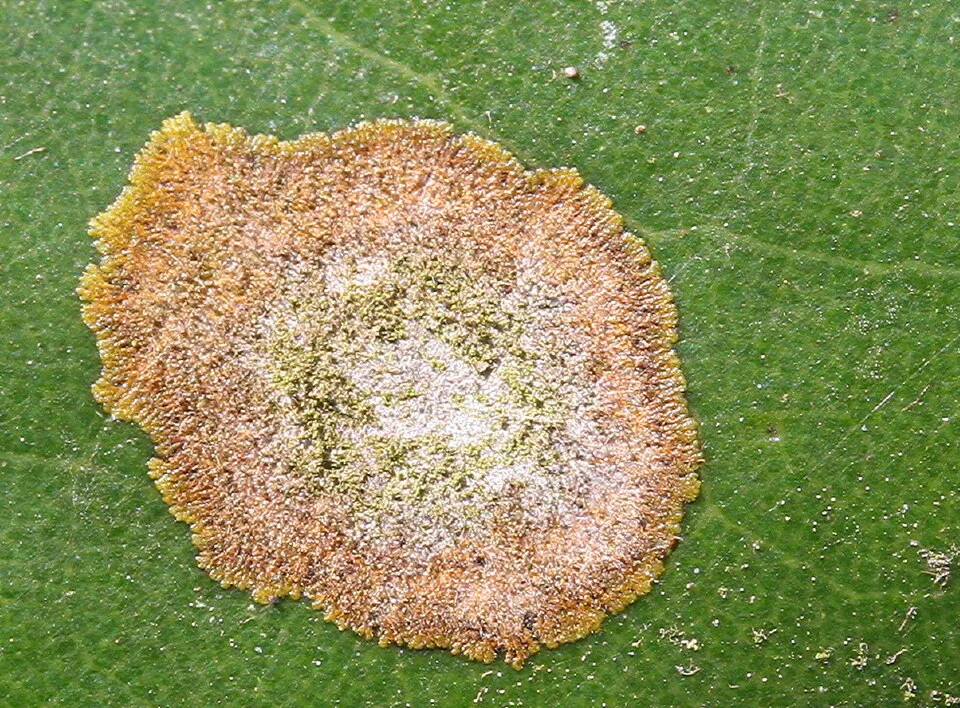
Photo: Malcolm Manners from Lakeland FL, USA · CC BY 2.0
Algal leaf spot is caused by a parasitic green alga — a simple, water-loving plant, not a true fungus — called Cephaleuros virescens. It settles on the leaves and twigs of woody perennial trees such as coffee, tea, mango, citrus, avocado and guava, forming raised, velvety spots that turn rust-orange as it fruits. It spreads by tiny spores that swim in a film of rainwater and are splashed and blown from tree to tree in warm, wet, humid weather. It does the most harm on weak, crowded, shaded or poorly fed trees, where it moves onto the twig bark and kills fruiting wood.
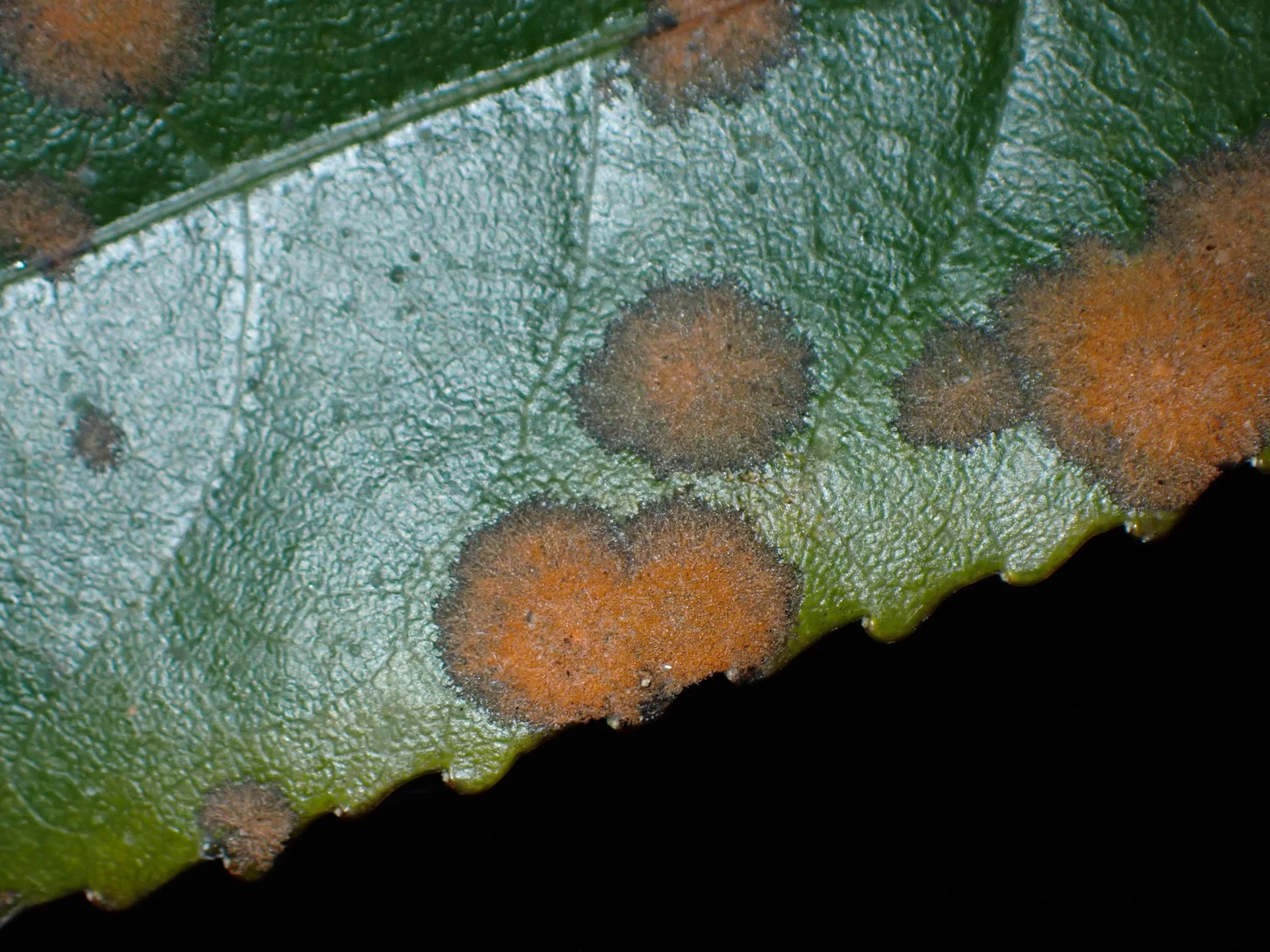
iNaturalist user (via Wikimedia Commons) · CC BY 4.0 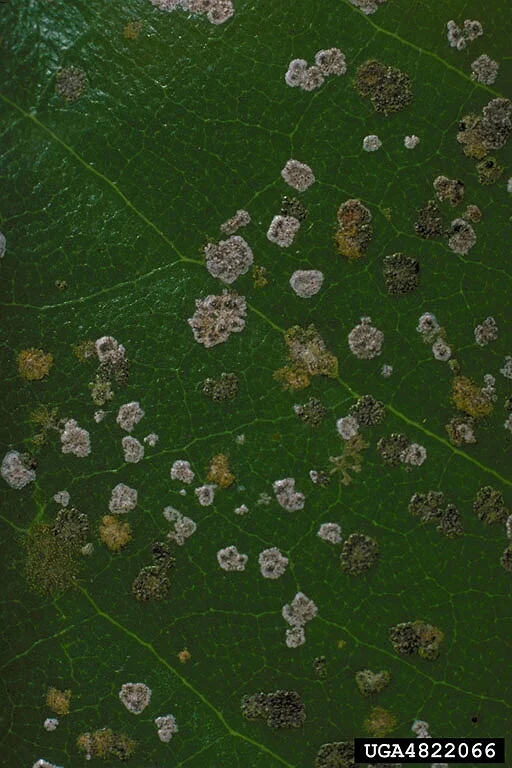
Edward L. Barnard, Florida Department of Agriculture and Consumer Services, Bugwood.org · CC BY 3.0 us
Why it matters
Algal leaf spot rarely kills a tree outright, but on a weak, crowded coffee, tea, mango, citrus, avocado or guava it quietly eats into the leaves and creeps onto the twigs — and a bad case can cost you up to a fifth (20%) of your crop. The velvety spots stop the leaf from making food, and where the alga bites into the twig bark it cracks the wood and kills the branch tips — the very wood that carries next season's fruit. It is stubborn once it settles in: it lives on the tree all year and throws out fresh spores every wet season, and a copper spray only shields new leaves — it cannot scrub off what is already there. So the real fix is to change the damp, shady, crowded, hungry conditions it thrives on, not to wait and spray it away.
When to act
Treat when orange-green velvety spots appear on more than a few leaves of stressed or shaded trees.
This guidance is general, compiled from published agronomic references including FAO and CABI. Thresholds and timing shift with your crop, your variety and the season.
In much of the region a spray is simply called mushonga — medicine. But a chemical group you cannot name is one you cannot rotate, and a product you did not write down has no pre-harvest interval you can observe. Mushonga, and other farming words →
The full Algal leaf spot field guide
Identify it
The spots (what you see first)
on the older leaves, look for round, slightly raised patches from the size of a match-head to a small coin (3–10 mm across) that feel velvety or felty, like a little pad of fine carpet stuck to the leaf. They start out grey-green and sit mostly on the upper side of the leaf.
The give-away colour
in warm, wet weather the patches grow a coat of rusty orange to red-brown 'fur' — that is the alga fruiting, and it is the surest sign the trouble is algal leaf spot and not something else. (On tea, this rusty stage is why it is often called 'red rust'.)
On the twigs and branches (the serious stage)
where it spreads onto woody parts the bark cracks and roughens, the twig can be choked right around (girdled), and the tips die back — leaves past the spot brown off and the end of the branch dies. This is the damaging stage, because it kills the wood that carries your fruit.
Tell it apart from look-alikes
lichens are flat, dry, grey or pale-bluish crusts or leafy flakes on old bark — not raised, not velvety, and never orange-furred. Fungal leaf spots are flat or sunken, brown-to-black and dead in the middle, often ringed with yellow, while algal spot is raised, felty and green-turning-orange. True rust rubs off on your finger as loose orange powder; algal spot is a firm felt mat that stays stuck when you rub it.
Scout for it
When to look
algal leaf spot rides wet weather, so watch hardest through the rainy season and the muggy weeks straight after it — the tree's mid- and late-season, when it is most at risk. It needs warmth (above about 20°C) and long damp, humid spells (air staying wetter than about 85%); a run of overcast, drizzly days in a crowded orchard is your cue to go and check.
How to walk it
walk a large 'W' across the block so you cover the four corners and the middle, stopping at about 10 trees. Don't just check the easy trees by the path — go to the shaded, crowded, low and damp spots and the weak, hungry-looking trees, because that is where it takes hold first.
What to check on each tree
look at the older, lower, inner leaves on the shaded side where the air sits still and damp, turn a few leaves over, and run your eye along the twigs and small branches for cracked, rough bark and dying tips.
When to act
treat once you find the velvety spots on more than about 5 leaves on a tree — or on more than 1 in every 5 leaves you turn over — especially on stressed or shaded trees, because that means the colony is building. A stray spot on one or two leaves of an otherwise healthy tree is not worth spraying.
Control it
Prevent first — open up the tree:
your biggest non-chemical lever is airflow and light. Prune and thin the canopy so sun and wind get right in and the leaves dry fast after rain — the alga can only swim and spread while the leaf stays wet, so a dry leaf starves it. Space your trees and don't let them crowd into one another.
Keep the tree strong and the ground dry
the alga hits weak, hungry, stressed trees hardest, so feed balanced nutrition to keep trees vigorous, and fix waterlogged or poorly drained ground and standing damp around the trunk. A strong, well-fed tree shrugs off the odd spot.
Act early — cut out and burn what's infected:
as soon as you find spotted, cracked or dying twigs, prune them out well below the damage and burn them — never leave the prunings lying under the tree, because they seed the next round of spores. Rake up and burn badly spotted fallen leaves too, and do this cutting in dry weather so you don't spread wet spores.
Copper spray — last resort only:
if it keeps building after you have opened up and cleaned the tree, protect the new growth with a copper-based spray (a copper fungicide). Start at the onset of the rains and repeat as the label directs, coating both leaves and bark. Copper only protects the surface it lands on — it is a shield, not a cure, so it guards clean new leaves and bark but will not scrub off spots already there; aim it at the healthy growth before the alga reaches it.
Spray safely and don't lean on it
cover your skin, eyes, nose and mouth, spray in the cool of morning or evening with the wind at your back, and keep the spray off food, drinking water, children and bees. Respect the pre-harvest interval — the number of days the label tells you to wait between the last spray and picking — which matters on coffee, tea and fruit you eat, and wash yourself and your kit afterwards. Don't spray every season out of habit: copper builds up in the soil and can harm the tree, so lean on pruning and feeding first.
If it keeps spreading — cut your losses:
when whole branches are cracking and dying back despite spraying, stop chasing the leaves and prune out and burn the dead and dying wood to save the rest of the tree — and open up, re-space, or even remove the worst, most shaded, unproductive trees so the whole block dries out. Then fix the root cause before the next wet season — more light, more air, better drainage, better feeding — because a tree left weak and shaded will catch it again every year.
Catch Algal leaf spot before it costs you the harvest
This guide is the general answer. Divisi works out yours — the week to scout your own field for Algal leaf spot, and what to do the day you find it.


Crops it affects
Plan the crops it attacks
-
 When to plant Avocado in Cassongue
 -
 When to plant Guava in Gokana
 -
 When to plant Mango in South Imenti
 -
 When to plant Tea in Kabarole
All planting calendars, country by country
Get Insights by email
A short digest of new Divisi articles. No email on quiet weeks.
Frequently asked questions
How do I identify Algal leaf spot?
The spots (what you see first). on the older leaves, look for round, slightly raised patches from the size of a match-head to a small coin (3–10 mm across) that feel velvety or felty, like a little pad of fine carpet stuck to the leaf. They start out grey-green and sit mostly on the upper side of the leaf.
When should I take action against Algal leaf spot?
Treat when orange-green velvety spots appear on more than a few leaves of stressed or shaded trees.
How do I control Algal leaf spot?
Prevent first — open up the tree:. your biggest non-chemical lever is airflow and light. Prune and thin the canopy so sun and wind get right in and the leaves dry fast after rain — the alga can only swim and spread while the leaf stays wet, so a dry leaf starves it. Space your trees and don't let them crowd into one another.
Which crops are attacked by Algal leaf spot?
Among the crops covered here: Avocado, Guava, Mango, Tea.