 Divisi
Scale insects
· Insect
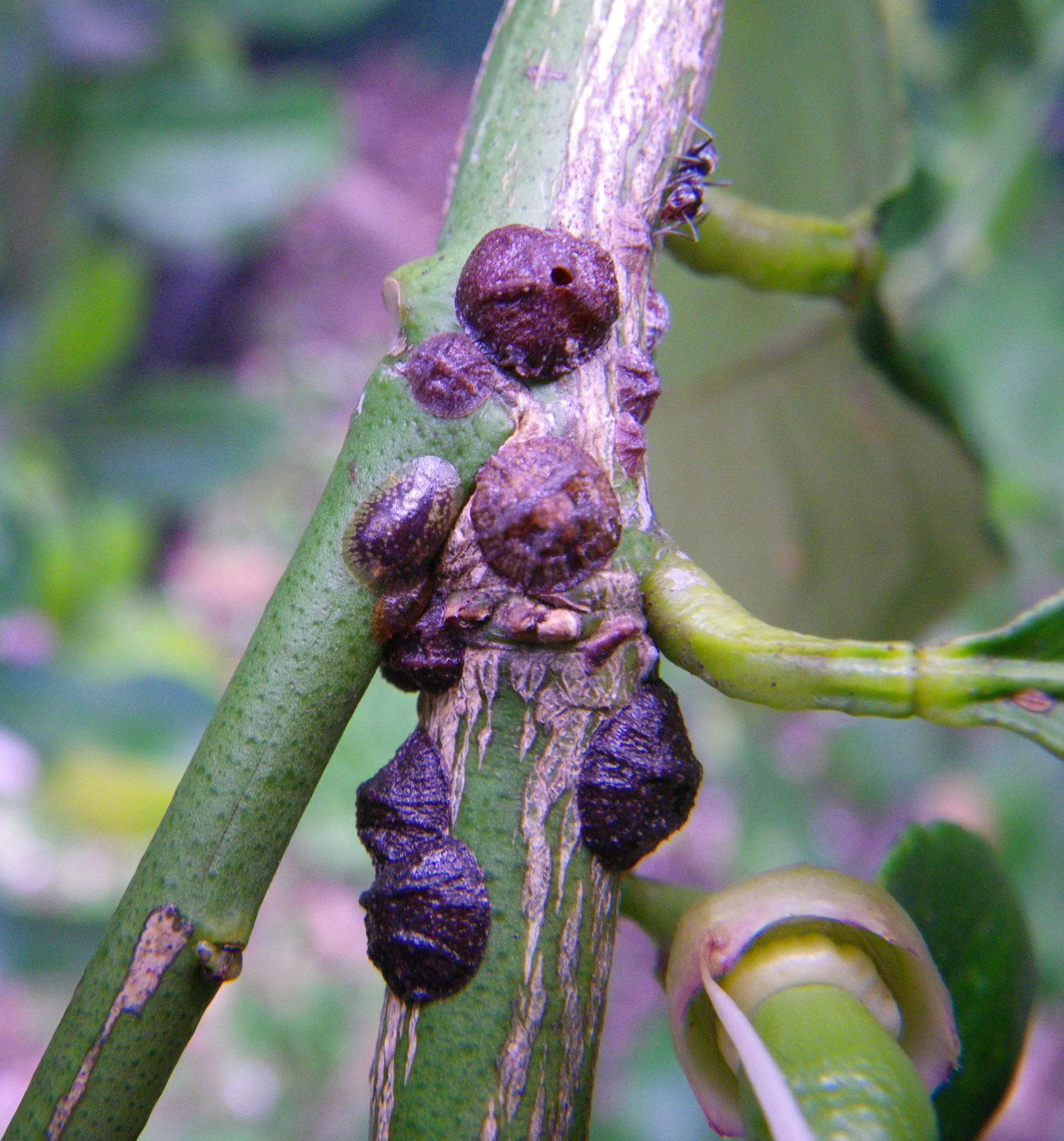
Photo: Toby Hudson · CC BY-SA 3.0
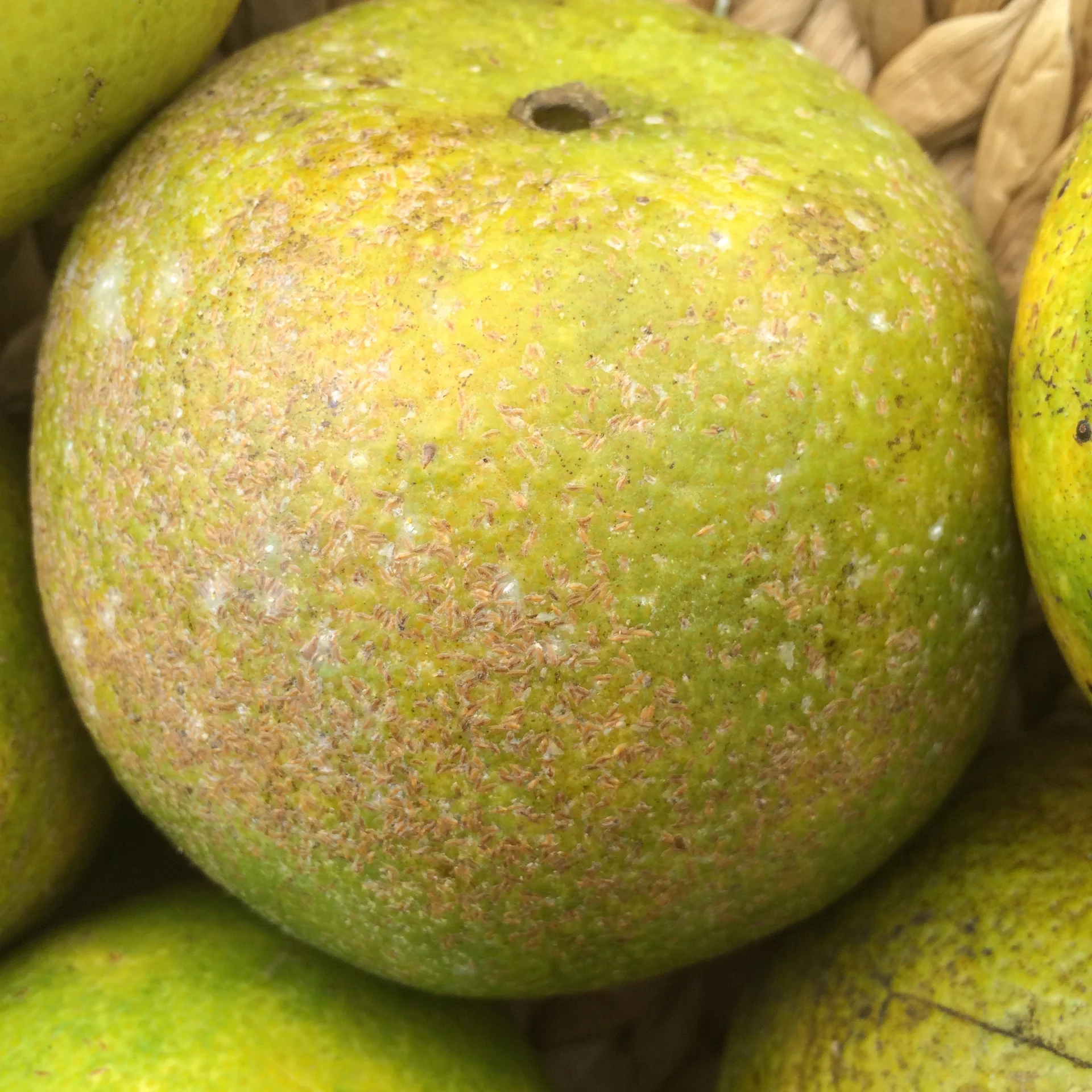
Scale insects are tiny sap-sucking bugs that clamp onto the twigs, leaf veins and fruit of trees and bushes — citrus, mango, coffee, guava and cassava among them — and sit there for life under a waxy shell or crust no bigger than a pinhead. Armoured scales wear a hard, separate shield; soft scales are dome-shaped and dribble sticky honeydew (sugary droppings) that blackens leaves and fruit with sooty mould. They breed fast in hot, dry, dusty weather, are herded and defended by ants, and once they encrust a tree they sap its strength, kill back its twigs and blemish the fruit.
Scot Nelson · CC0 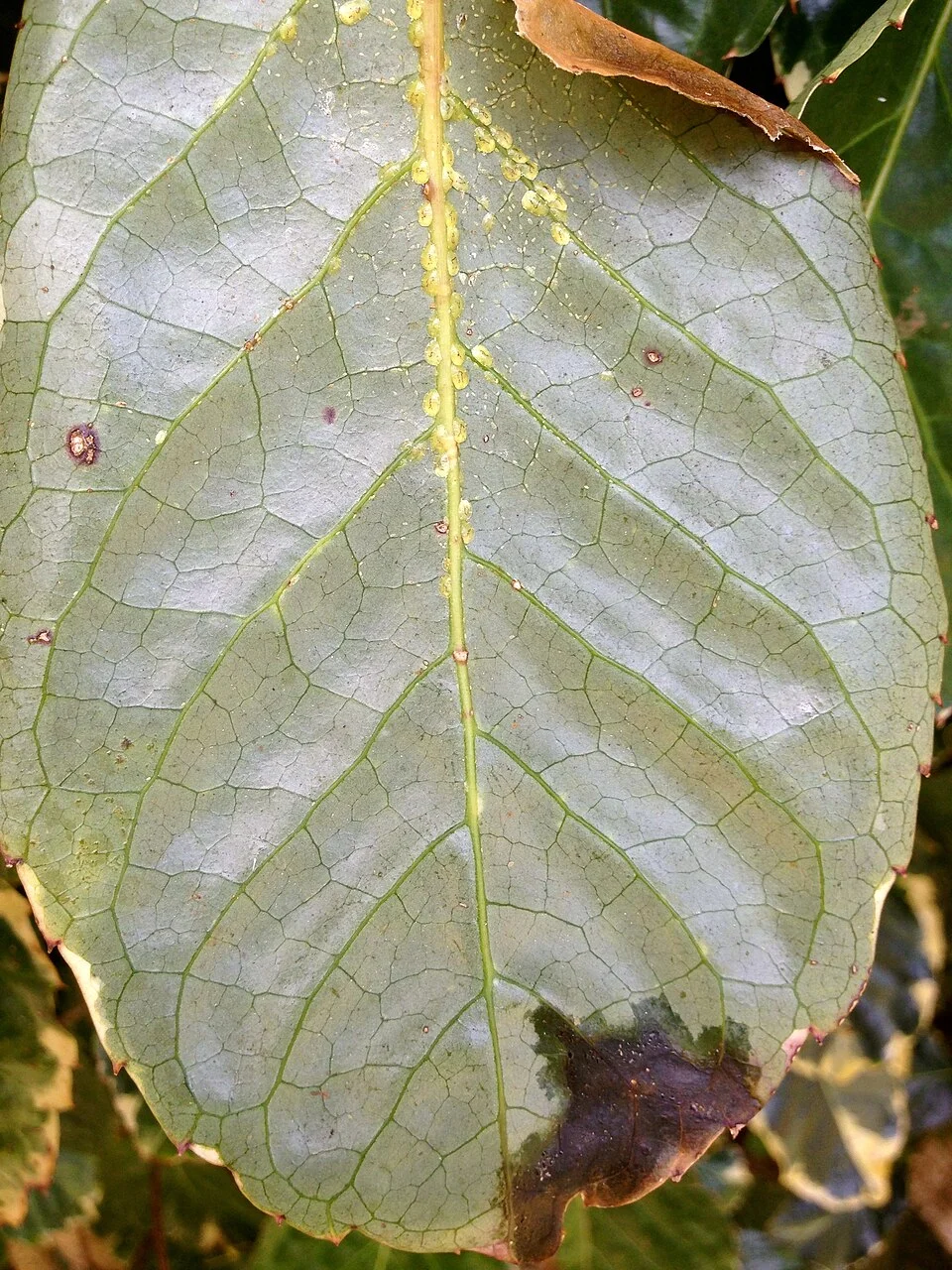
Scot Nelson · CC0
Why it matters
A heavy scale attack can strip up to 40% of your harvest — close to half the fruit on a badly hit tree — leaving fruit blackened and blemished so it won't sell, and shoots that yellow and die back. It creeps up on you: the insects sit dead still under a waxy armour that shrugs off most sprays, ants guard and spread them, and on a tree crop they carry over season after season — so by the time you spot the black sooty mould, the colony is already huge. That is why scale is far cheaper to stop early than to clear once it has crusted over your trees.
When to act
scale colonies encrusting shoots or fruit, sooty mould developing, or twig dieback appearing
This guidance is general, compiled from published agronomic references including FAO and CABI. Thresholds and timing shift with your crop, your variety and the season.
In much of the region a spray is simply called mushonga — medicine. But a chemical group you cannot name is one you cannot rotate, and a product you did not write down has no pre-harvest interval you can observe. Mushonga, and other farming words →
The full Scale insects field guide
Identify it
The first thing you'll notice is usually the mess, not the insect
Leaves and fruit turn sticky and shiny with sugary droppings (honeydew — the clear syrup the scales dribble out), then go black as if dusted with soot (sooty mould, a harmless mould that grows on the honeydew). Watch too for ants streaming up and down the trunk, yellowing leaves that drop early, bare dying twig-ends (dieback), and dull, blackened fruit that fetches a poor price.
The scales themselves look like tiny raised bumps
, not like an insect at all — round, oval, or shaped like a little oyster or limpet shell — from the size of a pinhead up to a match-head, packed tight along twigs, on the fruit, and on the undersides of leaves beside the veins. They may be brown, black, grey, white or waxy. The giveaway: they don't move and won't wipe off like dust — you must scrape them loose with a thumbnail. Armoured scales pop off as a hard little shield and leave the insect behind; soft scales are dome-shaped, stuck fast to their own body, and are the ones oozing the sticky honeydew.
The young — called crawlers — are the tiny moving specks
Newly hatched, before they grow a shell, they look like grains of moving dust or pale pollen, yellow to orange, wandering over the old scales and out onto the soft new growth. They matter twice over: crawlers are the only stage that spreads, and the only stage a spray can reliably kill.
Don't mix it up with
dried sap or lichen and bark scab (these are dry and part of the bark — a true scale lifts off to show a soft body or a damp smear underneath); mealybugs, close cousins wrapped in loose white cottony fluff that can still crawl slowly (scales are fixed and either hard or domed); or aphids and whitefly, which also make honeydew and sooty mould but crawl or fly away and gather on the soft shoot tips. And remember the sooty mould is not a leaf disease — it wipes off with a wet cloth and simply tells you sap-suckers are feeding above it.
Scout for it
Look hardest while the tree is pushing soft new flush and while the fruit is filling and ripening
— through the development, mid- and late-season stages — because that tender growth is exactly where crawlers settle and build their crust. Step up your checks in hot, dry, dusty spells (around 20–32°C), the weather scale loves best.
Walk a big "W" across the plot so you cover all four corners and the middle, not just the trees along the path. Stop at about 10 trees (or 10 plants on coffee and cassava). Give extra attention to dusty roadside trees and any tree with ants running on it — that is where an outbreak starts.
At each stop, check a few new shoots, the undersides of leaves along the veins, and several fruit for the fixed bumps, sticky honeydew, black sooty mould and ants. Scrape a few scales off with a thumbnail: soft, moist and plump underneath means alive; dry, hollow and papery means dead — and a neat round hole in a dead scale means a helpful wasp has already killed it, so leave that tree unsprayed.
To time a spray, hunt for the crawlers (the mobile young): wrap a strip of sticky tape, sticky side outward, around an infested twig, or tap a branch over a dark cloth and watch for tiny moving specks. When crawlers are out and walking, that is the short window when sprays actually work — before they grow their armour.
Act as soon as about 1 in 5 (20%) of the shoots or fruit you check carry live scale
, OR the first black sooty mould shows up, OR you spot any fresh twig dieback. Don't wait for the dieback to spread — by then the colony is already large and far harder to clear.
Control it
Prevent it — start clean and keep trees strong
Plant only clean, scale-free seedlings, cuttings and budwood — scale barely travels on its own, so it mostly arrives on infested plants, tools and clothes. Keep trees vigorous and unstressed: water them through dry spells, rinse road dust off the leaves, and go easy on nitrogen fertiliser (soft, lush growth pulls scale in). Prune out the worst-encrusted twigs and dead wood, then burn or bury the prunings — never leave them lying under the tree.
Cut off the ants and spare the helpers
Ants farm scale for its honeydew and chase off the very insects that would eat it, so break the partnership: smear a sticky grease band around the trunk, clear the weeds and touching branches they climb up, and dig out their nests. Just as vital, keep away from harsh broad-spectrum poisons (sprays that kill many kinds of insect at once) — they knock out scale's natural enemies worse than the scale itself and cause a bigger flare-up.
Act early — let the natural enemies do the work (your strongest non-chemical tool)
Tiny parasitic wasps (they lay an egg inside a scale so the grub eats it from within) and ladybird beetles will quietly clear scale for free once the ants and harsh sprays are out of their way — bring in or release them where they are available locally. On light patches, simply scrub the scales off the bark and fruit with a cloth, brush or gloved thumbnail (a little soapy water helps) and cut out the worst-crusted shoots.
Only if it is getting away from you, reach for horticultural oil — and aim at the crawlers
Horticultural oil is a light mineral or plant oil that smothers scales (it blocks the tiny pores they breathe through) rather than poisoning them, so it is gentle on people and on the wasps and ladybirds. It is one of the few sprays that even touches the armoured adults, but it works far better on the moving crawlers, so time it to your tape-or-tap check. Wet every surface — twigs, both sides of every leaf, and the fruit, because oil kills only what it actually coats — and spray again after 2–3 weeks to catch the next hatch of crawlers.
Spray safely, and never let scale get used to a poison
Cover your skin, eyes, nose and mouth; spray in the cool of the morning or evening with the wind behind you; never spray in the heat of the day or on drought-stressed trees (oil can scorch hot, dry leaves). Keep the spray off food, drinking water, children, animals and bees, respect the pre-harvest interval (the set number of days you must wait between your last spray and picking the fruit, printed on the label), and wash yourself and your clothes afterwards. If you ever step up to a stronger selective insecticide (one chosen to spare helpful insects), use it spot-only and sparingly, and rotate to a different chemical group each time so the scale never builds up resistance.
If it keeps spreading — find the leak, then cut your losses
When scale builds up despite your efforts, ask why: are ants still bridging in (re-band the trunk), is a neighbour's tree the source, or did you miss the crawler window (re-time your spray to it)? And when a tree is too far gone — crusted over, black with sooty mould and dying back — it has become a factory pumping crawlers onto your healthy trees: cut it down and burn it to save the rest of the block, then replant with clean stock.
Catch Scale insects before it costs you the harvest
This guide is the general answer. Divisi works out yours — the week to scout your own field for Scale insects, and what to do the day you find it.


Crops it affects
Plan the crops it attacks


All planting calendars, country by country
Get Insights by email
A short digest of new Divisi articles. No email on quiet weeks.
Frequently asked questions
How do I identify Scale insects?
The first thing you'll notice is usually the mess, not the insect. Leaves and fruit turn sticky and shiny with sugary droppings (honeydew — the clear syrup the scales dribble out), then go black as if dusted with soot (sooty mould, a harmless mould that grows on the honeydew). Watch too for ants streaming up and down the trunk, yellowing leaves that drop early, bare dying twig-ends (dieback), and dull, blackened fruit that fetches a poor price.
When should I take action against Scale insects?
scale colonies encrusting shoots or fruit, sooty mould developing, or twig dieback appearing
How do I control Scale insects?
Prevent it — start clean and keep trees strong. Plant only clean, scale-free seedlings, cuttings and budwood — scale barely travels on its own, so it mostly arrives on infested plants, tools and clothes. Keep trees vigorous and unstressed: water them through dry spells, rinse road dust off the leaves, and go easy on nitrogen fertiliser (soft, lush growth pulls scale in). Prune out the worst-encrusted twigs and dead wood, then burn or bury the prunings — never leave them lying under the tree.
Which crops are attacked by Scale insects?
Among the crops covered here: Cassava, Guava, Mango.