 Divisi
Guava wilt
· Fungal
Photo: Adesolive · CC0
Guava wilt is a soil-borne fungal disease (mainly Nalanthamala psidii and Fusarium species) that attacks guava through the roots and clogs the tree's water pipes (the vascular system that carries water up from the roots). Starved of water, the tree yellows, wilts, dies back branch by branch and finally dies. It travels in soil, water, tools, roots and young nursery plants, and once it is in an orchard it can kill tree after tree.
Sidon quintin · CC BY-SA 4.0
Why it matters
Guava wilt is a tree-killer, not just a leaf spot. Once it takes hold in an orchard it can wipe out up to 80% of your trees, and a full-grown guava you have fed and watered for years can be dead within a season or two. The fungus lives in the soil and inside the wood where no spray can reach it, so there is no cure once a tree is infected — everything you do is about stopping it reaching your other trees and never planting it into the ground in the first place.
When to act
First branches showing sudden yellowing, wilting and dieback on an established tree; presence of the disease anywhere in the orchard.
This guidance is general, compiled from published agronomic references including FAO and CABI. Thresholds and timing shift with your crop, your variety and the season.
In much of the region a spray is simply called mushonga — medicine. But a chemical group you cannot name is one you cannot rotate, and a product you did not write down has no pre-harvest interval you can observe. Mushonga, and other farming words →
The full Guava wilt field guide
Identify it
The first thing you see
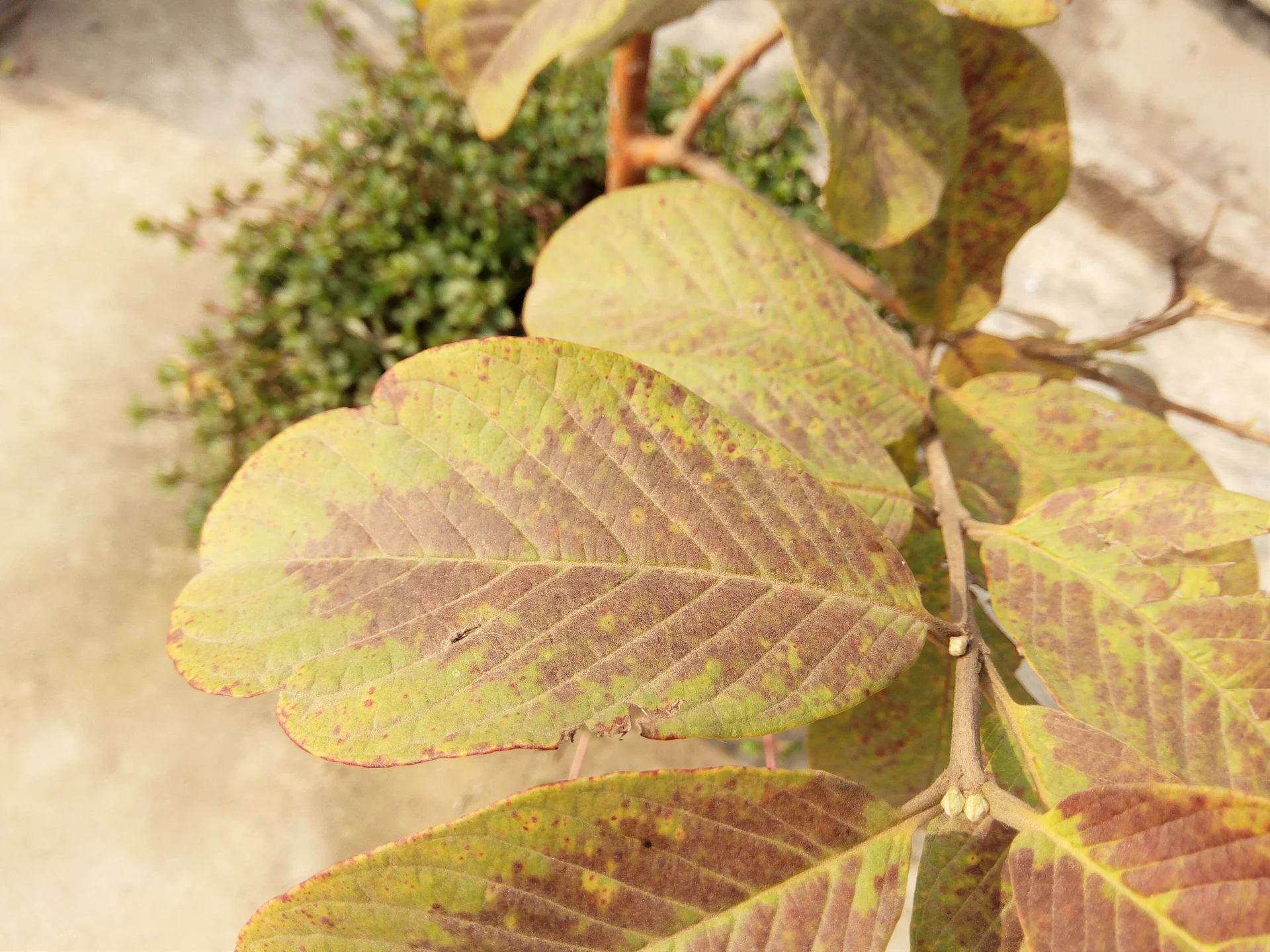
on an otherwise healthy grown tree, the leaves on one branch or one side suddenly turn pale yellow and wilt — they hang limp as if the tree is thirsty, even when the soil is wet. Watering does not bring them back.
As it spreads
the wilting jumps branch to branch through the canopy. Leaves dry to brown and drop early, twigs die back from the tip, and any fruit stays small and hard. Over weeks to a couple of seasons the whole tree browns off and dies, often still holding its dead leaves.
The hidden sign — cut and look:
slice into a wilting branch or dig and cut a root. A healthy guava is creamy-white inside; an infected one shows brown or dark streaks in the wood just under the bark. That brown staining in the water-pipes is the surest sign it is wilt and not just drought.
Don't confuse it
with plain drought or waterlogging (whole tree droops evenly and perks up after rain or watering — wilt starts one-sided and never recovers), with sunburn or nutrient shortage (yellowing is even across the tree, no brown wood inside), or with termite or borer damage (you see tunnels, holes and sawdust, not clean brown streaks in the wood).
Scout for it
When to watch hardest
guava wilt shows up on established, bearing trees — through the main fruiting and later part of the season (mid- and late-season), and especially in warm weather (about 24–32°C) on heavy, poorly drained or waterlogged ground after rain. That is when to walk the orchard with your eyes open.
How to walk it
every week or two, walk a large "W" across the whole orchard so you pass through all four corners and the middle, not just the trees by the path or gate. Low, wet patches deserve an extra look.
What to check on each tree
look up into the canopy for any branch or side that is yellowing, wilting or losing leaves while the rest is green. Stop at every tree that looks off.
Confirm before you decide
on a suspect tree, cut into a wilting branch (and a root if you can reach one) and look for the brown streaking inside the wood. Brown streaks confirm wilt.
The number that means act now
this disease has no safe level to tolerate. Even ONE established tree with sudden one-sided yellowing, wilting and dieback — confirmed by brown wood inside — means the disease is in your orchard and you must act at once. Mark every affected tree with paint or a tied rag so you can find them again and watch the trees next to them closely.
Control it
Prevent it first — this is your strongest tool
Start every new tree with clean, disease-free nursery stock on well-drained land, never in low, waterlogged spots. Do not plant guava again where guava has just died of wilt, and avoid moving soil, water or tools from a sick area to a clean one.
Grow tougher trees (resistant variety)
Where you can get them, plant tolerant rootstocks or resistant selections — graft your good fruiting variety onto a rootstock that resists the fungus. This is one of the most effective steps you can take because it protects the tree from the inside.
Protect the roots
The fungus gets in through wounds, so avoid injuring roots when you hoe, plough or dig near trees, keep water from standing around the trunk, and improve drainage on heavy ground with ridging or channels.
Keep your tools clean (sanitation)
The fungus rides on blades and soil. Disinfect pruning saws and hoes (wipe with a strong bleach or spirits solution) between trees, and always work on healthy trees first and suspect trees last so you don't carry it around.
Act early with biology — Trichoderma
Trichoderma is a helpful fungus that fights the wilt fungus in the soil. Work Trichoderma-based soil treatment plus plenty of compost or well-rotted manure into the root zone of your healthy trees and around new plantings to build up defenders in the soil. It cannot cure a tree that is already dying, so use it to protect — best applied early, before symptoms, and repeated. When handling any soil treatment, cover your nose and mouth, wear gloves, keep it off food and away from children, and wash your hands and clothes after.
No spray can cure it
Because the fungus lives inside the wood and deep in the soil, there is no fungicide that will save an infected tree — do not waste money or risk your health chasing one. Your defence is prevention, resistant stock and sanitation, not a chemical rescue.
If it keeps spreading — cut your losses to save the rest
As soon as a tree is confirmed dying of wilt, uproot it with as many of its roots as you can and burn it on the spot, so the fungus does not feed on the dead roots and spread. Do not replant guava in that hole. If tree after tree keeps dying despite this, stop growing guava on that land for several years and rotate to a non-host crop, or move new guava to fresh, well-drained ground — chasing a dying orchard only spreads the disease further.
Catch Guava wilt before it costs you the harvest
This guide is the general answer. Divisi works out yours — the week to scout your own field for Guava wilt, and what to do the day you find it.


Crops it affects
Plan the crops it attacks

All planting calendars, country by country
Get Insights by email
A short digest of new Divisi articles. No email on quiet weeks.
Frequently asked questions
How do I identify Guava wilt?
The first thing you see. on an otherwise healthy grown tree, the leaves on one branch or one side suddenly turn pale yellow and wilt — they hang limp as if the tree is thirsty, even when the soil is wet. Watering does not bring them back.
When should I take action against Guava wilt?
First branches showing sudden yellowing, wilting and dieback on an established tree; presence of the disease anywhere in the orchard.
How do I control Guava wilt?
Prevent it first — this is your strongest tool. Start every new tree with clean, disease-free nursery stock on well-drained land, never in low, waterlogged spots. Do not plant guava again where guava has just died of wilt, and avoid moving soil, water or tools from a sick area to a clean one.
Which crops are attacked by Guava wilt?
Among the crops covered here: Guava.