 Divisi
Sorghum head smudge
Curvularia lunata · Fungal
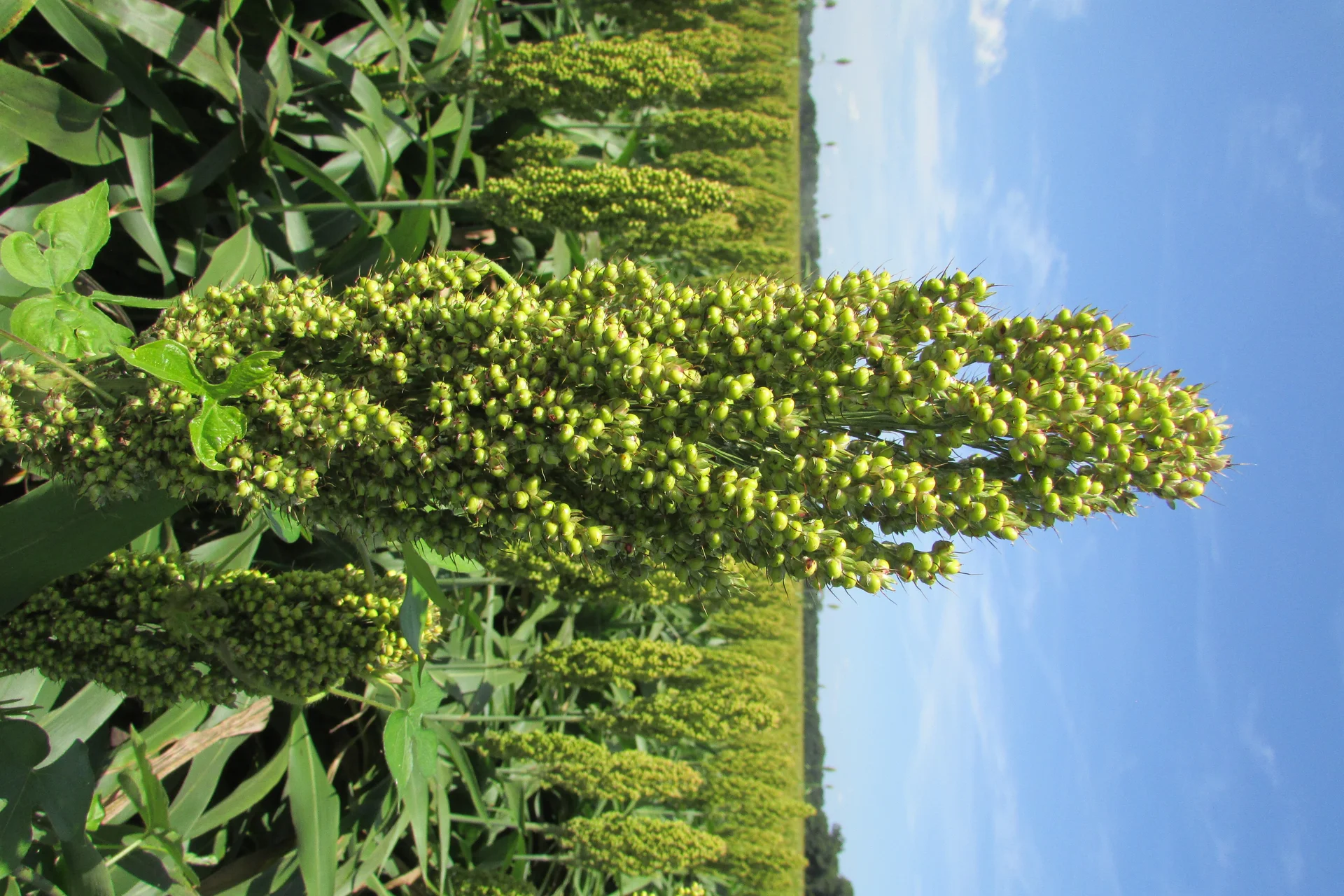
Photo: Chris Light · CC BY-SA 4.0
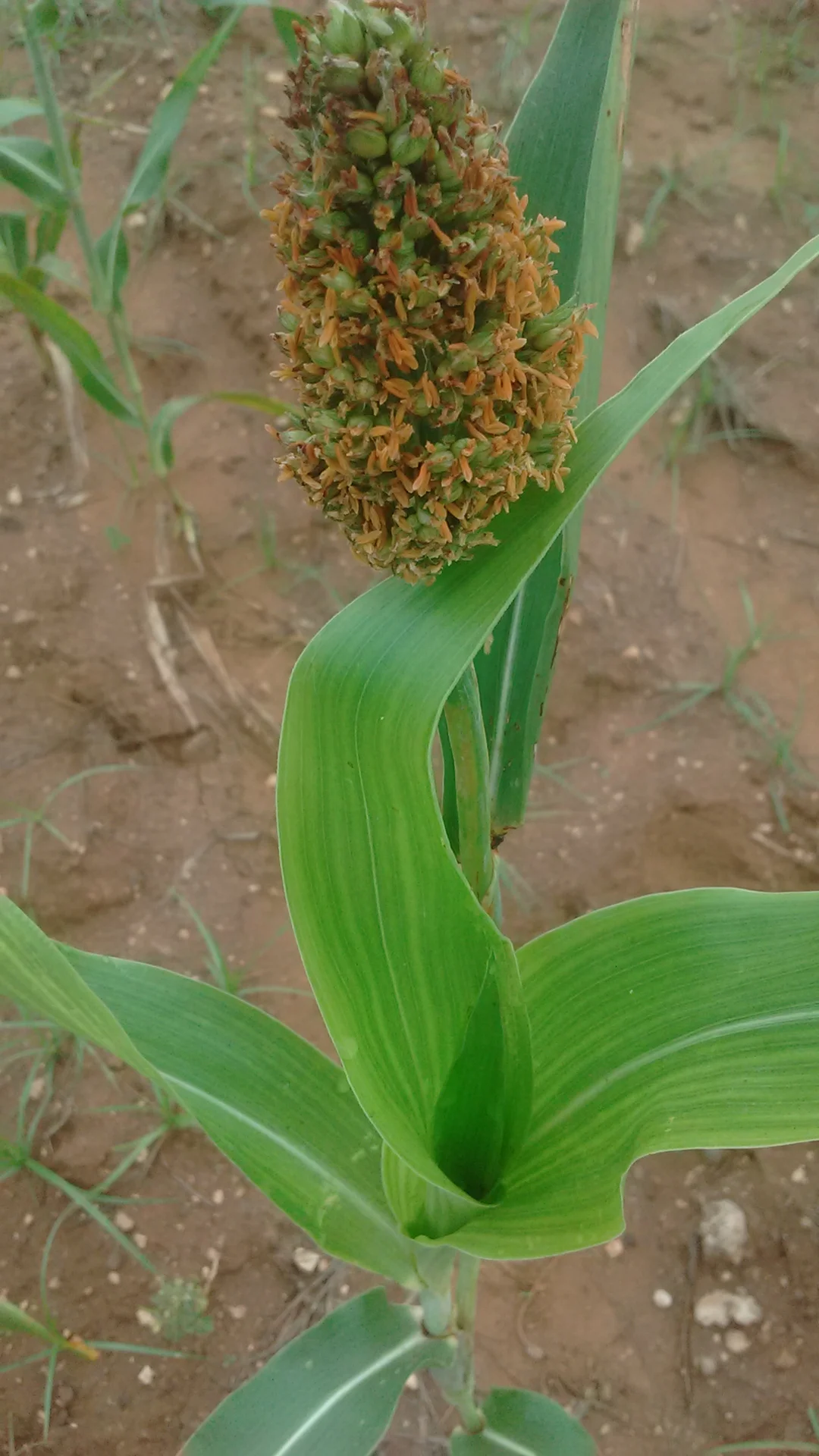
Head smudge is a fungal disease of the sorghum head, caused mainly by Curvularia lunata and its relatives. Under warm, wet, humid weather at flowering and grain fill, the fungus colonises the glumes (the little husks that wrap each grain) and the grain surface, leaving a dark, sooty smudge. It rarely destroys the grain outright, but it dirties and downgrades it, and seed saved from smudged heads sprouts poorly. It usually travels with the wider grain-mould complex.
Mohanapourani Hort · CC BY-SA 4.0 
Chris Light · CC BY-SA 4.0
Why it matters
Head smudge attacks the grain itself, right at the end of the season when you are almost home. In a bad, wet year it can dirty and downgrade up to a third of your harvest (about 30%) — buyers pay less for smudged, sooty grain, and it stores worse. It is hard to fix because the damage appears on the mature head, when it is already too late to save that grain; and if you keep seed from smudged heads, much of it will not sprout next season, so the loss follows you into the next crop.
When to act
Wet, humid weather during flowering and grain fill on a susceptible open-panicle variety; darkening grain appearing on maturing heads.
This guidance is general, compiled from published agronomic references including FAO and CABI. Thresholds and timing shift with your crop, your variety and the season.
In much of the region a spray is simply called mushonga — medicine. But a chemical group you cannot name is one you cannot rotate, and a product you did not write down has no pre-harvest interval you can observe. Mushonga, and other farming words →
The full Sorghum head smudge field guide
Identify it
The damage first
as the heads ripen, watch the grain turn dirty instead of clean. Healthy grain colours up bright and even; smudged grain looks sooty and smeared, as if someone rubbed the head with a thumb of ash or soot.
The disease signs
look closely at the glumes (the small husks around each grain) and the grain surface — you'll see grey, dark-brown to black smudgy blotches, a superficial dark stain sitting on the outside of the grain, not a deep rot. Whole panicles (seed heads) take on a dull, dirty, sooty look instead of a clean ripe colour.
Worst on
loose, open heads (where air and rain sit in the grain), white food-grade grain (the smudge shows more and buyers dock it hardest), and any crop left standing wet in the field after it is ripe.
Tell it apart from look-alikes
grain mould makes fuzzy pink, white or grey mould and soft, rotten, shrivelled grain — smudge is a flat dark stain on firm grain, not fluffy. Sooty mould from aphid honeydew wipes off the leaves and stalk and is tied to sticky sap, not the grain. Bird or weather damage leaves pecks, cracks and bleaching, not an even dark smudge on the glumes.
Scout for it
When
start once the crop is flowering and filling grain, right through to maturity (the mid- to late-season stages) — this is the only window head smudge takes hold. Check hardest after a spell of warm, wet, humid weather during flowering, which is exactly when the fungus infects.
How to walk it
cross the field in a big "W" so you cover all four corners and the middle, not just the edge by the path. Make about 10 stops along the way.
What to check
at each stop pull a ripening head close and look at the glumes and grain for grey-to-black smudging; turn a few heads over, since the shaded, damp side smudges first. Rate roughly what share of the grain on each head is discoloured.
The number that means act
if you find 1 in 5 heads (about 20%) starting to smudge — or you get wet, humid weather right at flowering on a variety you know is susceptible (open head, white grain) — treat that as your trigger to harvest and dry as soon as the grain is mature, and never carry seed from those heads.
Control it
Prevent first
-
choose the right variety (your strongest tool):
plant tolerant varieties with tight glumes and coloured (not white) grain. Tight husks keep the fungus off the grain and coloured types resist head smudge and grain mould far better — this is the single most effective step you have.
-
dodge the wet window and stay clean:
time planting so the heads ripen after the main rains, not during them, since the fungus needs warm wet weather at flowering. Keep it a sanitation habit: do not save seed from smudged, discoloured heads — clean, bright grain for seed keeps the disease from riding into next season.
Act early — beat it with the harvest:
there is no spray to un-smudge grain, so your real weapon at this stage is speed. As soon as the grain is mature, cut, thresh and dry the heads promptly — get them below dry-storage moisture fast. Every extra day a ripe head stands in humid weather is more smudge; never leave a mature crop standing wet in the field.
Chemical — last resort, seldom worth it on grain:
a registered fungicide (a shop product sold to control fungal disease) sprayed at flowering can protect a high-value seed crop, but on ordinary grain sorghum it is rarely worth the cost. If you do spray: cover your skin, eyes, nose and mouth; spray in the cool of the morning or evening with the wind at your back; keep it off food, water sources, children and bees; and respect the pre-harvest interval (the number of days the label says you must wait between spraying and harvest so no residue is on the grain). Rotate to a different fungicide group each time so the fungus does not build up resistance. Wash yourself and your clothes afterwards.
If it keeps spreading / when it's too late
you cannot rescue grain already smudged on the head — cut your losses on that portion by harvesting and drying at once to stop it worsening in store, and sell it as feed or lower grade rather than seed. Then fix it for next season: switch to a tight-glume, coloured-grain tolerant variety, and shift your planting date so the crop ripens out of the wet, humid weather.
Catch Sorghum head smudge before it costs you the harvest
This guide is the general answer. Divisi works out yours — the week to scout your own field for Sorghum head smudge, and what to do the day you find it.


Crops it affects
Plan the crops it attacks


All planting calendars, country by country
Get Insights by email
A short digest of new Divisi articles. No email on quiet weeks.
Frequently asked questions
How do I identify Sorghum head smudge?
The damage first. as the heads ripen, watch the grain turn dirty instead of clean. Healthy grain colours up bright and even; smudged grain looks sooty and smeared, as if someone rubbed the head with a thumb of ash or soot.
When should I take action against Sorghum head smudge?
Wet, humid weather during flowering and grain fill on a susceptible open-panicle variety; darkening grain appearing on maturing heads.
How do I control Sorghum head smudge?
Prevent first — choose the right variety (your strongest tool):. plant tolerant varieties with tight glumes and coloured (not white) grain. Tight husks keep the fungus off the grain and coloured types resist head smudge and grain mould far better — this is the single most effective step you have.
Which crops are attacked by Sorghum head smudge?
Among the crops covered here: Sorghum, Teff.