 Divisi
Lettuce mosaic virus
Lettuce mosaic virus · Viral

Photo: Roswitha Ulrich, Pflanzenschutzdienst, Hessen · CC BY-SA 4.0
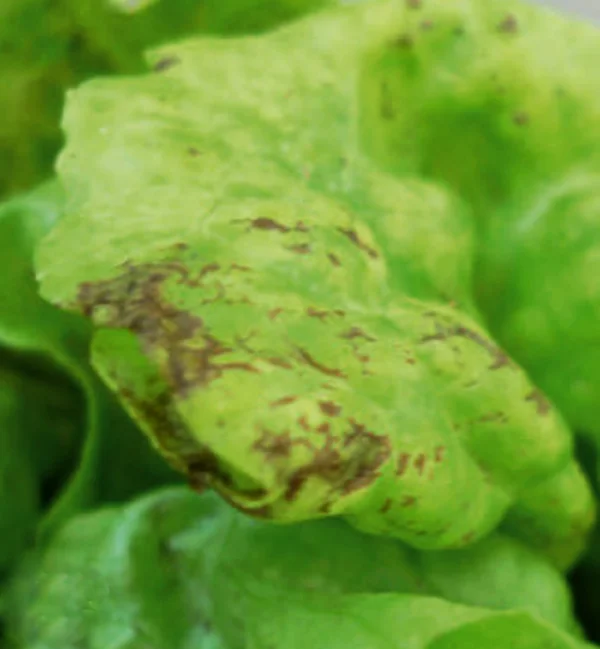
Lettuce mosaic virus is a virus disease of lettuce with no cure once a plant catches it. It arrives two ways: hidden inside a few bad seeds, and carried plant-to-plant by aphids (small soft green sap-sucking insects) that pick it up and pass it on in just a few seconds of feeding. Plants infected while young stay stunted and never form a proper head.
Roswitha Ulrich, Pflanzenschutzdienst, Hessen · CC BY-SA 4.0 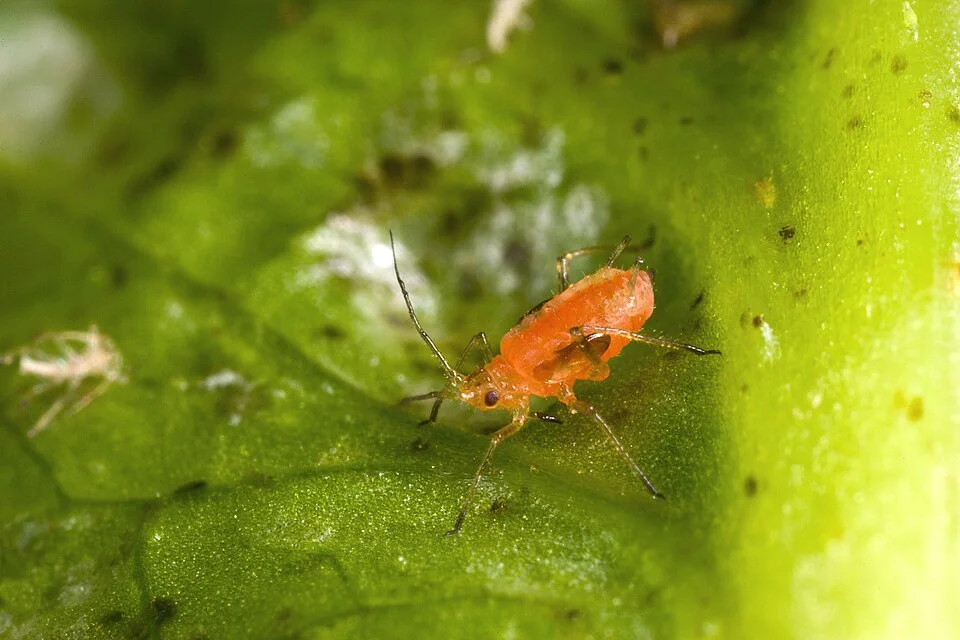
U.S. Department of Agriculture · Public domain
Why it matters
This virus can wipe out well over half a bed of lettuce — up to 60% of your crop — and the plants it hits early are the worst: they stay small, twisted and never form a firm head you can sell. There is no spray that cures a sick plant; once a lettuce has the virus it stays sick for life, and the aphids that carry it move it to healthy plants in seconds, faster than you can kill them. That is why the whole fight is about keeping it OUT — clean seed and pulling sick plants — not curing it after it lands.
When to act
mosaic-symptomatic seedlings appearing, or aphids colonising young lettuce; rogue symptomatic plants at once
This guidance is general, compiled from published agronomic references including FAO and CABI. Thresholds and timing shift with your crop, your variety and the season.
In much of the region a spray is simply called mushonga — medicine. But a chemical group you cannot name is one you cannot rotate, and a product you did not write down has no pre-harvest interval you can observe. Mushonga, and other farming words →
The full Lettuce mosaic virus field guide
Identify it
What you see first
young leaves show a patchy light-green and dark-green mottle (a "mosaic") instead of one even green — hold a leaf up to the light and the pale and dark blotches stand out. This is the clearest early sign.
As it spreads
the small veins go pale and glassy ("clearing"), leaves pucker, crinkle and curl, and the whole plant is stunted — clearly smaller than its healthy neighbours in the same row. Badly hit plants never close into a proper head.
Look for the carrier
turn young leaves over and check for aphids — tiny soft green (sometimes pink or grey) insects the size of a pinhead, clustered on the underside and on the growing tip, often with sticky shine and ants walking on them.
Don't confuse it
with fertiliser hunger (nitrogen shortage yellows the WHOLE older leaf evenly, not a green-on-green patchy mosaic), with downy mildew (pale patches on top with a grey furry mould underneath — mosaic has no mould), or with weedkiller drift damage (twisting spread evenly across the whole bed from one side, not scattered plant-by-plant). Mosaic is patchy mottling + stunting on scattered single plants.
Scout for it
When
check hardest while plants are young — from the seedling and nursery stage through the first few weeks of growth. This is when infection does the most damage and when you can still act, so walk the crop at least once a week.
How to walk it
cross the field in a big "W" shape so you cover all four corners and the middle, not just the edge nearest the path. Make about 10 stops along the way.
What to check at each stop
look down at 10 young plants — tip a few leaves up to the light for the green-on-green mottle, feel for puckering and curl, note any plant that is oddly small, and turn leaves over to look for aphid colonies on the underside and growing tip.
Your act-now number
this virus has zero tolerance — even 1 mottled or stunted seedling means act at once: mark it and pull it that same day (see control). If you find aphids building colonies on young lettuce, treat that as your warning that spread is starting and act before it runs through the bed.
Hang yellow sticky traps
(a yellow card or board smeared with grease/oil) at plant height around the bed to catch flying aphids early — rising catches mean aphids are moving in and the risk is climbing.
Control it
Prevent
-
start with clean seed (your strongest guard):
sow certified mosaic-tested seed (seed lab-checked to carry zero, or near-zero, virus). Because the virus rides inside a few bad seeds, clean seed stops it before it ever starts. Never save or use untested seed from an old lettuce crop.
-
grow a resistant variety:
where you can get them, plant resistant lettuce varieties — they shrug off the virus far better than ordinary types and are your best long-term protection alongside clean seed.
-
keep the field clean and broken:
pull out volunteer (self-sown) lettuce and nearby weeds that shelter the virus and its aphids, keep field edges tidy, and don't plant a new lettuce crop right next to or overlapping an older one — an old bed feeds aphids straight into the young one.
Act early — rogue (pull out) sick plants at once:
the moment you find a mottled or stunted plant, pull it out that same day, carry it out of the field in a bag (don't drop leaves between healthy plants), and bury or burn it. Every sick plant left standing is a source the aphids keep spreading from — removing them early is the single most useful thing you can do in-season.
Chemical — last resort, and know its limit:
an insecticide for the aphid carrier only slows aphids down; it cannot cure a sick plant and cannot fully stop the spread, because aphids pass the virus in seconds — faster than the spray kills them. Lean on clean seed, resistant varieties and roguing first; use aphid spray only as a back-up on top of those.
If you do spray, spray safely
cover your skin, eyes, nose and mouth; spray in the cool of morning or evening with the wind at your back; keep it off food, water sources, children and bees; respect the pre-harvest interval (the minimum wait printed on the label between spraying and picking lettuce to eat); wash yourself and your clothes afterwards. Rotate to a different chemical group each time so the aphids don't build up resistance (stop being killed by it).
If it keeps spreading
tighten the basics — rogue more often (every few days), knock back the aphids, and clear every volunteer and weed host around the bed. If most of the bed is already mottled and stunted, it is too late to save this crop: cut your losses, clear and destroy the whole planting so it can't seed aphids into your next one, then start fresh with certified clean seed and a resistant variety on a clean piece of ground, away from the old bed.
Catch Lettuce mosaic virus before it costs you the harvest
This guide is the general answer. Divisi works out yours — the week to scout your own field for Lettuce mosaic virus, and what to do the day you find it.


Crops it affects
Plan the crops it attacks

All planting calendars, country by country
Get Insights by email
A short digest of new Divisi articles. No email on quiet weeks.
Frequently asked questions
How do I identify Lettuce mosaic virus?
What you see first. young leaves show a patchy light-green and dark-green mottle (a "mosaic") instead of one even green — hold a leaf up to the light and the pale and dark blotches stand out. This is the clearest early sign.
When should I take action against Lettuce mosaic virus?
mosaic-symptomatic seedlings appearing, or aphids colonising young lettuce; rogue symptomatic plants at once
How do I control Lettuce mosaic virus?
Prevent — start with clean seed (your strongest guard):. sow certified mosaic-tested seed (seed lab-checked to carry zero, or near-zero, virus). Because the virus rides inside a few bad seeds, clean seed stops it before it ever starts. Never save or use untested seed from an old lettuce crop.
Which crops are attacked by Lettuce mosaic virus?
Among the crops covered here: Lettuce.