 Divisi
How to grow lettuce
Lactuca sativa · Asteraceae
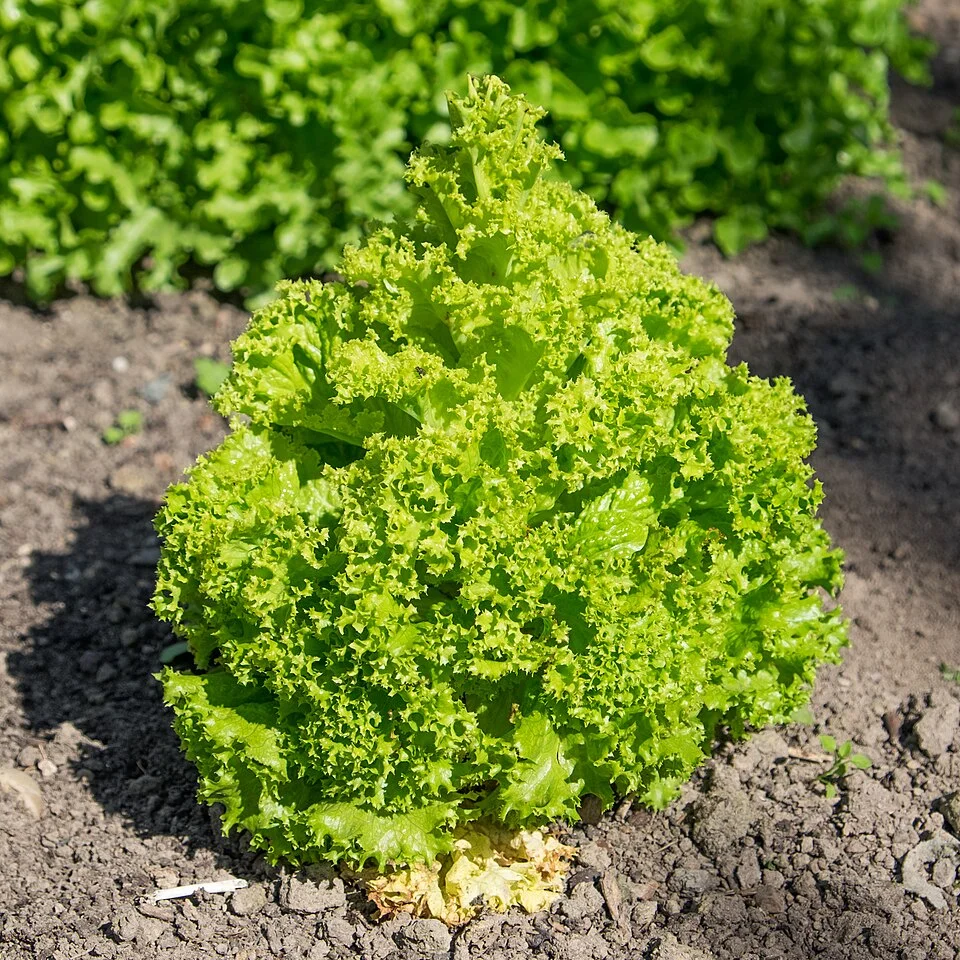
Photo: DeFacto · CC BY-SA 4.0
Lettuce is a fast, leafy salad crop grown for its crisp, tender leaves — and because people eat it raw, you must grow it clean. At heart it is a cool-weather plant: it grows best when the days sit between about 15 and 20°C, and it suffers in real heat. When the weather turns hot (a daily average above about 25°C), or the days grow long, lettuce bolts — it shoots up a tall, bitter flower-stalk and stops being worth selling — and in hot soil the seed will not even sprout. So the whole game is simple: grow it in the cool season or the cooler highlands, keep it evenly wet, feed it lightly, and cut it young and fast. It comes in a few types — soft loose-leaf, tender butterhead, upright cos (romaine), and tight crisphead (iceberg) — and loose-leaf is the easiest and most forgiving to start with. A crop is ready in just 6 to 11 weeks and sells well near towns, but it wilts within hours of cutting, so it is only ever as good as how fast you cool it.
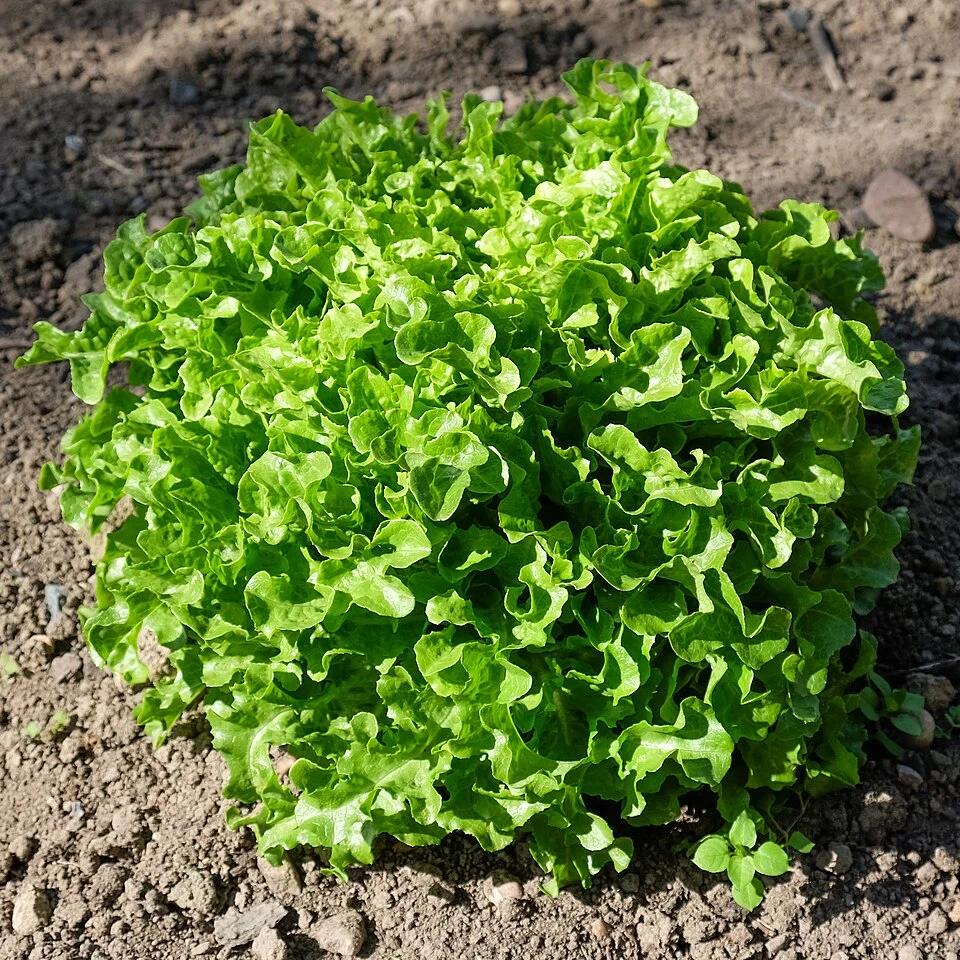
DeFacto · CC BY-SA 4.0 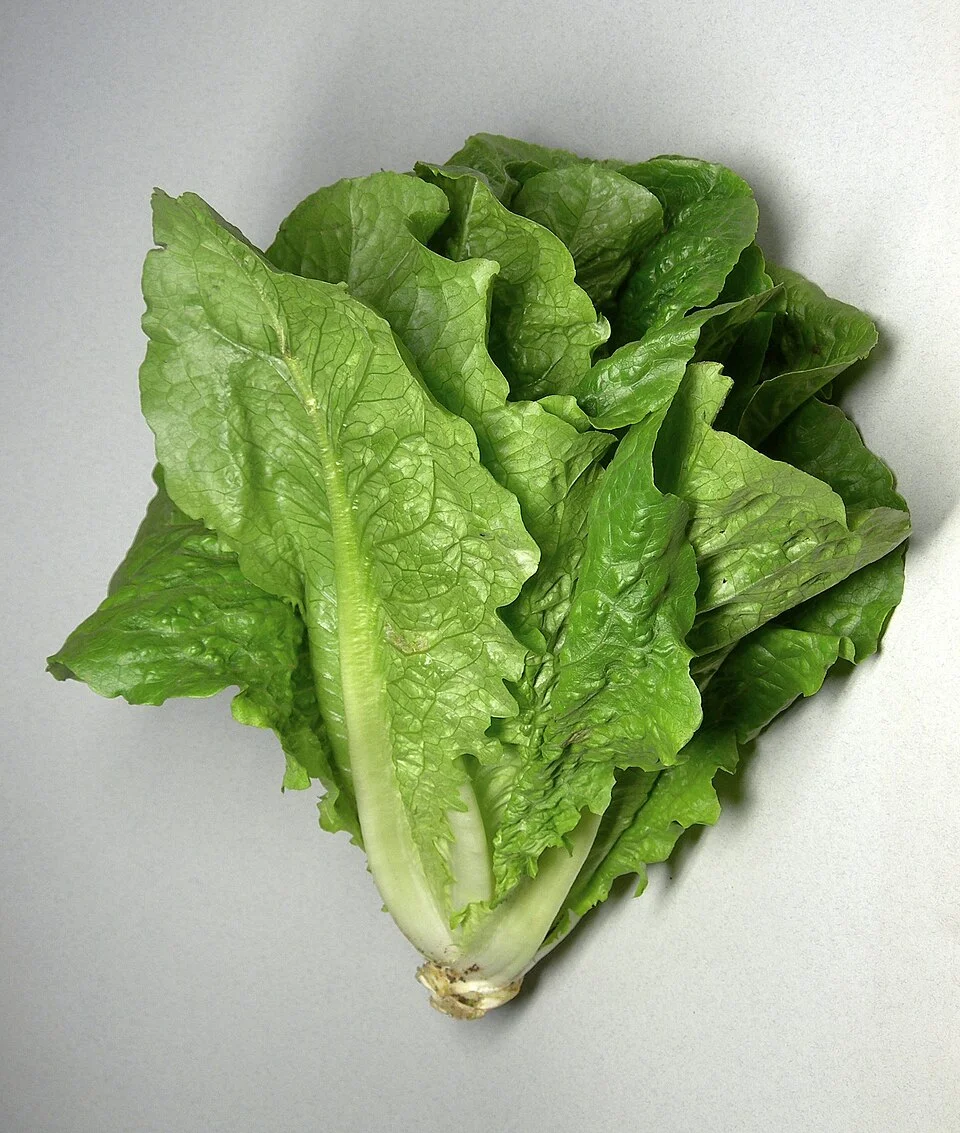
Rainer Zenz · CC BY-SA 3.0
- Days to maturity
- 45–75 days
- Row spacing
- 38 cm
- Plant spacing in the row
- 30 cm
- Sowing depth
- 0.5–1 cm
These are general figures for the crop, compiled from published agronomic references including FAO and CABI. The right choice for your field depends on your soil, rainfall and the yield you are aiming for.
Will lettuce actually do well on your field? Check your own field against every crop in the catalogue — no signup. Run the crop check →
Also known as
- Afrikaans
- slaai
- French
- laitue, salade
- Portuguese
- alface
- Swahili
- saladi, letusi
Working in buckets, bags or paces? The farming glossary turns the measures growers actually use into kilograms and hectares — what a 20 litre bucket of each crop really weighs, and how to size a field by walking it — alongside the Shona, Swahili, Ndebele and Yoruba words used in the field. Open the glossary →
Growing lettuce, stage by stage
From a shaded nursery bed to a crisp cut head — a fast cool-season salad that lives or dies on cool weather, steady water, and cutting before it turns bitter.
Raise strong seedlings in the nursery
Lettuce seed is tiny and fussy, so you start it in a small nursery bed or seed-tray where you can baby it, then move the young plants to the field as an even stand. The one hard part is the seed's heat-block: lettuce seed will not sprout in warm soil (above about 25–30°C). Sow very shallow into cool, damp seed mix, keep it in light shade, never let it dry out — and you'll have strong transplants ready in 3–4 weeks.
Confirm the cool-season / highland window Recommended
Lettuce is a cool-weather plant. Grow it into real heat and it bolts — shoots up a bitter flower-stalk and is ruined — and the seed may not even sprout. Choosing the right cool window to sow is the one decision that saves the whole crop: get it wrong and no amount of care later can fix it.
In the week before you sow the nursery, pick a stretch where the daytime average stays below about 25°C — the cool season, or the cooler highlands. Lettuce is happiest between 15 and 20°C.
Count backwards from that cool weather. The crop needs about 3–4 weeks in the nursery, then roughly 4 to 10 weeks in the field depending on type — loose-leaf is quicker (about 4–6 weeks after transplanting) and head types slower (about 8–10 weeks) — so make sure that whole run lands in the cool and doesn't slide into the hot season.
If your area is warm, plan to sow in the coolest part of the year, or grow only in a shaded, well-watered spot. Loose-leaf types take heat best; save tight crisphead (iceberg) for the coolest times.
Don't sow so the plants would heat up as they fill out — heat while they are heading is exactly what turns lettuce bitter and makes it bolt (run to a flower-stalk instead of staying leafy).
- Do:
Sow very shallow — barely cover the seed, because light helps it wake — and keep the seed mix cool (about 18–21°C) to beat the heat-block (lettuce seed refuses to sprout in warm soil).
- Watch out:
Long, hot days push bolting. If a heatwave is likely in the weeks your crop would be heading, shift your sowing date earlier or later into cooler weather.
Sow the nursery shallow, keep cool & moist Critical
Everything starts here. Lettuce seed is tiny and fussy — it must be barely covered, kept cool, and never allowed to dry out for even half a day. Get germination even and you plant out a full, uniform stand; let the seedbed dry or bake and you begin the season with gaps you can't fill.
On sowing day, fill a seed-tray or a fine, level nursery bed with moist, well-drained seed mix or fine soil. Water it first so it is damp all the way through before you sow.
Sow very shallow — no deeper than your fingernail (about ½–1 cm) — and barely cover it, because light helps lettuce seed sprout. The seed is as fine as sand, so sow it thinly and evenly.
Keep the seedbed cool (about 18–21°C) and constantly moist. In warm weather, sow in the cool of late afternoon, shade the bed, and water to cool the soil — lettuce seed refuses to sprout in hot soil (its 'heat-block').
If your weather is warm and the seed won't come up, ask your supplier for primed seed — seed the supplier has part-woken so it sprouts faster and copes better with warmth.
Water with a fine rose or a soft sprinkle so you don't wash the seed out. Expect sprouts in a few days, and seedlings ready to move in 3–4 weeks, when each has 1 to 3 true leaves (the proper leaves that come after the first pair of rounded seed-leaves).
- Do:
Keep the nursery in light shade and check it twice a day in warm weather — a lettuce seedbed that dries out even once can fail.
- Tip:
Sowing deep or covering thickly — buried lettuce seed sits in the dark and rots instead of sprouting.
- Watch out:
Seedlings that suddenly topple over with a thin, dark, watery pinch right at the soil line have damping-off — a rot of over-wet, crowded beds. Sow thinly, water in the morning so leaves dry by night, and never overwater. If it starts → pull out the toppled seedlings, ease right off the watering, and give the bed more air and light.
Harden off seedlings Recommended
Nursery seedlings are soft — grown in shade and shelter. Thrown straight into full sun and wind, they wilt, scorch and stall. A few days of hardening off (toughening them up) let them shrug off the move and keep growing without a check (a growth pause) — and a checked lettuce is quick to bolt.
Starting about 5–7 days before transplanting, give the seedlings a little more sun and wind each day — move the trays out, or open the shade, for a couple more hours at a time.
Ease back the watering a little so the plants firm up and toughen — but never let them wilt hard.
By transplanting day they should stand up to full outdoor sun without flopping. Water them well the evening before you lift them, so they move with damp roots.
- Do:
Step the exposure up gradually and in the cool of the day — sudden full midday sun on soft seedlings scorches the leaves.
- Tip:
Skipping this on a hot, bright week — unhardened seedlings can stall for days after transplanting, and a stalled lettuce bolts early.
Prepare the bed and get your seedlings
While the nursery grows, get the field ready. Lettuce is a shallow-rooted, heavy-feeding crop with a short life, so the whole job here is a deep, crumbly, well-drained bed built up with compost and its first (basal) feed of phosphorus, potassium and calcium. If you're not raising your own seedlings, buy strong, clean ones now — cool-raised, not leggy.
Prepare the bed + compost + basal Critical
Lettuce roots are shallow (about 40 cm) but the crop is a heavy feeder on a short life — it must find everything it needs close to the surface, fast. A deep, crumbly, well-drained bed full of well-rotted compost or manure, with the basal fertiliser worked in, gives the tender roots rich, loose ground to spread into and holds the steady moisture this crop can't do without.
Do this about 1–2 weeks before you transplant, so the bed has time to settle before the seedlings arrive.
Clear the ground of old crop residue and weeds, then dig or till it deep and loose — a rough, cloddy bed chokes lettuce's shallow, fine roots.
Work in well-rotted compost or manure — dark, crumbly, no strong smell — generously, since lettuce is a hungry crop for such a short life. Fresh, strawy manure burns the young roots, so only use it well rotted.
Apply the basal fertiliser your recommendation gives — lettuce wants phosphorus for the roots and potassium and calcium for firm, crisp leaves, not just nitrogen.
On heavy or wet soil, raise the bed into ridges or beds so water never stands around the shallow roots — waterlogging rots them fast.
Rake the surface level and fine so water spreads evenly and the young transplants meet no clods.
- Do:
Raise the bed on heavy or slow-draining soil — lettuce's shallow roots sit right where waterlogging hits first.
- Tip:
Fresh, raw manure at bed-making — it scorches the fine roots and seeds the bed with weeds. Use only well-rotted material.
- Watch out:
Wash your hands after handling manure or fertiliser, and keep both off food, water and children.
Source healthy seedlings Critical
If you're not raising your own, the seedlings you buy are your crop — lettuce grows so fast that a stalled or leggy transplant never catches up in its short 6–11 week life, and one bought too warm-raised may already be primed to bolt. Buy strong, clean plants from a trusted nursery in the week before you transplant.
Buy compact, dark-green seedlings with 1 to 3 true leaves — not tall, pale or leggy ones, and not ones that look stressed or hardened too hard.
Check each one: no mottled, puckered leaves (a sign of lettuce mosaic virus), no aphids in the heart, and no wilting.
Ask whether the seedlings were raised in the cool — ones raised through heat may already be stressed toward bolting once they're in the field.
Transplant them within a day or two of buying, keeping them shaded and moist until you do — lettuce transplants dry out and check fast.
- Do:
Pick short, compact, dark-green seedlings — they root fast and give you the shortest, most even crop cycle.
- Tip:
Buying leggy, pale or heat-stressed seedlings — a checked lettuce transplant is quick to bolt and never fully recovers.
Transplant and settle the crop in
Moving day. Lettuce has shallow roots and hates any check (growth pause), so the aim is to set the seedlings at the right spacing and get them growing again without a pause — plant into moist soil in the cool of the day, firm them, and water in at once. The first two weeks are all about never letting the bed dry, keeping weeds off a poor competitor, and catching the pests that fell young plants overnight.
Transplant + water in Critical
How you set the plants now fixes the whole crop — you cannot re-space later. The right spacing lets each plant fill out; too close and they stay small and trap the damp, still air that breeds disease. And because lettuce roots are shallow, a plant that dries out even once in its first days checks and may bolt.
Transplant on the day the seedlings are ready, in the cool of the day — early morning or late afternoon — never in hot sun.
Set the seedlings at spacing: head types about 25–35 cm apart in the row (roughly one-and-a-half hand-spans) and 30–45 cm between rows (about two hand-spans). Loose-leaf types go a little closer. Put one seedling per station.
Plant each one so the lowest leaves sit just above the soil — don't bury the growing centre (the heart the new leaves come from), or it rots. Firm the soil gently around the roots so there are no air pockets.
Water in straight away, right at the base, so the roots meet wet soil and never dry. If a plant flops on the first day, shade it and water it again.
Growing from direct-sown seed instead? Don't transplant — thin the young plants to the same spacing, keeping the single strongest seedling at each station.
- Do:
Transplant on a cool, overcast day if you can — it shields the soft seedlings from harsh sun while they take root.
- Tip:
Setting the growing centre too deep — a buried heart rots. A lettuce should sit with its centre just clear of the soil.
- Watch out:
Hold the spacing you chose — you can't fix it later. Crowded lettuce stays small and holds the damp that feeds downy mildew (see the scouting task).
Water to keep continuously moist Critical
For the first two weeks the new roots are shallow and few, and the plant is re-growing after the shock of the move. Let the bed dry now and the plants stunt and set themselves up to bolt — steady moisture is what gets them established.
Water every 2–3 days right through the first fortnight after transplanting — more often in heat, or on sandy soil that dries fast.
Keep the top of the soil constantly damp — never bone-dry, and never waterlogged (soggy soil rots the shallow roots).
Check with a finger: if the top few centimetres (about a finger-joint down) are dry, water. Push in near a plant — you want it damp at root depth.
Water at the base, in the morning where you can, so the leaves dry through the day — wet leaves overnight invite disease.
- Do:
Water little and often — lettuce's shallow roots want steady damp, not a flood followed by a drought.
- Watch out:
A plant that wilts at midday but perks up by evening is short of water at the roots — water more often; don't wait for it to flop.
Early weeding Recommended
Lettuce is short, soft and slow to cover the ground — a poor fighter. Weeds left now steal its water, light and food, and crowd it into the damp, still air that breeds disease. Weeding early hands the bed back to the crop.
Weed by hand or a light hoe within the first 2–3 weeks after transplanting, while the weeds are still small.
Hoe shallowly and keep the blade away from the plants — lettuce roots run just under the surface and are easily cut.
Pull the weeds right next to each plant by hand, so you don't nick the roots or bruise the leaves.
Clear weeds from between the rows too, so air moves through the crop and the leaves dry — this alone cuts disease.
- Do:
Weed early and gently — a clean bed in the first three weeks is worth far more than a big clean-up later.
- Tip:
Deep or rough hoeing near the plants — it tears the shallow roots and sets the crop back badly.
Scout (cutworms, aphids, slugs) Recommended
The young crop is tender and easily lost. Cutworms can fell seedlings overnight, slugs shred them, and aphids start the colonies that later ruin heads and carry virus. Ten minutes twice a week now, while problems are small, protects the whole crop.
From a few days after transplanting, walk the bed twice a week and look closely at a few plants in each part — the leaf undersides and the growing centre, not just the tops.
Cutworms: look for young plants cut clean off at the soil line, worst overnight. Scratch the soil beside a felled plant to find the fat, greasy, grey caterpillar curled into a C.
Slugs and snails: look for ragged holes chewed in the leaves and silvery slime-trails, worst after rain and at night.
Aphids: look for clusters of tiny soft green or grey insects on the leaf undersides and in the heart.
Count how many plants show fresh damage and note where. If seedlings are being felled or holed and the gaps are spreading, act now — bait for slugs and cutworms in the evening, and rub out or wash off the first aphid colonies before they build up.
Keep any slug or cutworm bait away from children, poultry and pets — it is made to be tempting to eat and is poisonous to them too; scatter it thinly along the row, not in heaps, and store the rest locked away.
If a pest is spreading fast → treat that evening and re-check in 2–3 days. If it's only old, dried damage with no pest → leave it and keep watching.
- Do:
Scout in the early morning or evening — that's when slugs, snails and cutworms come out where you can actually see them.
- Watch out:
Fresh damage means the pest is still there and feeding; old, dried holes with no pest are a past attack — don't waste effort on it.
Grow the leaves and heads — the make-or-break stretch
Now the crop bulks up into leaves and (for head types) forms its head — and this is the touchy window for the three things that ruin lettuce: tipburn, bolting and bitterness. All three are beaten the same way: steady, even moisture and restrained feeding, in cool weather. Feed nitrogen little and often, never let the water swing between wet and dry, and scout hard for downy mildew and aphids — you must catch them before the heads close.
Steady N feeding (restrained) Recommended
Lettuce grows fast and needs a steady trickle of nitrogen (the nutrient that drives leafy growth) to bulk up in its short life. But too much, or too late, backfires — it builds up nitrate in the leaves and worsens tipburn (scorched inner-leaf edges). Little and often, kept restrained, is the rule.
Starting about 2 weeks after transplanting, feed small amounts of nitrogen every 10–14 days through the growing stretch — the amount your recommendation gives for your bed. Keep it light; more is not better with lettuce.
Band it in a thin line to the side of the row and water it in — never scatter it over the plants.
Keep fertiliser off the leaves — grains sitting on damp leaves scorch them, and these leaves will be eaten raw. Brush off anything that lands on a plant.
Lettuce also wants potassium for firm, crisp leaves — if your recommendation is a compound (balanced) feed rather than straight nitrogen, it carries that too. Follow the amount it gives; don't add extra.
Stop feeding nitrogen as the heads start to firm. Late nitrogen swells soft, nitrate-heavy leaves and drives tipburn — it does not build a better head.
Hold the moisture dead-steady while you feed: calcium (the nutrient that keeps the inner leaves from scorching) only reaches the young heart-leaves when the water is even — that steadiness is what actually holds tipburn off.
- Do:
Feed on moist soil, keep fertiliser away from food, water and children, and wash your hands afterwards.
- Tip:
Heavy or late nitrogen — it brings on tipburn, makes the leaves bitter and nitrate-heavy, and does not improve the head.
- Watch out:
Downy mildew wakes up in cool (about 10–20°C), damp, leaf-wet weather — check for it every time you feed. Look for pale yellow patches on top of the leaf with a white or grey fuzzy mould underneath (see the scouting task).
Water uniform (avoid swings) Critical
This is the most important job of the whole crop — worth 10 to 25% of your yield. Water that swings between wet and dry is what causes tipburn, bitterness and split or loose heads. The plant needs the same steady damp every day; even a single hard dry-out can trigger bolting (running to a bitter flower-stalk).
From about 2 weeks after transplanting right up to harvest, water every 2–3 days to keep the soil evenly damp at all times — no wet-then-dry swings. On sandy soil and in heat, water more often.
Aim for the same amount on the same rhythm — steadiness matters more than an occasional big soak.
Water at the base, in the morning, so the leaves dry through the day — this keeps downy mildew down while it keeps the moisture even.
In hot spells, a little extra water and light shade cools the crop and helps hold off bolting and bitterness.
- Do:
Keep a steady rhythm — the crop that never dries and never floods is the one that stays sweet and heads well.
- Tip:
Letting the bed dry out then drowning it — that swing is the direct cause of tipburn and split heads.
- Watch out:
Brown, dead, scorched edges on the young inner leaves are tipburn — a moisture-and-calcium fault, not a disease. Steady the water and ease off nitrogen; spraying will not fix it.
Scout (aphids, downy mildew, slugs) Critical
Now the stakes are highest. Aphids that get inside a closing head make it unsellable — no one buys lettuce with insects in the heart. Downy mildew can race through a damp crop. Catch both on the first plants, before the heads close, or you can lose the lot.
Through the whole growing stretch, walk the crop twice a week and check the leaf undersides and the heart of each plant, across every part of the bed.
Aphids: look for clusters of tiny soft green or grey insects on the undersides and in the centre. Treat the first colonies now — before the heads close, because once they're sealed inside, the head is ruined.
Downy mildew: look for pale yellow angular patches on the upper leaf (boxed in by the veins) with a white or grey fuzzy mould underneath them. It strikes in cool, damp, leaf-wet weather — act on the first patches, and pick off and remove badly-hit lower leaves.
Slugs and snails: ragged holes and silvery slime-trails, worst after rain — bait or hand-pick in the evening.
Mottled light-and-dark-green patches with puckered, distorted small leaves is lettuce mosaic virus — there is no cure. Pull out and remove affected plants, control the aphids that spread it, and use clean seed next time.
Remember: brown scorched inner-leaf edges are tipburn, not a pest — don't spray for that; steady the water and ease off nitrogen instead.
- Do:
Deal with aphids before the heads close — it is the last moment you can reach them.
- Watch out:
If you must spray: lettuce is eaten raw and cut often, so respect the pre-harvest interval — the number of days the product label says you must wait between spraying and picking. Never cut sprayed leaves early.
- Do:
When spraying, cover your skin, eyes and nose, spray in the cool of the day with the wind behind you, keep it off food, and wash well afterwards.
Cut at the right moment
Lettuce is ready fast — loose-leaf in about 4–6 weeks after transplanting, head types in about 8–10 weeks — and the window to cut it in top quality is short. Cut too early and you lose weight; wait too long and it bolts, turns bitter and is worthless. Watch it closely and cut in the cool of the morning.
Check heading / readiness Recommended
Cut at the right moment and you get full, sweet, heavy heads; misjudge it and you lose weight (too early) or the whole value (too late, once it bolts and turns bitter). This quick check tells you which plants are ready today.
Head types (butterhead, cos, crisphead): gently squeeze the head — it's ready when it feels firm and well-filled, not soft and open. Cut these from about 8–10 weeks after transplanting.
Loose-leaf: it's ready as soon as the leaves reach a usable size — pick from about 4–6 weeks after transplanting, before they turn bitter. You don't wait for a head to form.
Look hard at the centre of each plant: a heart that is stiffening and stretching upward, or a seed-stalk starting to rise, means bolting — cut that plant today.
Taste a leaf if you're unsure — any bitterness means cut now; bitterness only gets worse.
If a plant isn't ready yet → leave it, keep the water steady, and check again in a few days. But if it's starting to bolt → cut it immediately, ready or not — quality collapses from here, and waiting loses everything.
- Do:
Harvest in the early morning while it's cool — the leaves are crisp and full of water, and they keep far better than midday-cut lettuce.
- Watch out:
A stiffening, stretching centre or a rising seed-stalk is bolting — harvest at once; there is no recovering from it.
Cut heads / pick leaves Critical
This is the payday — but lettuce starts to wilt the moment it's cut. Cutting in the cool of the morning, cleanly, and before any bolting, is the difference between crisp heads that sell and limp ones that don't.
Harvest in the early morning while it's cool — never in the heat of the day, when the leaves are soft and wilt fast.
Head types: cut the whole head through the stem at the base with a clean, sharp knife, and strip off the loose, dirty or damaged outer leaves.
Loose-leaf: either pick the outer leaves a few at a time (leaving the centre to keep growing) or cut the whole rosette — the low circle of leaves — at the base.
Cut before any bolting: go through the bed every 5–7 days and take each plant as it comes ready — a bolting plant is worthless, so never leave it standing.
Handle the leaves gently — they bruise easily — and get them straight into the shade, never left lying in the sun.
- Do:
Move each cut lettuce out of the sun at once — even a few minutes in hot sun starts it wilting.
- Tip:
Cutting in the heat of the day — warm lettuce wilts within the hour and will not crisp up again.
Cool it fast and keep it fresh
Lettuce is one of the most perishable crops there is — it can wilt within hours of cutting. The whole job now is to get the field heat out fast and hold it cool and damp. Do this well and it stays crisp and sellable; skip it and a good crop turns to limp, unsaleable leaves before it even reaches market.
Cool immediately, trim & wash Recommended
The clock starts the moment you cut. Lettuce carries the field's heat in its leaves, and that heat wilts it fast. Cooling it within hours — not at the end of the day — is what saves the crispness you grew, and it can make the lettuce keep many times longer.
Get the cut lettuce out of the sun and into the shade immediately — never let it sit in the field heat.
Cool it within hours, not at day's end: dunk or spray it in clean, cold water, or hold it somewhere cool — the faster the field heat comes out, the longer it lasts.
Trim off damaged, dirty and outer leaves, and wash in clean water — lettuce is eaten raw, so clean water is a safety matter, not just for looks.
Let the surface water drain, then keep the lettuce cool, shaded and damp (a cool room, a damp cloth, the coolest store you have) right up to market.
Move it to sale quickly — even well-cooled, lettuce does not keep long.
- Do:
Cool within hours of cutting — this one step does more for shelf life than anything else you can do.
- Tip:
Piling warm lettuce in deep heaps or closed bags in the sun — it heats, sweats and rots. Keep it cool, shaded and loosely packed.
- Watch out:
Wash in clean water only — dirty water on a raw-eaten crop is a health risk to whoever buys it.
Pests and diseases that attack lettuce


Where to sell lettuce
Markets that trade this crop — what each one sells it by, when supply peaks there, and the currency used.


Grow lettuce with a plan, not a guess
This guide is the general answer. Divisi works out yours — the week to plant lettuce on your soil and your rainfall, and each job dated for your field.


When to plant lettuce, country by country
- When to plant lettuce in Algeria
- When to plant lettuce in Angola
- When to plant lettuce in Benin
- When to plant lettuce in Botswana
- When to plant lettuce in Burkina Faso
- When to plant lettuce in Burundi
- When to plant lettuce in Cabo Verde
- When to plant lettuce in Cameroon
- When to plant lettuce in Comores
- When to plant lettuce in Congo
- When to plant lettuce in Côte d'Ivoire
- When to plant lettuce in Egypt
- When to plant lettuce in Eritrea
- When to plant lettuce in Eswatini
- When to plant lettuce in Ethiopia
- When to plant lettuce in Gabon
- When to plant lettuce in Gambia
- When to plant lettuce in Ghana
- When to plant lettuce in Guinea Ecuatorial
- When to plant lettuce in Guinea-Bissau
- When to plant lettuce in Guinée
- When to plant lettuce in Kenya
- When to plant lettuce in Lesotho
- When to plant lettuce in Liberia
- When to plant lettuce in Libya
- When to plant lettuce in Madagascar
- When to plant lettuce in Malawi
- When to plant lettuce in Mali
- When to plant lettuce in Mauritanie
- When to plant lettuce in Mauritius
- When to plant lettuce in Morocco
- When to plant lettuce in Moçambique
- When to plant lettuce in Namibia
- When to plant lettuce in Niger
- When to plant lettuce in Nigeria
- When to plant lettuce in Rwanda
- When to plant lettuce in République centrafricaine
- When to plant lettuce in République démocratique du Congo
- When to plant lettuce in Sao Tome and Principe
- When to plant lettuce in Seychelles
- When to plant lettuce in Sierra Leone
- When to plant lettuce in Somalia
- When to plant lettuce in South Africa
- When to plant lettuce in South Sudan
- When to plant lettuce in Sudan
- When to plant lettuce in Sénégal
- When to plant lettuce in Tchad
- When to plant lettuce in Togo
- When to plant lettuce in Tunisie
- When to plant lettuce in Uganda
- When to plant lettuce in United Republic of Tanzania
- When to plant lettuce in Zambia
- When to plant lettuce in Zimbabwe
Where lettuce scores best
Districts where Divisi's engine currently rates this crop highest, ranked by fit.


Get Insights by email
A short digest of new Divisi articles. No email on quiet weeks.
Frequently asked questions
How do I grow lettuce?
How to grow lettuce: 45–75 days to maturity, 38 cm rows, 0.5–1 cm deep. Also called slaai, laitue, alface, saladi.
What is slaai in English?
Slaai is the Afrikaans name for lettuce.
What is laitue in English?
Laitue (also salade) is the French name for lettuce.
What is alface in English?
Alface is the Portuguese name for lettuce.
What is saladi in English?
Saladi (also letusi) is the Swahili name for lettuce.
How long does lettuce take to grow?
Lettuce takes about 45–75 days from sowing to maturity, though the exact length varies with variety, temperature and how the season runs.
What spacing should I use for lettuce?
Space lettuce rows about 38 cm apart, with roughly 30 cm between plants within the row.
How deep should lettuce be planted?
Sow lettuce at about 0.5–1 cm deep. Shallower risks drying out; deeper wastes seed energy before the shoot reaches light.
What pests and diseases attack lettuce?
The ones covered in this guide are Lettuce mosaic virus, Slugs and snails. Each has its own page explaining how to identify, check for and control it.