 Divisi
Loose smut
Ustilago tritici · Fungal
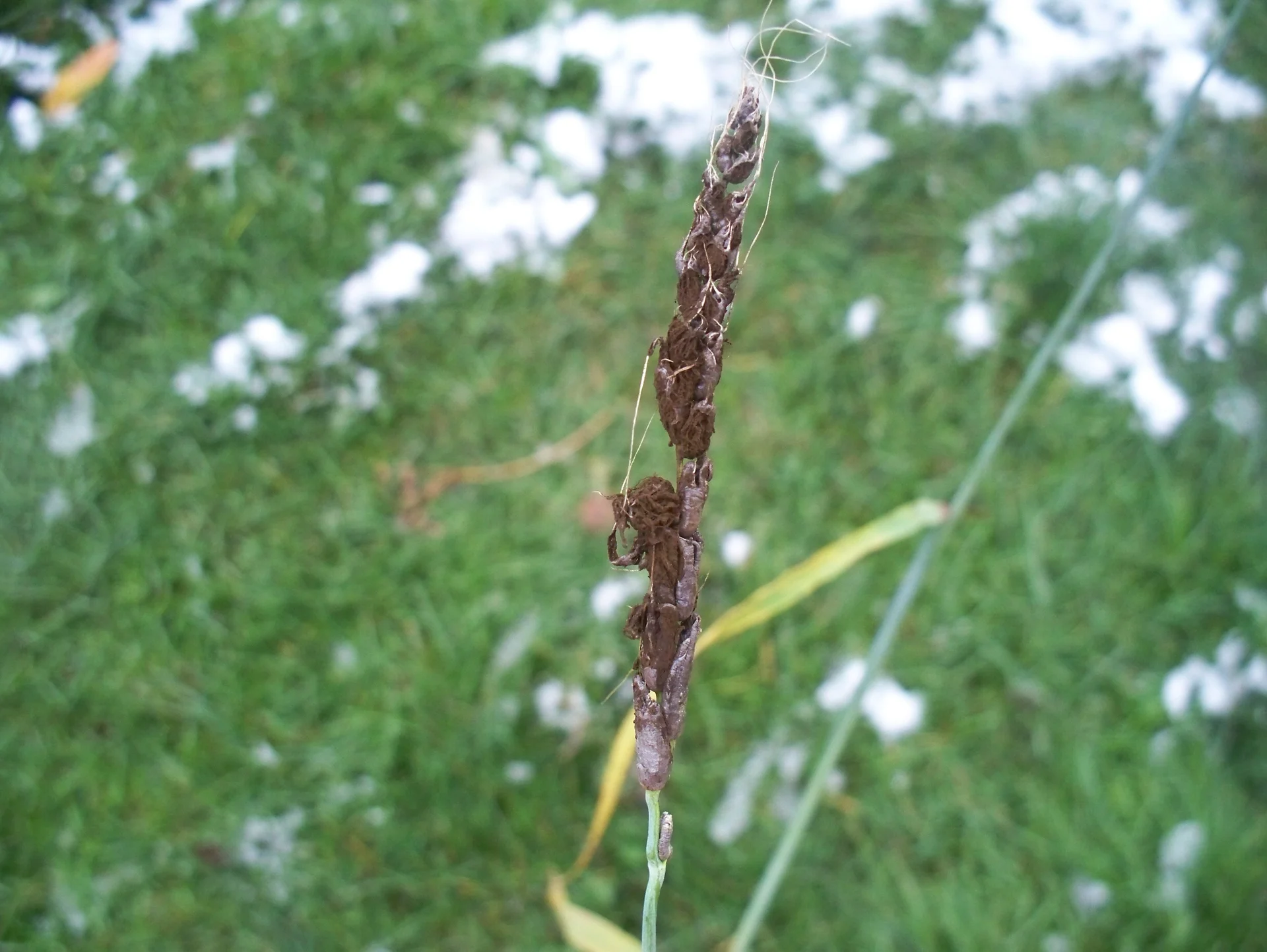
Photo: User:Agronom · CC BY-SA 3.0
Loose smut is a seed-borne fungal disease of wheat and barley. The fungus rides hidden inside seed that looks perfectly healthy, grows up silently with the plant, and at heading destroys the whole head — replacing the grain with a mass of black powdery spores. Those spores blow onto the flowers of nearby healthy plants, whose seed then carries the fungus into next season. You cannot see it in the seed and you cannot spray it out of a growing crop; it is beaten before planting, by starting with clean, treated seed.
Sylvie Ja (User:Bildoj) · CC BY-SA 3.0 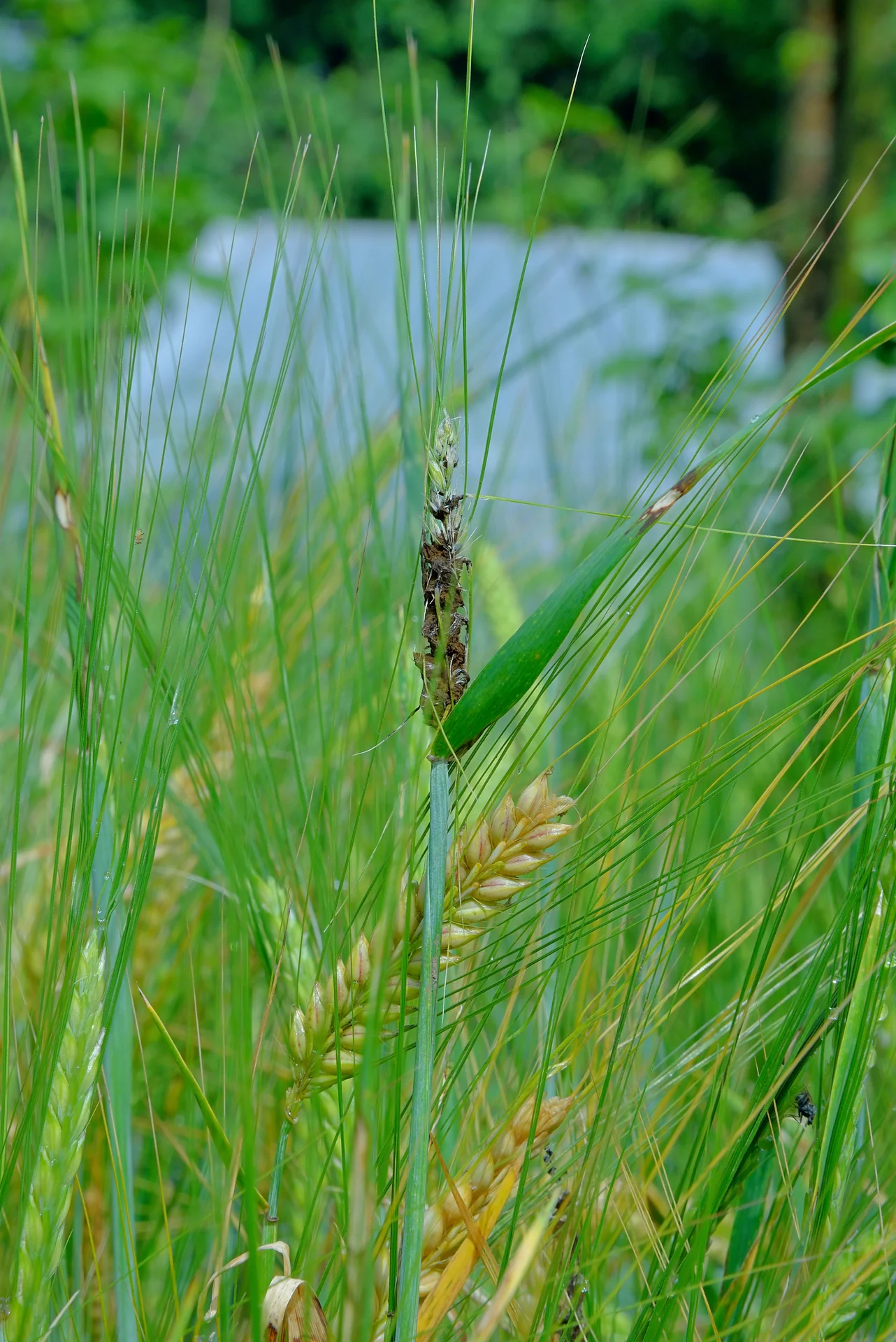
Rasbak · CC BY-SA 3.0
Why it matters
Loose smut can quietly cost you up to a third of your grain (about 30%) — every smutted head is a head that will give you no grain at all, just black dust. It is cruel because it hides: the fungus lives inside seed that looks completely healthy, so you plant your problem without knowing it, and by the time you see the black heads at flowering the grain is already destroyed and the spores are busy infecting next year's seed. There is no spray that saves a crop once it is growing — the only real fix is to stop it in the seed before you ever plant.
When to act
smutted heads seen at heading indicate infected seed; save none of that seed and treat seed for the next crop
This guidance is general, compiled from published agronomic references including FAO and CABI. Thresholds and timing shift with your crop, your variety and the season.
In much of the region a spray is simply called mushonga — medicine. But a chemical group you cannot name is one you cannot rotate, and a product you did not write down has no pre-harvest interval you can observe. Mushonga, and other farming words →
The full Loose smut field guide
Identify it
The first thing you see
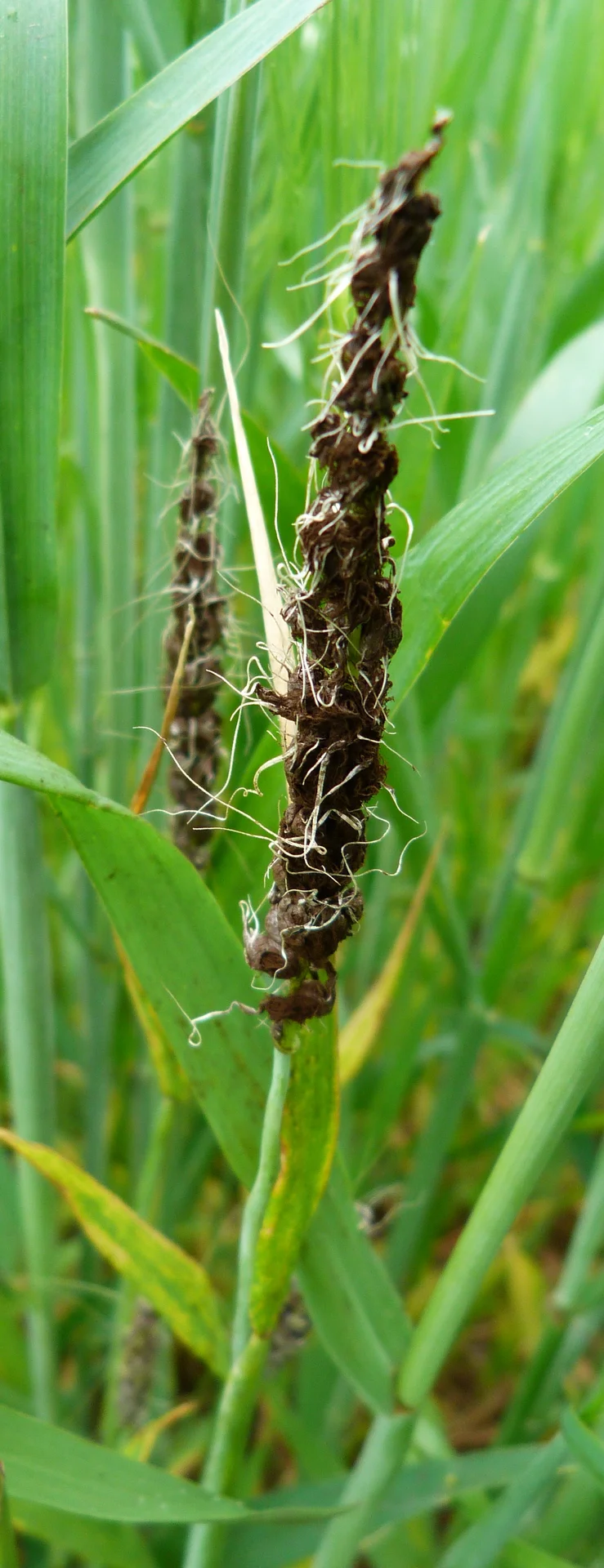
at heading, when heads push out of the boot, some heads come out not green and grain-filled but black — turned into a soft mass of black, powdery dust instead of grain.
As it spreads
that black powder (the spores) blows away in the wind within days, leaving behind only the bare central stalk of the head (the rachis) — a thin, naked spike like a little stick where a full head should be. Infected plants often head a few days earlier than the healthy ones around them, so the black heads show up first.
Where and how many
it shows up head by head, scattered through the field — one plant here, one there — not as a patch. Each affected plant usually has its whole head destroyed.
Don't confuse it
with common bunt (stinking smut), where the head stays whole and greenish but the grains are swapped for grey, greasy "balls" of dark powder that stay put and give off a rotten-fish smell — loose smut's dust is loose and blows away, leaving a bare stalk, and has no smell. It is also not ergot (hard, black, horn-like bodies sticking out of the head) or ordinary black sooty mould (a surface dirt you can rub off a still-healthy head).
Scout for it
When to look
watch at heading and flowering, near the end of the season (late season) — that is the only time loose smut shows itself, because it lives inside the plant until the head forms.
How to walk
walk a big "W" across the field so you cross all four corners and the middle, not just the edge by the path. Make about 10 stops along the way.
What to check
at each stop, look across the heads for any that have turned to black powdery dust or a bare naked stalk — these stand out against the green healthy heads, especially early when they head first.
The number that means act
finding even a single smutted head tells you the seed that came off this field is carrying the fungus. Do not save any seed from a field with smutted heads for planting, and treat next season's seed before you sow it. The more black heads you count, the heavier the load your seed would carry into next year.
Control it
Prevent it (best defence)
sow certified, disease-free seed and never re-sow seed saved from a crop that showed any smut — this is a seed problem, so clean seed is the whole battle. Where you can get it, grow a variety that resists loose smut; resistant varieties carry far less infection year to year.
Act early in the field
if you spot just a few smutted heads, cut or bag them and carry them out before the black dust blows off — this stops those spores from landing on the open flowers of your healthy plants and cutting into next season's seed. It will not save this crop, but it protects the seed you keep.
Chemical — systemic seed-treatment fungicide (the one strong tool that works):
because the fungus hides inside the seed, only a systemic fungicide — one that soaks into the seed and travels inside to kill the fungus hidden within, unlike a contact/surface dressing that only coats the outside — can reach it. Treat the seed before planting (the product class named for this is a systemic seed-treatment fungicide). Safety: wear gloves and cover your skin, nose and eyes when handling treated seed, mix in the open air with the wind behind you, never eat treated seed or feed it to animals or people, keep it away from food, water, children and animals, wash your hands and clothes after, and store leftover treated seed clearly marked and apart from grain. To keep the fungicide working over the years, rotate to a different chemical group rather than using the same one every season.
If it keeps coming back
if you still see smutted heads season after season, stop saving your own seed altogether — buy fresh certified, treated seed each year and switch to a resistant variety. Any field that heads out with black smutted heads has already lost that grain, so harvest it for eating or feed only, save none of it for seed, and start the next crop clean.
Catch Loose smut before it costs you the harvest
This guide is the general answer. Divisi works out yours — the week to scout your own field for Loose smut, and what to do the day you find it.


Crops it affects
Plan the crops it attacks

All planting calendars, country by country
Get Insights by email
A short digest of new Divisi articles. No email on quiet weeks.
Frequently asked questions
How do I identify Loose smut?
The first thing you see. at heading, when heads push out of the boot, some heads come out not green and grain-filled but black — turned into a soft mass of black, powdery dust instead of grain.
When should I take action against Loose smut?
smutted heads seen at heading indicate infected seed; save none of that seed and treat seed for the next crop
How do I control Loose smut?
Prevent it (best defence). sow certified, disease-free seed and never re-sow seed saved from a crop that showed any smut — this is a seed problem, so clean seed is the whole battle. Where you can get it, grow a variety that resists loose smut; resistant varieties carry far less infection year to year.
Which crops are attacked by Loose smut?
Among the crops covered here: Wheat.