 Divisi
Maize streak virus
Maize streak virus · Viral
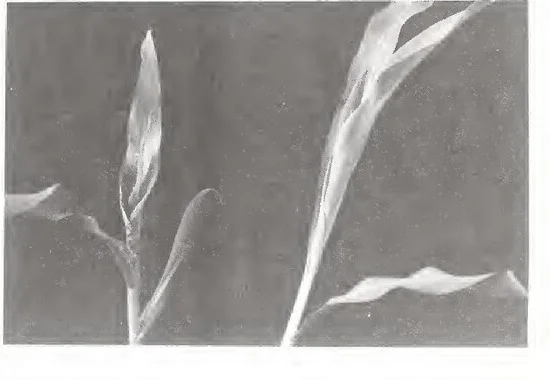
Photo: L. W. H. Chang / USDA APHIS (photo courtesy V. D. Damsteegt) · Public domain
Maize streak virus is the most damaging virus disease of maize in sub-Saharan Africa. It is not spread by touch, seed, or wind — it is carried plant-to-plant by tiny leafhoppers (small jumping insects, the vector — the living carrier that injects the virus as it feeds). The insects pick up the virus from infected maize and wild grasses and pass it on for the rest of their lives. A plant infected while young is stunted for good and may never make a cob.
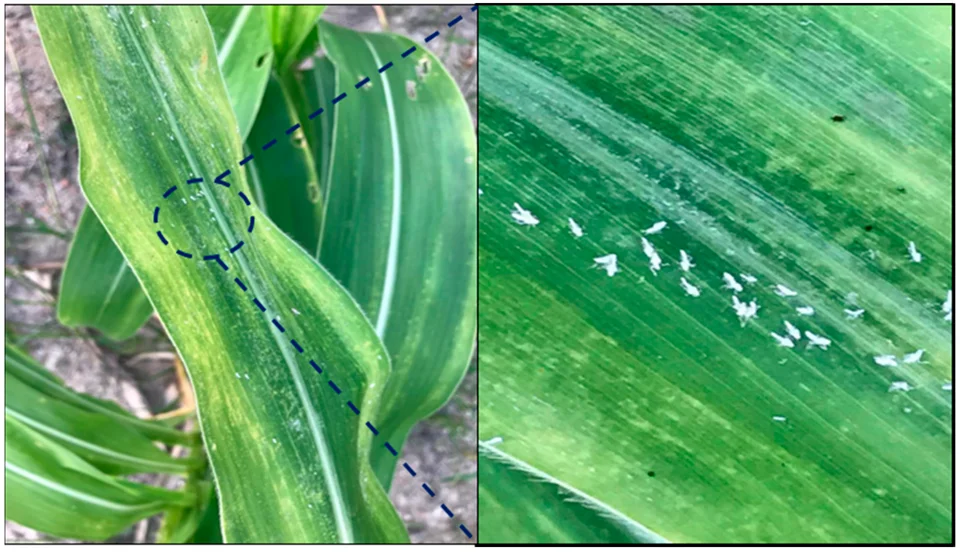
Maathavi Kannan, Ismanizan Ismail, and Hamidun Bunawan · CC BY 4.0 
Merike Sõmera, Cecilia Sarmiento, and Erkki Truve · CC BY 4.0
Why it matters
Maize streak can cost you your whole field — up to 100% of the crop — when plants catch it young. Because it is a virus living inside the plant, no spray can cure a plant once it is infected — a striped plant stays striped and stunted to harvest. The insects that carry it are small and easy to miss, so the disease often spreads before you notice. That is why everything here is about stopping it before it starts, not curing it after.
When to act
streak symptoms on young plants or leafhoppers colonising seedlings; earliest-infected plants suffer the greatest loss
This guidance is general, compiled from published agronomic references including FAO and CABI. Thresholds and timing shift with your crop, your variety and the season.
In much of the region a spray is simply called mushonga — medicine. But a chemical group you cannot name is one you cannot rotate, and a product you did not write down has no pre-harvest interval you can observe. Mushonga, and other farming words →
The full Maize streak virus field guide
Identify it
The first sign
shows on the youngest leaves: broken, pale-yellow to near-white streaks and dots running the length of the leaf, along the veins. At first they look like scattered dashes, like someone flicked pale paint down the leaf.
As it spreads
, the dashes join into long continuous cream or white stripes so the whole leaf looks striped yellow-and-green. The streaks are dry and flat, not wet, not fuzzy, and not raised — the leaf just loses its green in narrow lines.
On a plant caught young
, growth stalls: the plant stays short and bunched, leaves are narrow, and it makes a small cob or no cob at all. Plants infected later are less stunted but still striped.
Look for the carrier
turn over young leaves and open the whorl to find leafhoppers — pale green to grey jumping insects, smaller than a grain of rice, that hop or fly off quickly when disturbed. They gather most on the newest growth.
Don't confuse it with look-alikes
Streaks that are straight, fine and run only along the veins point to streak virus. Yellowing between the veins with the veins staying green is usually a nutrient shortage (like nitrogen or zinc), not this virus. Pale blotches that spread from the leaf edge or a whole yellow older leaf are more likely hunger or drought. And a striped seedling that is also stunted and bunched is streak, not a feeding scar.
Scout for it
When
this virus does its worst damage at the seedling and young-plant stage (the crop's vulnerable window). Start checking from the day of emergence and keep going every week until the plants are knee-to-waist high — the earlier a plant is infected, the more it loses.
How to walk
cross the field in a large "W" so you cover all four corners and the middle, not just the edge by the path or near grassland — leafhoppers move in from field margins first.
How many
make about 10 stops, and at each stop check 10 young plants — look down into the whorl and at the newest leaves for pale vein-streaks, and watch for leafhoppers hopping off.
The number that means act now
as soon as you find streak symptoms on young plants, OR leafhoppers settling on your seedlings — even a few striped plants in your first walk — treat the field as at risk and act. Waiting lets the leafhoppers carry it plant to plant.
Check the neighbours too
scout hardest when your crop is young next to grassland, next to older or volunteer maize, or planted late while nearby fields are already up — that is where the leafhoppers come from.
Control it
Prevent first
-
grow a resistant variety (your strongest tool)
The single best defence is planting maize-streak-resistant seed, bred for African conditions; it stays green and yields even when leafhoppers are about. If streak has hurt you before, make this your main choice for next season.
-
plant early and all at once
Sow early and uniformly, together with your neighbours, so your maize is past the tender seedling stage before leafhopper numbers build up. Late and staggered plantings are the ones that get hit hardest, because young plants sit next to older infected ones.
-
clean up the sources
Clear grassy weeds and volunteer (self-sown) maize in and around the field before and during the season — these are where the virus and the leafhoppers survive between crops. Keeping the field edges clean cuts the reservoir the insects feed from.
Act early — rogue the first sick plants
As soon as you spot striped, stunted seedlings, pull them out and remove them (this is roguing — taking out infected plants so they can't feed more leafhoppers). It won't cure the field but it lowers the source while plants are still young.
Chemical — LAST resort, and only for the insect, never the virus
No spray cures an infected plant. The only chemical option is protecting seedlings from the leafhopper with an insecticide seed treatment / vector-control product — a systemic treatment (one that is taken up inside the plant, so it protects the seedling from the inside) used only in high-risk situations such as late planting beside infected fields. Safety: treated seed is poison — never eat it, feed it to animals, or mix it by hand without gloves; keep it away from food, water, children and animals. If you spray a vector insecticide, cover your skin, eyes and nose, spray in the cool of the day with the wind behind you, keep off food, water, children and bees, respect the pre-harvest interval (the wait between spraying and harvest printed on the label), wash well afterwards, and rotate to a different chemical group each time so the leafhoppers don't build resistance.
If it keeps spreading →
don't waste money spraying a field that is already badly striped — the virus is inside the plants and won't come out. Instead switch your plan for next season: buy certified streak-resistant seed, plant earlier and all at once, and keep the grass weeds and volunteer maize cleared. When a field is already mostly stunted and won't make cobs, cut your losses — remove the worst plants or the crop early, feed healthy green material to livestock if it is safe, and put your effort into a clean, resistant, early-planted crop next time.
Catch Maize streak virus before it costs you the harvest
This guide is the general answer. Divisi works out yours — the week to scout your own field for Maize streak virus, and what to do the day you find it.


Crops it affects
Plan the crops it attacks

All planting calendars, country by country
Get Insights by email
A short digest of new Divisi articles. No email on quiet weeks.
Frequently asked questions
How do I identify Maize streak virus?
The first sign. shows on the youngest leaves: broken, pale-yellow to near-white streaks and dots running the length of the leaf, along the veins. At first they look like scattered dashes, like someone flicked pale paint down the leaf.
When should I take action against Maize streak virus?
streak symptoms on young plants or leafhoppers colonising seedlings; earliest-infected plants suffer the greatest loss
How do I control Maize streak virus?
Prevent first — grow a resistant variety (your strongest tool). The single best defence is planting maize-streak-resistant seed, bred for African conditions; it stays green and yields even when leafhoppers are about. If streak has hurt you before, make this your main choice for next season.
Which crops are attacked by Maize streak virus?
Among the crops covered here: Maize.