 Divisi
Moringa root and collar rot
Lasiodiplodia theobromae (Diplodia root/collar rot) · Fungal
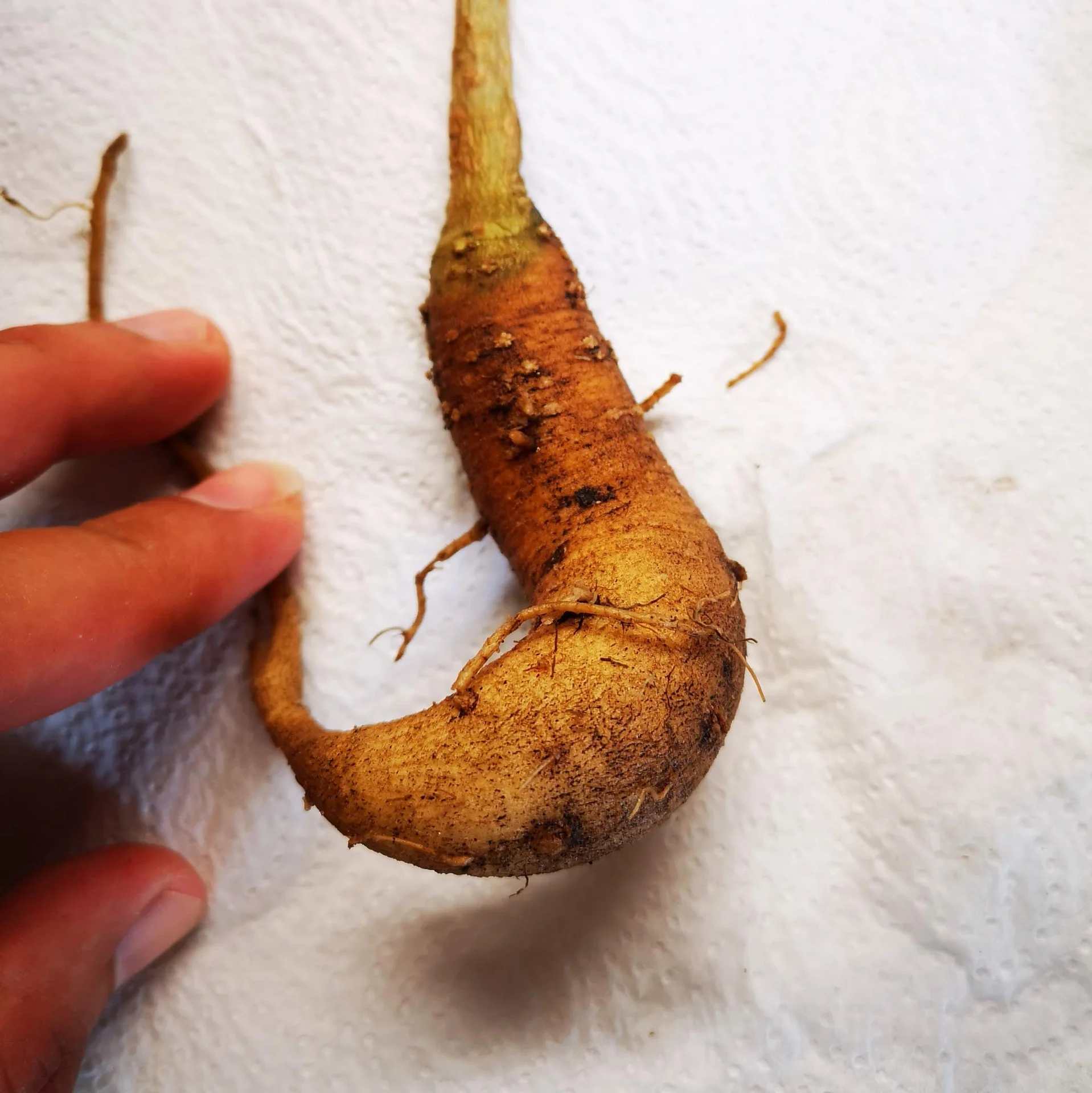
Photo: Abrahami · CC BY-SA 4.0
Moringa root and collar rot is a soil-borne fungus that attacks the roots and the base of the stem (the collar) of moringa, especially in warm, waterlogged ground. It rots the tree's soft, fleshy taproot so the plant can no longer drink, then climbs into the collar and kills the whole tree. It enters through wounds and through roots sitting in standing water, and it lingers in old rotted roots left in the soil, so it comes back on the same wet patch year after year. The crop guide knows it as Diplodia root rot — the tree's second hard enemy after frost.
Why it matters
Root rot does not just spoil a leaf or two — it kills the whole tree, roots and all, so the loss is total (up to 100% of the affected tree). And because moringa is a tree you run for years on cutting cycles, killing one tree costs you not this season's leaves but years of harvests to come. It is at its most deadly while the tree is young and its taproot is soft, and it strikes exactly when you might think you are helping — after heavy rain or a generous watering leaves the ground soggy. The cruel part is that a rotting tree looks thirsty: it wilts, so the natural reaction is to water it more, which only drowns and rots it faster. Get the ground right and you beat this disease before it starts; get it wrong and no spray on earth will save the tree.
When to act
the very first young tree that wilts and dies while its soil is still wet, with a soft brown base — 1 such tree is enough to act: pull it, destroy it, and fix the drainage before more go
This guidance is general, compiled from published agronomic references including FAO and CABI. Thresholds and timing shift with your crop, your variety and the season.
In much of the region a spray is simply called mushonga — medicine. But a chemical group you cannot name is one you cannot rotate, and a product you did not write down has no pre-harvest interval you can observe. Mushonga, and other farming words →
The full Moringa root and collar rot field guide
Identify it
The first thing you see
a young tree that suddenly wilts, yellows and droops even though the soil around it is still wet or muddy. This is the tell-tale sign. A merely thirsty tree perks up when you water it; a root-rotted tree keeps wilting no matter how wet the ground is, because its roots have rotted and can no longer drink. Whole seedlings and young trees flag, brown off from the tips down, and can collapse within a few days.
Check the base — the collar, where the stem meets the soil:
scrape the bark at ground level with your thumbnail. Healthy wood underneath is firm and creamy-green; rotted wood is soft, brown to black, water-soaked and often sour-smelling. You may find a dark, sunken, cracked patch (a canker) ringing the base, sometimes weeping a gummy ooze, and later tiny black pin-head specks — the fungus's fruiting bodies — peppering the dead bark.
Dig one dying tree to be sure
lift a wilting plant and look at the taproot. In root rot the fleshy taproot is brown, soft and rotten, its outer skin sloughing off in your hand, instead of firm, pale and carrot-like. The rot runs up from the root into the collar, and the tree sits loose in the ground and rocks or pulls out easily. This is the disease the crop guide calls Diplodia root rot.
Don't confuse it
with: frost — which browns and kills the leaves and shoots after a cold, clear, still night but leaves the root firm and white; drought — where the soil is dry and the plant revives after a good watering (root rot never does); or termites — a chewed, hollowed base with mud tunnels crusted up the stem, not a soft wet brown rot. The one sign that always points to root rot is a plant wilting while its feet are wet, with a soft brown collar.
Scout for it
When to look hardest
while the trees are young and getting established (the establishment and early-growth stages — roughly the first few months after planting), because the soft young taproot rots most easily. Step up your checks after every heavy rain, flood or heavy watering, and right through any warm, wet spell, since warm ground that stays soggy is exactly what sets this rot off.
Where to walk
go straight to the low spots and the heavy, slow-draining patches where water pools after rain — that is where trees rot first. Check the trees on flat, wet ground before the ones on mounds, ridges or slopes.
What to check at each tree
look for any plant wilting, yellowing or dying while the soil around it is still wet or muddy. At each suspicious tree, scrape the bark at the base to look for the soft brown collar rot, and give the stem a gentle push — a rotted root lets the tree rock in the ground or lift out easily.
The number that means act now
the threshold is the very first tree you find wilting-and-dying while its soil is wet, with a soft brown base — 1 such tree is enough to act. One is not bad luck: it means that patch is waterlogging and the rot will take its neighbours next. Don't wait to 'see how many' — pull that tree and fix the drainage straight away.
Control it
Prevent it first
-
keep the roots dry (your single strongest tool; no spray beats it):
moringa root rot is a wet-soil disease, so stop the waterlogging and you stop the rot. Plant only on free-draining ground in full sun; on any land that holds water, plant on a raised mound or ridge so the root crown sits proud of the wet. Never over-water — moringa needs far less than you think, and soggy soil kills it faster than drought ever will. After heavy rain, break the edge of any pool or open a small channel so the water drains off within a day.
-
start clean and don't wound the base:
raise your trees from fresh, sound seed or firm hardwood cuttings taken from healthy, well-cropping trees — never from a stand that has been dying back. Keep hoes, slashers and hoe-handles away from the trunk and collar, because the fungus slips in through wounds at the base. Dig out and destroy any trees that died of rot last season, roots and all, since the fungus lives on in old rotted roots left in the ground.
Act early — remove the sick tree and dry the ground:
the moment you find a rotted tree, dig it out with as much of its rotten root as you can and destroy it — burn it or bury it deep, well away from the field. Never leave it lying, and never put it on the compost. Then stop watering that patch, open a channel to drain it, and let the soil dry out. Where you can get it, water a Trichoderma biofungicide (a friendly soil fungus sold as a powder or liquid) into the soil around the surviving trees — it settles on the roots and crowds out the rot fungus, and it is safe for you, your animals, your soil and the leaves you eat.
Chemical as a last resort — a fungicide soil drench:
if trees keep rotting in a valuable planting even after you have improved the drainage, you can drench the soil around the collar with a systemic benzimidazole fungicide (the chemical group that includes carbendazim and thiophanate-methyl). Know its limit plainly: a drench can slow the rot in roots not yet killed but cannot bring a rotted tree back to life, and it will never beat wet soil — it only buys a little time while you fix the real problem, the drainage.
Use any chemical safely
mix and apply with your skin, eyes, nose and mouth covered; keep the product off the leaves and pods you will eat, out of drinking water, ponds and rivers, and away from children, animals and bees. Respect the pre-harvest interval — the number of days the label says you must wait between treating and picking leaves or pods. Wash yourself and your clothes afterwards, and never tip leftover drench near a well, stream or pond.
Fight resistance
benzimidazoles are a group this fungus can quickly get used to if you lean on them — so do not drench again and again with the same product. Treat only when you truly must, rotate to a different fungicide group if you treat more than once, and keep drainage, mounding and Trichoderma as the real backbone of your control, not the chemical.
If it keeps spreading — change the ground, not just the tree:
when trees keep dying in the same wet patch however you treat them, the soil there is the problem, not the individual tree. Stop replanting moringa into that spot; put the next trees on high mounds or ridges, or on better-drained land altogether, and rest the sick patch under a different, non-woody crop for a season or two so the fungus in the soil starves down. Chasing the rot with sprays on waterlogged ground will only cost you more trees.
Catch Moringa root and collar rot before it costs you the harvest
This guide is the general answer. Divisi works out yours — the week to scout your own field for Moringa root and collar rot, and what to do the day you find it.


Crops it affects
Plan the crops it attacks

All planting calendars, country by country
Get Insights by email
A short digest of new Divisi articles. No email on quiet weeks.
Frequently asked questions
How do I identify Moringa root and collar rot?
The first thing you see. a young tree that suddenly wilts, yellows and droops even though the soil around it is still wet or muddy. This is the tell-tale sign. A merely thirsty tree perks up when you water it; a root-rotted tree keeps wilting no matter how wet the ground is, because its roots have rotted and can no longer drink. Whole seedlings and young trees flag, brown off from the tips down, and can collapse within a few days.
When should I take action against Moringa root and collar rot?
the very first young tree that wilts and dies while its soil is still wet, with a soft brown base — 1 such tree is enough to act: pull it, destroy it, and fix the drainage before more go
How do I control Moringa root and collar rot?
Prevent it first — keep the roots dry (your single strongest tool; no spray beats it):. moringa root rot is a wet-soil disease, so stop the waterlogging and you stop the rot. Plant only on free-draining ground in full sun; on any land that holds water, plant on a raised mound or ridge so the root crown sits proud of the wet. Never over-water — moringa needs far less than you think, and soggy soil kills it faster than drought ever will. After heavy rain, break the edge of any pool or open a small channel so the water drains off within a day.
Which crops are attacked by Moringa root and collar rot?
Among the crops covered here: Moringa (drumstick tree).